Chapter 15
Ice & Rain Protection
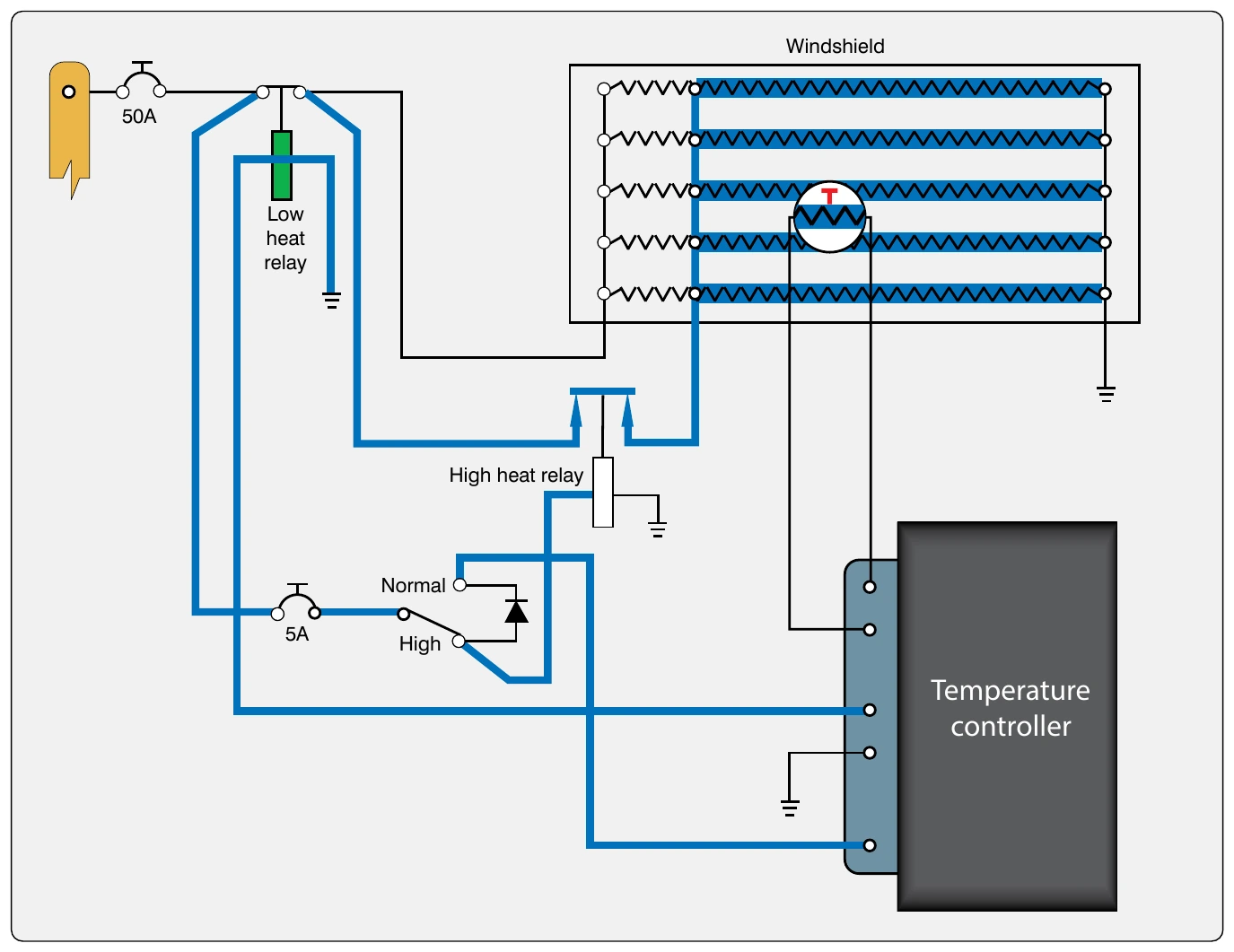
Some windshield heating systems can be operated at two heat levels. On these aircraft, NORMAL heating supplied heat to the broadest area of windshield. HIGH heating supplies a higher intensity of heat to a smaller but more essential viewing area. Typically, this window heating system is always on and set in the NORMAL position. Figure 15-45 illustrates a simplified windshield heat system of this type.
Pneumatic
Some laminated windshields on older aircraft have a space between the plies that allows the flow of hot air to be directed between the glass to keep it warm and fog free. The source of air is bleed air or conditioned air from the environmental control system. Small aircraft may utilize ducted warm air, which is released to flow over the windshield inner surface to defrost and defog. These systems are similar to those used in automobiles. The source of air could be ambient (defog only), the aircraft’s heating system, or a combustion heater. While these pneumatic windshield heat systems are effective for the aircraft on which they are installed, they are not approved for flying into known icing conditions and, as such, are not effective for anti-ice.
Large aircraft equipped with pneumatic jet blast rain repellent systems achieve some anti-icing effects from operating this system although electric windshield heat is usually used.
Chemical
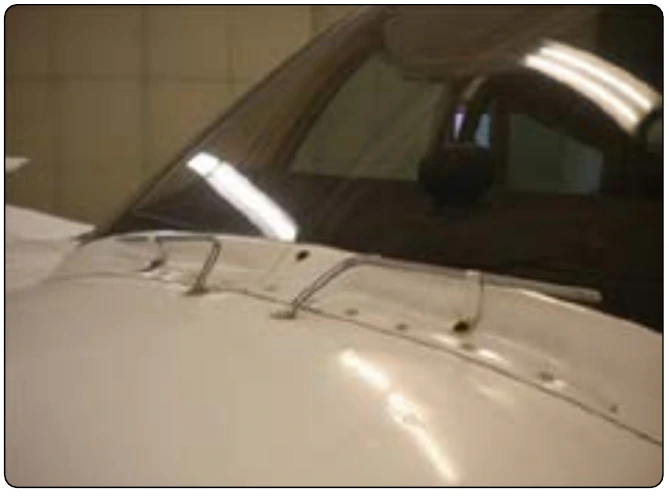
As previously mentioned in this chapter, chemical anti-ice systems exist generally for small aircraft. This type of anti-ice is also used on windshields. Whether alone or part of a TKSTM system or similar, the liquid chemical is sprayed through a nozzle onto the outside of the windshield which prevents ice from forming. The chemical can also deice the windshield of ice that may have already formed. Systems such as these have a fluid reservoir, pump, control valve, filter, and relief valve. Other components may exist. Figure 15-46 shows a set of spray tubes for application of chemical anti-ice on an aircraft windshield.
Water & Waste Tank Ice Prevention
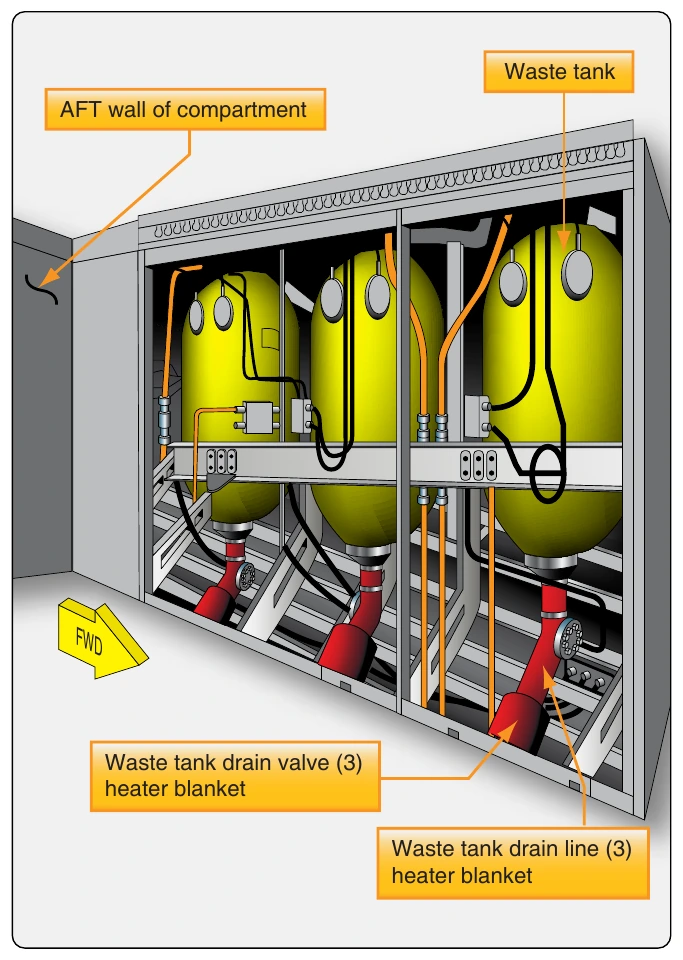
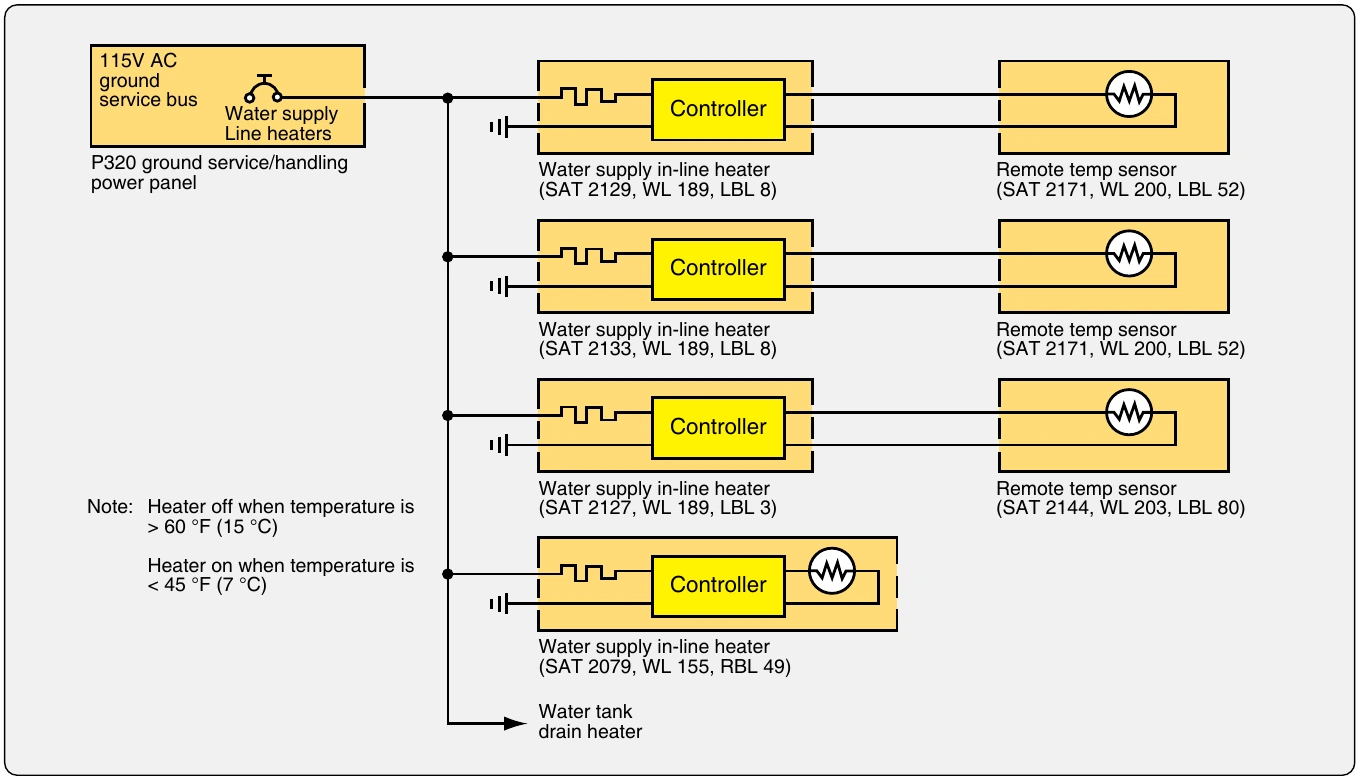
Transport type aircraft have water and waste systems on board, and electrical heaters are often used to prevent the formation of ice in the water lines of these systems. Water lines carry water from the potable tanks to the lavatories and galleys. The waste water tanks collect the gray water from the galleys and lavatories. Heater blankets, inline heaters, or heater boots are often used to heat the water supply lines, water tank drain hoses, waste drain lines, waste tank rinse fittings, and drain masts. Thermostats in the water lines supply temperature data to the control unit that turns the electrical heaters on and off. When the temperature falls below freezing, the electrical heaters turn on and stay on until the temperature reaches a safe temperature. Figure 15-47 is a schematic of a water supply line heater system, and Figure 15-48 shows the location of the waste water tanks and heater blankets.