Chapter 15
Ice & Rain Protection
Chemical Rain Repellent
Water poured onto clean glass spreads out evenly. Even when the glass is held at a steep angle or subjected to air velocity, the glass remains wetted by a thin film of water. However, when glass is treated with certain chemicals, a transparent film is formed that causes the water to behave very much like mercury on glass. The water draws up into beads that cover only a portion of the glass and the area between beads is dry. The water is readily removed from the glass. This principle lends itself quite naturally to removing rain from aircraft windshields. The high-velocity slipstream continually removes the water beads, leaving a large part of the window dry.
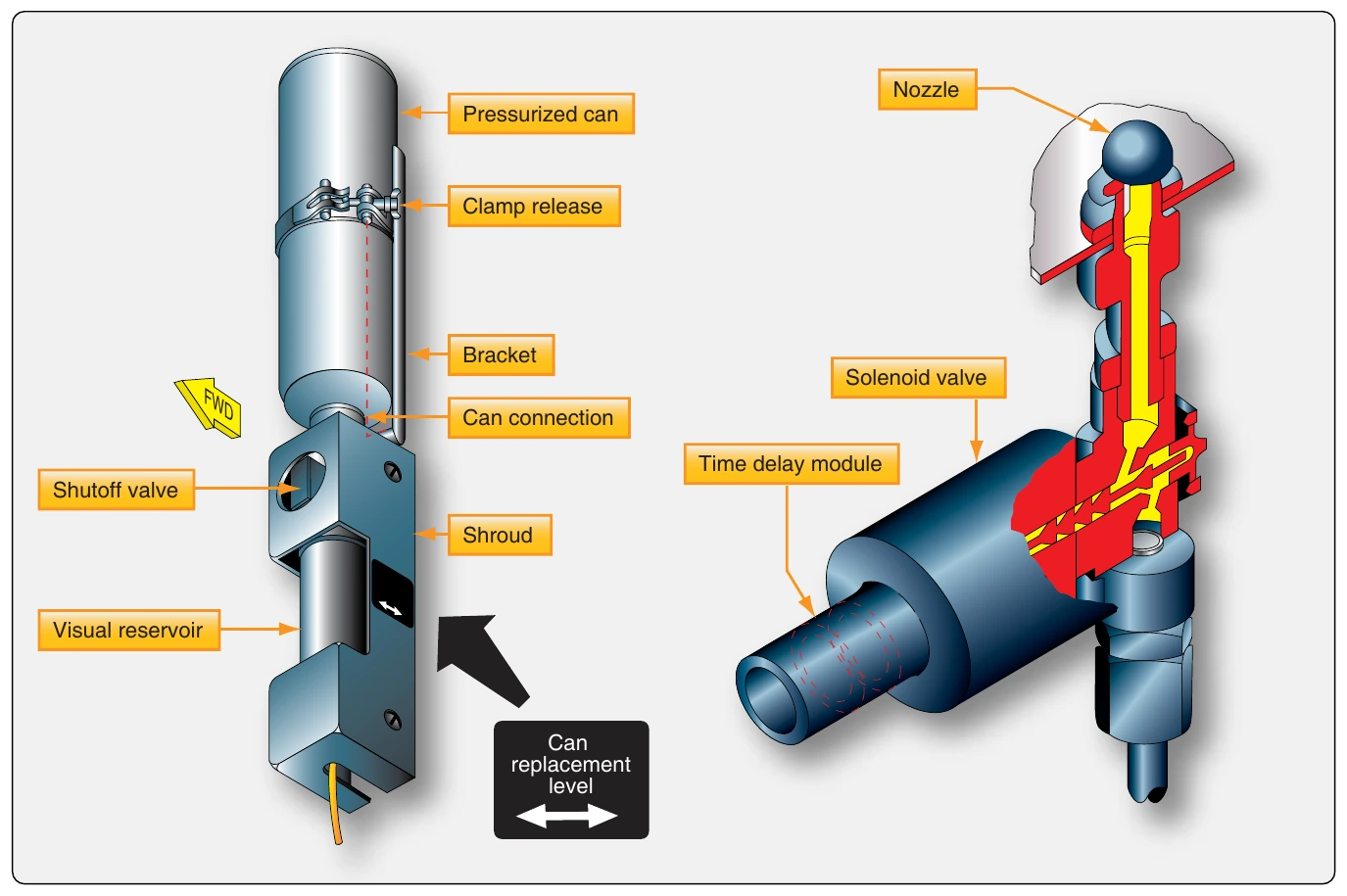
A rain repellent system permits application of the chemical repellent by a switch or push button in the flight deck. The proper amount of repellent is applied regardless of how long the switch is held. On some systems, a solenoid valve controlled by a time delay module meters the repellent to a nozzle which sprays it on the outside of the windshield. Two such units exist — one each for the forward glass of the pilot and copilot. [Figure 15-41]
This system should only be used in very wet conditions. The rain repellent system should not be operated on dry windows because heavy undiluted repellent restricts window visibility. Should the system be operated inadvertently, do not operate the windshield wipers or rain clearing system as this tends to increase smearing. Also, the rain repellent residues caused by application in dry weather or very light rain can cause staining or minor corrosion of the aircraft skin. To prevent this, any concentrated repellent or residue should be removed by a thorough fresh water rinse at the earliest opportunity. After application, the repellent film slowly deteriorates with continuing rain impingement. This makes periodic reapplication necessary. The length of time between applications depends upon rain intensity, the type of repellent used, and whether windshield wipers are used.
Windshield Surface Seal Coating
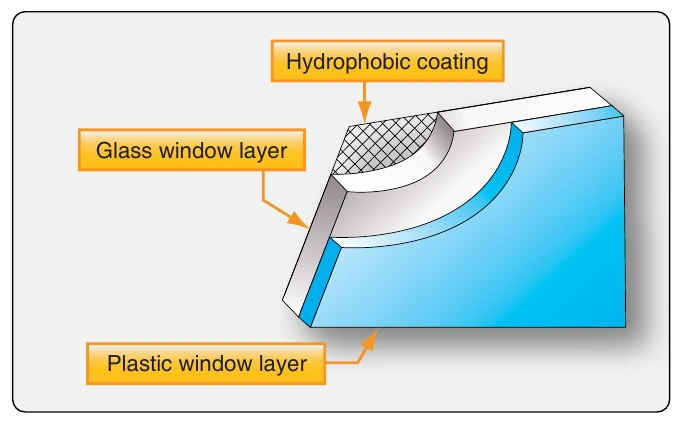
Some aircraft models use a surface seal coating, also called hydrophobic coating that is on the outside of the pilot’s/copilot’s windshield. [Figure 15-42] The word hydrophobic means to repel or not absorb water. The windshield hydrophobic coating is on the external surface of the windows (windshields). The coatings cause raindrops to bead up and roll off, allowing the flight crew to see through the windshield with very little distortion. The hydrophobic windshield coating reduces the need for wipers and gives the flight crew better visibility during heavy rain.
Most new aircraft windshields are treated with surface seal coating. The manufacturer’s coating process deeply penetrates the windshield surface providing hydrophobic action for quite some time. When effectiveness declines, products made to be applied in the field are used. These liquid treatments rubbed onto the surface of the windshield maintain the beading action of rain water. They must be applied periodically or as needed.
Pneumatic Rain Removal Systems
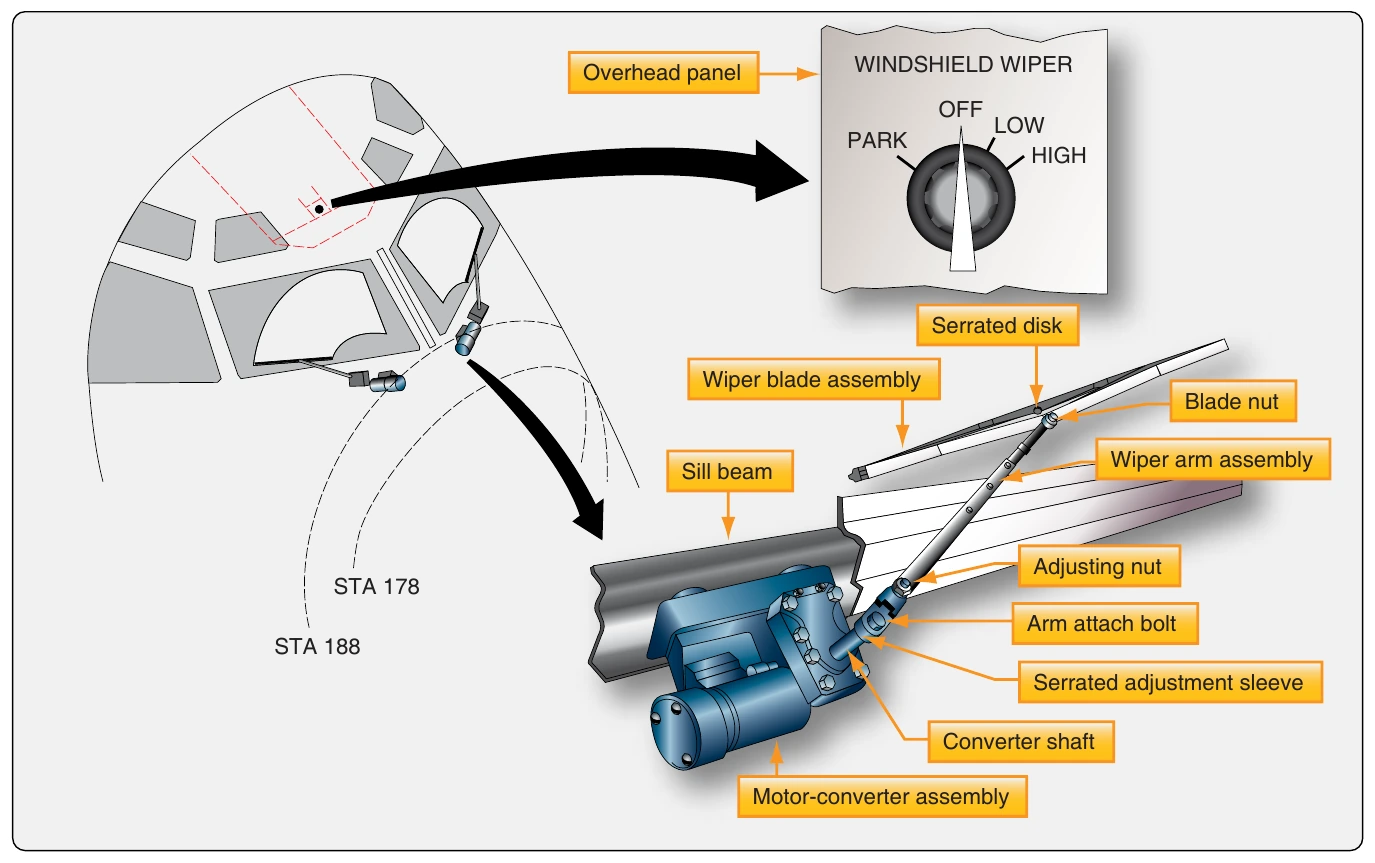
Windshield wipers characteristically have two basic problem areas. One is the tendency of the slipstream aerodynamic forces to reduce the wiper blade loading pressure on the window, causing ineffective wiping or streaking. The other is in achieving fast enough wiper oscillation to keep up with high rain impingement rates during heavy rain falls. As a result, most aircraft wiper systems fail to provide satisfactory vision in heavy rain.
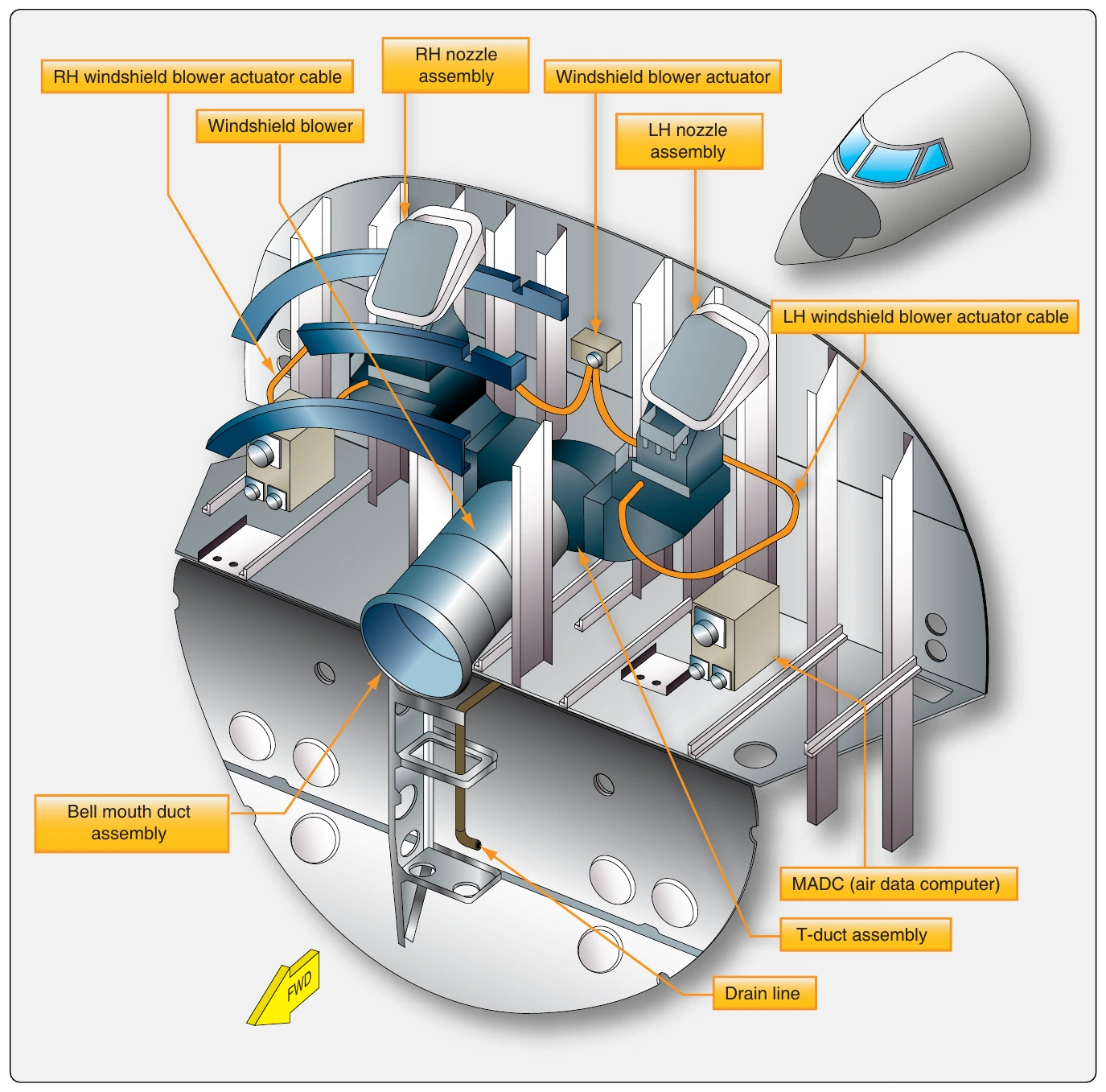
The rain removal system shown in Figure 15-43 controls windshield icing and removes rain by directing a flow of heated air over the windshield. This heated air serves two purposes. First, the air breaks the rain drops into small particles that are then blown away. Secondly, the air heats the windshield to prevent the moisture from freezing. The air can be supplied by an electric blower or by bleed air.
Windshield Frost, Fog, & Ice Control Systems
In order to keep windshield areas free of ice, frost, and fog, window anti-icing, deicing, and defogging systems are used. These can be electric, pneumatic, or chemical depending on the type and complexity of the aircraft. A few of these systems are discussed in this section.
Electric
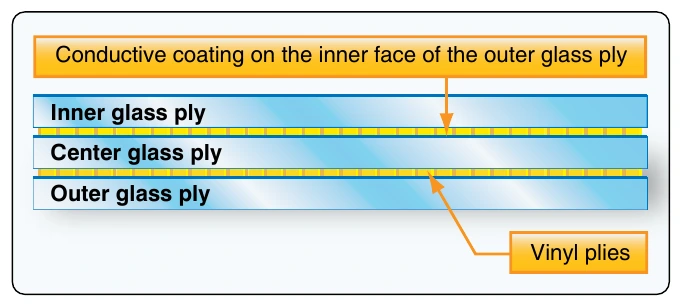
High performance and transport category aircraft windshields are typically made of laminated glass, polycarbonate, or similar ply material. Typically, clear vinyl plies are also included to improve performance characteristics. The laminations create the strength and impact resistance of the windshield assembly. These are critical features for windshields as they are subject to a wide range of temperatures and pressures. They must also withstand the force of a 4-pound bird strike at cruising speed to be certified. The laminated construction facilitates the inclusion of electric heating elements into the glass layers, which are used to keep the windshield clear of ice, frost, and fog. The elements can be in the form of resistance wires or a transparent conductive material may be used as one of the window plies. To ensure enough heating is applied to the outside of the windshield, heating elements are placed on the inside of the outer glass ply. Windshields are typically bonded together by the application of pressure and heat without the use of cement. Figure 15-44 illustrates the plies in one transport category aircraft windshield.
Whether resistance wires or a laminated conductive film is used, aircraft window heat systems have transformers to supply power and feedback mechanisms, such as thermistors, to provide a window heat control unit with information used to keep operating temperature within acceptable limits. Some systems are automatic while others are controlled by flight deck switches. Separate circuits for pilot and co-pilot are common to ensure visibility in case of a malfunction. Consult the manufacturer’s maintenance information for details on the particular window heat system in question.