Chapter 16
Cabin Environmental Control Systems
Carbon monoxide is a colorless, odorless gas produced by incomplete combustion of hydrocarbon fuels, such as those used in aviation. The human body does not require this gas to function. Its presence, however, can prevent a sufficient level of oxygen to be maintained in the body, resulting in hypoxia. This is also known as carbon monoxide poisoning. As with all forms of oxygen deprivation, extended exposure to carbon monoxide can result in unconsciousness and even death.
Hemoglobin is the substance in the blood that attaches to oxygen in the lungs and circulates it to cells in the body for use. Carbon monoxide more readily attaches itself to hemoglobin than oxygen. If carbon monoxide is present in the lungs, hemoglobin attaches to it and not oxygen. This results in cells not receiving the amount of oxygen they need. The insufficient oxygen level results in hypoxia-like symptoms.
A real danger of carbon monoxide poisoning is that long exposure to slight traces of carbon monoxide can result in oxygen deprivation just as easily as short-term exposure to a concentrated amount. The onset of its effects can be very subtle.
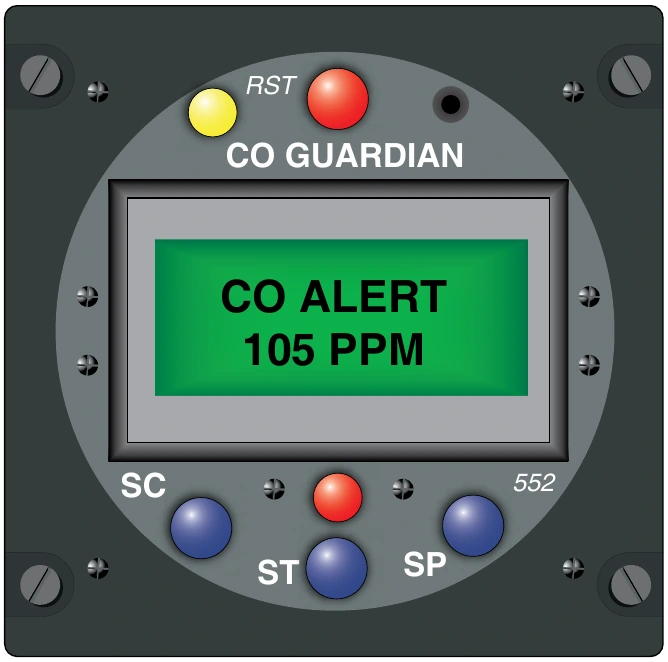
Carbon monoxide detectors are used in flight decks and cabins to provide the crew a warning of the silent danger. There are many types of carbon monoxide detectors available to alert aviators of the presence of this gas. Some are made to be permanently installed in the instrument panel, while others are portable. The simplest carbon monoxide detectors are chemical tabs mounted on cardboard that hang on or adhere to something in the flight deck. When carbon monoxide is present, the tab changes color due to a chemical reaction. More sophisticated detectors provide a digital output in parts per million of carbon monoxide present or illuminate a light and/or an audible alarm sounds. [Figure 16-3] If contaminated, a carbon monoxide portable test unit can be returned to service by installing a new indicating element.
Aircraft that utilize exhaust shroud-type heating systems or combustion heaters are more likely to have carbon monoxide introduced into the cabin from these devices. It is very important to discover the source of carbon monoxide if it is detected. Various leak checks and testing for cracks are performed regularly whenever a combustion source is also the source for cabin heat.
Aircraft Oxygen Systems
The negative effects of reduced atmospheric pressure at flight altitudes, forcing less oxygen into the blood, can be overcome. There are two ways this is commonly done: increase the pressure of the oxygen or increase the quantity of oxygen in the air mixture.
Large transport-category and high-performance passenger aircraft pressurize the air in the cabin. This serves to push more of the normal 21 percent oxygen found in the air into the blood for saturation. Techniques for pressurization are discussed later in this chapter. When utilized, the percentage of oxygen available for breathing remains the same; only the pressure is increased.
By increasing the quantity of oxygen available in the lungs, less pressure is required to saturate the blood. This is the basic function of an aircraft oxygen system. Increasing the level of oxygen above the 21 percent found in the atmosphere can offset the reduced pressure encountered as altitude increases. Oxygen may be regulated into the air that is breathed so as to maintain a sufficient amount for blood saturation. Normal mental and physical activity can be maintained at indicated altitudes of up to about 40,000 feet with the sole use of supplemental oxygen.
Oxygen systems that increase the quantity of oxygen in breathing air are most commonly used as primary systems in small and medium size aircraft designed without cabin pressurization. Pressurized aircraft utilize oxygen systems as a means of redundancy should pressurization fail. Portable oxygen equipment may also be aboard for first aid purposes.
Forms of Oxygen & Characteristics
Gaseous Oxygen
Oxygen is a colorless, odorless, and tasteless gas at normal atmospheric temperatures and pressures. It transforms into a liquid at –183 °C (its boiling point). Oxygen combines readily with most elements and numerous compounds. This combining is called oxidation. Typically, oxidation produces heat. When something burns, it is actually rapidly combining with oxygen. Oxygen itself does not burn because it does not combine with itself, except to form oxygen or ozone. But, pure oxygen combines violently with petroleum products creating a significant hazard when handling these materials in close proximity to each other. Nevertheless, oxygen and various petroleum fuels combine to create the energy produced in internal combustion engines.
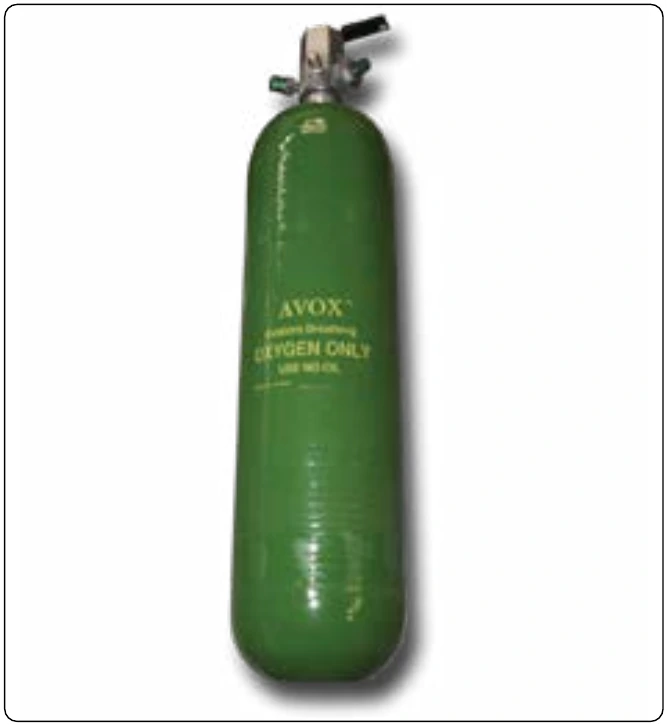
Pure gaseous oxygen, or nearly pure gaseous oxygen, is stored and transported in high-pressure cylinders that are typically painted green. Technicians should be cautious to keep pure oxygen away from fuel, oil, and grease to prevent unwanted combustion. Not all oxygen in containers is the same. Aviator’s breathing oxygen is tested for the presence of water. This is done to avoid the possibility of it freezing in the small passage ways of valves and regulators. Ice could prevent delivery of the oxygen when needed. Aircraft often operate in subzero temperatures, increasing the possibility of icing. The water level should be a maximum of.02ml per liter of oxygen. The words “Aviator’s Breathing Oxygen” should be marked clearly on any cylinders containing oxygen for this purpose. [Figure 16-4]
Production of gaseous oxygen for commercial or aircraft cylinders is often through a process of liquefying air. By controlling temperature and pressure, the nitrogen in the air can be allowed to boil off leaving mostly pure oxygen. Oxygen may also be produced by the electrolysis of water. Passing electric current through water separates the oxygen from the hydrogen. One further method of producing gaseous oxygen is by separating the nitrogen and oxygen in the air through the use of a molecular sieve. This membrane filters out nitrogen and some of the other gases in air, leaving nearly pure oxygen for use. Onboard oxygen sieves, or oxygen concentrators as they are sometimes called, are used on some military aircraft. Their use in civil aviation is expected.
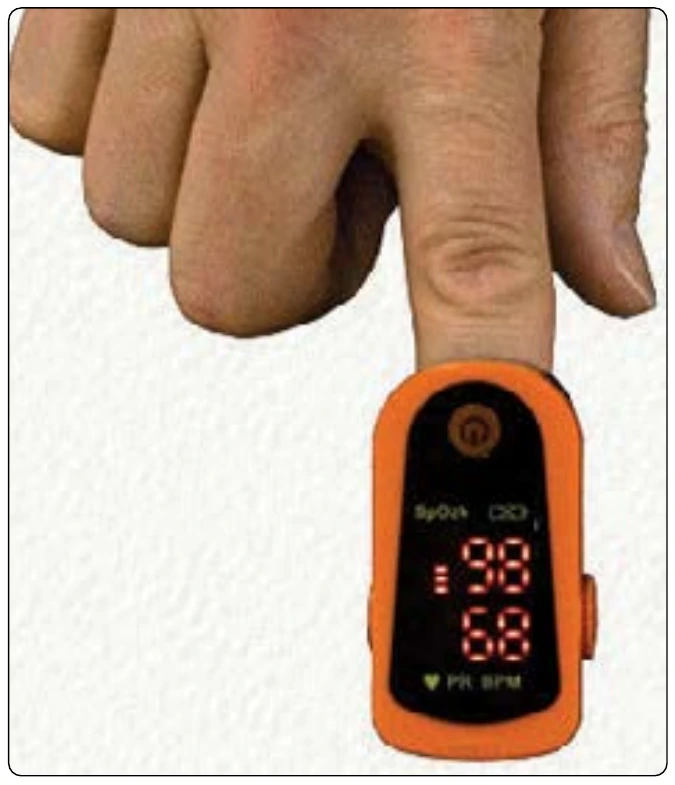
Use of portable pulse oximeters has become more common in aviation. These devices measure the oxygen saturation level of the blood. With this information, adjustments to the oxygen flow rates of onboard oxygen equipment can be made to prevent hypoxia. Figure 16-5 shows an oximeter into which a finger is inserted to measure oxygen saturation of the blood in percentage. Heart rate is also displayed.