
Chapter 16
Cabin Environmental Control Systems
Liquid Oxygen
Liquid oxygen (LOX) is a pale blue, transparent liquid. Oxygen can be made liquid by lowering the temperature to below –183 °C or by placing gaseous oxygen under pressure. A combination of these is accomplished with a Dewar bottle. This special container is used to store and transport liquid oxygen. It uses an evacuated, double-walled insulation design to keep the liquid oxygen under pressure at a very low temperature. [Figure 16-6] A controlled amount of oxygen is allowed to vaporize and is plumbed into a gaseous oxygen delivery system downstream of a converter that is part of the container assembly.
A small quantity of LOX can be converted to an enormous amount of gaseous oxygen, resulting in the use of very little storage space compared to that needed for high-pressure gaseous oxygen cylinders. However, the difficulty of handling LOX, and the expense of doing so, has resulted in the container system used for gaseous oxygen to proliferate throughout civilian aviation. LOX is used in military aviation and some medical helicopter applications for patient oxygen.
Chemical or Solid Oxygen
Sodium chlorate has a unique characteristic. When ignited, it produces oxygen as it burns. This can be filtered and delivered through a hose to a mask that can be worn and breathed directly by the user. Solid oxygen candles, as they are called, are formed chunks of sodium chlorate wrapped inside insulated stainless-steel housings to control the heat produced when activated. The chemical oxygen supply is often ignited by a spring-loaded firing pin that when pulled, releases a hammer that smashes a cap creating a spark to light the candle. Electric ignition via a current-induced hot wire also exists. Once lit, a sodium chlorate oxygen generator cannot be extinguished. It produces a steady flow of breathable oxygen until it burns out, typically generating 10–20 minutes of oxygen. [Figure 16-7]
Solid oxygen generators are primarily used as backup oxygen devices on pressurized aircraft. They are one-third as heavy as gaseous oxygen systems that use heavy storage tanks for the same quantity of oxygen available. Sodium chlorate chemical oxygen generators also have a long shelf life, making them perfect as a standby form of oxygen. They are inert below 400 °F and can remain stored with little maintenance or inspection until needed, or until their expiration date is reached.
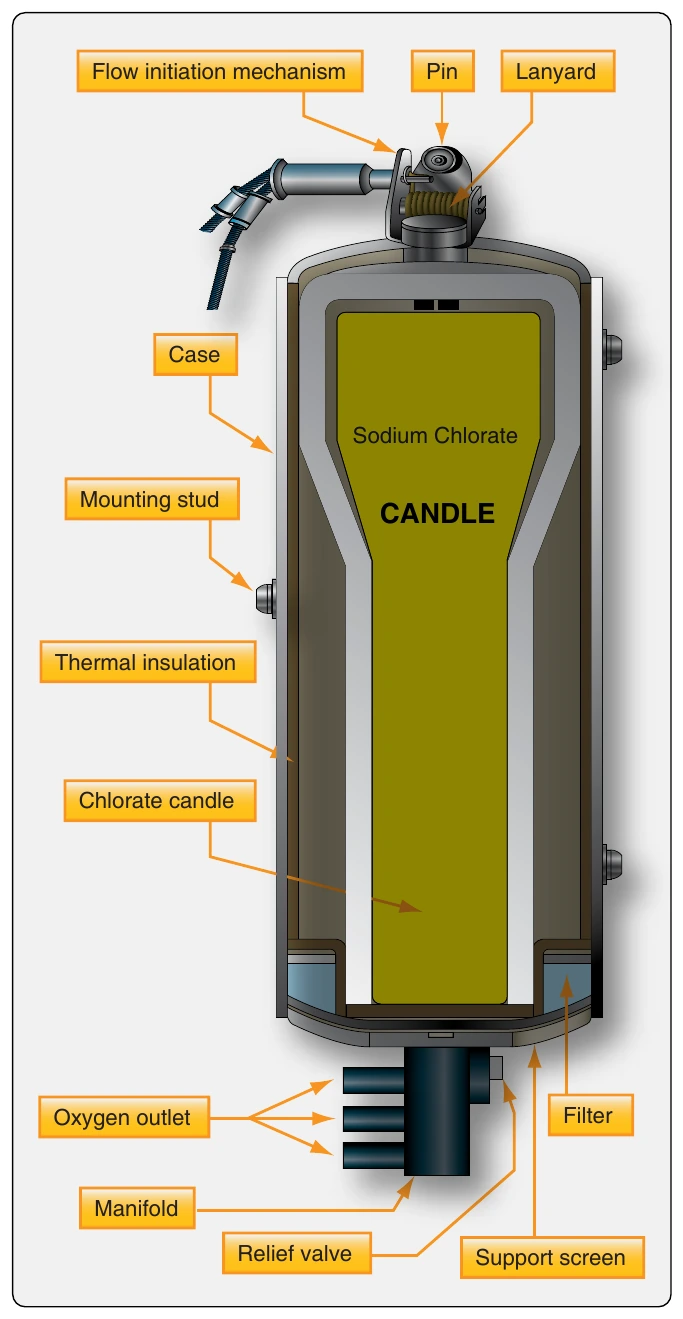
The feature of not extinguishing once lit limits the use of solid oxygen since it becomes an all-or-nothing source. The generators must be replaced if used, which can greatly increase the cost of using them as a source of oxygen for short periods of time. Moreover, chemical oxygen candles must be transported with extreme caution and as hazardous materials. They must be properly packed, and their ignition devices deactivated.
Onboard Oxygen Generating Systems (OBOGS)
The molecular sieve method of separating oxygen from the other gases in air has application in flight, as well as on the ground. The sieves are relatively light in weight and relieve the aviator of a need for ground support for the oxygen supply. Onboard oxygen generating systems on military aircraft pass bleed air from turbine engines through a sieve that separates the oxygen for breathing use. Some of the separated oxygen is also used to purge the sieve of the nitrogen and other gases that keep it fresh for use. Use of this type of oxygen production in civilian aircraft is anticipated. [Figure 16-8]
Oxygen Systems & Components
Built-in and portable oxygen systems are used in civilian aviation. They use gaseous or solid oxygen (oxygen generators) as suits the purpose and aircraft. LOX systems and molecular sieve oxygen systems are not discussed, as current applications on civilian aircraft are limited.
Gaseous Oxygen Systems
The use of gaseous oxygen in aviation is common; however, applications vary. On a light aircraft, it may consist of a small carry-on portable cylinder with a single mask attached via a hose to a regulator on the bottle. Larger portable cylinders may be fitted with a regulator that divides the outlet flow for 2–4 people. Built-in oxygen systems on high performance and light twin-engine aircraft typically have a location where oxygen cylinders are installed to feed a distribution system via tubing and a regulator. The passenger compartment may have multiple breathing stations plumbed so that each passenger can individually plug in a hose and mask if oxygen is needed. A central regulator is normally controlled by the flight crew who may have their own separate regulator and oxygen cylinder. Transport category aircraft may use an elaborate built-in gaseous oxygen system as a backup system to cabin pressurization. In all of these cases, oxygen is stored as a gas at atmospheric temperature in high-pressure cylinders. It is distributed through a system with various components that are described in this section.
Oxygen Storage Cylinders
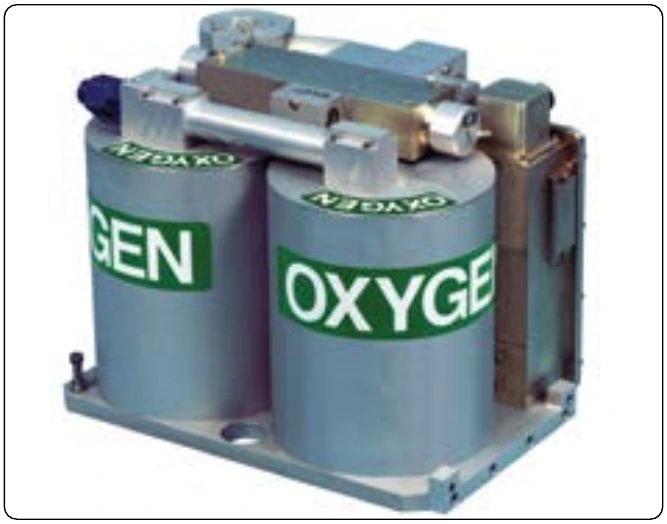
Gaseous oxygen is stored and transported in high-pressure cylinders. Traditionally, these have been heavy steel tanks rated for 1800–1850 psi of pressure and capable of maintaining pressure up to 2,400 psi. While these performed adequately, lighter weight tanks were sought. Some newer cylinders are comprised of a lightweight aluminum shell wrapped by Kevlar®. These cylinders are capable of carrying the same amount of oxygen at the same pressure as steel tanks but weigh much less. Also available are heavy-walled all-aluminum cylinders. These units are common as carry-on portable oxygen used in light aircraft.
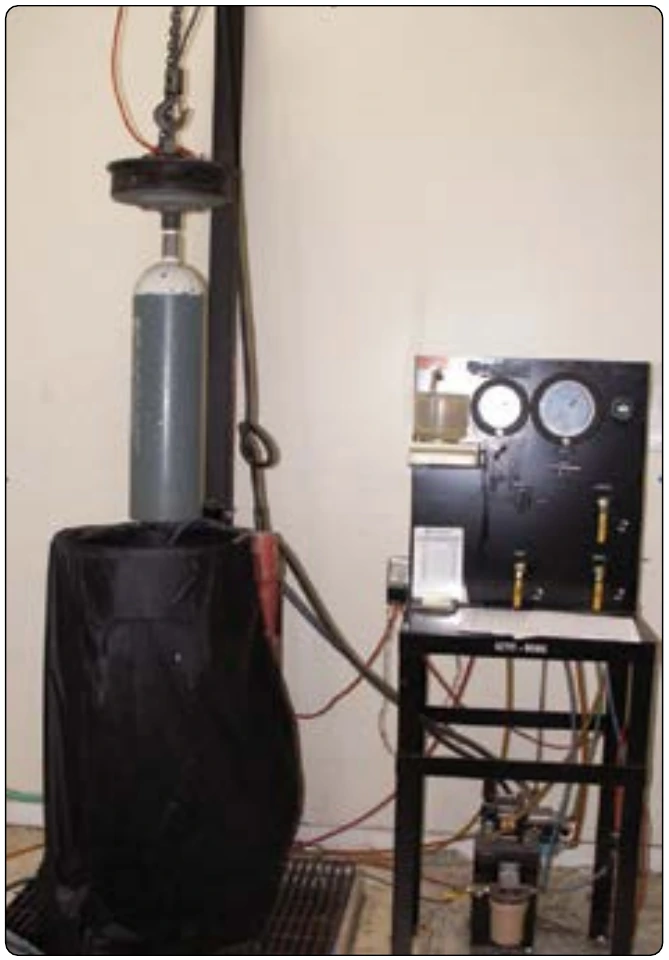
Most oxygen storage cylinders are painted green, but yellow and other colors may be used as well. They are certified to Department of Transportation (DOT) specifications. To ensure serviceability, cylinders must be hydrostatically tested periodically. In general, a hydrostatic test consists of filling the container with water and pressurizing it to 5⁄3 of its certified rating. It should not leak, rupture, or deform beyond an established limit. Figure 16-9 shows a hydrostatic cylinder testing apparatus.
Most cylinders also have a limited service life after which they can no longer be used. After a specified number of filling cycles or calendar age, the cylinders must be removed from service. The most common high-pressure steel oxygen cylinders used in aviation are the 3AA and the 3HT. They come in various sizes but are certified to the same specifications. Cylinders certified under DOT-E-8162 are also popular for their extremely light weight. These cylinders typically have an aluminum core around which Kevlar® is wrapped. The DOT-E 8162 approved cylinders are now approved under DOT-SP-8162 specifications. The SP certification has extended the required time between hydrostatic testing to 5 years (previously 3 years). [Figure 16-10]