
Chapter 3
Aircraft Fabric Covering
Fillers
After the fabric sealer is applied, a filler is used. It is sprayed on in a number of cross coats as required by the manufacturer or the fabric covering process STC. The filler contains solids or chemicals that are included to block UV light from reaching the fabric. Proper fill coating is critical because UV light is the single most destructive element that causes polyester fabric to deteriorate. Dope-based processes use butyrate dope fillers while other processes have their own proprietary formulas. When fillers and sealers are combined, they are known as fabric primers. Aluminum pastes and powders, formerly added to butyrate dope to provide the UV protection, have been replaced by premixed formulas.
Topcoats
Once the aircraft fabric has been installed, sealed, and fill-coat protected, finishing or topcoats are applied to give the aircraft its final appearance. Colored butyrate dope is common in dope-based processes, but various polyurethane topcoats are also available. It is important to use the topcoat products and procedures specified in the applicable STC to complete an airworthy fabric re-covering job.
The use of various additives is common at different stages when utilizing the above products. The following is a short list of additional products that facilitate the proper application of the fabric coatings. Note again that only products approved under a particular STC can be used. Substitution of similar products, even though they perform the same basic function, is not allowed.
- A catalyst accelerates a chemical reaction. Catalysts are specifically designed for each product with which they are mixed. They are commonly used with epoxies and polyurethanes.
- A thinner is a solvent or mixture of solvents added to a product to give it the proper consistency for application, such as when spraying or brushing.
- A retarder is added to a product to slow drying time. Used mostly in dope processes and topcoats, a retarder allow more time for a sprayed coating to flow and level, resulting in a deeper, glossier finish. It is used when the working temperature is elevated slightly above the ideal temperature for a product. It also can be used to prevent blushing of a dope finish when high humidity conditions exist.
- An accelerators contains solvents that speed up the drying time of the product with which it is mixed. It is typically used when the application working temperature is below that of the ideal working temperature. It can also be used for faster drying when airborne contaminants threaten a coating finish.
- Rejuvenator, used on dope finishes only, contains solvents that soften coatings and allow them to flow slightly. Rejuvenator also contains fresh plasticizers that mix into the original coatings. This increases the overall flexibility and life of the coatings.
- Fungicide and mildewicide additives are important for organic fabric covered aircraft because fabrics, such as cotton and linen, are hosts for fungus and mildew. Since fungus and mildew are not concerns when using polyester fabric, these additives are not required. Modern coating formulas contain premixed anti-fungal agents, providing sufficient insurance against the problem of fungus or mildew.
Available Covering Processes
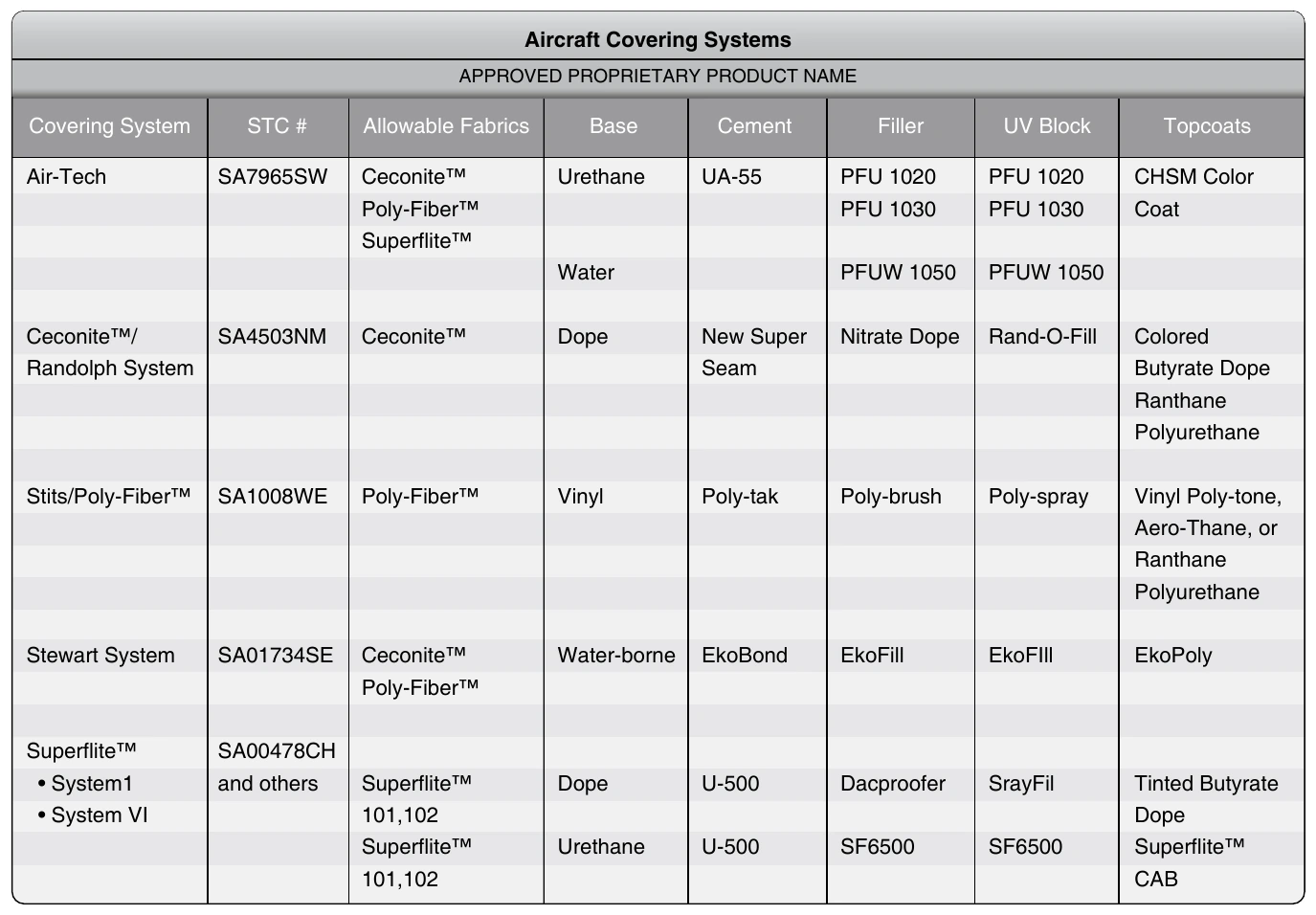
The covering processes that utilize polyester fabric are the primary focus of this chapter. Examples of FAA-approved aircraft covering processes are listed in Figure 3-9. The processes can be distinguished by the chemical nature of the glue and coatings that are used. A dope-based covering process has been refined out of the cotton fabric era, with excellent results on polyester fabric. In particular, plasticizers added to the nitrate and butyrate dopes minimize the shrinking and tautening effects of the dope, establish flexibility, and allow esthetically pleasing tinted butyrate dope finishes that last indefinitely. Durable polyurethane-based processes integrate well with durable polyurethane topcoat finishes. Vinyl is the key ingredient in the popular Poly-Fiber covering system. Air Tech uses an acetone thinned polyurethane compatible system.
The most recent entry into the covering systems market is the Stewart Finishing System that uses waterborne technology to apply polyurethane coatings to the fabric. The glue used in the system is water-based and nonvolatile. The Stewart Finishing System is Environmental Protection Agency (EPA) compliant and STC approved. Both the Stewart and Air Tech systems operate with any of the approved polyester fabrics as stated in their covering system STCs.
All the modern fabric covering systems listed in Figure 3-9 result in a polyester fabric covered aircraft with an indefinite service life. Individual preferences exist for working with the different approved processes. A description of basic covering procedures and techniques common to most of these systems follows later in this chapter.
Ceconite™, Polyfiber™, and Superflight™ are STC-approved fabrics with processes used to install polyester fabric coverings. Two companies that do not manufacturer their own fabric have gained STC approval for covering accessories and procedures to be used with these approved fabrics. The STCs specify the fabrics and the proprietary materials that are required to legally complete the re-covering job.
The aircraft fabric covering process is a three-step process. First, select an approved fabric. Second, follow the applicable STC steps to attach the fabric to the airframe and to protect it from the elements. Third, apply the approved topcoat to give the aircraft its color scheme and final appearance.
Although Grade-A cotton can be used on all aircraft originally certificated to be covered with this material, approved aircraft cotton fabric is no longer available. Additionally, due to the shortcomings of cotton fabric coverings, most of these aircraft have been re-covered with polyester fabric. In the rare instance the technician encounters a cotton fabric covered aircraft that is still airworthy, inspection and repair procedures specified in AC 43.13-1, Chapter 2, Fabric Covering, should be followed.
Determining Fabric Condition—Repair or Recover?
Re-covering an aircraft with fabric is a major repair and should only be undertaken when necessary. Often a repair to the present fabric is sufficient to keep the aircraft airworthy. The original manufacturer’s recommendations or the covering process STC should be consulted for the type of repair required for the damage incurred by the fabric covering. AC 43.13-1 also gives guidelines and acceptable practices for repairing cotton fabric, specifically when stitching is concerned.
Often a large area that needs repair is judged in reference to the overall remaining lifespan of the fabric on the aircraft. For example, if the fabric has reached the limit of its durability, it is better to re-cover the entire aircraft than to replace a large damaged area when the remainder of the aircraft would soon need to be re-covered.
On aircraft with dope-based covering systems, continued shrinkage of the dope can cause the fabric to become too tight. Overly tight fabric may require the aircraft to be re-covered rather than repaired because excess tension on fabric can cause airframe structural damage. Loose fabric flaps in the wind during flight, affecting weight distribution and unduly stressing the airframe. It may also need to be replaced because of damage to the airframe.
Another reason to re-cover rather than repair occurs when dope coatings on fabric develop cracks. These cracks could expose the fabric beneath to the elements that can weaken it. Close observation and field testing must be used to determine if the fabrics are airworthy. If not, the aircraft must be re-covered. If the fabric is airworthy and no other problems exist, a rejuvenator can be used per manufacturer’s instructions. This product is usually sprayed on and softens the coatings with very powerful solvents. Plasticizers in the rejuvenator become part of the film that fills in the cracks. After the rejuvenator dries, additional coats of aluminum-pigmented dope must be added and then final topcoats applied to finish the job. While laborious, rejuvenating a dope finish over strong fabric can save a great deal of time and money. Polyurethane-based finishes cannot be rejuvenated.