
Chapter 5
Aircraft Welding
Gas Metal Arc Welding (GMAW)
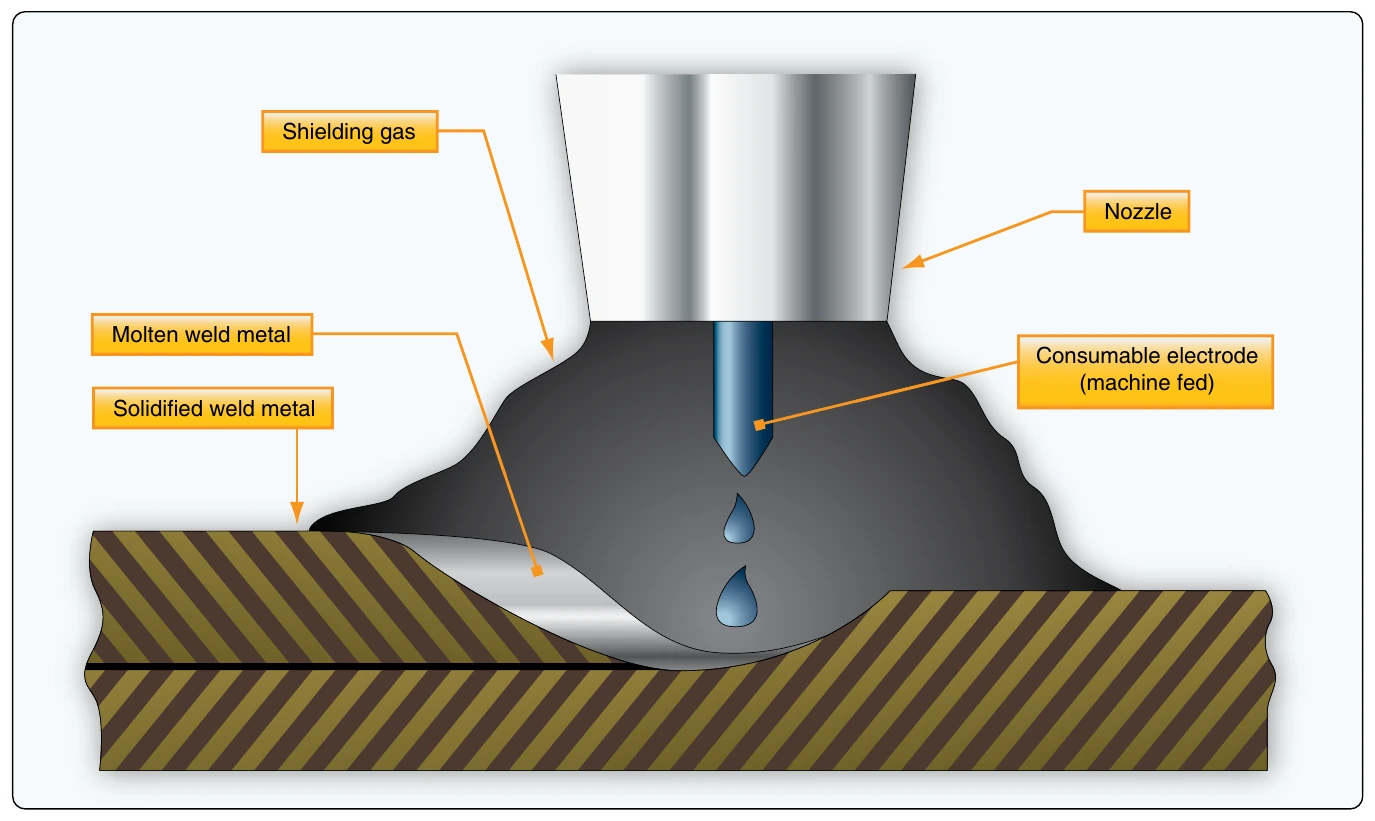
Gas metal arc welding (GMAW) was formerly called metal inert gas (MIG) welding. It is an improvement over stick welding because an uncoated wire electrode is fed into and through the torch and an inert gas, such as argon, helium, or carbon dioxide, flows out around the wire to protect the puddle from oxygen. The power supply is connected to the torch and the work, and the arc produces the intense heat needed to melt the work and the electrode. [Figure 5-4]
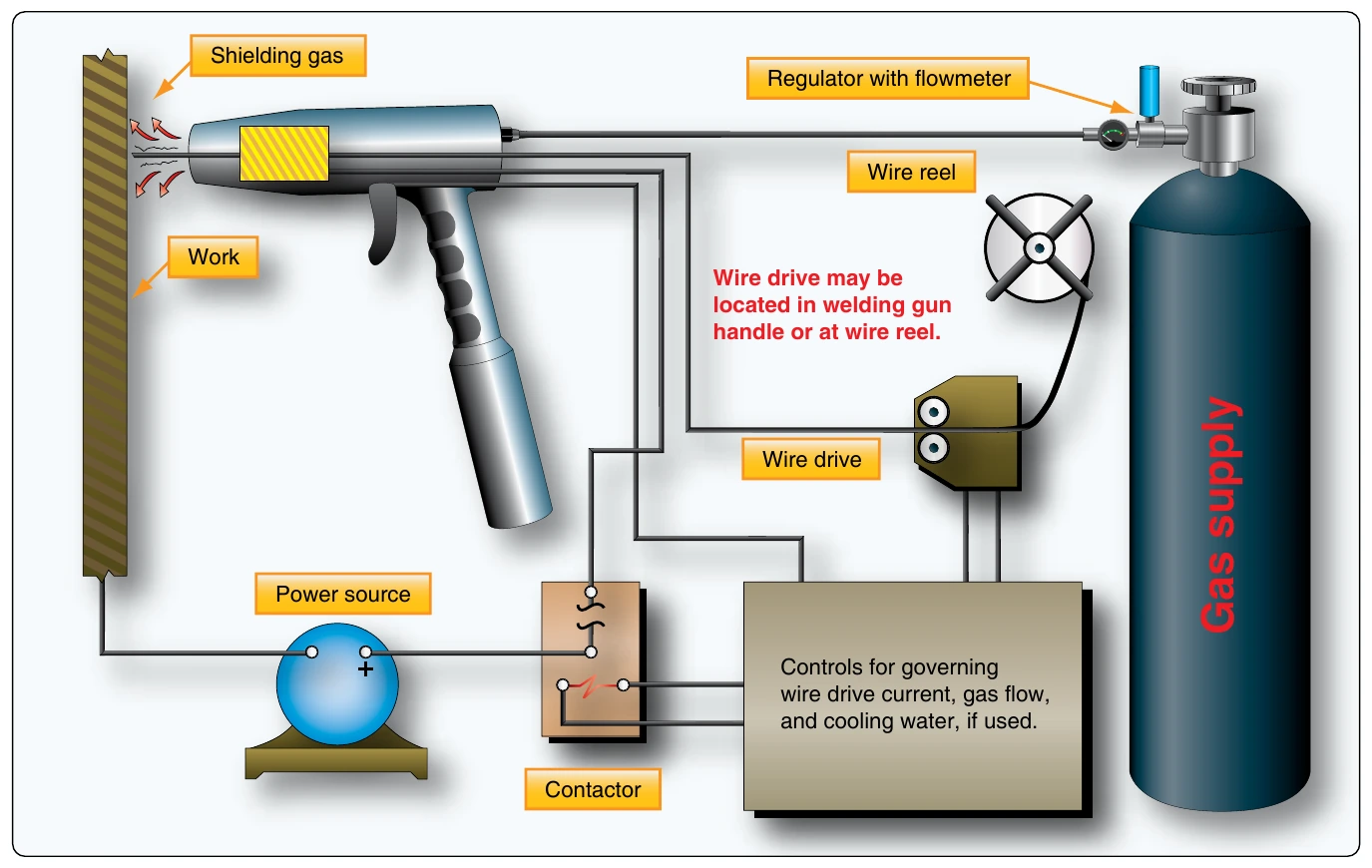
Low-voltage, high-current DC is typically used with GMAW welding. Figure 5-5 shows the equipment required for a typical MIG welding setup.
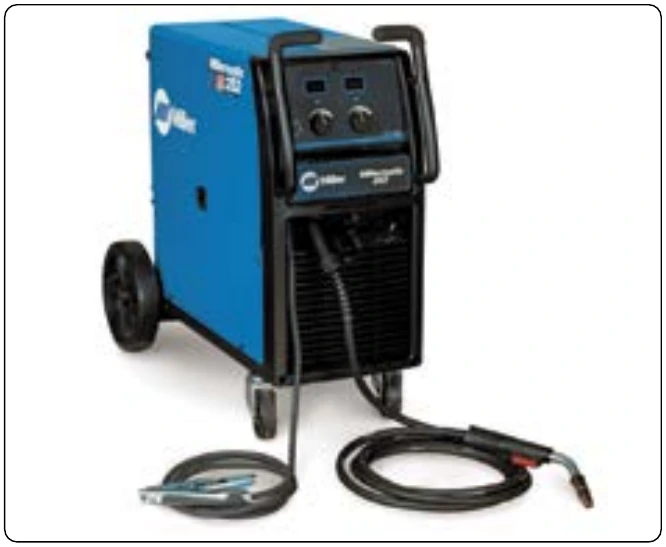
This method of welding can be used for large volume manufacturing and production work; it is not well suited to repair work because weld quality cannot be easily determined without destructive testing. Figure 5-6 depicts a typical power source used for MIG welding.
Gas Tungsten Arc Welding (GTAW)
Gas tungsten arc welding (GTAW) is a method of electric arc welding that fills most of the needs in aircraft maintenance and repair when proper procedures and materials are used. It is the preferred method to use on stainless steel, magnesium, and most forms of thick aluminum. It is more commonly known as Tungsten Inert Gas (TIG) welding and by the trade names of Heliarc or Heliweld. These names were derived from the inert helium gas that was originally used.
The first two methods of electric arc welding that were addressed used a consumable electrode that produced the filler for the weld. In TIG welding, the electrode is a tungsten rod that forms the path for the high amperage arc between it and the work to melt the metal at over 5,400 °F. The electrode is not consumed and used as filler so a filler rod is manually fed into the molten puddle in almost the same manner as when using an oxy-acetylene torch. A stream of inert gas, such as argon or helium, flows out around the electrode and envelopes the arc thereby preventing the formation of oxides in the molten puddle. [Figure 5-7]
The versatility of a TIG welder is increased by the choice of the power supply being used. DC of either polarity or AC may be used. [Figure 5-8]
- Either select the welder setting to DC straight polarity (the work being the positive and the torch being negative) when welding mild steel, stainless steel, and titanium; or
- Select AC for welding aluminum and magnesium.
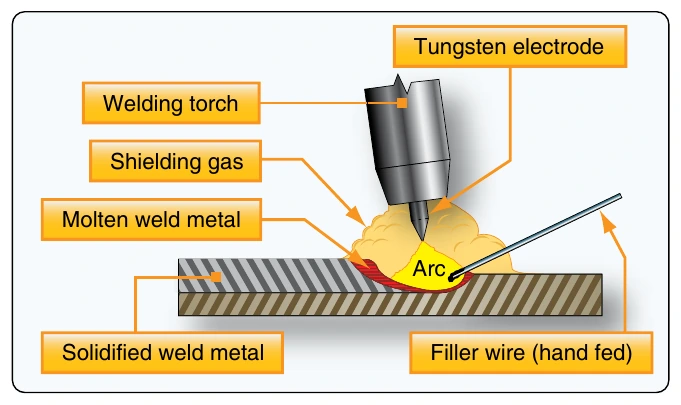
Figure 5-9 is a typical power source for TIG welding along with a torch, foot operated current control, regulator for inert gas, and assorted power cables.
Electric Resistance Welding
Electric resistance welding, either spot welding or seam welding, is typically used to join thin sheet metal components during the manufacturing process.
Spot Welding
Two copper electrodes are held in the jaws of the spot welding machine, and the material to be welded is clamped between them. Pressure is applied to hold the electrodes tightly together and electrical current flows through the electrodes and the material. The resistance of the material being welded is so much higher than that of the copper electrodes that enough heat is generated to melt the metal. The pressure on the electrodes forces the molten spots in the two pieces of metal to unite, and this pressure is held after the current stops flowing long enough for the metal to solidify. The amount of current, pressure, and dwell time are all carefully controlled and matched to the type of material and the thickness to produce the correct spot welds. [Figure 5-10]