
Chapter 6
Aircraft Wood & Structural Repair
Introduction
Wood was among the first materials used to construct aircraft. Most of the airplanes built during World War I (WWI) were constructed of wood frames with fabric coverings. Wood was the material of choice for aircraft construction into the 1930s. Part of the reason was the slow development of strong, lightweight metal aircraft structures and the lack of suitable corrosion-resistant materials for all-metal aircraft.
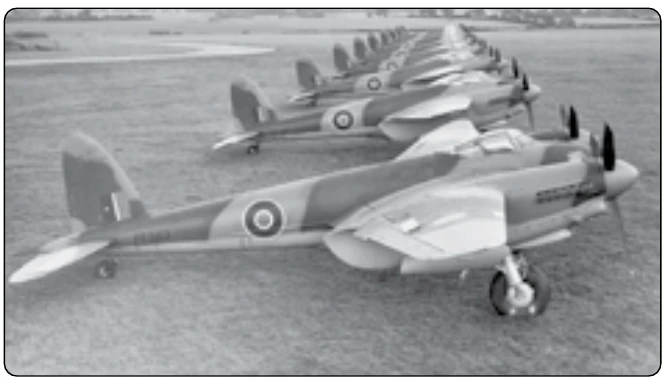
In the late 1930s, the British airplane company DeHavilland designed and developed a bomber named the Mosquito. Well into the late 1940s, DeHavilland produced more than 7,700 airplanes made of spruce, birch plywood, and balsa wood. [Figure 6-1]
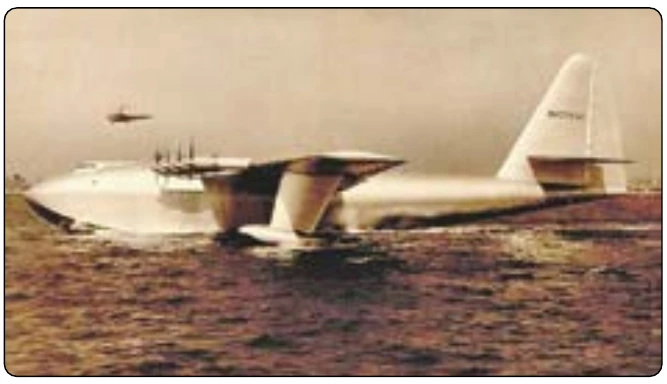
During the early part of WWII, the U.S. government put out a contract to build three flying boats. Hughes Aircraft ultimately won the contract with the mandate to use only materials not critical to the war, such as aluminum and steel. Hughes designed the aircraft to be constructed out of wood.
After many delays and loss of government funding, Howard Hughes continued construction, using his own money and completing one aircraft. On November 2, 1947, during taxi tests in the harbor at Long Beach, California, Hughes piloted the Spruce Goose for over a mile at an altitude of 70 feet, proving it could fly.
This was the largest seaplane and the largest wooden aircraft ever constructed. Its empty weight was 300,000 pounds with a maximum takeoff weight of 400,000 pounds. The entire airframe, surface structures, and flaps were composed of laminated wood with fabric covered primary control surfaces. It was powered by eight Pratt & Whitney R-4360 radial engines, each producing 3,000 horsepower. [Figure 6-2]
As aircraft design and manufacturing evolved, the development of lightweight metals and the demand for increased production moved the industry away from aircraft constructed entirely of wood. Some general aviation aircraft were produced with wood spars and wings, but today only a limited number of wood aircraft are produced. Most of those are built by their owners for education or recreation and not for production.
Quite a number of airplanes in which wood was used as the primary structural material still exist and are operating, including certificated aircraft that were constructed during the 1930s and later. With the proper maintenance and repair procedures, these older aircraft can be maintained in an airworthy condition and kept operational for many years.
Wood Aircraft Construction & Repairs
The information presented in this chapter is general in nature and should not be regarded as a substitute for specific instructions contained in the aircraft manufacturer’s maintenance and repair manuals. Methods of construction vary greatly with different types of aircraft, as do the various repair and maintenance procedures required to keep them airworthy.
When specific manufacturer’s manuals and instructions are not available, the Federal Aviation Administration (FAA) Advisory Circular (AC) 43.13-1, Acceptable Methods, Techniques, and Practices—Aircraft Inspection and Repair, can be used as reference for inspections and repairs. The AC details in the first paragraph, Purpose, the criteria necessary for its use. In part, it stipulates that the use of the AC is acceptable to the FAA for the inspection and minor repair of nonpressurized areas of civil aircraft.
It also specifies that the repairs identified in the AC may also be used as a basis for FAA approval of major repairs when listed in block 8 of FAA Form 337, Major Repair and Alteration, when:
- The user has determined that it is appropriate to the product being repaired;
- It is directly applicable to the repair being made; and
- It is not contrary to manufacturer’s data.
Certificated mechanics that have the experience of working on wooden aircraft are becoming rare. Title 14 of the Code of Federal Regulations (14 CFR) part 65 states in part that a certificated mechanic may not perform any work for which they are rated unless they have performed the work concerned at an earlier date. This means that if an individual does not have the previous aviation woodworking experience performing the repair on an aircraft, regulation requires a certificated and appropriately rated mechanic or repairman who has had previous experience in the operation concerned to supervise that person.
The ability to inspect wood structures and recognize defects (dry rot, compression failures, etc.) can be learned through experience and instruction from knowledgeable certificated mechanics and appropriately qualified technical instructors.
Inspection of Wood Structures
To properly inspect an aircraft constructed or comprised of wood components, the aircraft must be dry. It should be placed in a dry, well-ventilated hangar with all inspection covers, access panels, and removable fairings opened and removed. This allows interior sections and compartments to thoroughly dry. Wet, or even damp, wood causes swelling and makes it difficult to make a proper determination of the condition of the glue joints.
If there is any doubt that the wood is dry, a moisture meter should be utilized to verify the percentage of moisture in the structure. Nondestructive meters are available that check moisture without making holes in the surface. The ideal range is 8–12 percent, with any reading over 20 percent providing an environment for the growth of fungus in the wood.