
Chapter 7
Advanced Composite Materials
Cutting Processes & Precautions
Cutters that work well for metals would either have a short life or produce a poorly cut edge if used for composite materials. The cutters that are used for composites vary with the composite material that is being cut. The general rule for cutting composites is high speed and slow feed.
- Carbon fiber reinforced plastics: Carbon fiber is very hard and quickly wears out high speed steel cutters. For most trimming and cutting tasks, diamond grit cutters are best. Aluminum-oxide or silicon-carbide sandpaper or cloth is used for sanding. Silicon-carbide lasts longer then aluminum-oxide. Router bits can also be made from solid carbide or diamond coated.
- Glass fiber reinforced plastics: Glass fibers, like carbon, are very hard and quickly wear out high-speed steel cutters. Fiberglass is drilled with the same type and material drill bits as carbon fiber.
- Aramid (Kevlar®) fiber-reinforced plastics: Aramid fiber is not as hard as carbon and glass fiber, and cutters made from high-speed steel can be used. To prevent loose fibers at the edge of aramid composites, hold the part and then cut with a shearing action. Aramid composites need to be supported with a plastic backup plate. The aramid and backup plate are cut through at the same time. Aramid fibers are best cut by being held in tension and then sheared. There are specially shaped cutters that pull on the fibers and then shear them. When using scissors to cut aramid fabric or prepreg, they must have a shearing edge on one blade and a serrated or grooved surface on the other. These serrations hold the material from slipping. Sharp blades should always be used as they minimize fiber damage. Always clean the scissor serrations immediately after use so the uncured resin does not ruin the scissors.
Always use safety glasses and other protective equipment when using tools and equipment.
Cutting Equipment
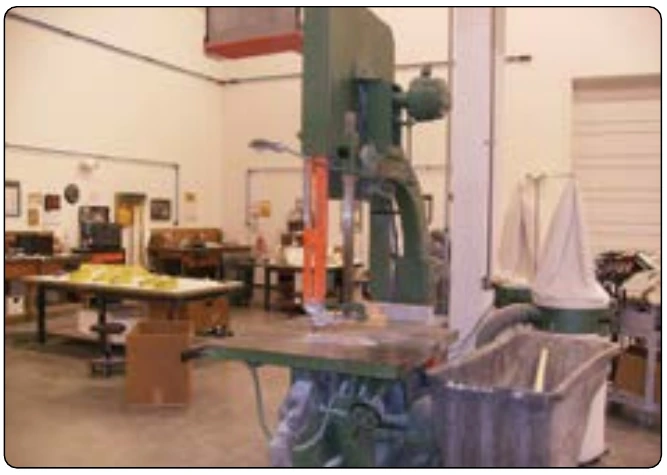
The bandsaw is the equipment that is most often used in a repair shop for cutting composite materials. A toothless carbide or diamond-coated saw blade is recommended. A typical saw blade with teeth does not last long if carbon fiber or fiberglass is cut. [Figure 7-88] Air-driven hand tools, such as routers, saber saws, die grinders, and cut-off wheels can be used to trim composite parts. Carbide or diamond-coated cutting tools produce a better finish and they last much longer. Specialized shops have ultrasonic, waterjet, and laser cutters. These types of equipment are numerical controlled (NC) and produce superior edge and hole quality. A waterjet cutter cannot be used for honeycomb structure because it introduces water in the part. Do not cut anything else on equipment that is used for composites because other materials can contaminate the composite material.
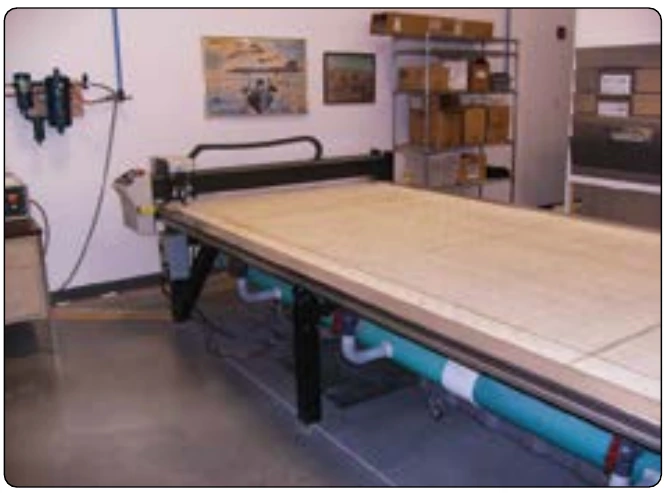
Prepreg materials can be cut with a CNC Gerber table. The use of this equipment speeds up the cutting process and optimizes the use of the material. Design software is available that calculates how to cut plies for complex shapes. [Figures 7-89]
Repair Safety
Advanced composite materials including prepreg, resin systems, cleaning solvents, and adhesives could be hazardous, and it is important that you use personal protection equipment. It is important to read and understand the Safety Data Sheets (SDS) and handle all chemicals, resins, and fibers correctly. The SDS lists the hazardous chemicals in the material system, and it outlines the hazards. The material could be a respiratory irritant or carcinogenic, or another kind of dangerous substance.
Eye Protection
Always protect eyes from chemicals and flying objects. Wear safety glasses at all times and, when mixing or pouring acids, wear a face shield. Never wear corrective contact lenses in a shop, even with safety glasses. Some of the chemical solvents can melt the lenses and damage eyes. Dust can also get under the lenses, causing damage.
Respiratory Protection
Do not breathe carbon fiber dust and always ensure that there is a good flow of air where the work is performed. Always use equipment to assist in breathing when working in a confined space. Use a vacuum near the source of the dust to remove the dust from the air. When sanding or applying paint, you need a dust mask or a respirator. A properly fitted dust mask provides the protection needed. For application of paints, a sealed respirator with the correct filters or a fresh air supply respirator is required.
Downdraft Tables
A downdraft table is an efficient and economical device for protecting workers from harmful dust caused by sanding and grinding operations. The tables are also useful housekeeping tools because the majority of particulate material generated by machining operations is immediately collected for disposal. Downdraft tables should be sized and maintained to have an average face velocity between 100 and 150 cubic feet per minute. The downdraft table draws contaminants like dust and fibers away from the operator’s material. Downdraft tables should be monitored and filters changed on a regular basis to provide maximum protection and particulate collection.
Skin Protection
During composite repair work, protect your skin from hazardous materials. Chemicals could remain on hands that burn sensitive skin. Always wear gloves and clothing that offer protection against toxic materials. Use only approved gloves that protect skin and do not contaminate the composite material. Always wash hands prior to using the toilet or eating. Damaged composite components should be handled with care. Single fibers can easily penetrate the skin, splinter off, and become lodged in the skin.