
Chapter 7
Advanced Composite Materials
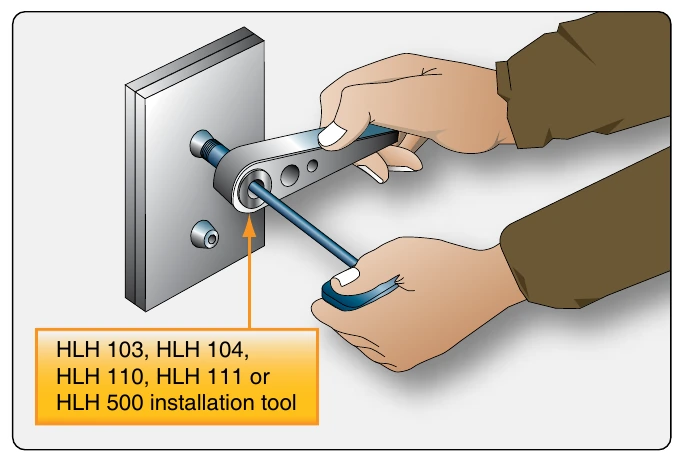
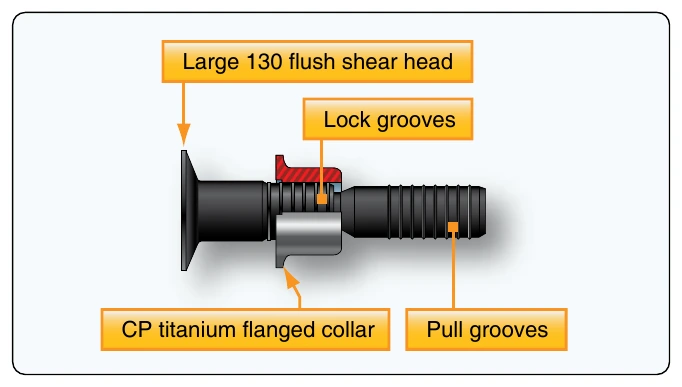
Cherry’s E-Z Buck® (CSR90433) Hollow Rivet
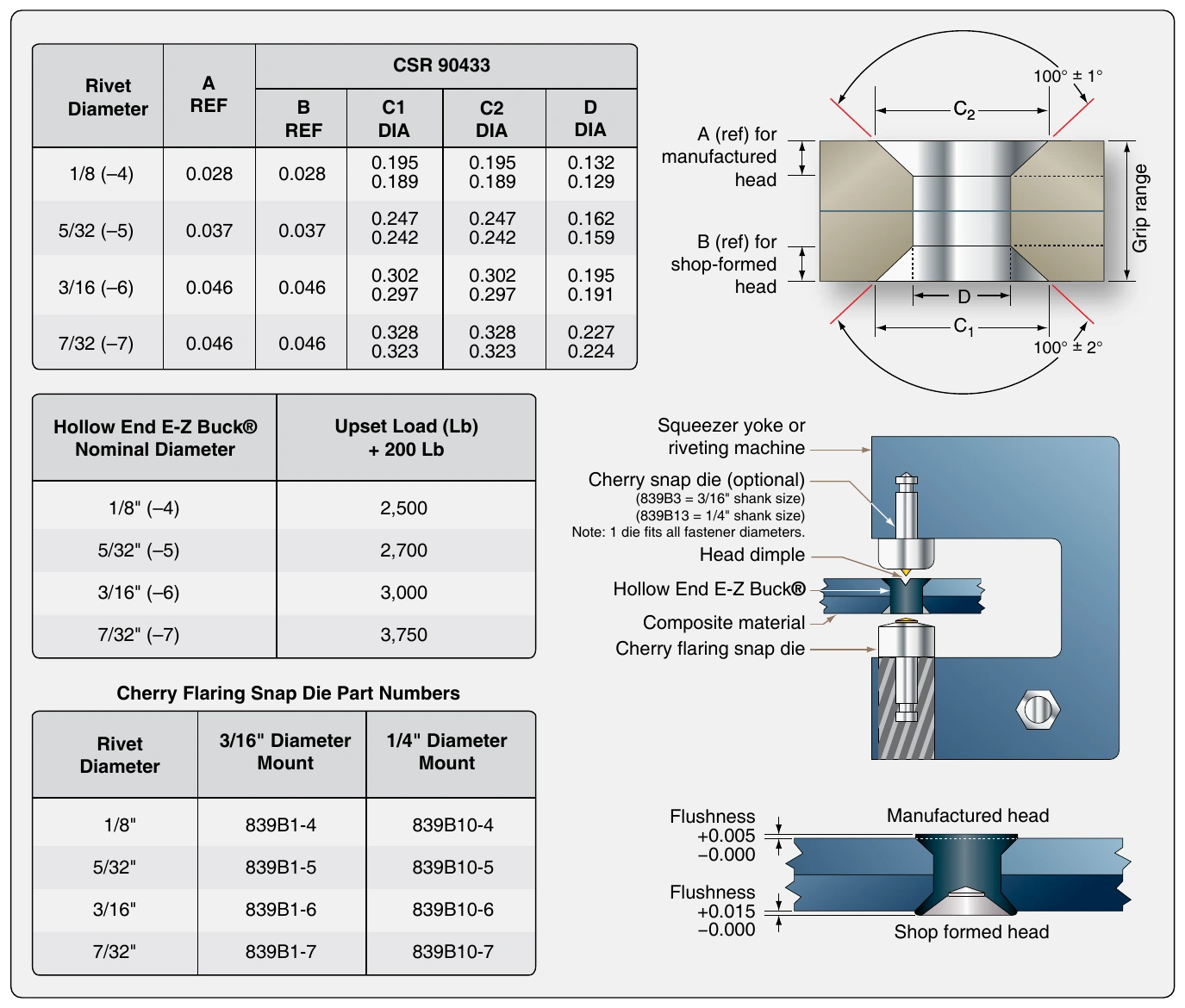
The Cherry Hollow End E-Z Buck® rivet is made from titanium/columbium alloy and has a shear strength of 40 KSI. The E-Z Buck® rivet is designed to be used in a double flush application for fuel tanks. The main advantage of this type of rivet is that it takes less than half the force of a solid rivet of the same material. The rivets are installed with automated riveting equipment or a rivet squeezer. Special optional dies ensure that the squeezer is always centered during installation, avoiding damage to the structure. [Figure 7-82]
Blind Fasteners
Composite structures do not require as many fasteners as metal aircraft because stiffeners and doublers are co-cured with the skins, eliminating many fasteners. The size of panels on aircraft has increased in composite structures, which causes backside inaccessibility. Therefore, blind fasteners or screws and nutplates must be used in these areas. Many manufacturers make blind fasteners for composite structures; a few are discussed below.
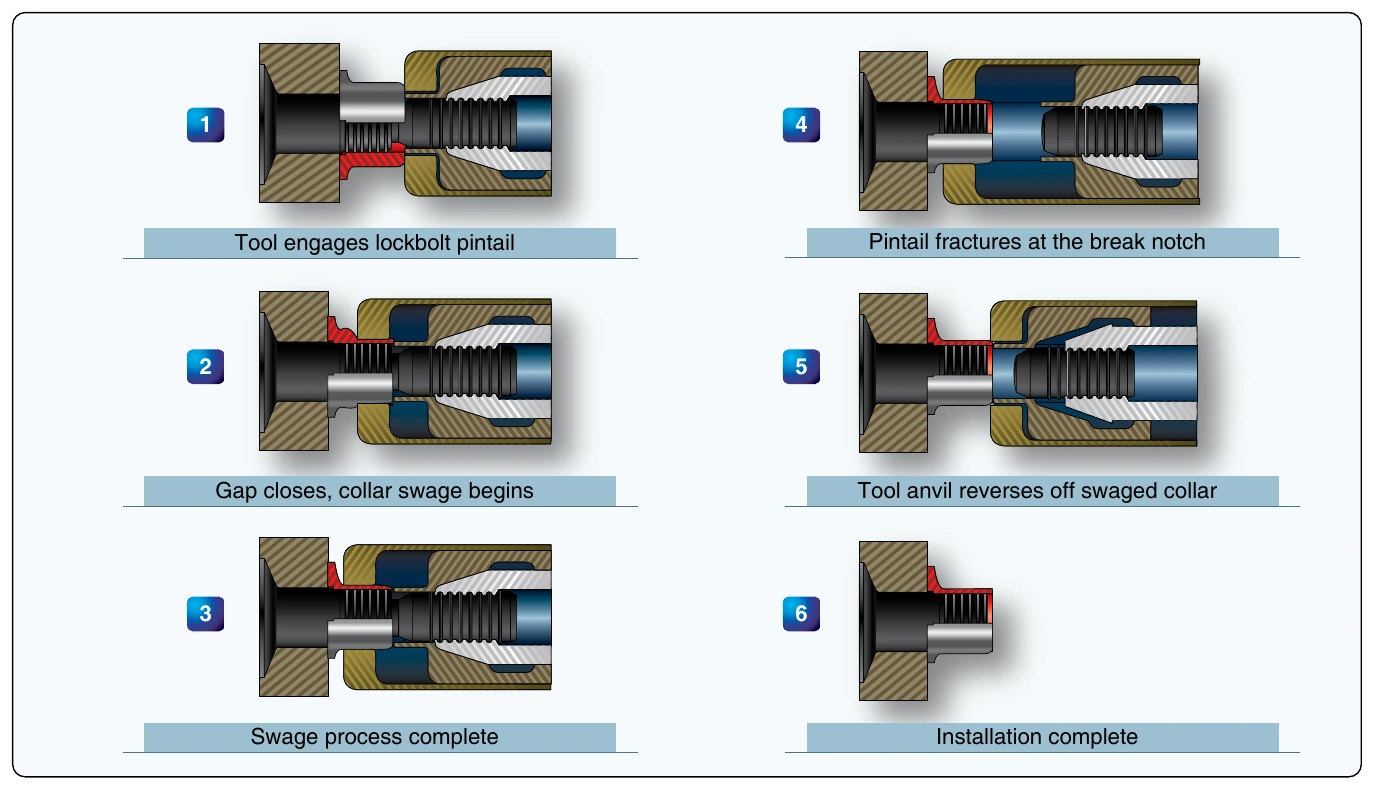
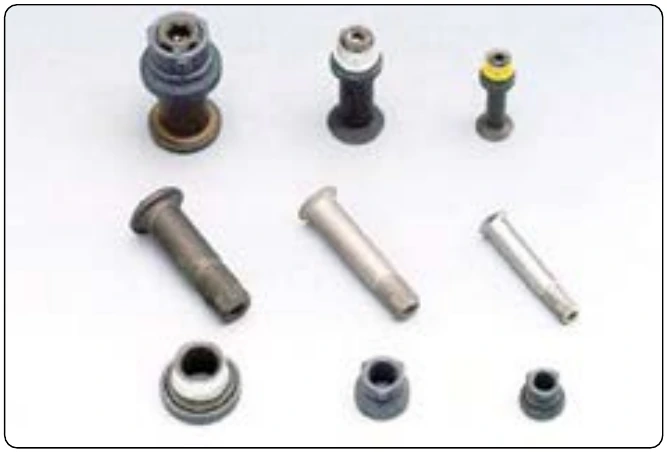
Blind Bolts
The Cherry Maxibolt® is available in titanium for compatibility with composite structures. The shear strength of the Maxibolt® is 95 KSI. It can be installed from one side with a G-83 or equivalent pneumatic-hydraulic installation tool, and is available in 100° flush head, 130° flush head and protruding head styles. [Figure 7-83]
The Alcoa UAB™ blind bolt system is designed for composite structures and is available in titanium and stainless steel. The UAB™ blind bolt system is available in 100° flush head, 130° flush head, and protruding head styles.
The Accu-Lok™ Blind Fastening System is designed specifically for use in composite structures in which access is limited to one side of the structure. It combines high joint preload with a large diameter footprint on the blind side.
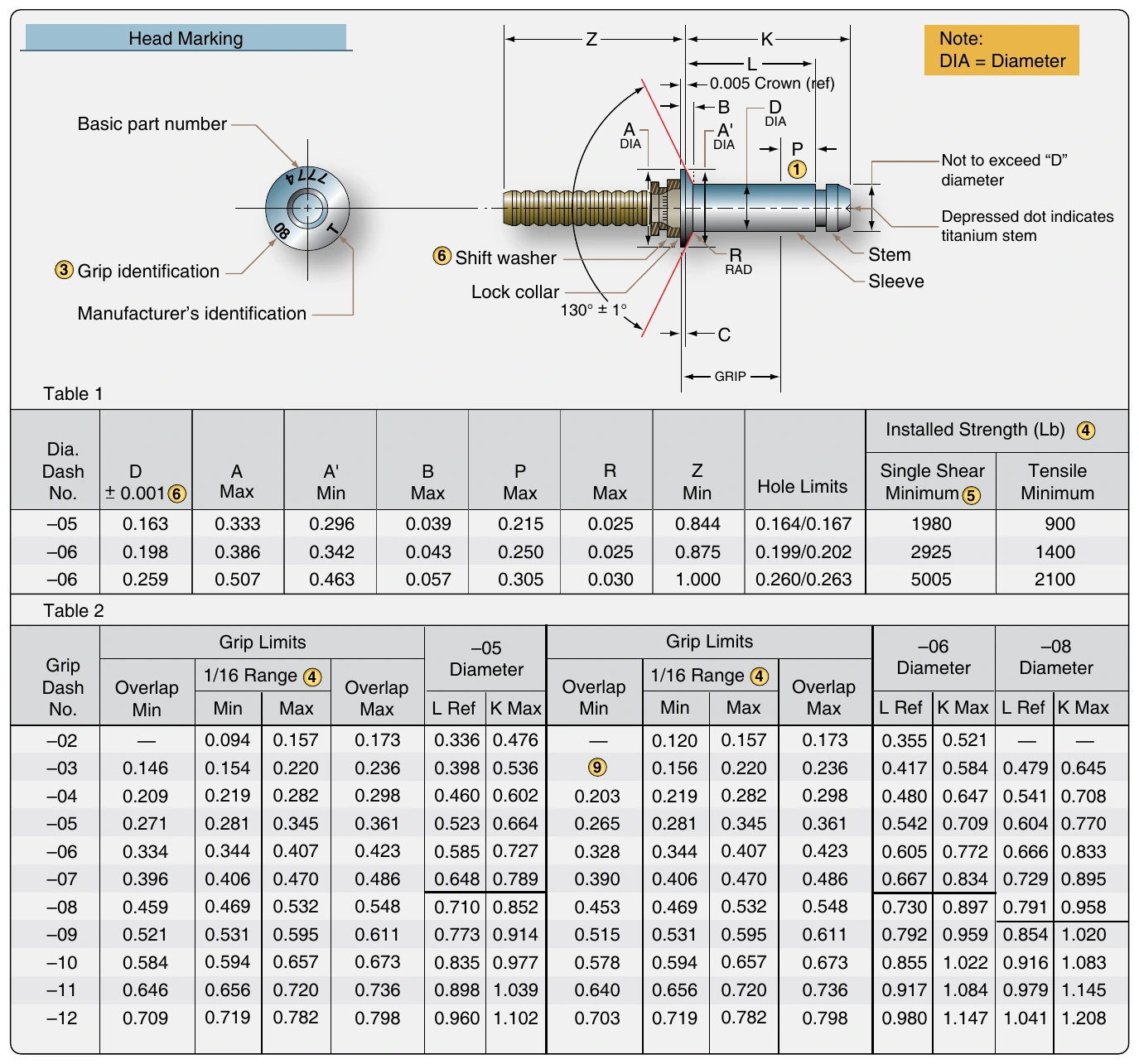
The large footprint enables distribution of the joint preload over a larger area, virtually eliminating the possibility of delaminating the composite structure. The shear strength of the Accu-Lok™ is 95 KSI, and it is available in 100° flush head, 130° flush head, and protruding head styles. A similar fastener designed by Monogram is called the Radial-Lok®. [Figure 7-84]
Fiberlite
The fiberlite fastening system uses composite materials for a wide range of aerospace hardware. The strength of fiberlite fasteners is equivalent to aluminum at two-thirds the weight. The composite fastener provides good material compatibility with carbon fiber and fiberglass.
Screws & Nutplates in Composite Structures
The use of screws and nutplates in place of Hi-Loks® or blind fasteners is recommended if a panel must be removed periodically for maintenance. Nutplates used in composite structures usually require three holes: two for attachment of the nutplate and one for the removable screw, although rivetless nut plates and adhesive bonded nutplates are available that do not require drilling and countersinking two extra holes.