
Chapter 8
Aircraft Painting & Finishing
Some tools that are available to the painter include:
- Masking paper/tape dispenser that accommodates various widths of masking paper. It includes a masking tape dispenser that applies the tape to one edge of the paper as it is rolled off to facilitate one person applying the paper and tape in a single step.
- Electronic and magnetic paint thickness gauges to measure dry paint thickness.
- Wet film gauges to measure freshly applied wet paint.
- Infrared thermometers to measure coating and substrate surfaces to verify that they fall in the recommended temperature range prior to spraying.
Spray Guns
A top quality spray gun is a key component in producing a quality finish in any coating process. It is especially important when painting an aircraft because of the large area and varied surfaces that must be sprayed.
When spray painting, it is of utmost importance to follow the manufacturer’s recommendations for correct sizing of the air cap, fluid tip, and needle combinations. The right combination provides the best coverage and the highest quality finish in the shortest amount of time.
All of the following examples of the various spray guns (except the airless) are of the air atomizing type. They are the most capable of providing the highest quality finish.
Siphon-Feed Gun
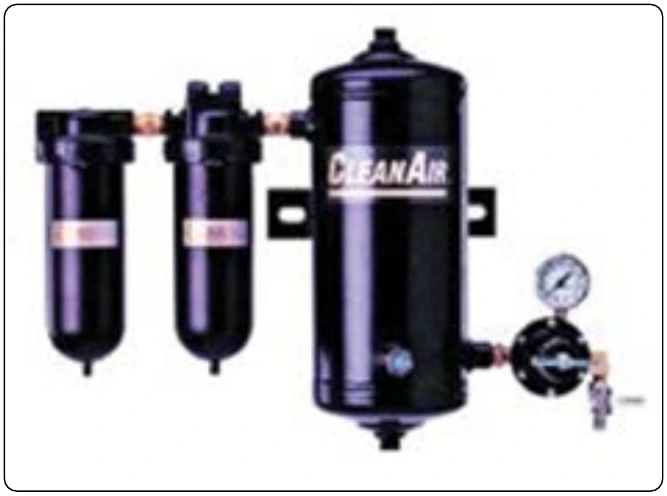
The siphon-feed gun is a conventional spray gun familiar to most people, with a one quart paint cup located below the gun. Regulated air passes through the gun and draws (siphons) the paint from the supply cup. This is an external mix gun, which means the air and fluid mix outside the air cap. This gun applies virtually any type coating and provides a high quality finish. [Figure 8-4]
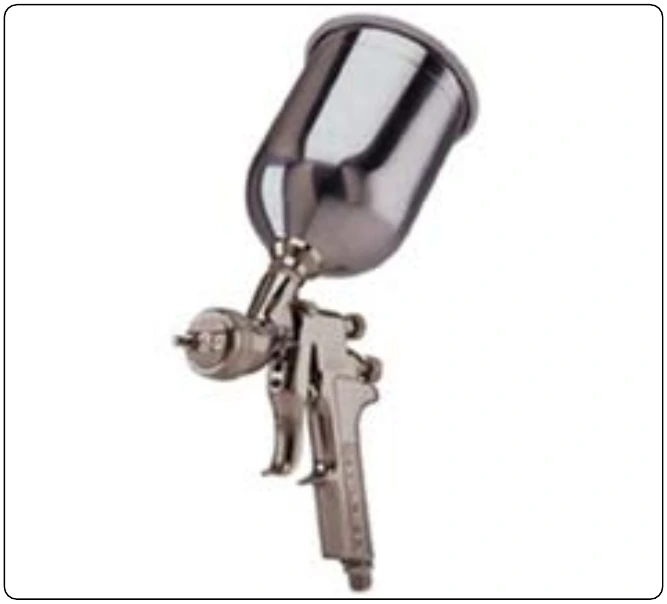
Gravity-Feed Gun
A gravity-feed gun provides the same high-quality finish as a siphon-feed gun, but the paint supply is located in a cup on top of the gun and supplied by gravity. The operator can make fine adjustments between the atomizing pressure and fluid flow and utilize all material in the cup. This also is an external mix gun. [Figure 8-5]
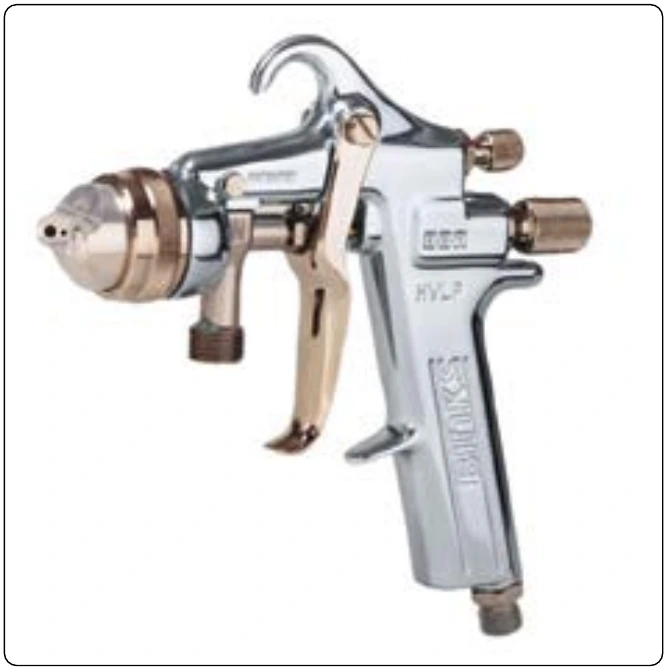
The HVLP production spray gun is an internal mix gun. The air and fluid is mixed inside the air cap. Because of the low pressure used in the paint application, it transfers at least 65 percent and upwards of 80 percent of the finish material to the surface. HVLP spray guns are available with a standard cup located underneath or in a gravity-feed model with the cup on top. The sample shown can be connected with hoses to a remote paint material container holding from 2 quarts to 60 gallons. [Figure 8-6]
Because of more restrictive EPA regulations, and the fact that more paint is being transferred to the surface with less waste from overspray, a large segment of the paint and coating industry is switching to HVLP spray equipment.
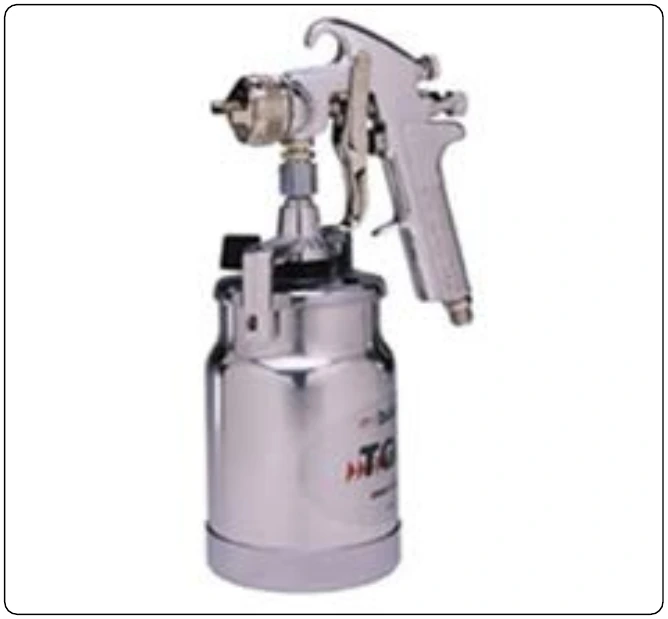
Airless spraying does not directly use compressed air to atomize the coating material. A pump delivers paint to the spray gun under high hydraulic pressure (500 to 4,500 psi) to atomize the fluid. The fluid is then released through an orifice in the spray nozzle. This system increases transfer efficiency and production speed with less overspray than conventional air atomized spray systems. It is used for production work but does not provide the fine finish of air atomized systems. [Figure 8-7]