
Chapter 14
Human Factors
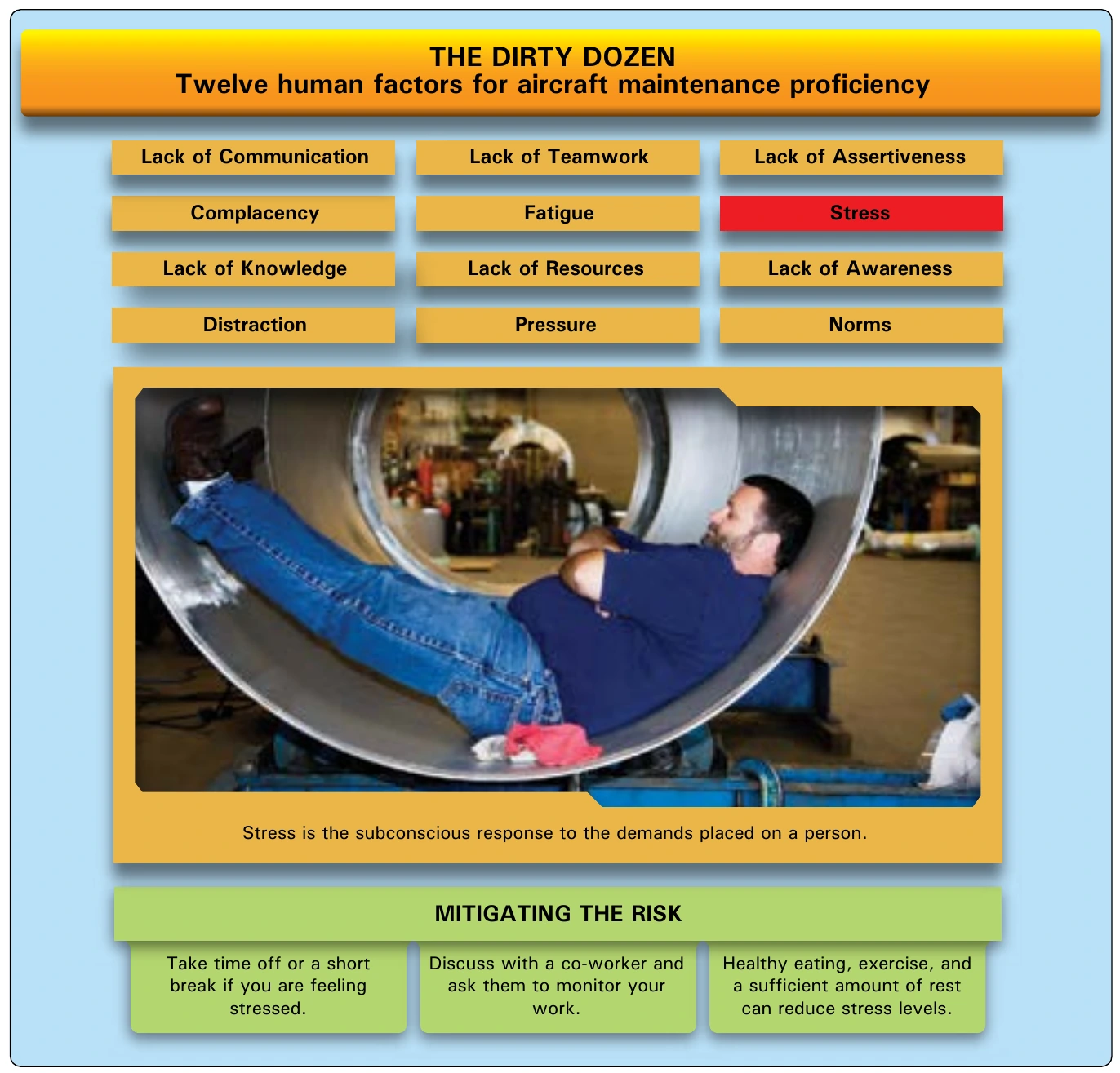
Some norms are unsafe in that they are non-productive or detract from the productivity of the group. Taking shortcuts in aircraft maintenance, working from memory, or not following procedures are examples of unsafe norms. Newcomers are better able to identify these unsafe norms than long-standing members of the group. On the other hand, the newcomer’s credibility depends on their assimilation into the group. The newcomer’s assimilation, however, depends on adherence to the group norms. Everyone should be aware of the perceptiveness of newcomers in identifying unhealthy norms and develop a positive attitude toward the possibility that norms may need to be changed. Finally, as newcomers become assimilated into the group structure, they build credibility with others. Once this has been done, a relative newcomer may begin to institute change within the group. Unfortunately, such actions are often difficult to do and rely heavily on the group’s perception of the newcomer’s credibility.
Norms have been identified as one of the dirty dozen in aviation maintenance and a great deal of anecdotal evidence points to the use of unsafe norms on the line. The effect of unsafe norms may range from the relatively benign, such as determining accepted meeting times, to the inherently unsafe, such as signing off on incomplete maintenance tasks. Any behavior commonly accepted by the group, whether as a standard operating procedure (SOP) or not, can be a norm. Supervisors need to ensure that everyone adheres to the same standards and that unsafe norms are not tolerated. AMTs should pride themselves on following procedure, rather than unsafe norms that may have been adopted as regular practice.
Aviation Authority (CAA) conducted in-depth studies of maintenance sites on aviation maintenance operations. The following list is what they found to be the most common occurring maintenance errors.
- Incorrect installation of components.
- Fitting of wrong parts.
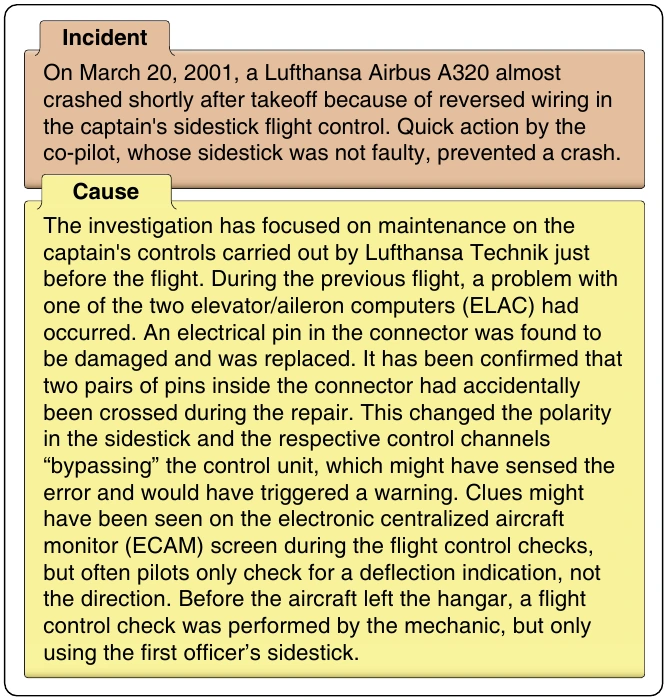
- Electrical wiring discrepancies to include crossing connections. [Figure 14-32]
- Forgotten tools and parts.
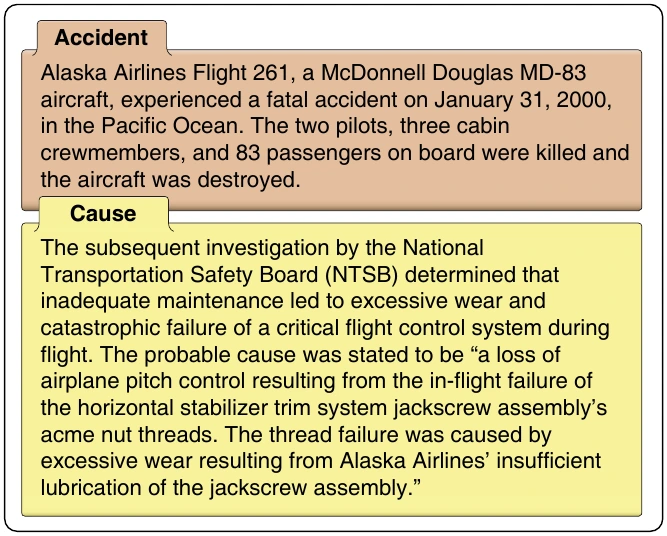
- Failure to lubricate. [Figure 14-33]
- Failure to secure access panels, fairings, or cowlings.
- Fuel or oil caps and fuel panels not secured.
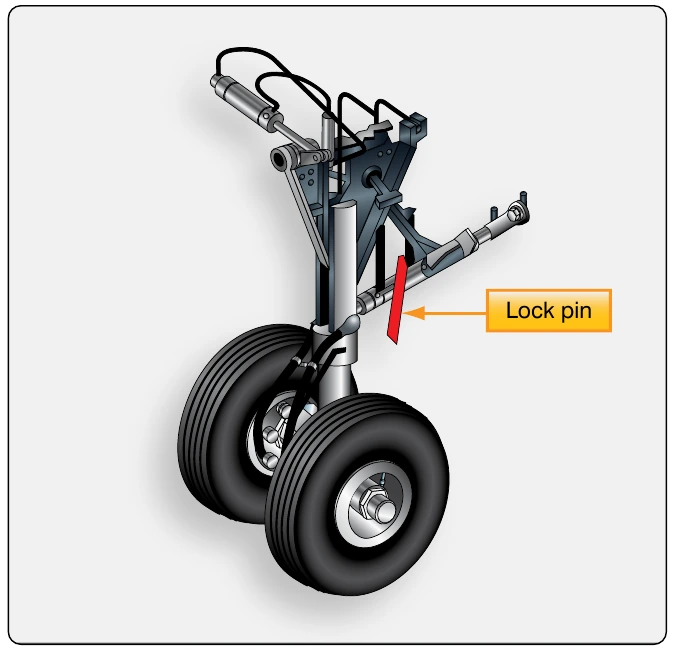
- Failure to remove lock pins. [Figure 14-34]
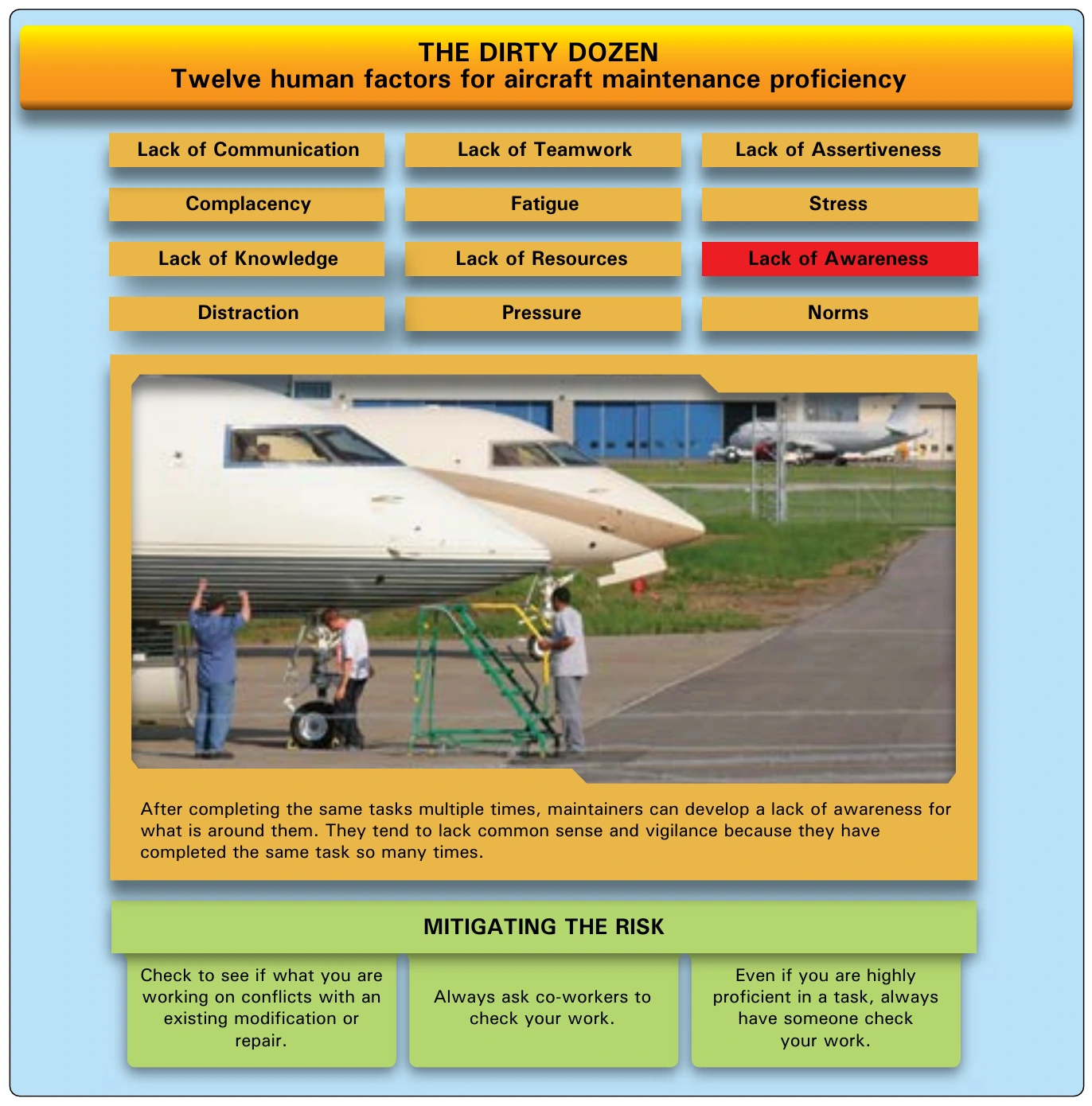
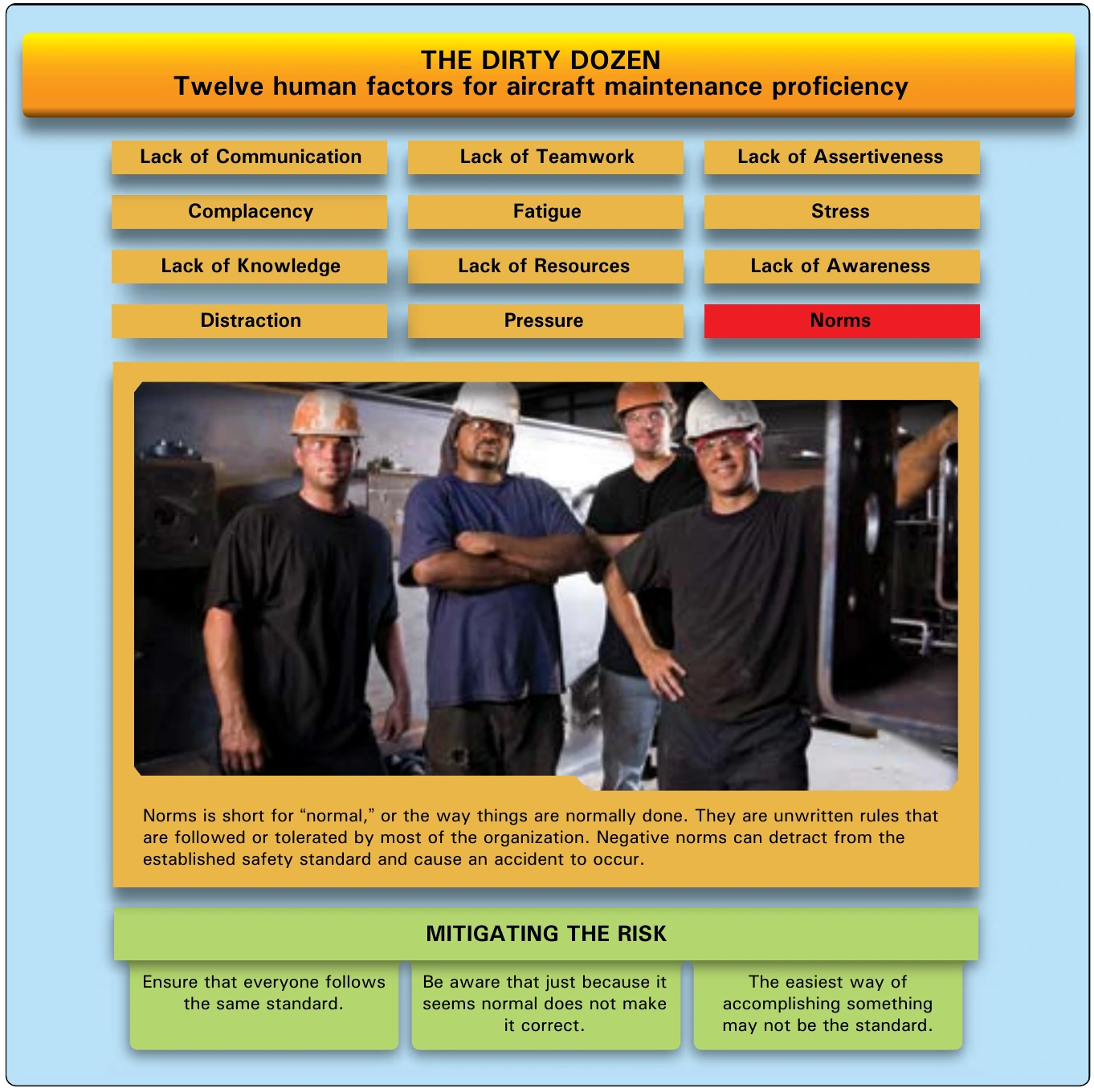
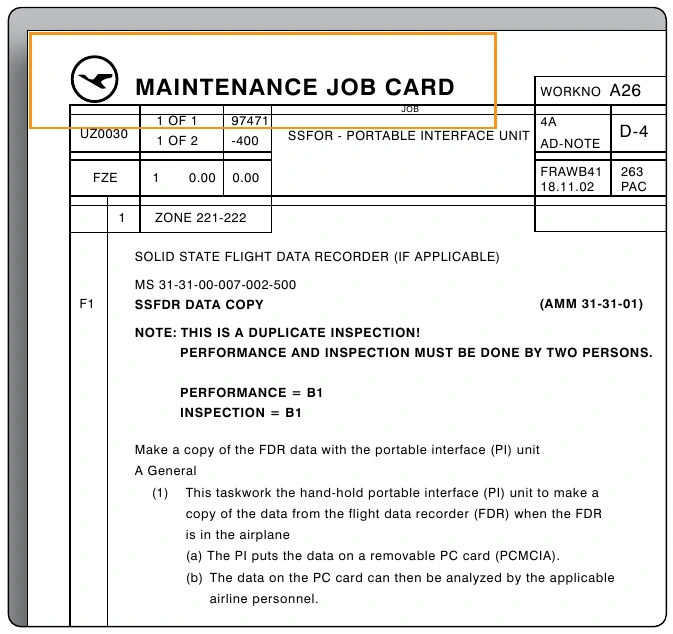
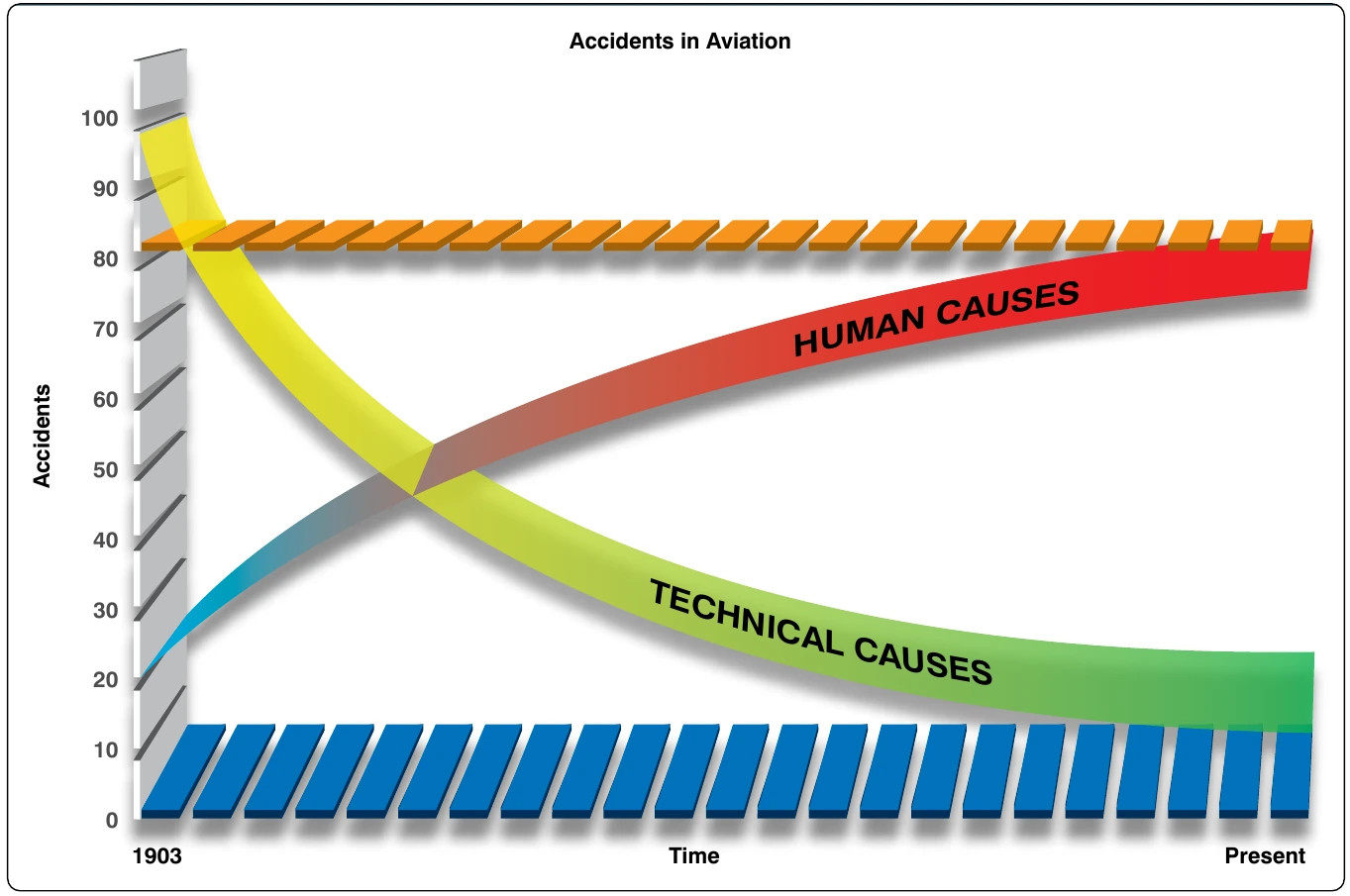
All of the maintenance discrepancies listed above can be avoided if the proper procedures are followed on the job card that is being used. [Figure 14-35] Regardless of how many times the task has been completed, each time you Historically, twenty percent of all accidents are caused by a machine failure, and eighty percent by human factors. [Figure 14-36] Originally focusing on the pilot community, human factors awareness has now spread into the training sphere of maintenance technicians. An in-depth review of an aviation incident reveals time and again that a series of human errors (known also as a chain of events) was allowed to build until the accident occurred. If the chain of events is broken at the maintenance level, the likelihood of the accident occurring can be drastically decreased. Figure 14-37 is a list of maintenance-related incidents/accidents and their causes. It is easy to see how many of the “Dirty Dozen” contributed to the causes or were considered contributing factors.
Where to Get Information
Following is a list of websites and references that are good sources of information on human factors.
FAA. The most direct link for aviation maintenance human factors is the FAA Human Factors website at [hf.faa.gov](http://hf.faa.gov). It offers document access and services, including most of the FAA maintenance human factors documents dating back to the 1988 start of FAA’s maintenance human factors research and development program. New documents include videos, PowerPoint presentations, and other media.
The FAA has sponsored a multi-disciplinary subject matter expert work group involving industry, labor, research, and government to investigate the issues associated with maintenance fatigue, and the practical science-based methods that can be used to manage fatigue risk. For more information, visit the website at [www.mxfatigue.com](http://www.mxfatigue.com).
featured courses and resources. For more information, visit the website at [www.faasafety.gov](http://www.faasafety.gov).