
Chapter 2
Regulations, Maintenance Forms, Records, & Publications
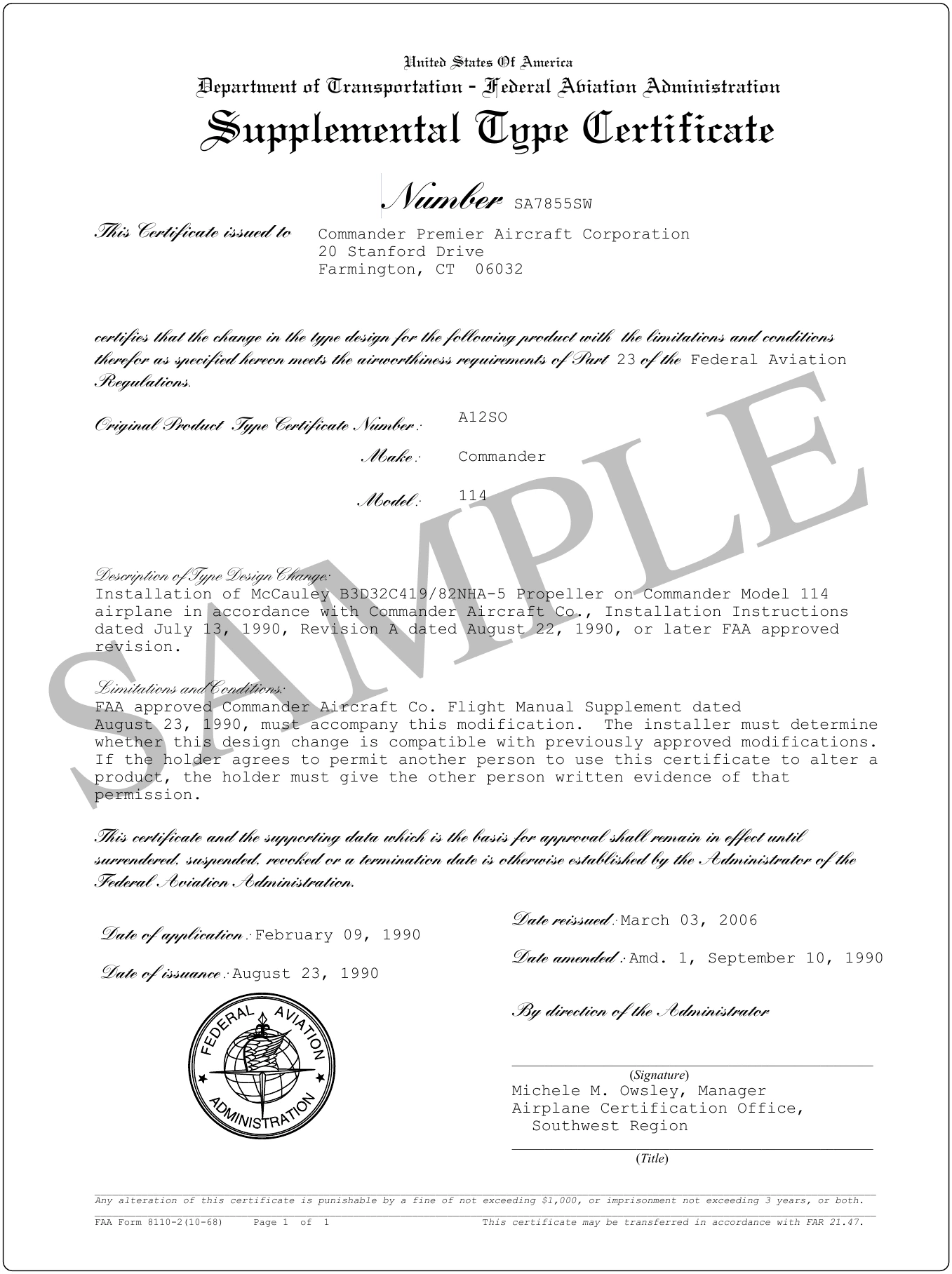
Possession of the STC document does not constitute rights to the design data or installation of the modification. The STC and its supporting data (drawings, instructions, specifications, and so forth) are the property of the STC holder. You must contact the STC holder to obtain rights for the use of the STC.
Type Certificate Data Sheets (TCDS)
The TCDS is a formal description of the aircraft, engine, or propeller. It lists limitations and information required for type certification including airspeed limits, weight limits, thrust limitations, and so forth.
TCDSs and specifications set forth essential factors and other conditions that are necessary for U.S. airworthiness certification. Aircraft, engines, and propellers that conform to a U.S. TC are eligible for U.S. airworthiness certification when found to be in a condition for safe operation and ownership requisites are fulfilled. [Figure 2-16]
TCDSs were originated and first published in January 1958. Title 14 of the CFR part 21, section 21.41 indicates they are part of the TC. As such, a TCDS is evidence the product has been type certificated. Generally, TCDSs are compiled from details supplied by the TC holder; however, the FAA may request and incorporate additional details when conditions warrant. [Figure 2-17]
Under federal law, no civil aircraft registered in the United States can operate without a valid airworthiness certificate. This certificate must be approved and issued by the FAA; and it is only issued if the aircraft and its engines, propellers, and appliances are found to be airworthy and meet the requirements of an FAA-approved TC. The FAA issues a TC when a new aircraft, engine, propeller, and so forth, is found to meet safety standards set forth by the FAA. The TCDS lists the specifications, conditions, and limitations that the airworthiness requirements were met under for the specified product, such as engine make and model, fuel type, engine limits, airspeed limits, maximum weight, minimum crew, and so forth. TCDSs are issued and revised as necessary to accommodate new models or other major changes in the certified product. TCDSs are categorized by TC holder and product type.
FAA Handbooks & Manuals
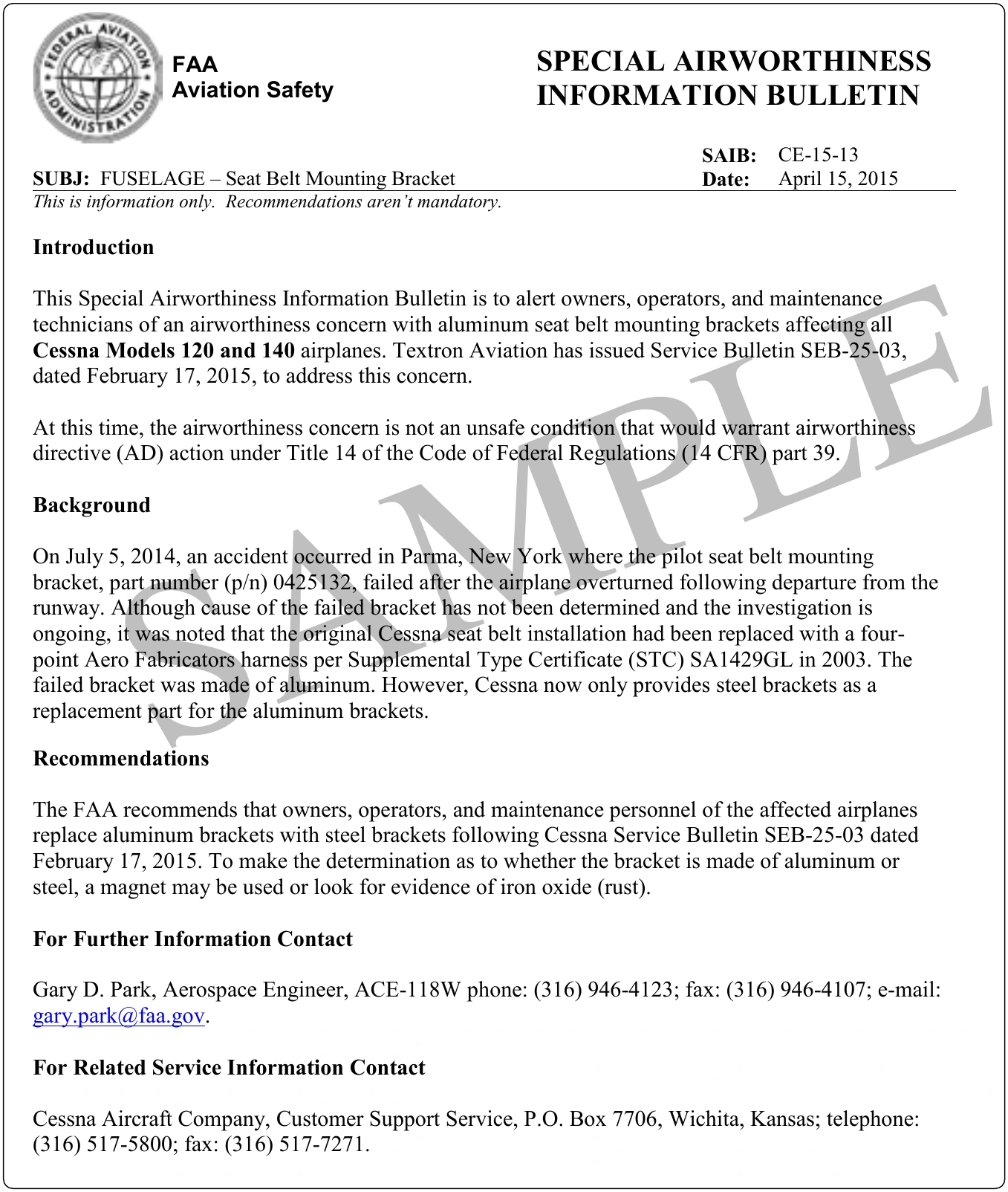
The FAA publishes handbooks and manuals for beginners and aviation professionals. Publications are updated periodically to reflect new FAA regulations and technical developments. Figure 2-18 shows a list of aircraft and aviation handbooks and manuals available on the FAA website ([www.faa.gov](http://www.faa.gov)).
Non-FAA Documents
Air Transport Association ATA iSpec 2200
To standardize the technical data and maintenance activities on large and therefore complex aircraft, the ATA e-Business Program has established a classification of maintenance related actions. These are arranged with sequential numbers assigned to ATA chapters. These chapters are consistent regardless of the large aircraft that is being worked on. [Figure 2-19]
Manufacturers’ Published Data
The original equipment manufacturer (OEM) is usually the best source of information for the operation of and maintenance on a particular product. If the product is a TC’d or STC’d item, 14 CFR part 21, section 21.50 requires the holder of the design approval to provide one set of complete ICAs. Additional requirements for ICAs are specified in sections 23.1529, 25.1529, 27.1529 and 29.1529. These sections further refer the reader to 14 CFR part 23, Appendix A; part 25, Appendix H; part 27, Appendix A; and part 29, Appendix A. Regardless of the appendix referred to, the requirements in the appendix for the ICA are as follows:
- General: The aircraft ICA must contain instructions for continued airworthiness for each engine, propeller, or appliance and the interface of those appliances and products with the aircraft.
- Format: The ICA must be in the form of a manual or manuals appropriate to the data being provided.
- Content: The manual contents must be in English and must include the following:
- Introductory information, including an explanation of the airplane’s features and data as necessary to perform maintenance or preventive maintenance
- A description of the aircraft and its systems, including engine, propeller, and appliances
- Basic operating information describing how the aircraft and its components are controlled
- Servicing information with such detail as servicing parts, tank capacities, types of fluid to be used, applicable pressures for the various systems, access panels for inspection and servicing, lubrication points, and types of lubricants to be used
The maintenance instructions must include the following data:
- Recommended schedule for cleaning, inspecting, adjusting, testing, and lubricating the various parts
- Applicable wear tolerances
1
- Recommended overhaul periods
- Details for an inspection program that identifies both the frequency and the extent of the inspections necessary to provide for continued airworthiness
- Troubleshooting information
- The order and method for proper removal and replacement of parts
- Procedures for system testing during ground operations
- Diagrams for structural access plates
- Details for application of special inspection techniques
- Information concerning the application of protective treatments after inspection
- Information relative to the structural fasteners
- List of any special tools needed