Chapter 3
Mathematics in Aviation Maintenance
When using a trigonometry table, find 30° in the first column. Next, find the value for sin 30° under the second column marked “sine” or “sin.” The value for sin 30° should be 0.5.
Pythagorean Theorem
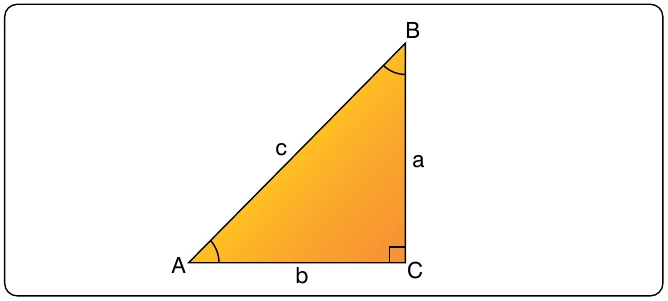
The Pythagorean Theorem is named after the ancient Greek mathematician, Pythagoras (~500 B.C.). This theorem is used to find the third side of any right triangle when two sides are
is one side of the triangle and “b” is the other side of the triangle.
Example: What is the length of the longest side of a right triangle, given the other sides are 7 inches and 9 inches? The longest side of a right triangle is always side “c,” the hypotenuse. Use the Pythagorean Theorem to solve for the length of side “c” as follows:
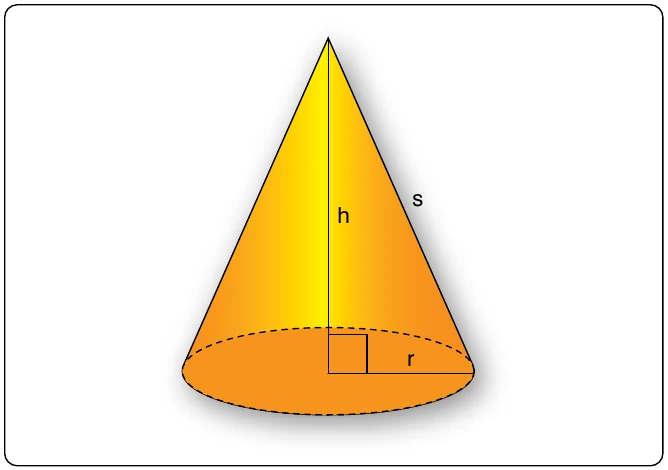
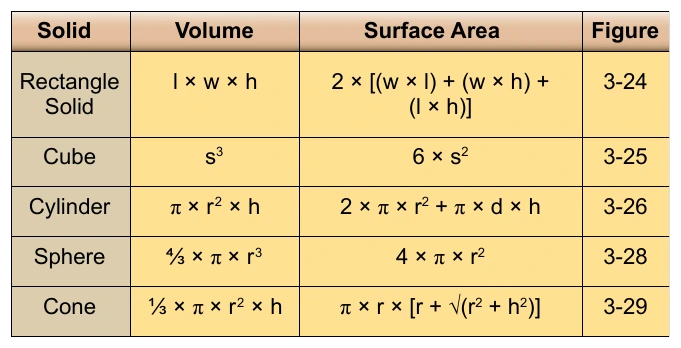
The diagonal distance across the cargo door opening is 8.9 feet, so the 8-foot wide square steel plate fits diagonally through the cargo door opening and into the airplane.
Measurement Systems
Conventional (U.S. or English) System
Our conventional (U.S. or English) system of measurement is part of our cultural heritage from the days when the thirteen colonies were under British rule. It started as a collection of Anglo-Saxon, Roman, and Norman-French weights and measures. For example, the inch represents the width of the thumb and the foot is from the length of the human foot. Tradition holds that King Henry I decreed that the yard should be the distance from the tip of his nose to the end of his thumb. Since medieval times, commissions appointed by various English monarchs have reduced the chaos of measurement by setting specific standards for some of the most important units. Some of the conventional units of measure are: inches, feet, yards, miles, ounces, pints, gallons, and pounds. Because the conventional system was not set up systematically, it contains a random collection of conversions. For example,
Metric System
The metric system, also known as the International System of Units (SI), is the dominant language of measurement used today. Its standardization and decimal features make it well-suited for engineering and aviation work.