
Chapter 8
Cleaning & Corrosion Control
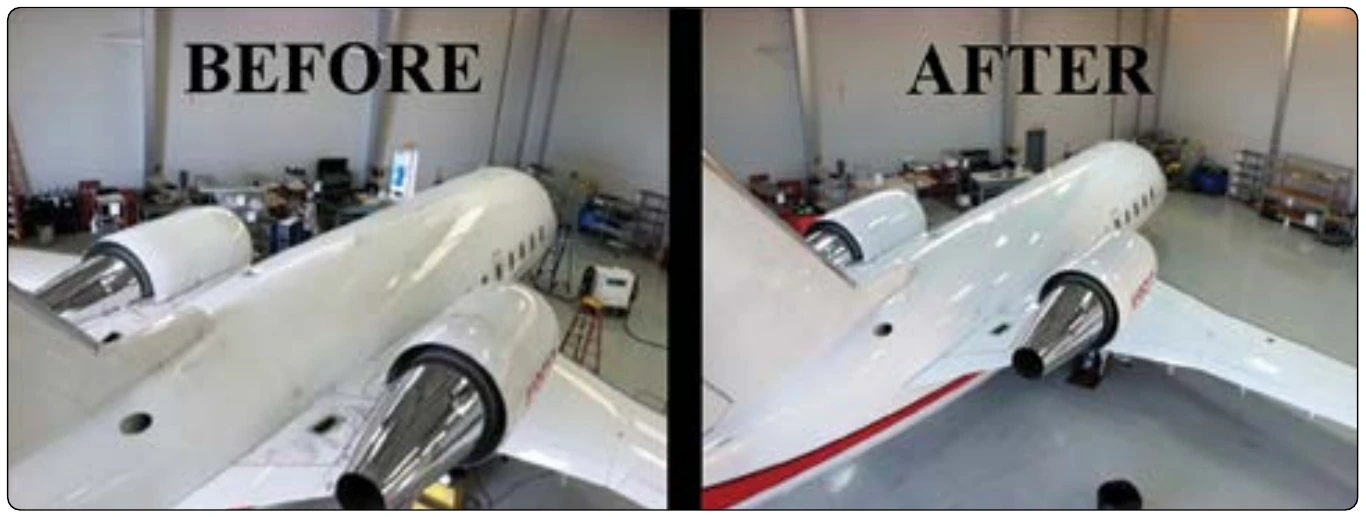
preventing corrosion.
The type and extent of soiling and the final desired appearance determine the cleaning method to be used.
Wet wash removes oil, grease, carbon deposits, and most soils, with the exception of corrosion and oxide films. The cleaning compounds used are generally applied by spray or mop. Then high-pressure running water is used as a rinse. Either alkaline or emulsion cleaners can be used in the wet wash method.
Dry wash is used to remove airport film, dust, and small accumulations of dirt and soil when the use of liquids is neither desirable nor practical. This method is not suitable for removing heavy deposits of carbon, grease, or oil, especially in the engine exhaust areas. Dry wash materials are applied with spray, mops, or cloths and removed by dry mopping or wiping with clean, dry cloths.
Polishing restores the luster to painted and unpainted surfaces of the aircraft and is usually performed after the surfaces have been cleaned. Polishing is also used to remove oxidation and corrosion. Polishing materials are available in various forms and degrees of abrasiveness. It is important that the aircraft manufacturer’s instructions be used in specific applications.
The washing of aircraft should be performed in the shade whenever possible, as cleaning compounds tend to streak the surface if applied to hot metal or are permitted to dry on the area. Install covers over all openings where water or cleaners might enter and cause damage. Pay particular attention to instrument system components, such as pitot-static fittings and ports.
Various areas of aircraft, such as the sections housing radar and the area forward of the flight deck that are finished with a flat-finish paint, must not be cleaned more than necessary and never scrubbed with stiff brushes or coarse rags. A soft sponge or cheesecloth with a minimum of manual rubbing is advisable. Any oil or exhaust stains on the surface must first be removed with a solvent, such as kerosene or other petroleum-based solvent. Rinse the surfaces immediately after cleaning to prevent the compound from drying on the surface.
Before applying soap and water to plastic surfaces, flush the plastic surfaces with fresh water to dissolve salt deposits and wash away dust particles. Plastic surfaces are to be washed with soap and water, preferably by hand.
Rinse with fresh water and dry with a chamois, synthetic wipes designed for use on plastic windshields, or absorbent cotton. In view of the soft surface, do not rub plastic with a dry cloth since this is not only likely to cause scratches, but it also builds up an electrostatic charge that attracts dust particles to the surface. The charge, as well as the dust, may be removed by patting or gently blotting with a clean, damp chamois. Do not use scouring powder or other material that can mar the plastic surface. Remove oil and grease by rubbing gently with a cloth wet with soap and water. Do not use acetone, benzene, carbon tetrachloride, lacquer thinners, window cleaning sprays, gasoline, fire extinguisher, or deicer fluid on plastics, because they soften the plastic and cause crazing. Finish cleaning the plastic by coating with a plastic polish intended for aircraft windows and windshields. These polishes can minimize small surface scratches and also help keep static charges from building up on the surface of the windows.
Surface oil, hydraulic fluid, grease, or fuel can be removed from aircraft tires by washing with a mild soap solution. After cleaning, lubricate all grease fittings, hinges, and so forth, where removal, contamination, or dilution of the grease is suspected during washing of the aircraft.
Interior Cleaning
Keeping the interior of the aircraft clean is just as important as maintaining a clean exterior surface. Corrosion can establish itself on the inside structure to a greater degree, because it is difficult to reach some areas for cleaning. Nuts, bolts, bits of wire, or other metal objects carelessly dropped and neglected, combined with moisture and dissimilar metal contact, can cause electrolytic corrosion.
When performing structural work inside the aircraft, clean up all metal particles and other debris as soon as possible. To make cleaning easier and prevent the metal particles and debris from getting into inaccessible areas, use a drop cloth in the work area to catch this debris. A vacuum cleaner can be used to pick up dust and dirt from the interior of the flight deck and cabin.
Aircraft interior present certain problems during cleaning operations due to the fact that aircraft cabin compartments are relatively small enclosures. The possibility of restricted ventilation and quick buildup of flammable vapor/air mixtures can occur when there is any indiscriminate use of flammable cleaning agents or solvents. Additionally, there may also exist the possibility of an ignition source from concurrent maintenance work in the form of an electrical fault, friction or static spark, an open flame device, etc.
Wherever possible, use nonflammable agents in these operations to reduce to the minimum the fire and explosion hazards.
Types of Cleaning Operations
The principal areas of aircraft cabins that may need periodic cleaning are:
- Aircraft passenger cabin areas (seats, carpets, side panels, headliners, overhead racks, curtains, ash trays, windows, doors, decorative panels of plastic, wood, or similar materials)
- Aircraft flight station areas (similar materials to those found in passenger cabin areas plus instrument panels, control pedestals, glare shields, flooring materials, metallic surfaces of instruments and flight control equipment, electrical cables and contacts, and so forth)
- Lavatories and buffets (similar materials to those found in passenger cabin areas plus toilet facilities, metal fixtures and trim, trash containers, cabinets, wash and sink basins, mirrors, ovens, and so forth)