
Chapter 8
Cleaning & Corrosion Control
Corrosion, however slight, is damage. Therefore, corrosion damage is classified under the four standard types, as is any other damage. These types are negligible damage, damage repairable by patching, damage repairable by insertion, and damage necessitating replacement of parts.
The term “negligible” does not imply that little or nothing is to be done. The corroded surface must be cleaned, treated, and painted as appropriate. Negligible damage, generally, is corrosion that has scarred or eaten away the surface protective coats and begun to etch the metal. Corrosion damage extending to classifications of “repairable by patching” and “repairable by insertion” must be repaired in accordance with the applicable structural repair manual. When corrosion damage exceeds the damage limits to the extent that repair is not possible, the component or structure must be replaced.
Processes & Materials Used in Corrosion Control
Metal Finishing
Aircraft parts are almost always given some type of surface finish by the manufacturer. The main purpose is to provide corrosion resistance; however, surface finishes may also be applied to increase wear resistance or to provide a suitable base for paint.
In most instances, the original finishes described in the following paragraphs cannot be restored in the field due to unavailable equipment or other limitations. However, an understanding of the various types of metal finishes is necessary if they are to be properly maintained in the field and if the partial restoration techniques used in corrosion control are to be effective.
Surface Preparation
Original surface treatments for steel parts usually include a cleaning treatment to remove all traces of dirt, oil, grease, oxides, and moisture. This is necessary to provide an effective bond between the metal surface and the final finish. The cleaning process may be either mechanical or chemical. In mechanical cleaning, the following methods are employed: wire brush, steel wool, emery cloth, sandblasting, or vapor blasting.
Chemical cleaning is preferred over mechanical since none of the base metal is removed by cleaning. There are various chemical processes now in use, and the type used depends on the material being cleaned and the type of foreign matter being removed.
Steel parts are pickled to remove scale, rust, or other foreign matter, particularly before plating. The pickling solution can be either muriatic (hydrochloric) or sulfuric acid. Cost wise, sulfuric acid is preferable, but muriatic acid is more effective in removing certain types of scale. The pickling solution is kept in a stoneware tank and is usually heated by means of a steam coil. Parts not to be electroplated after pickling are immersed in a lime bath to neutralize the acid from the pickling solution.
Electrocleaning is another type of chemical cleaning used to remove grease, oil, or organic matter. In this cleaning process, the metal is suspended in a hot alkaline solution containing special wetting agents, inhibitors, and materials to provide the necessary electrical conductivity. An electric current is then passed through the solution in a manner similar to that used in electroplating.
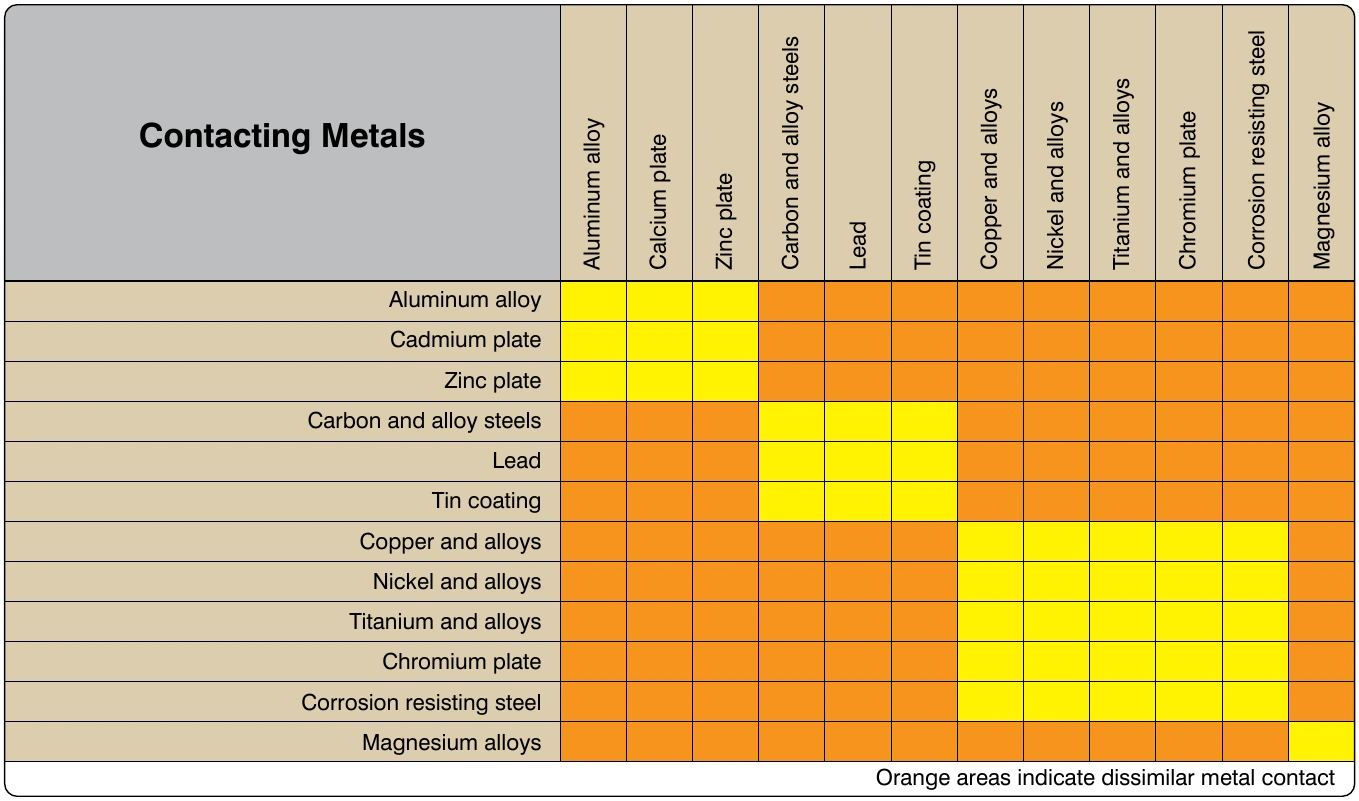
corrosion.
Aluminum and magnesium parts are also cleaned by using some of the foregoing methods. Blast cleaning, using abrasive media, is not applicable to thin aluminum sheets, particularly Alclad. Steel grits are not used on aluminum or corrosion resistant metals.
Polishing, buffing, and coloring of metal surfaces play a very important part in the finishing of metal surfaces. Polishing and buffing operations are sometimes used when preparing a metal surface for electroplating, and all three operations are used when the metal surface requires a high luster finish.
Chemical Treatments
Anodizing
Anodizing is the most common surface treatment of nonclad aluminum alloy surfaces. It is typically done in specialized facilities in accordance with MIL-DTL-5541F or AMS-C-5541A. The aluminum alloy sheet or casting is the positive pole in an electrolytic bath in which chromic acid or other oxidizing agent produces an aluminum oxide film on the metal surface. Aluminum oxide is naturally protective. Anodizing merely increases the thickness and density of the natural oxide film. When this coating is damaged in service, it can only be partially restored by chemical surface treatments. Therefore, when an anodized surface is cleaned including corrosion removal, the technician must avoid unnecessary destruction of the oxide film. The anodized coating provides excellent resistance to corrosion. The coating is soft and easily scratched, making it necessary to use extreme caution when handling it prior to coating it with primer.
Aluminum wool, nylon webbing impregnated with aluminum oxide abrasive, fine grade, nonwoven abrasive pads, or fiber bristle brushes are the approved tools for cleaning anodized surfaces. The use of steel wool, steel wire brushes, or harsh abrasive materials on any aluminum surface is prohibited. Producing a buffed or wire brush finish by any means is also prohibited. Otherwise, anodized surfaces are treated in much the same manner as other aluminum finishes.
In addition to its corrosion resistant qualities, the anodic coating is also an excellent bond for paint. In most cases, parts are primed and painted as soon as possible after anodizing. The anodic coating is a poor conductor of electricity; therefore, if parts require bonding, the coating is removed where the bonding wire is to be attached. Alclad surfaces that are to be left unpainted require no anodic treatment; however, if the Alclad surface is to be painted, it is usually anodized to provide a bond for the paint.