
Chapter 2
Engine Fuel & Fuel Metering Systems
- Float chamber mechanism system,
- Main metering system,
- Idling system,
- Mixture control system,
- Accelerating system, and
- Economizer system.
Float Chamber Mechanism System
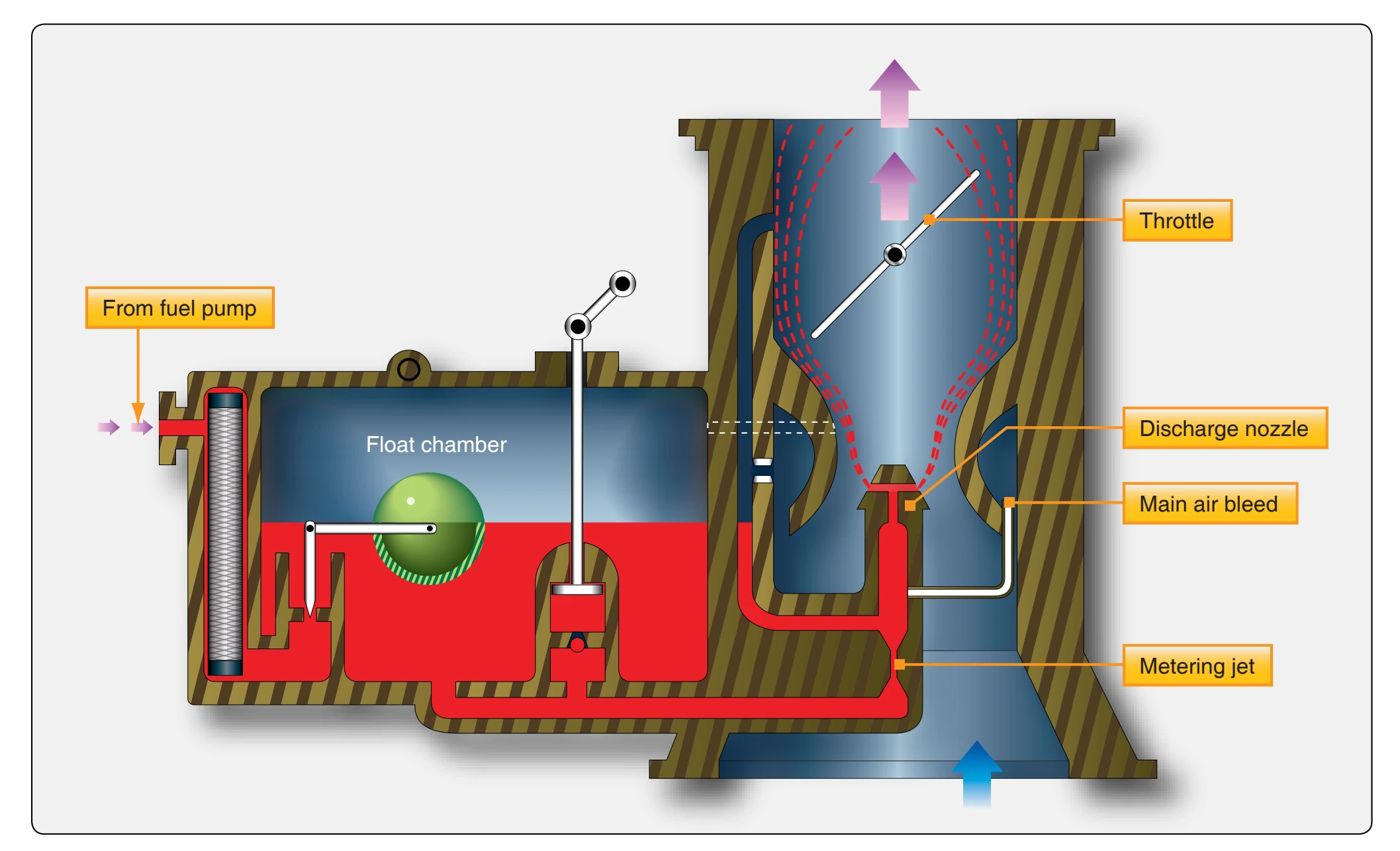
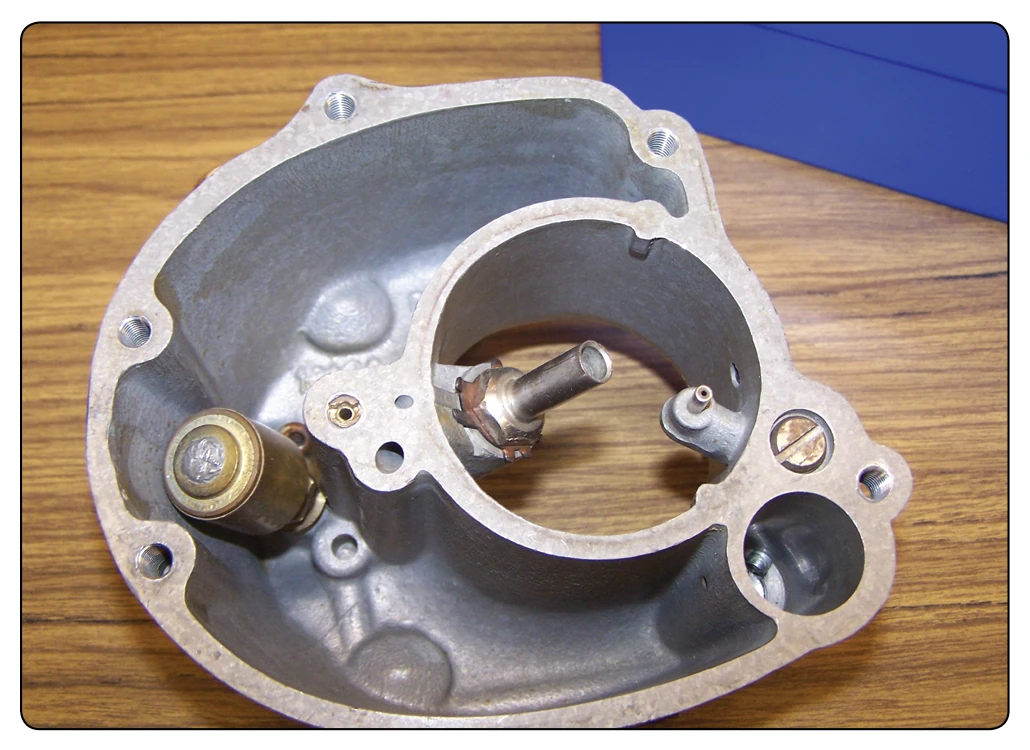
A float chamber is provided between the fuel supply and the main metering system of the carburetor. The float chamber, or bowl, serves as a reservoir for fuel in the carburetor. [Figure 2-11] This chamber provides a nearly constant level of fuel to the main discharge nozzle which is usually about 1⁄ " below the holes in the main discharge nozzle. The fuel 8 level must be maintained slightly below the discharge nozzle outlet holes to provide the correct amount of fuel flow and to prevent fuel leakage from the nozzle when the engine is not operating.
The level of fuel in the float chamber is kept nearly constant by means of a float-operated needle valve and a seat. The needle seat is usually made of bronze. The needle valve is constructed of hardened steel, or it may have a synthetic rubber section which fits the seat. With no fuel in the float chamber, the float drops toward the bottom of the chamber and allows the needle valve to open wide. As fuel is admitted from the supply line, the float rises (floats in the fuel) and closes the needle valve when the fuel reaches a predetermined level. When the engine is running, and fuel is being drawn out of the float chamber, the valve assumes an intermediate position so that the valve opening is just sufficient to supply the required amount of fuel and keep the level constant. [Figure 2-10] If fuel is found leaking from the discharge nozzle of the carburetor when the engine is not running, the most likely cause is that the float needle valve and seat is leaking and needs to be replaced.
With the fuel at the correct level (float chamber), the discharge rate is controlled accurately by the air velocity through the carburetor venturi where a pressure drop at the discharge nozzle causes fuel to flow into the intake airstream. Atmospheric pressure on top of the fuel in the float chamber
forces the fuel out the discharge nozzle. A vent or small opening in the top of the float chamber allows air to enter or leave the chamber as the level of fuel rises or falls.
Main Metering System
The main metering system supplies fuel to the engine at all speeds above idling and consists of:
- Venturi,
- Main metering jet,
- Main discharge nozzle,
- Passage leading to the idling system, and
- Throttle valve.
Since the throttle valve controls the mass airflow through the carburetor venturi, it must be considered a major unit in the main metering system as well as in other carburetor systems. A typical main metering system is illustrated in Figure 2-12. The venturi performs three functions:
- Proportions the air-fuel mixture,
- Decreases the pressure at the discharge nozzle, and
- Limits the airflow at full throttle.
The fuel discharge nozzle is located in the carburetor barrel so that its open end is in the throat or narrowest part of the
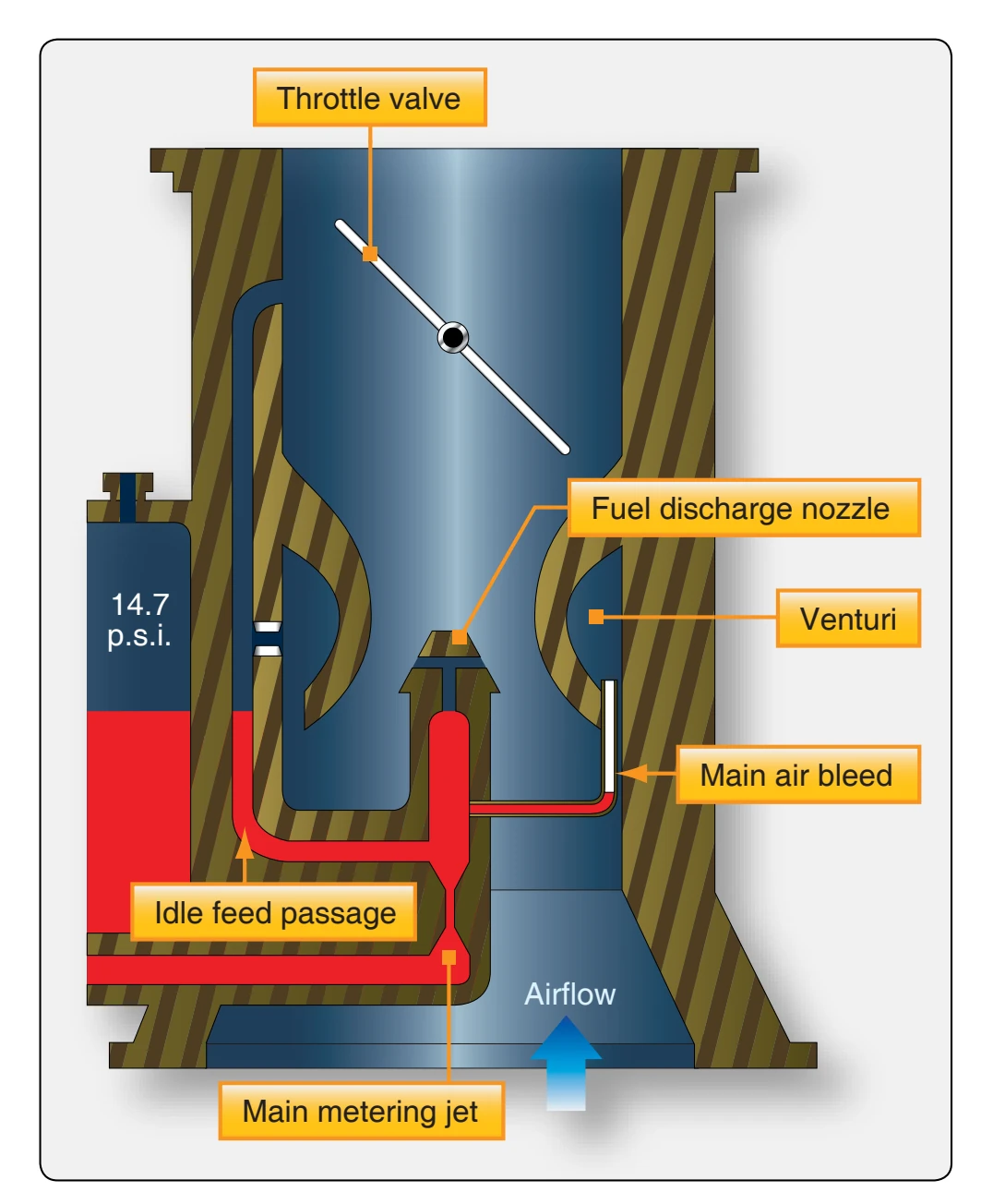
venturi. A main metering orifice, or jet, is placed in the fuel passage between the float chamber and the discharge nozzle to limit the fuel flow when the throttle valve is wide open.
When the engine crankshaft is revolved with the carburetor throttle open, the low pressure created in the intake manifold acts on the air passing through the carburetor barrel. Due to the difference in pressure between the atmosphere and the intake manifold, air flows from the air intake through the carburetor barrel into the intake manifold. The volume of airflow depends upon the degree of throttle opening. As the air flows through the venturi, its velocity increases. This velocity increase creates a low pressure area in the venturi throat. The fuel discharge nozzle is exposed to this low pressure. Since the float chamber is vented to atmospheric pressure, a pressure drop across the discharge nozzle is created. It is this pressure difference, or metering force, that causes fuel to flow from the discharge nozzle. The fuel comes out of the nozzle in a fine spray, and the tiny particles of fuel in the spray quickly vaporize in the air.
The metering force (pressure differential) in most carburetors increases as the throttle opening is increased. The fuel must be raised in the discharge nozzle to a level at which it discharges into the airstream. To accomplish this, a pressure differential of 0.5 "Hg is required. When the metering force is considerably reduced at low engine speeds, the fuel delivery from the discharge nozzle decreases if an air bleed (air metering jet) is not incorporated in the carburetor. The decrease in fuel flow in relation to airflow is due to two factors:
- The fuel tends to adhere to the walls of the discharge nozzle and break off intermittently in large drops instead of forming a fine spray.
- A part of the metering force is required to raise the fuel level from the float chamber level to the discharge nozzle outlet.