Chapter 24
Observations
-RASN FG HZ Light rain and (light) snow, fog, haze.
TS Thunderstorm (without precipitation).
+TSRA Thunderstorm, heavy rain.
+FC TSRAGR BR Tornado, thunderstorm, (moderate) rain, hail, mist.
24.4.3.9 Sky Condition Group
METAR KOKC 011955Z AUTO 22015G25KT 180V250 3/4SM R17L/2600FT +TSRA BR OVC010CB
18/16 A2992 RMK AO2 TSB25 TS OHD MOV E SLP132
Sky condition is a description of the appearance of the sky. It includes cloud cover, vertical visibility, or clear skies.
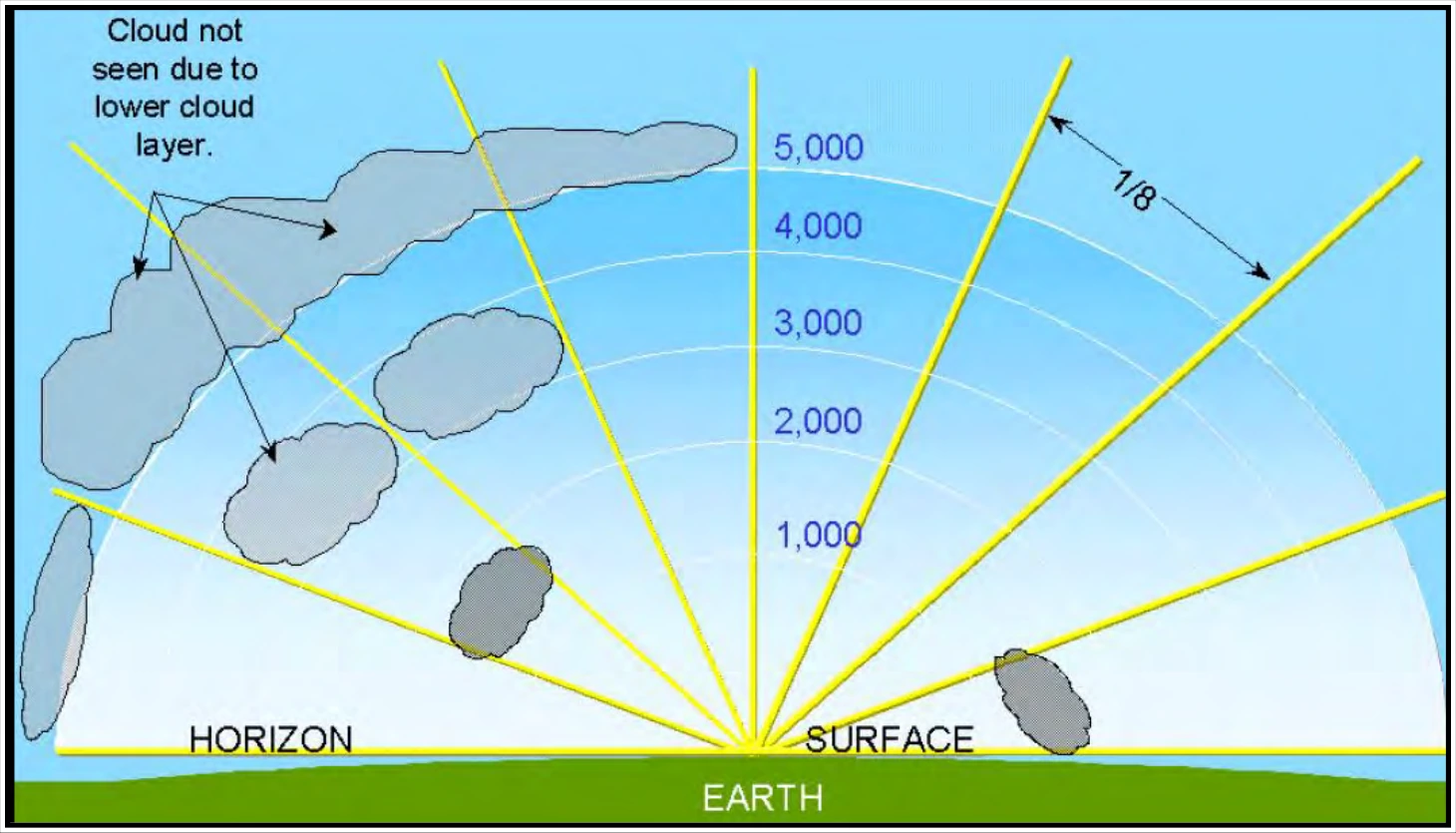
The sky condition group is based on the amount of cloud cover (the first three letters) followed by the height of the base of the cloud cover (final three digits). No space is between the amount of cloud cover and the height of the layer. The height of the layer is recorded in feet AGL.
Sky condition is coded in ascending order and ends at the first overcast layer. At mountain stations, if the layer is below station level, the height of the layer will be coded with three solidi (///).
Vertical visibility is coded as VV, followed by the vertical visibility into the indefinite ceiling. An “indefinite ceiling” is a ceiling classification applied when the reported ceiling value represents the vertical visibility upward into surface-based obscuration. No space is between the group identifier and the vertical visibility. Figure 24-3 illustrates the effect of an obscuration on the vision from a descending aircraft.
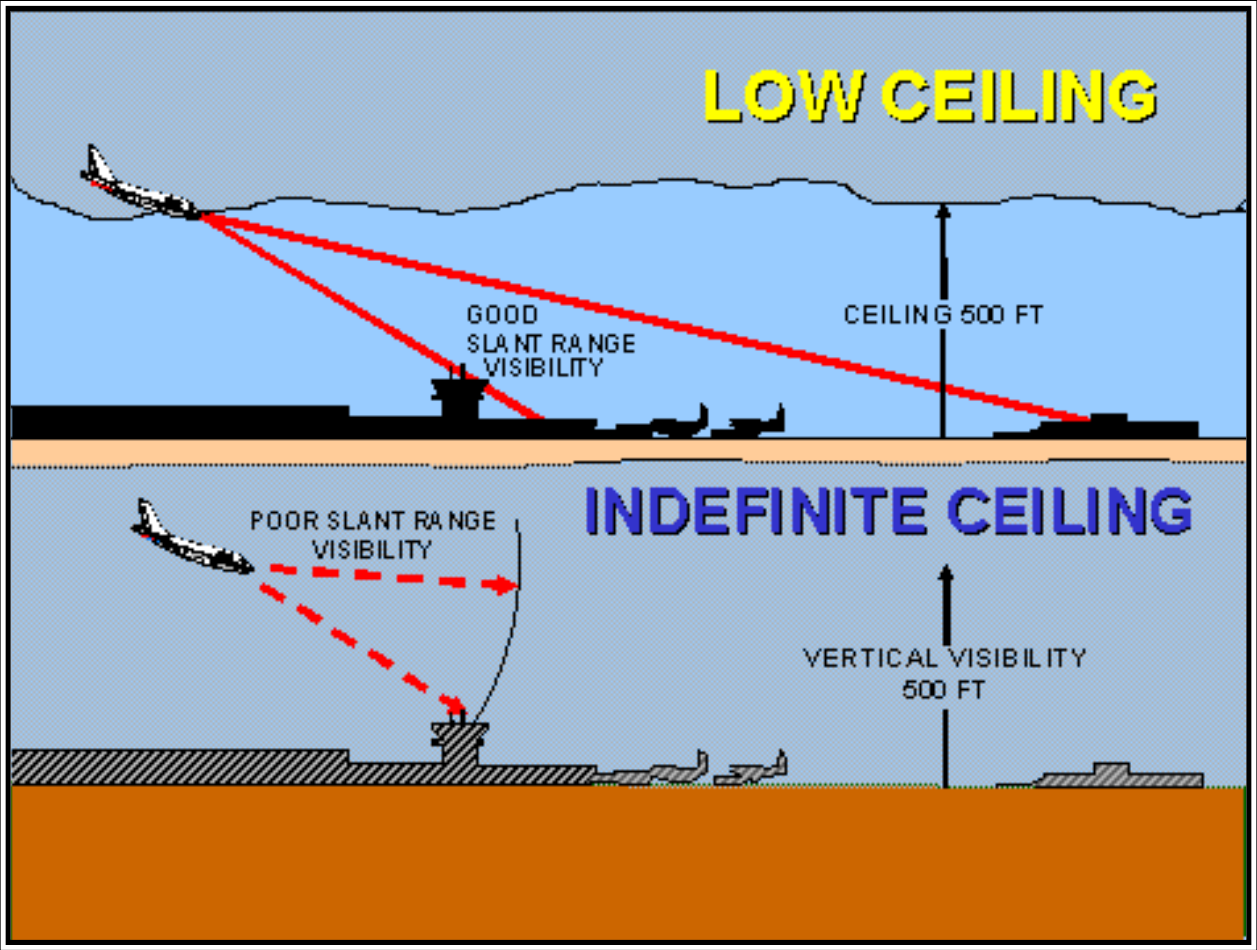
The ceiling is 500 ft in both examples, but the indefinite ceiling example (bottom) produces a more adverse impact to landing aircraft. This is because an obscuration (e.g., fog, blowing dust, snow) limits runway acquisition due to reduced slant range visibility. This pilot would be able to see the ground but not the runway. If the pilot was at approach minimums, the approach could not be continued, and a missed approach would need to be executed.
Clear skies are coded in the format SKC or CLR. When SKC is used, an observer indicates no layers are present; CLR is used by automated stations to indicate no layers are detected at or below 12,000 ft.
Each coded layer is separated from the others by a space. Each layer reported is coded by using the appropriate reportable contraction seen in Table 24-4. A report of clear skies (SKC or CLR) is a complete layer report within itself. The abbreviations FEW, SCT, BKN, and OVC will be followed (without a space) by the height of the layer.
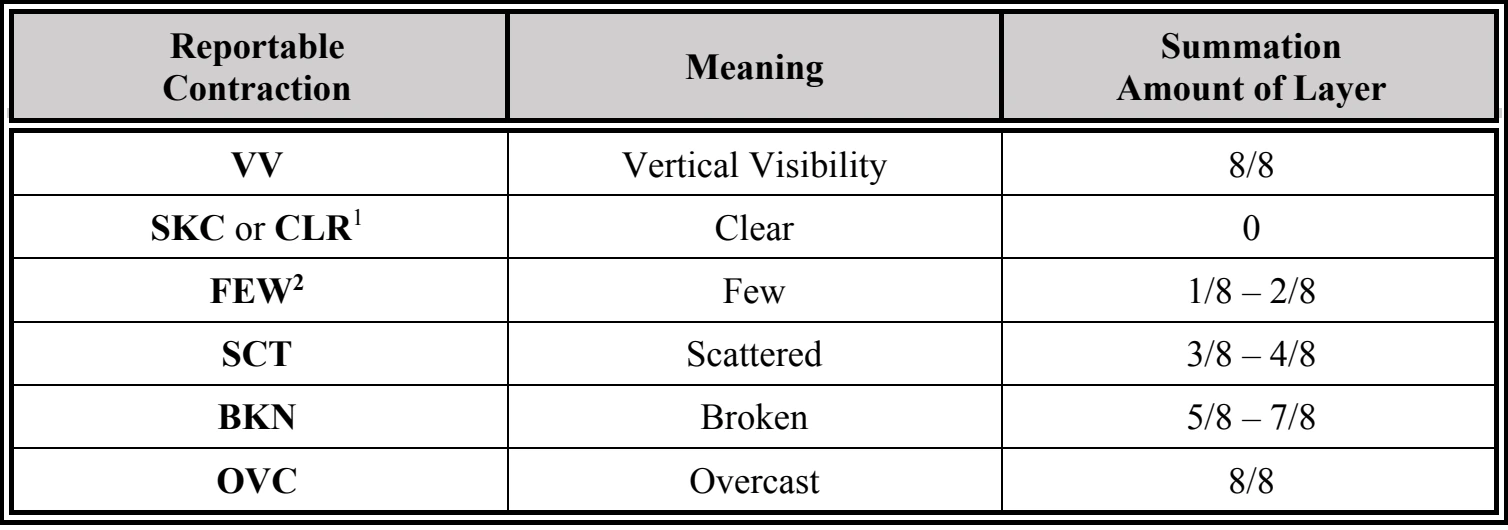
- The abbreviation CLR will be used at automated stations when no layers at or below 12,000 ft are reported; the abbreviation SKC will be used at manual stations when no layers are reported.
- Any layer amount less than 1/8 is reported as FEW.
The height is coded in hundreds of feet above the surface using three digits in accordance with Table 24-5.

The ceiling is the lowest layer aloft reported as broken or overcast. If the sky is totally obscured with ground-based clouds, the vertical visibility is the ceiling.