
Chapter 6
Airplane Attitude Instrument Flying
Pitch Attitude Instrument Cross-Check
The altimeter is an important instrument for indicating pitch attitude in level flight except when used in conditions of exceptionally strong vertical currents, such as thunderstorms. With proper power settings, any of the pitch attitude instruments can be used to hold reasonably level flight attitude. However, only the altimeter gives the exact altitude information. Regardless of which pitch attitude control instrument indicates a need for a pitch attitude adjustment, the attitude indicator, if available, should be used to make the adjustment. Common errors in pitch attitude control are:
- Overcontrolling;
- Improperly using power; and
- Failing to adequately cross-check the pitch attitude instruments and take corrective action when pitch attitude change is needed.
Bank Control
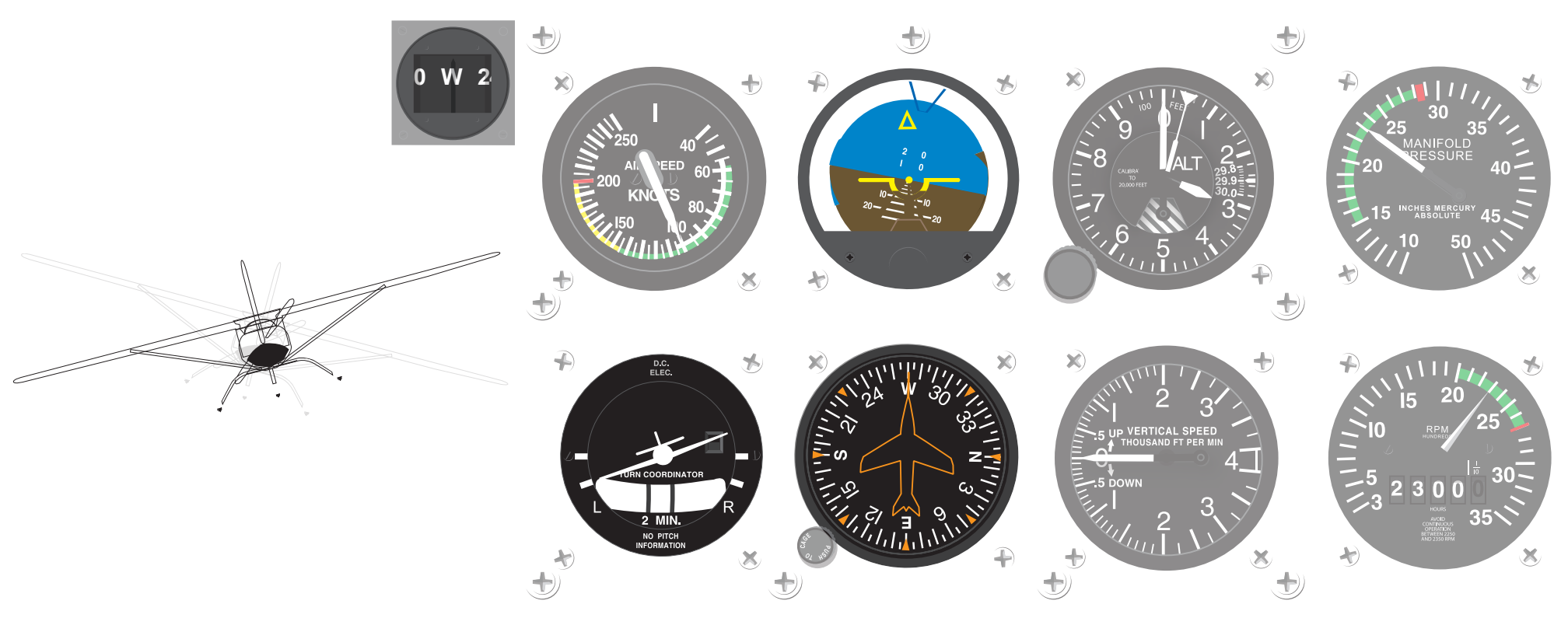
Bank control is controlling the angle made by the wing and the horizon. After interpreting the bank attitude from the appropriate instruments, exert the necessary pressures to move the ailerons and roll the aircraft about the longitudinal axis. As illustrated in Figure 6-11, these instruments include:
- Attitude indicator
- Heading indicator
- Magnetic compass
- Turn coordinator/turn-and-slip indicator
Attitude Indicator As previously discussed, the attitude indicator is the only instrument that portrays both instantly and directly the actual flight attitude and is the basic attitude reference.
Heading Indicator
The heading indicator supplies the pertinent bank and heading information and is considered a primary instrument for bank.
Magnetic Compass
The magnetic compass provides heading information and is considered a bank instrument when used with the heading indicator. Care should be exercised when using the magnetic compass as it is affected by acceleration, deceleration in flight caused by turbulence, climbing, descending, power changes, and airspeed adjustments. Additionally, the magnetic compass indication will lead and lag in its reading depending upon the direction of turn. As a result, acceptance of its indication should be considered with other instruments that indicate turn information. These include the already mentioned attitude and heading indicators, as well as the turn-and-slip indicator and turn coordinator.
Turn Coordinator/Turn-and-Slip Indicator
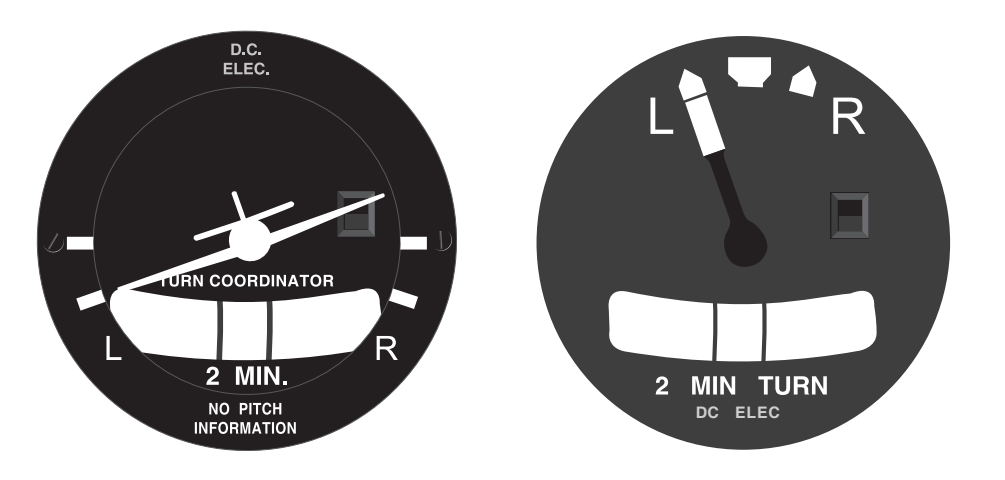
Both of these instruments provide turn information. [Figure 6-12] The turn coordinator provides both bank rate and then turn rate once stabilized. The turn-and-slip indicator provides only turn rate.
Power Control
A power change to adjust airspeed may cause movement around some or all of the aircraft axes. The amount and direction of movement depends on how much or how rapidly the power is changed, whether single-engine or multiengine airplane or helicopter. The effect on pitch attitude and airspeed caused by power changes during level flight is illustrated in Figures 6-13 and 6-14. During or immediately after adjusting the power control(s), the power instruments should be cross-checked to see if the power adjustment is as desired. Whether or not the need for a power adjustment is indicated by another instrument(s), adjustment is made by cross-checking the power instruments. Aircraft are powered by a variety of powerplants, each powerplant having certain instruments that indicate the amount of power being applied to operate the aircraft. During instrument flight, these instruments must be used to make the required power adjustments.
As illustrated in Figure 6-15, power indicator instruments include:
- Airspeed indicator
- Engine instruments