
Chapter 6
Airplane Attitude Instrument Flying
The airspeed indicator provides an indication of power best observed initially in level flight where the aircraft is in balance and trim. If in level flight the airspeed is increasing, it can generally be assumed that the power has increased, necessitating the need to adjust power or re-trim the aircraft.
Engine Instruments
Engine instruments, such as the manifold pressure (MP) indicator, provide an indication of aircraft performance for a given setting under stable conditions. If the power conditions are changed, as reflected in the respective engine instrument readings, there is an affect upon the aircraft performance, either an increase or decrease of airspeed. When the propeller rotational speed (revolutions per minute (RPM) as viewed on a tachometer) is increased or decreased on fixed-pitch propellers, the performance of the aircraft reflects a gain or loss of airspeed as well.
Trim Control
Proper trim technique is essential for smooth and accurate instrument flying and utilizes instrumentation illustrated in Figure 6-16. The aircraft should be properly trimmed while executing a maneuver. The degree of flying skill, which ultimately develops, depends largely upon how well the aviator learns to keep the aircraft trimmed.
Airplane Trim
An airplane is correctly trimmed when it is maintaining a desired attitude with all control pressures neutralized. By relieving all control pressures, it is much easier to maintain the aircraft at a certain attitude. This allows more time to devote to the navigation instruments and additional flight deck duties.
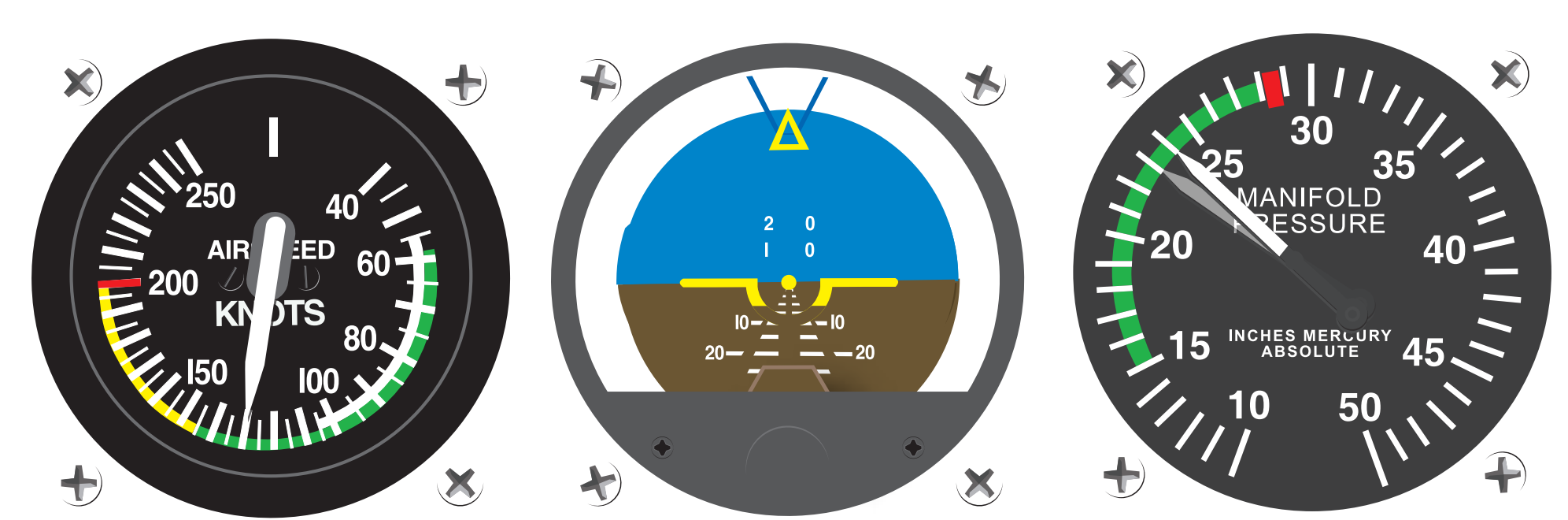
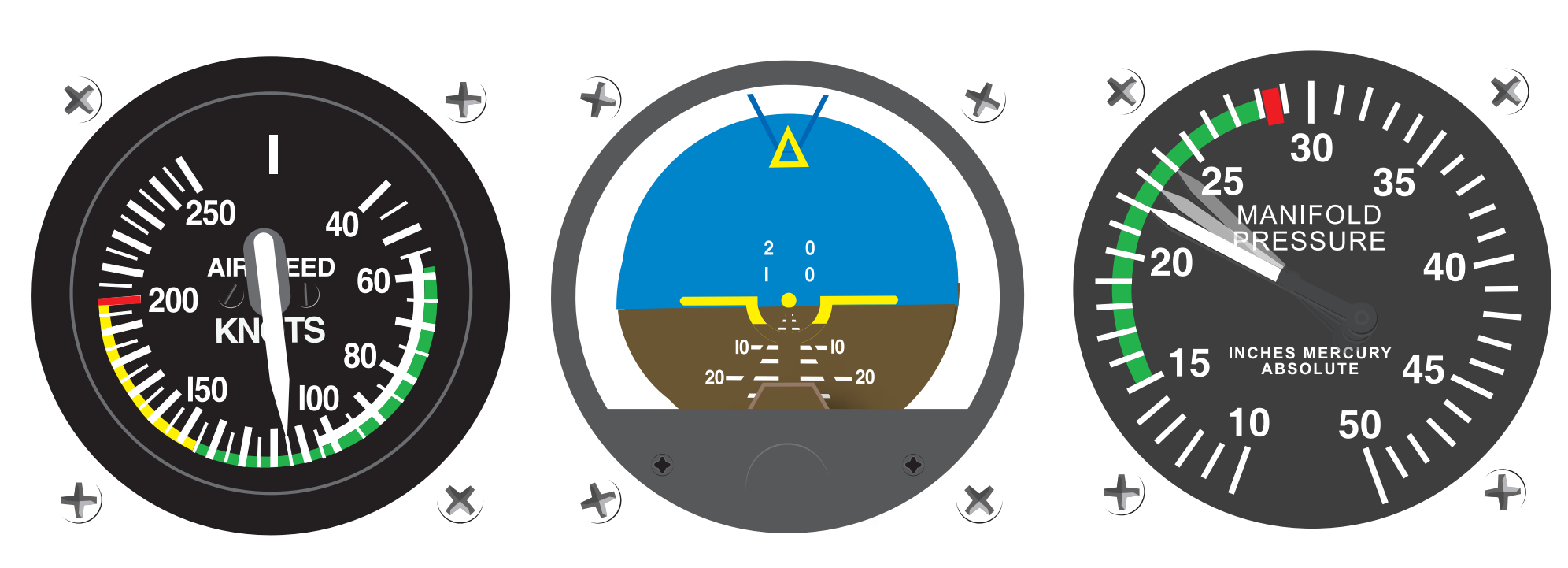
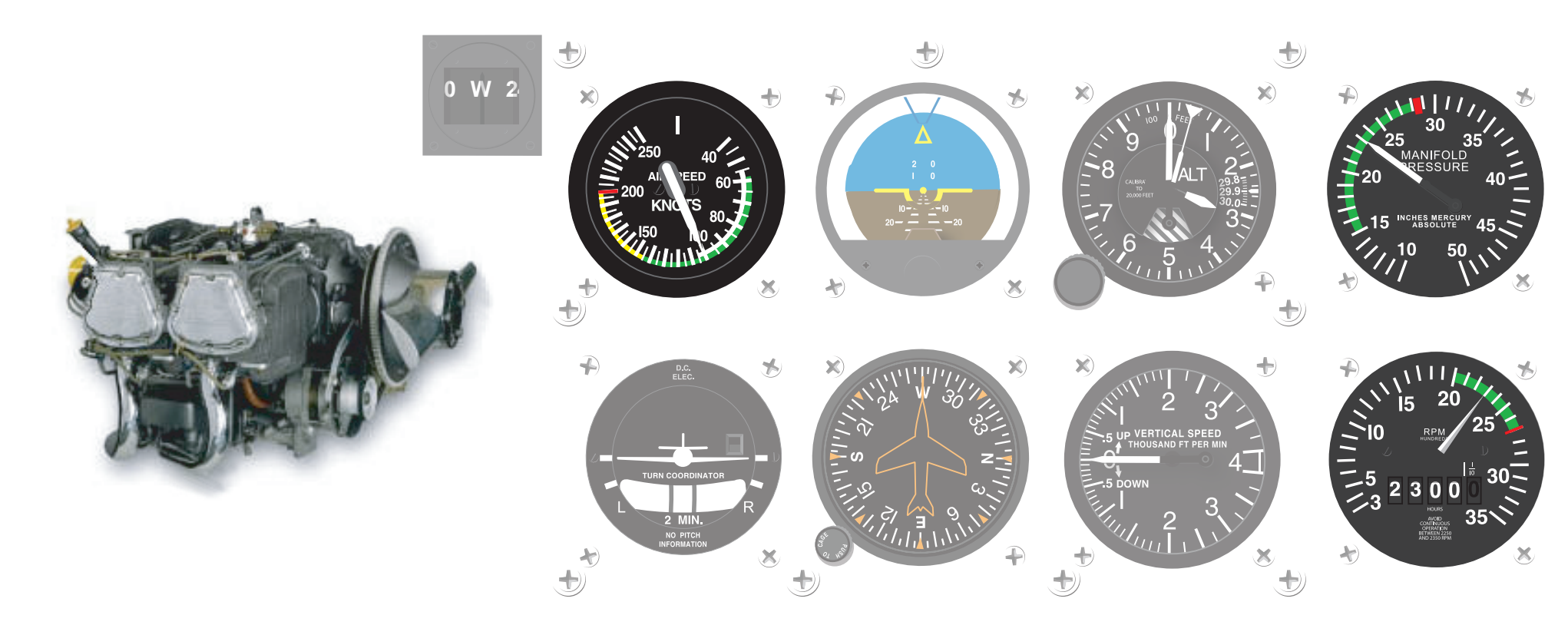
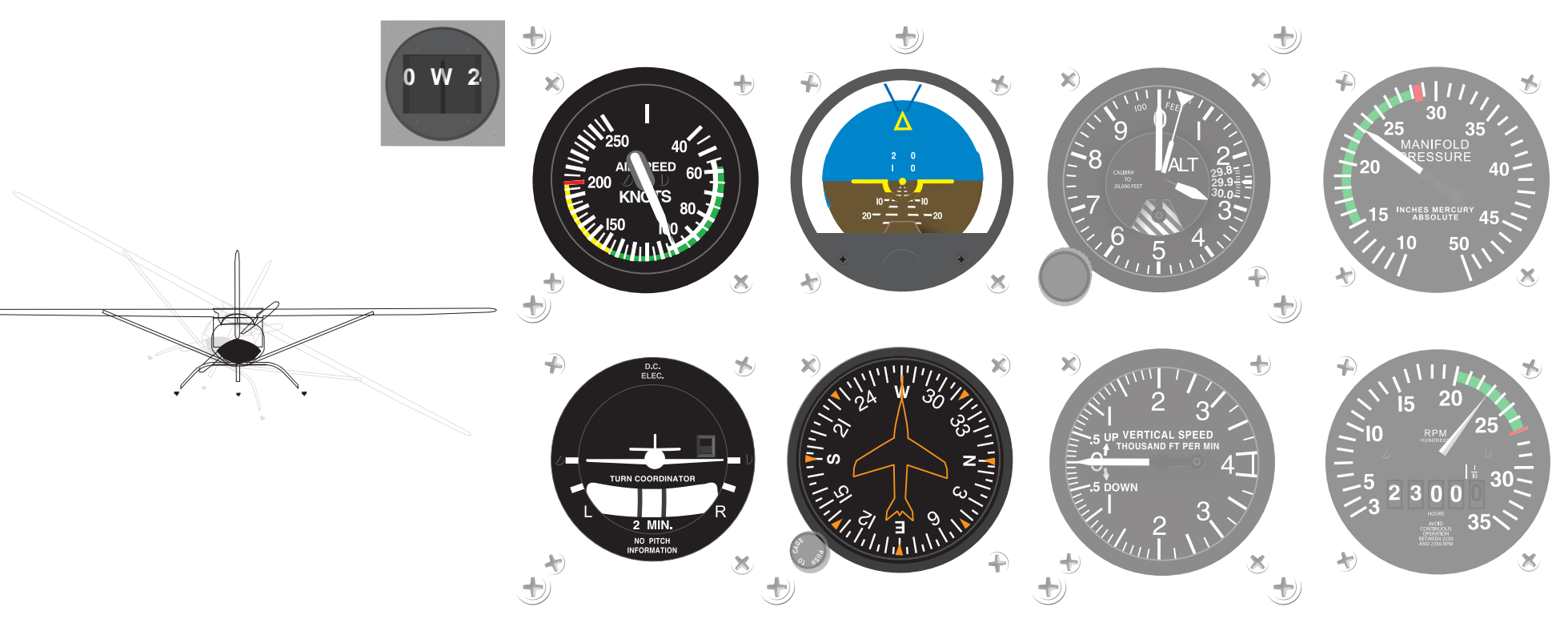
An aircraft is placed in trim by:
- Applying control pressure(s) to establish a desired attitude. Then, the trim is adjusted so that the aircraft maintains that attitude when flight controls are released. The aircraft is trimmed for coordinated flight by centering the ball of the turn-and-slip indicator.
- Moving the rudder trim in the direction where the ball is displaced from center. Aileron trim may then be adjusted to maintain a wings-level attitude.
- Using balanced power or thrust when possible to aid in maintaining coordinated flight. Changes in attitude, power, or configuration may require trim adjustments. Use of trim alone to establish a change in aircraft attitude usually results in erratic aircraft control. Smooth and precise attitude changes are best attained by a combination of control pressures and subsequent trim adjustments. The trim controls are aids to smooth aircraft control.
Helicopter Trim
A helicopter is placed in trim by continually cross-checking the instruments and performing the following:
- Using the cyclic-centering button. If the helicopter is so equipped, this relieves all possible cyclic pressures.
- Using the pedal adjustment to center the ball of the turn indicator. Pedal trim is required during all power changes and is used to relieve all control pressures held after a desired attitude has been attained.
An improperly trimmed helicopter requires constant control pressures, produces tension, distracts attention from cross-checking, and contributes to abrupt and erratic attitude control. The pressures felt on the controls should be only those applied while controlling the helicopter.
Adjust the pitch attitude, as airspeed changes, to maintain desired attitude for the maneuver being executed. The bank must be adjusted to maintain a desired rate of turn, and the pedals must be used to maintain coordinated flight. Trim must be adjusted as control pressures indicate a change is needed.
Example of Primary and Support Instruments
Straight-and-level flight at a constant airspeed means that an exact altitude is to be maintained with zero bank (constant heading). The primary pitch, bank, and power instruments used to maintain this flight condition are: