
Chapter 7
Airplane Basic Flight Maneuvers
Section I — Analog Instrumentation
Introduction
Instrument flying techniques differ according to aircraft type, class, performance capability, and instrumentation. Therefore, the procedures and techniques that follow need to be modified to suit individual aircraft. Recommended procedures, performance data, operating limitations, and flight characteristics of a particular aircraft are available in the Pilot’s Operating Handbook/Airplane Flight Manual (POH/AFM) for study before practicing the flight maneuvers.
The flight maneuvers discussed in Chapter 7-I assume the use of a single-engine, propeller-driven small airplane with retractable gear and flaps and a panel with instruments representative of those discussed earlier in Chapter 5, Flight Instruments. With the exception of the instrument takeoff, all of the maneuvers can be performed on “partial panel,” with the attitude gyro and heading indicator covered or inoperative.
Straight-and-Level Flight
Pitch Control
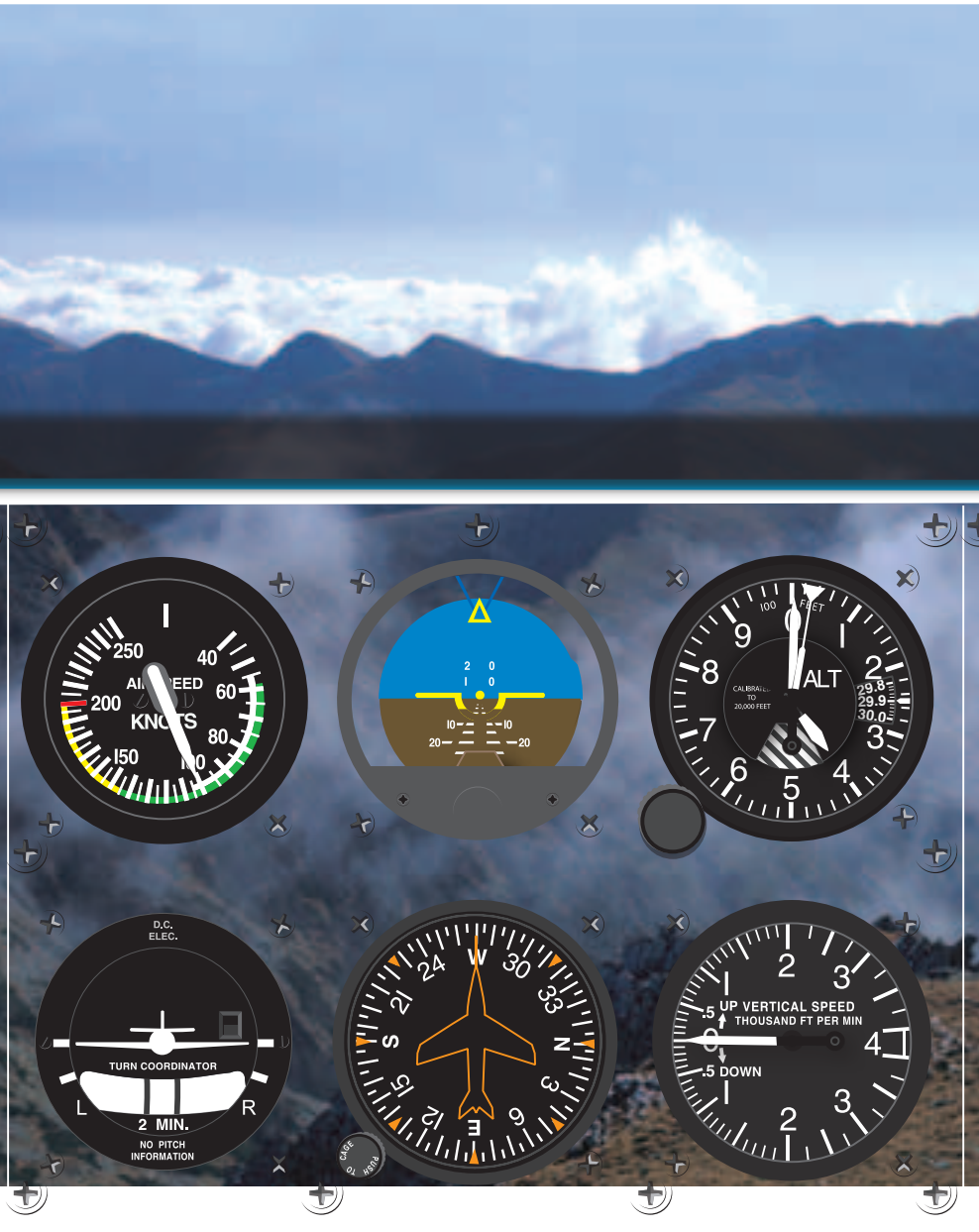
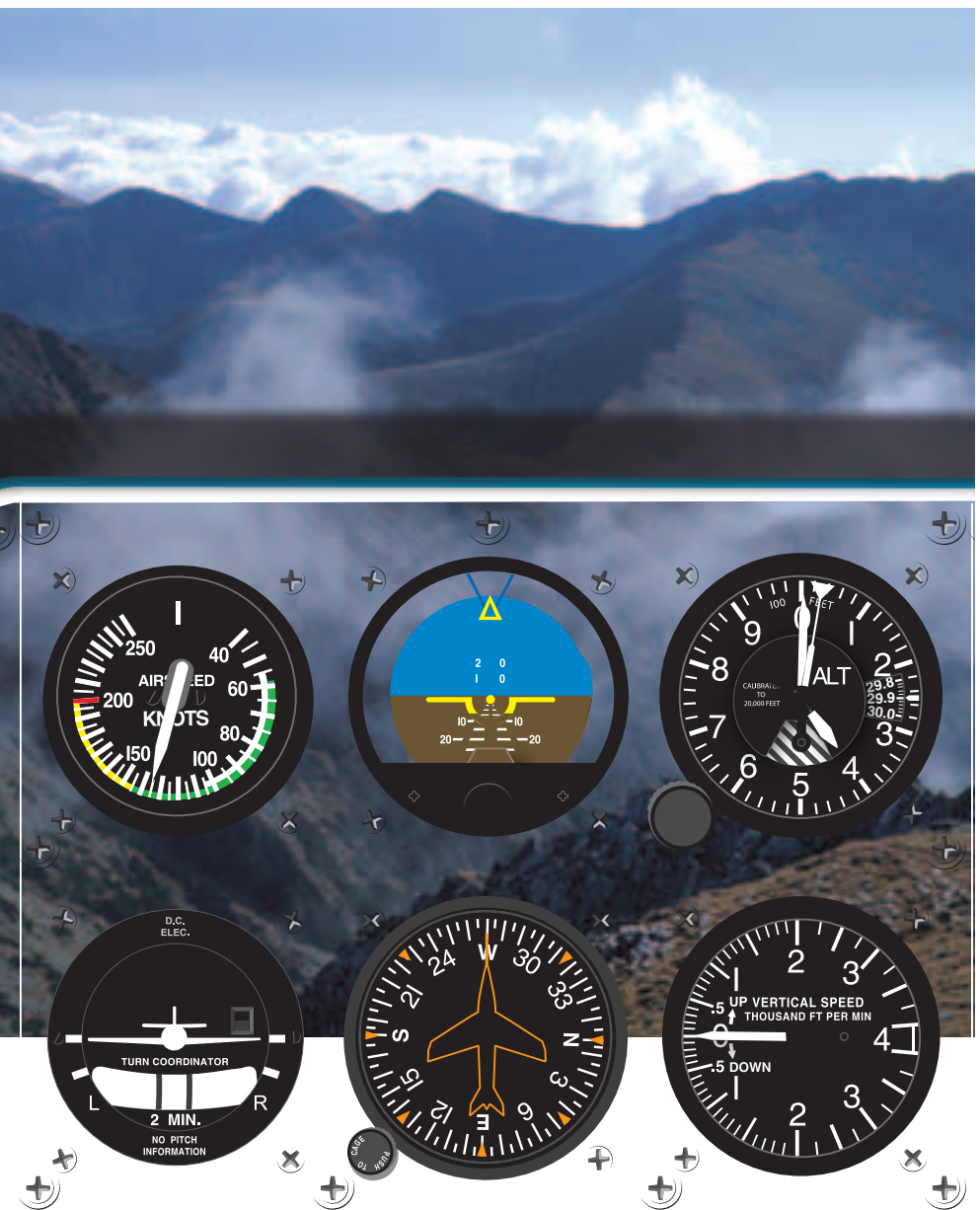
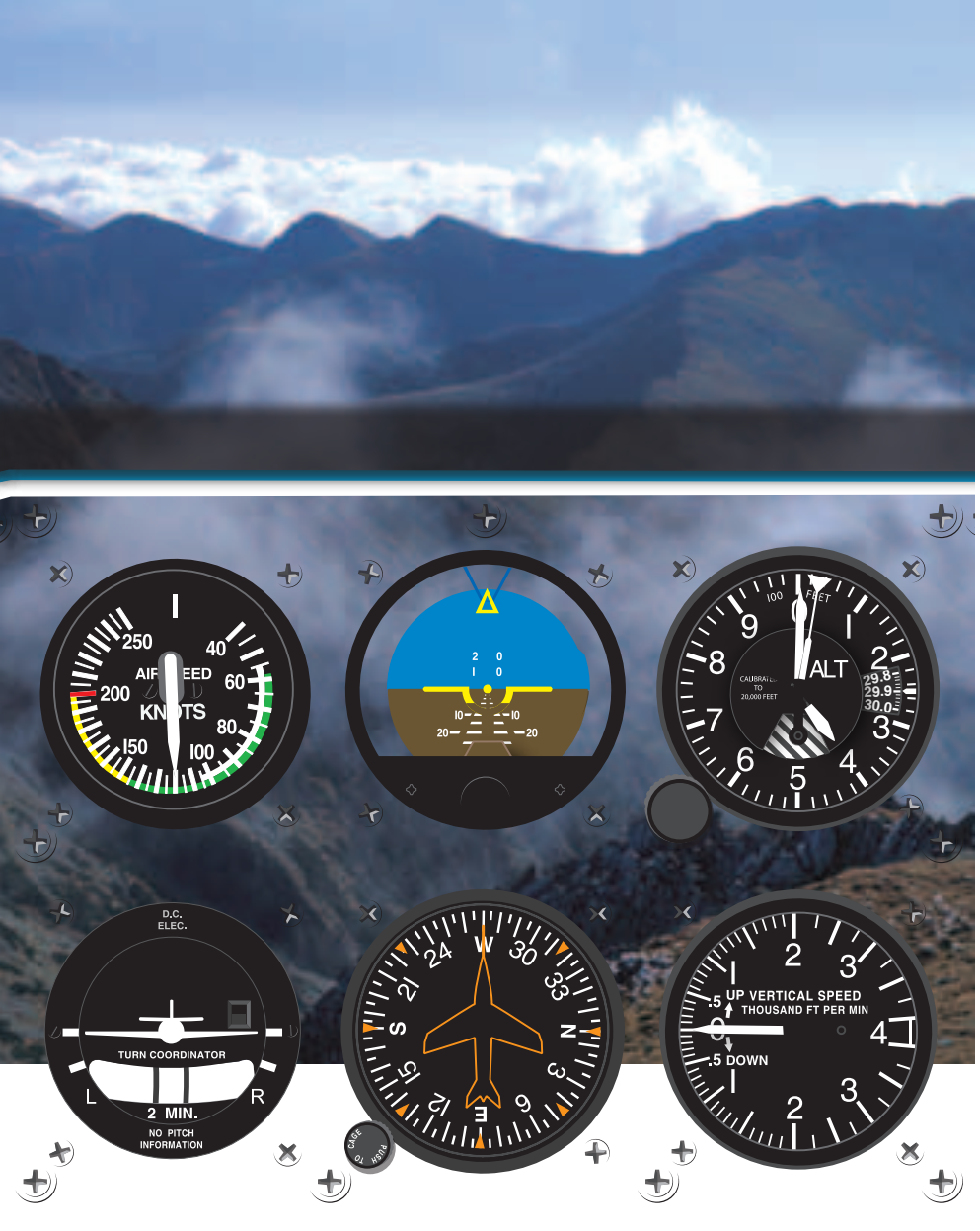
The pitch attitude of an airplane is the angle between the longitudinal axis of the airplane and the actual horizon. In level flight, the pitch attitude varies with airspeed and load. For training purposes, the latter factor can normally be disregarded in small airplanes. At a constant airspeed, there is only one specific pitch attitude for level flight. At slow cruise speeds, the level flight attitude is nose high with indications as in Figure 7-1; at fast cruise speeds, the level-flight attitude is nose low. [Figure 7-2] Figure 7-3 shows the indications for the attitude at normal cruise speeds. The instruments used to determine the pitch attitude of the aircraft are the attitude indicator, the altimeter, the vertical speed indicator (VSI), and the airspeed indicator (ASI).
Attitude Indicator
The attitude indicator gives the direct indication of pitch attitude. The desired pitch attitude is gained by using the elevator control to raise or lower the miniature aircraft in relation to the horizon bar. This corresponds to the way pitch attitude is adjusted in visual flight by raising or lowering the nose of the airplane in relation to the natural horizon. However, unless the airspeed is constant, and until the level flight attitude for that airspeed has been identified and established, there is no way to know whether level flight as indicated on the attitude indicator is resulting in level flight as shown on the altimeter, VSI, and ASI. If the miniature aircraft of the attitude indicator is properly adjusted on the ground before takeoff, it shows approximately level flight at normal cruise speed when the pilot completes the level off from a climb. If further adjustment of the miniature aircraft is necessary, the other pitch instruments must be used to maintain level flight while the adjustment is made.
To practice pitch control for level flight using only the attitude indicator, use the following exercise. Restrict the displacement of the horizon bar to a one-half bar width, a bar width up or down, then a one-and-one-half bar width. One-half, one, and one-and-one-half bar width nose-high attitudes are shown in Figures 7-4, 7-5, and 7-6.
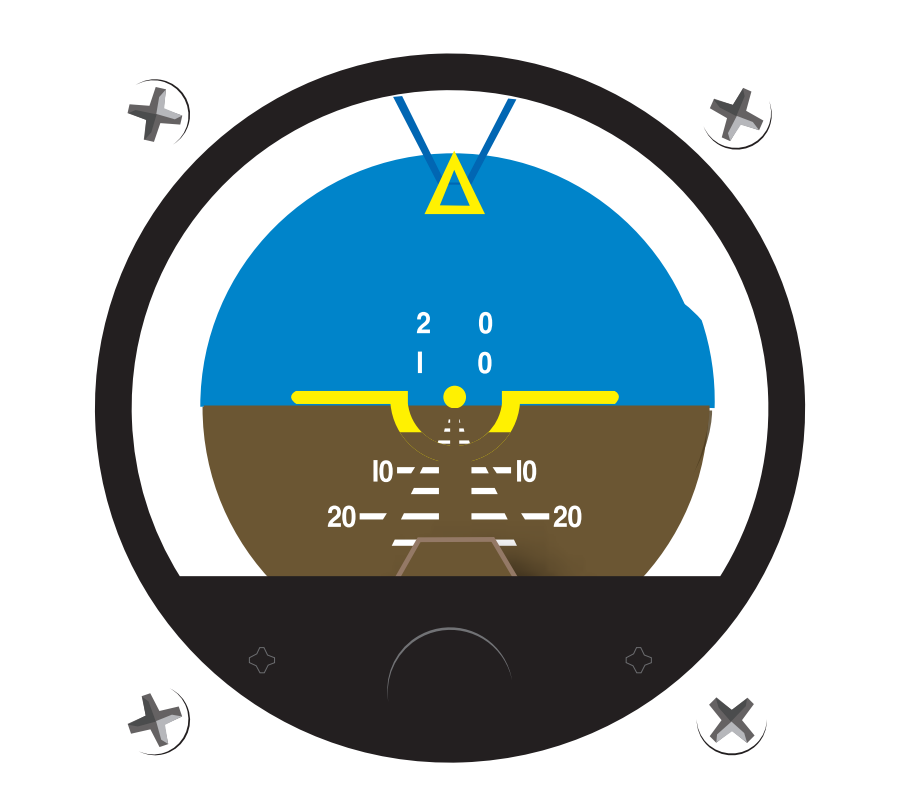
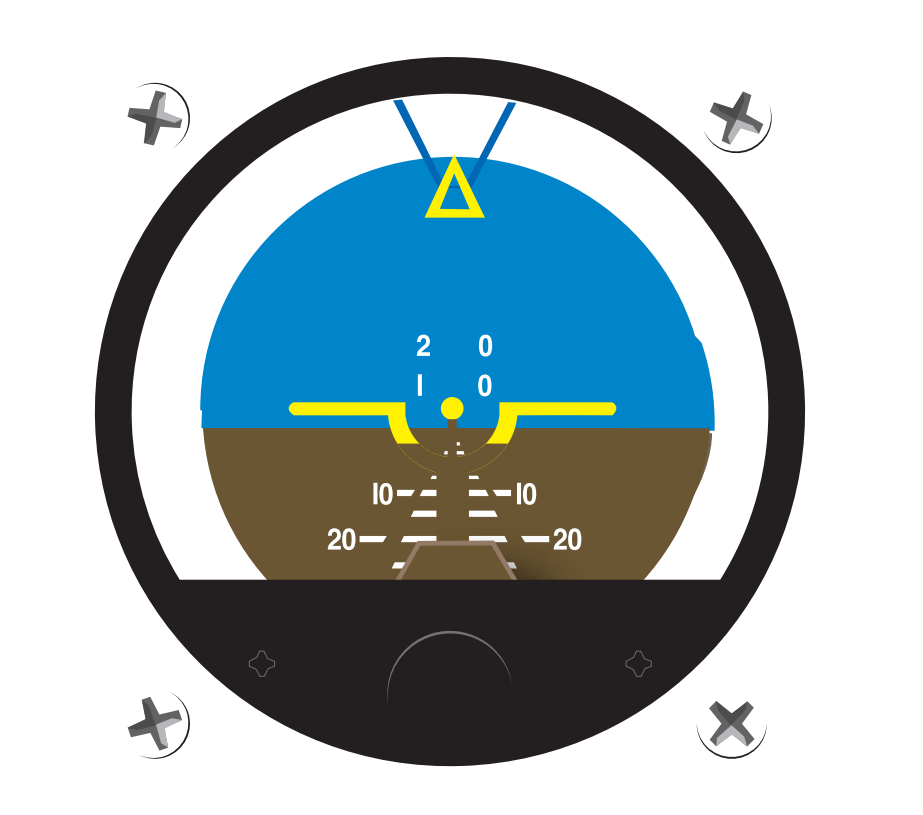
An instructor pilot can demonstrate these normal pitch corrections and compare the indications on the attitude indicator with the airplane’s position to the natural horizon.
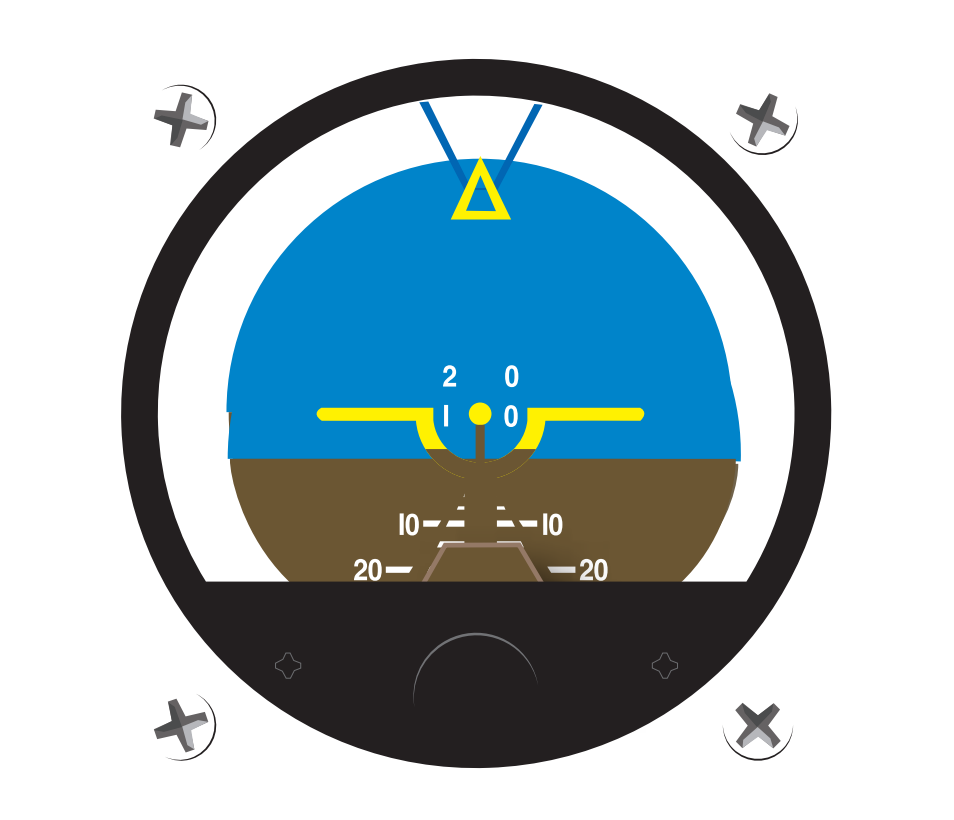
Pitch attitude changes for corrections to level flight by reference to instruments are much smaller than those commonly used for visual flight. With the airplane correctly trimmed for level flight, the elevator displacement and the control pressures necessary to effect these standard pitch changes are usually very slight. The following are a few helpful hints to help determine how much elevator control pressure is required.
First, a tight grip on the controls makes it difficult to feel control pressure changes. Relaxing and learning to control the aircraft usually takes considerable conscious effort during the early stages of instrument training.