Chapter 7
Airplane Basic Flight Maneuvers
Figure 7-72 shows the unusual attitude protection with valid AHRS and air data computer (ADC) inputs. The bright red chevrons pointing down to the horizon indicate a nose-high unusual attitude that can be easily recognized and corrected.
Now look at Figure 7-73. The display shows the same airspeed as the picture above; however, the AHRS unit has failed. The altimeter and the VSI tape are the only clear indications that the aircraft is in a nose-high attitude. The one key instrument that is no longer present is the slip/skid indicator. There is not a standby turn coordinator installed in the aircraft for the pilot to reference.
The magnetic compass indicates a heading is being maintained; however, it is not as useful as a turn coordinator or slip/skid indicator.
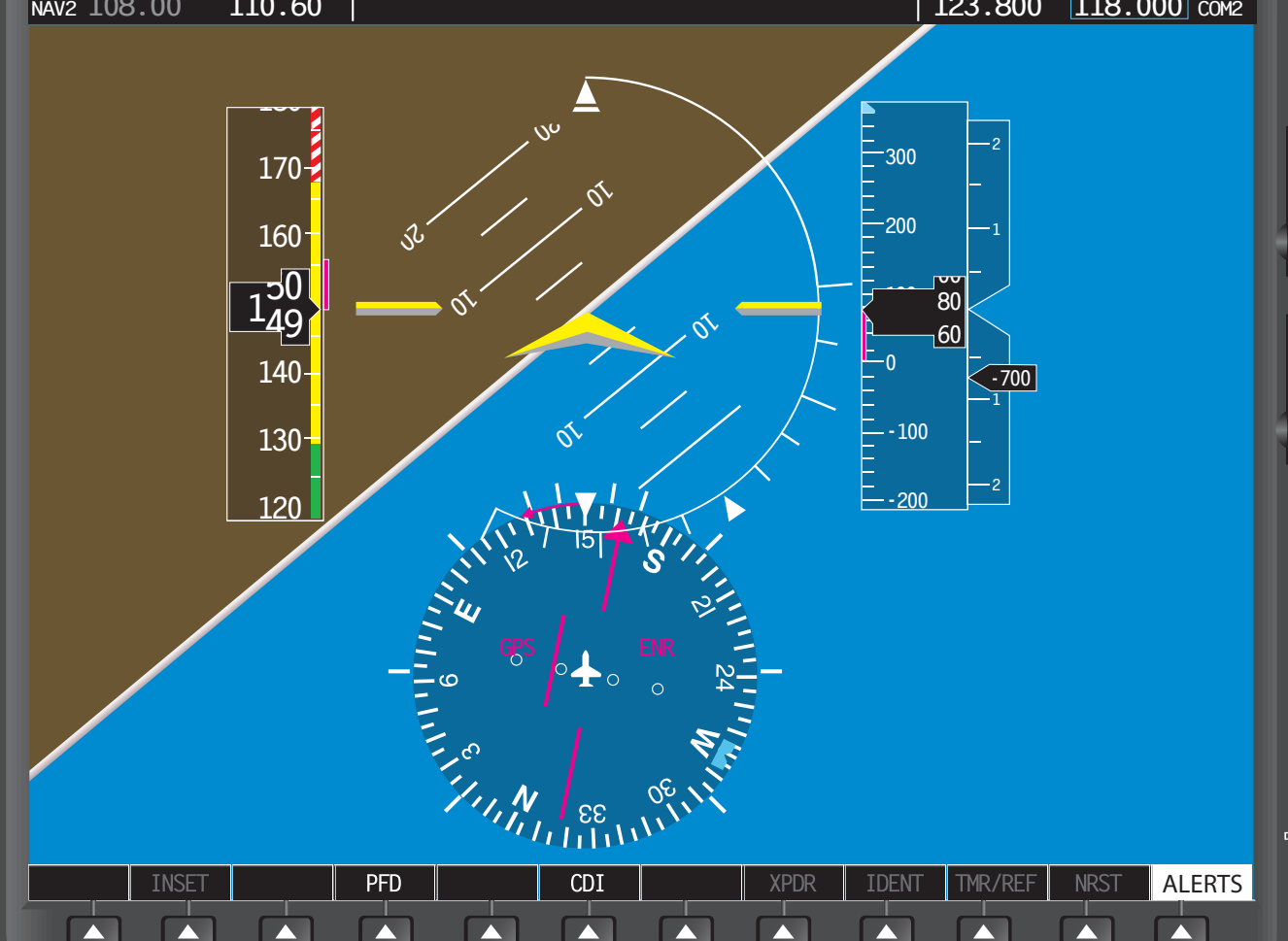
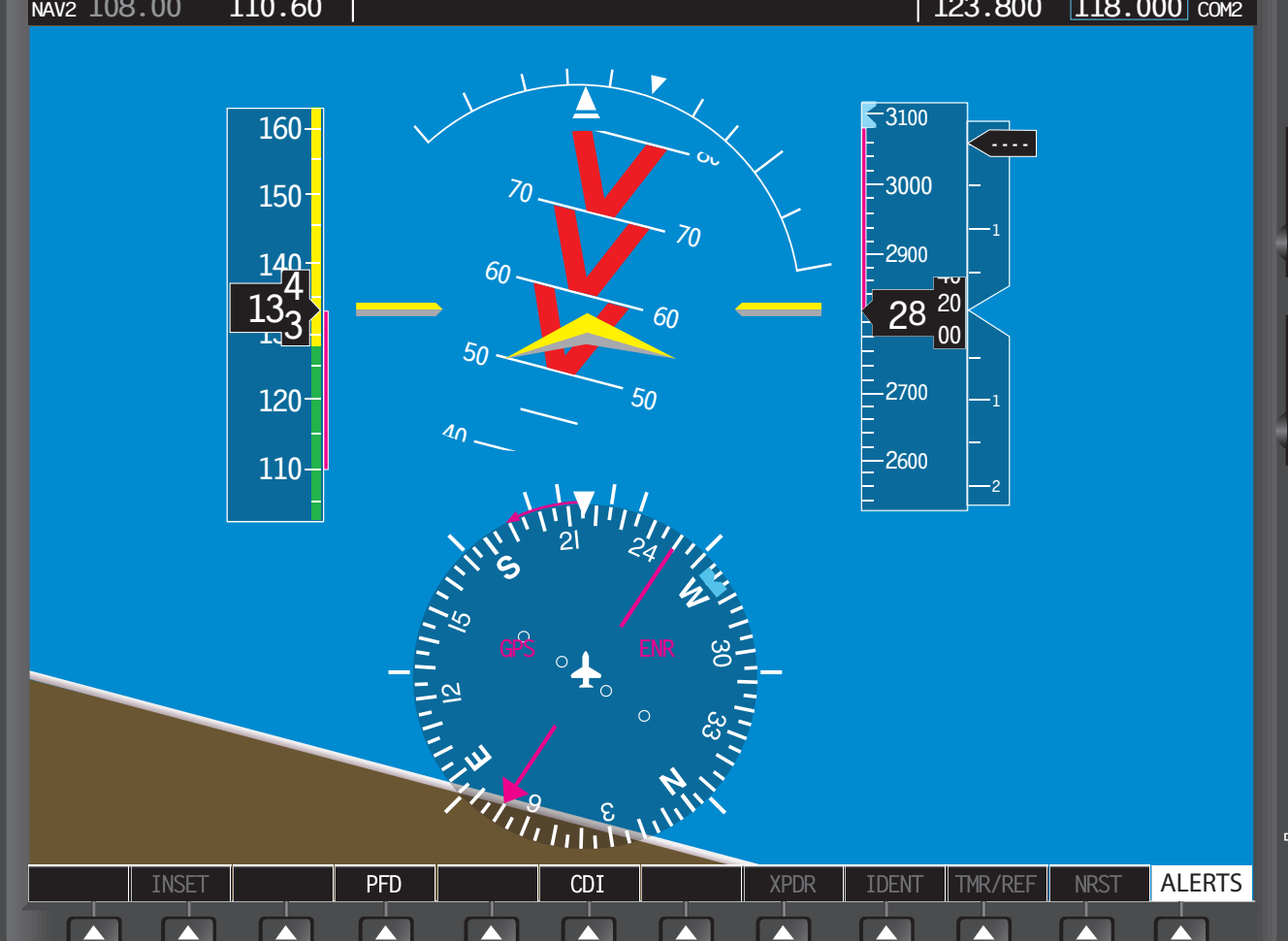
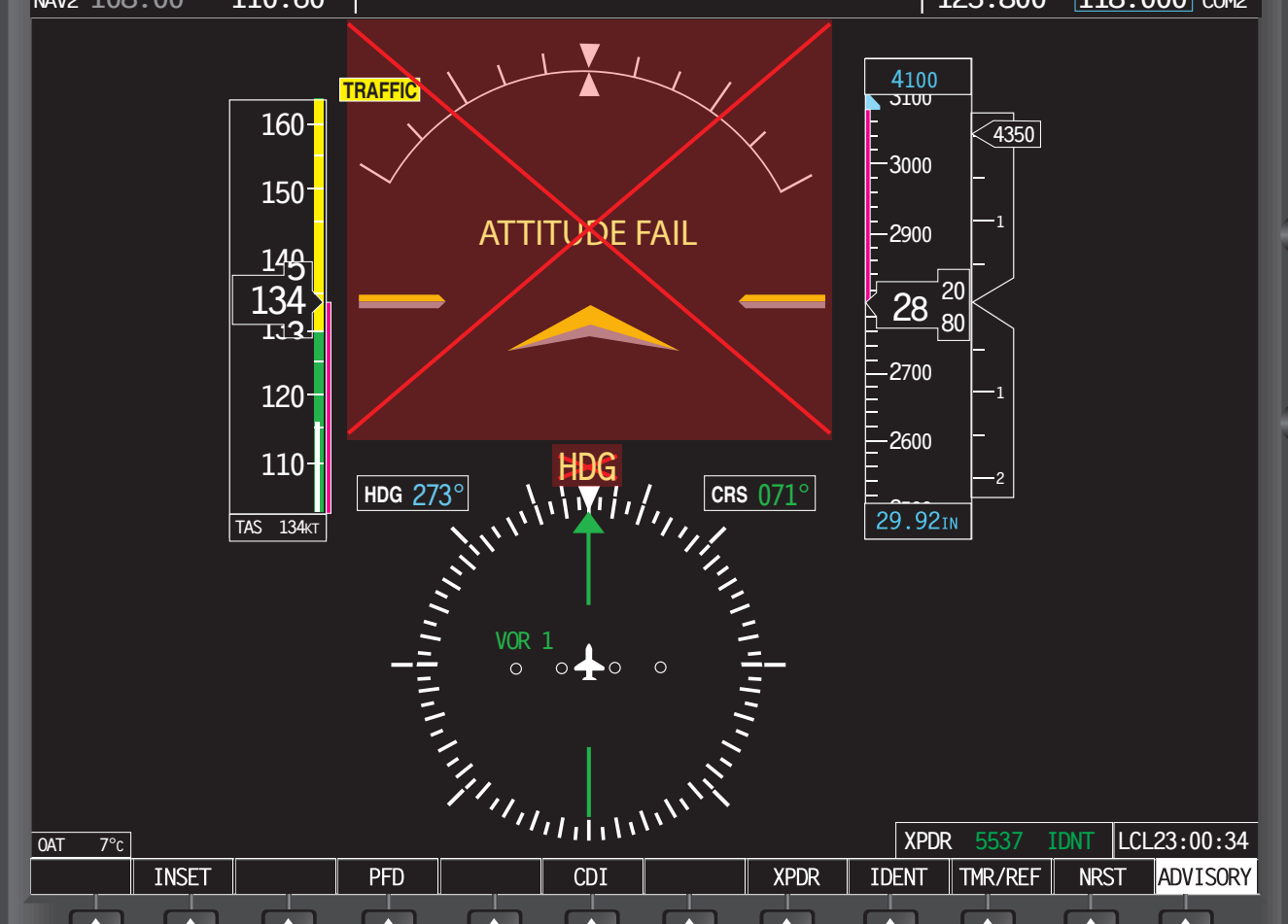
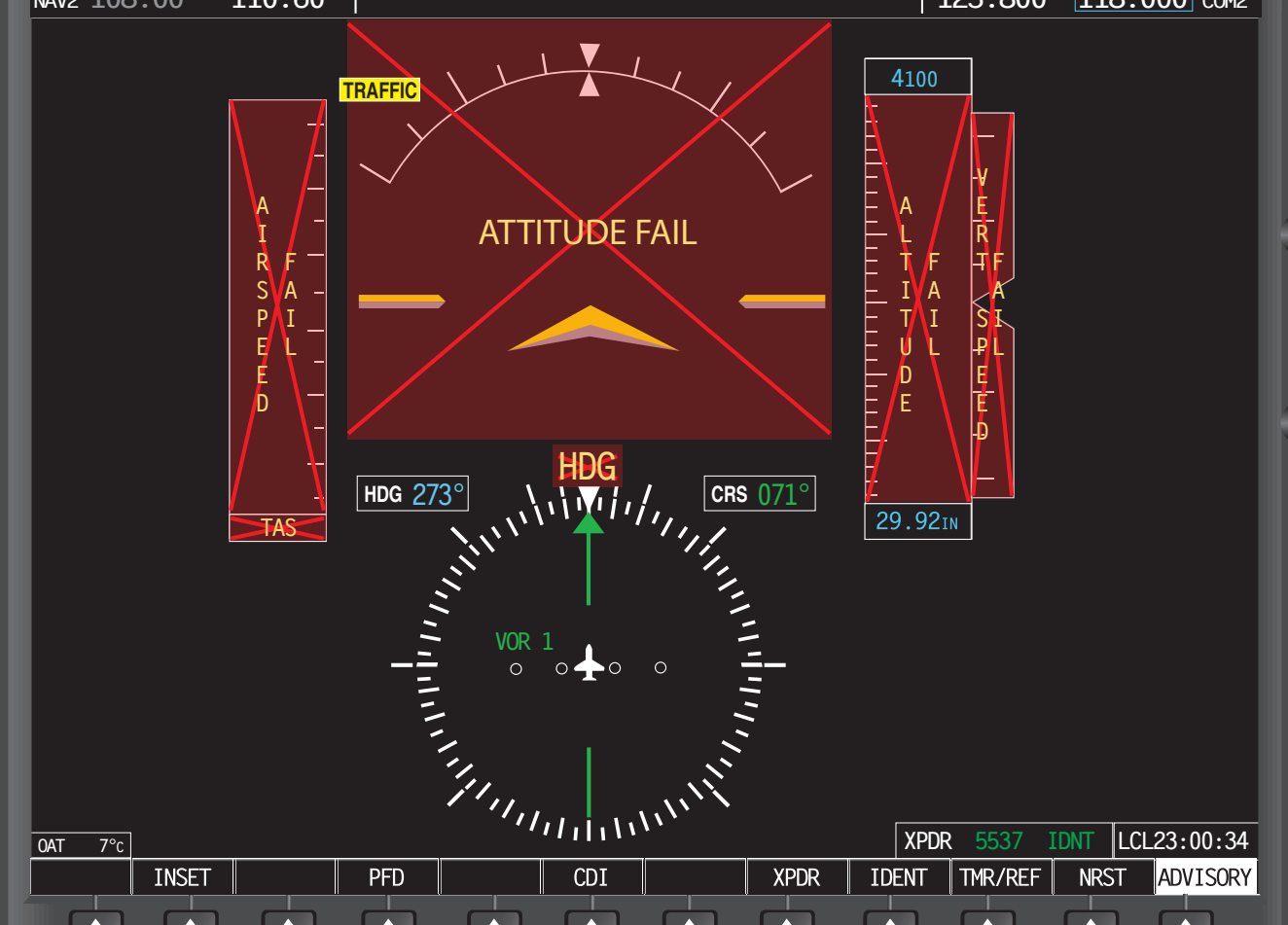
Figure 7-74 depicts an AHRS and ADC failure. In this failure scenario, there are no indications of the aircraft’s attitude. The manufacturer recommends turning on the autopilot, which is simply a wing leveler.
With a failure of the primary instrumentation on the PFD, the only references available are the standby instruments. The standby instrumentation consists of an analog ASI, attitude indicator, altimeter, and magnetic compass. There is no standby turn coordinator installed.
In extreme nose-high or nose-low pitch attitudes, as well as high bank angles, the analog attitude indicator has the potential to tumble, rendering it unusable.
Autopilot Usage
The autopilot is equipped with inputs from a turn coordinator installed behind the MFD screen. This turn coordinator is installed solely for the use of the autopilot to facilitate the roll mode, which is simply a wing leveler. This protection is always available, barring a failure of the turn coordinator (to aid the pilot if the aircraft attains an unusual attitude).
Most EFD equipped aircraft are coming from the factory with autopilots installed. However, the purchaser of the aircraft can specify if an autopilot is to be installed. Extreme caution should be utilized when flying an EFD equipped aircraft without an autopilot in IMC with an AHRS and ADC failure.
The autopilot should be utilized to reduce workload, which affords the pilot more time to monitor the flight. Utilization of the autopilot also decreases the chances of entry into an unusual attitude.
Flying an EFD-equipped aircraft without the use of an autopilot has been shown to increase workload and decrease situational awareness for pilots first learning to flying the new system.
Common Errors Leading to Unusual Attitudes
The following errors have the potential to disrupt a pilot’s situational awareness and lead to unusual attitudes.
- Improper trimming techniques. A failure to keep the aircraft trimmed for level flight at all times can turn a momentary distraction into an emergency situation if the pilot stops cross-checking.
- Poor crew resource management (CRM) skills. Failure to perform all single-pilot resource management duties efficiently. A major cause of CRM-related accidents comes from the failure of the pilot to maintain an organized flight deck. Items that are being utilized for the flight portion should be neatly arranged for easy access. A disorganized flight deck can lead to a distraction that causes the pilot to cease cross-checking the instruments long enough to enter an unusual attitude.