
Chapter 7
Airplane Basic Flight Maneuvers
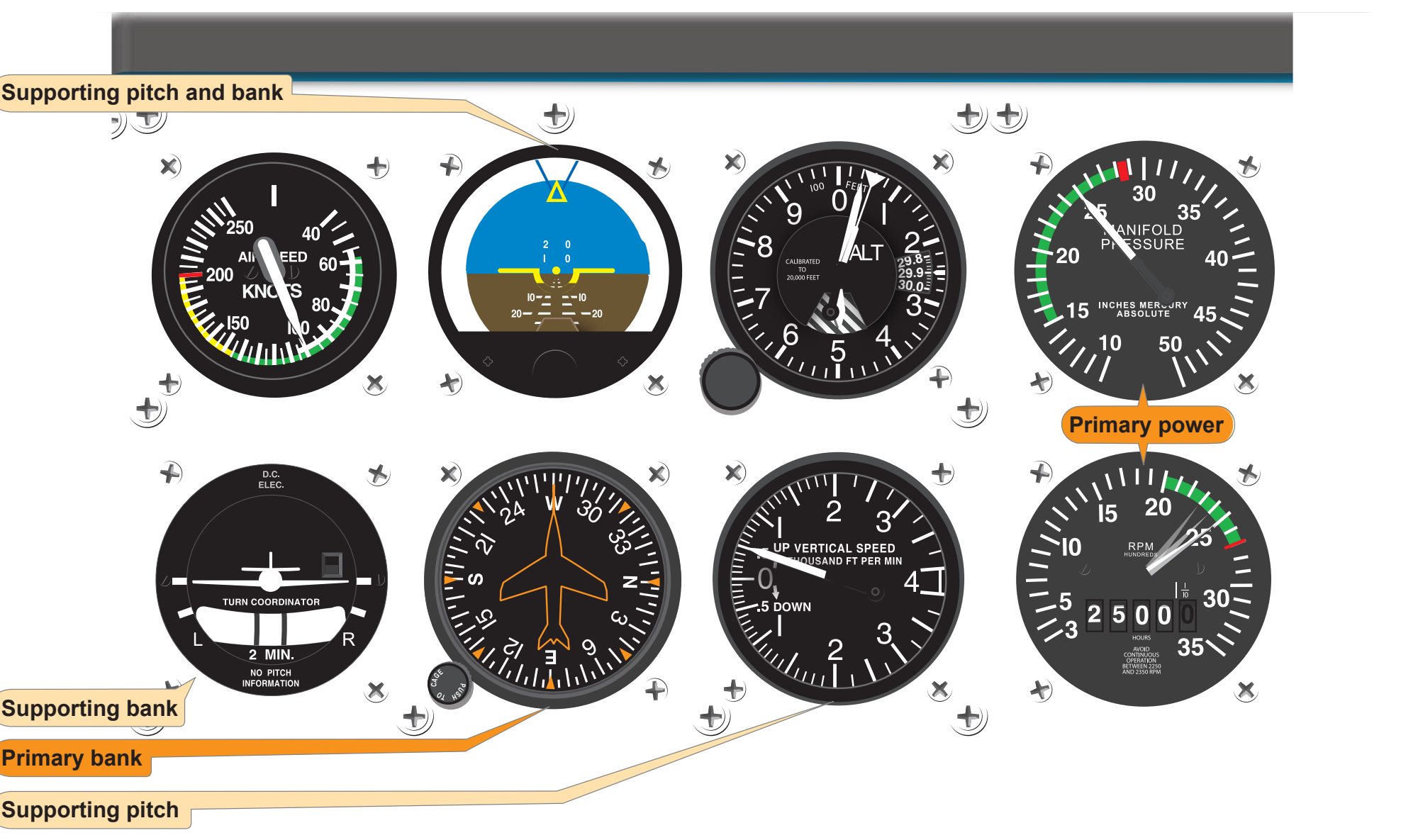
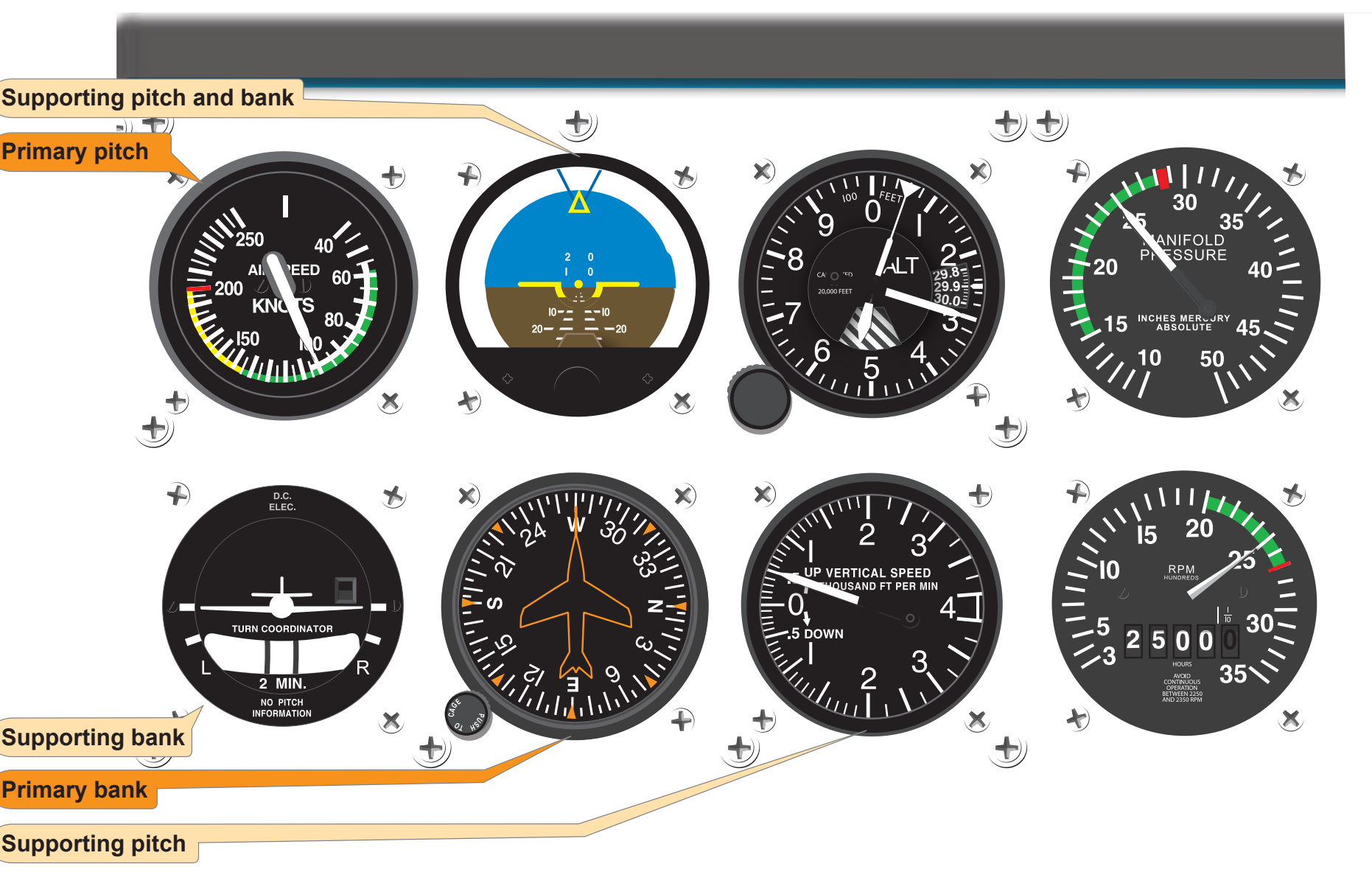
The technique for entering a constant-rate climb is very similar to that used for entry to a constant-airspeed climb from climb airspeed. As the power is increased to the approximate setting for the desired rate, simultaneously raise the miniature aircraft to the climbing attitude for the desired airspeed and rate of climb. As the power is increased, the ASI is primary for pitch control until the vertical speed approaches the desired value. As the vertical speed needle stabilizes, it becomes primary for pitch control and the ASI becomes primary for power control. [Figure 7-27] Pitch and power corrections must be promptly and closely coordinated. For example, if the vertical speed is correct, but the airspeed is low, add power. As the power is increased, the miniature aircraft must be lowered slightly to maintain constant vertical speed. If the vertical speed is high and the airspeed is low, lower the miniature aircraft slightly and note the increase in airspeed to determine whether or not a power change is also necessary. [Figure 7-28] Familiarity with the approximate power settings helps to keep pitch and power corrections at a minimum.
Leveling Off
To level off from a climb and maintain an altitude, it is necessary to start the level off before reaching the desired altitude. The amount of lead varies with rate of climb and pilot technique. If the airplane is climbing at 1,000 fpm, it continues to climb at a decreasing rate throughout the transition to level flight. An effective practice is to lead the altitude by 10 percent of the vertical speed shown (500 fpm/ 50-foot lead, 1,000 fpm/100-foot lead).
To level off at cruising airspeed, apply smooth, steady forward-elevator pressure toward level flight attitude for the speed desired. As the attitude indicator shows the pitch change, the vertical speed needle moves slowly toward zero, the altimeter needle moves more slowly, and the airspeed shows acceleration. [Figure 7-29] When the altimeter, attitude indicator, and VSI show level flight, constant changes in pitch and torque control have to be made as the airspeed increases. As the airspeed approaches cruising speed, reduce power to the cruise setting. The amount of lead depends upon the rate of acceleration of the airplane.
To level off at climbing airspeed, lower the nose to the pitch attitude appropriate to that airspeed in level flight. Power is simultaneously reduced to the setting for that airspeed as the pitch attitude is lowered. If power reduction is at a rate proportionate to the pitch change, airspeed will remain constant.
Descents
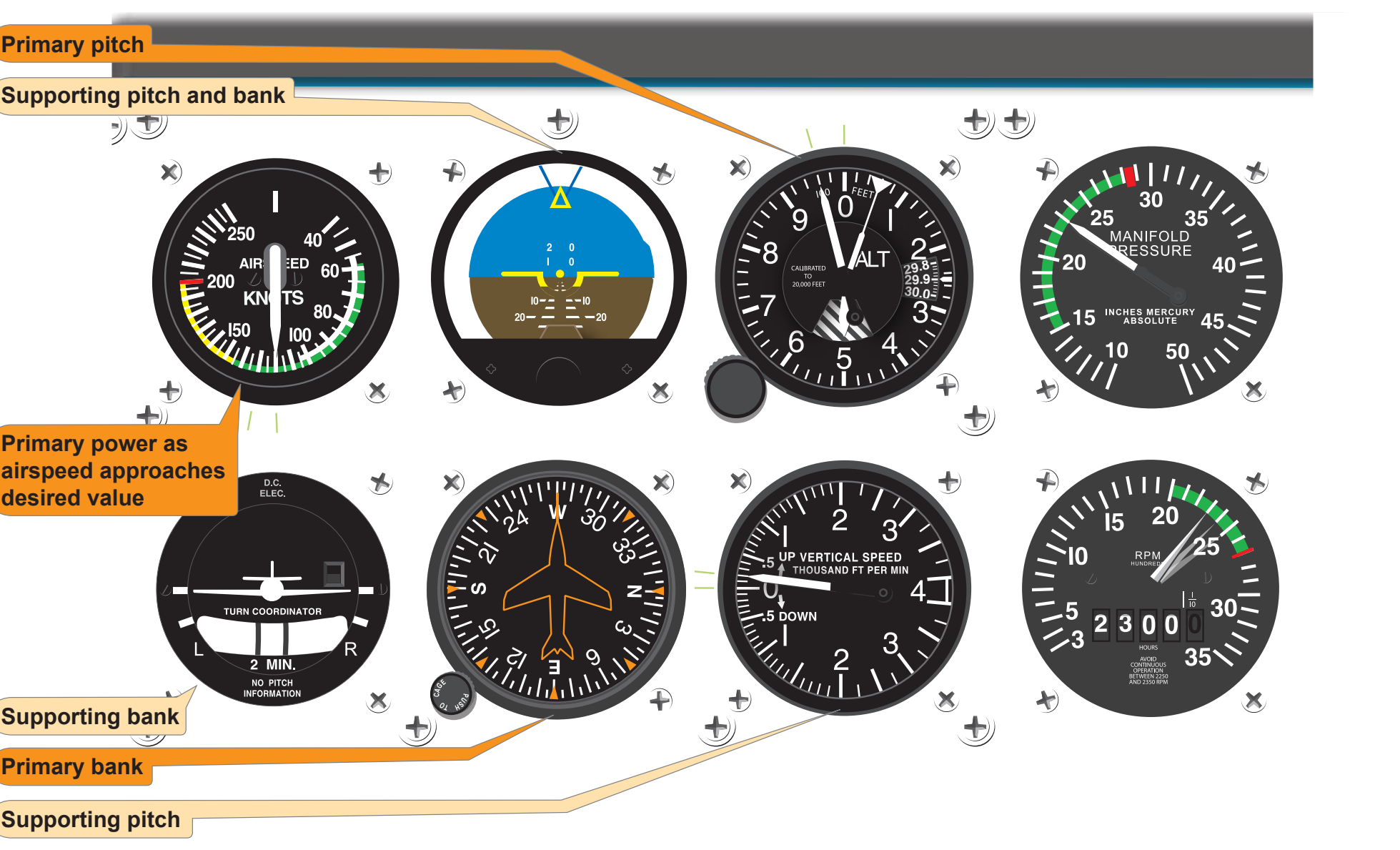
A descent can be made at a variety of airspeeds and attitudes by reducing power, adding drag, and lowering the nose to a predetermined attitude. The airspeed eventually stabilizes at a constant value. Meanwhile, the only flight instrument providing a positive attitude reference is the attitude indicator. Without the attitude indicator (such as during a partial panel descent), the ASI, altimeter, and VSI show varying rates of change until the airplane decelerates to a constant airspeed at a constant attitude. During the transition, changes in control pressure and trim, as well as cross-check and interpretation, must be accurate to maintain positive control.
Entry
The following method for entering descents is effective with or without an attitude indicator. First, reduce airspeed to a selected descent airspeed while maintaining straight-and-level flight, then make a further reduction in power (to a predetermined setting). As the power is adjusted, simultaneously lower the nose to maintain constant airspeed, and trim off control pressures.
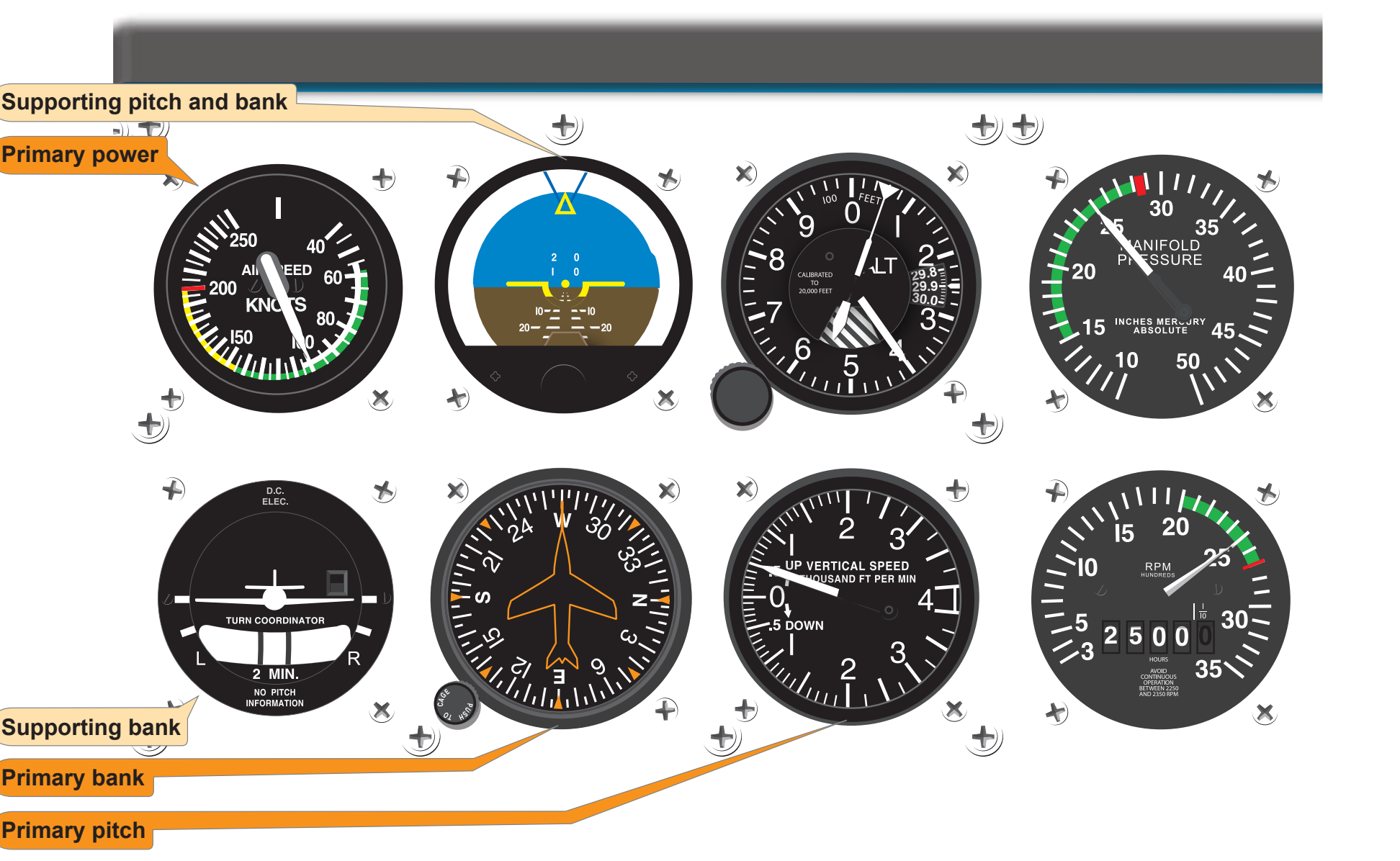
During a constant airspeed descent, any deviation from the desired airspeed calls for a pitch adjustment. For a constant rate descent, the entry is the same, but the VSI is primary for pitch control (after it stabilizes near the desired rate), and the ASI is primary for power control. Pitch and power must be closely coordinated when corrections are made, as they are in climbs. [Figure 7-30]
Leveling Off
The level off from a descent must be started before reaching the desired altitude. The amount of lead depends upon the rate of descent and control technique. With too little lead, the airplane tends to overshoot the selected altitude unless technique is rapid. Assuming a 500 fpm rate of descent, lead the altitude by 100–150 feet for a level off at an airspeed higher than descending speed. At the lead point, add power to the appropriate level flight cruise setting. [Figure 7-31] Since the nose tends to rise as the airspeed increases, hold forward elevator pressure to maintain the vertical speed at the descending rate until approximately 50 feet above the altitude, and then smoothly adjust the pitch attitude to the level flight attitude for the airspeed selected.
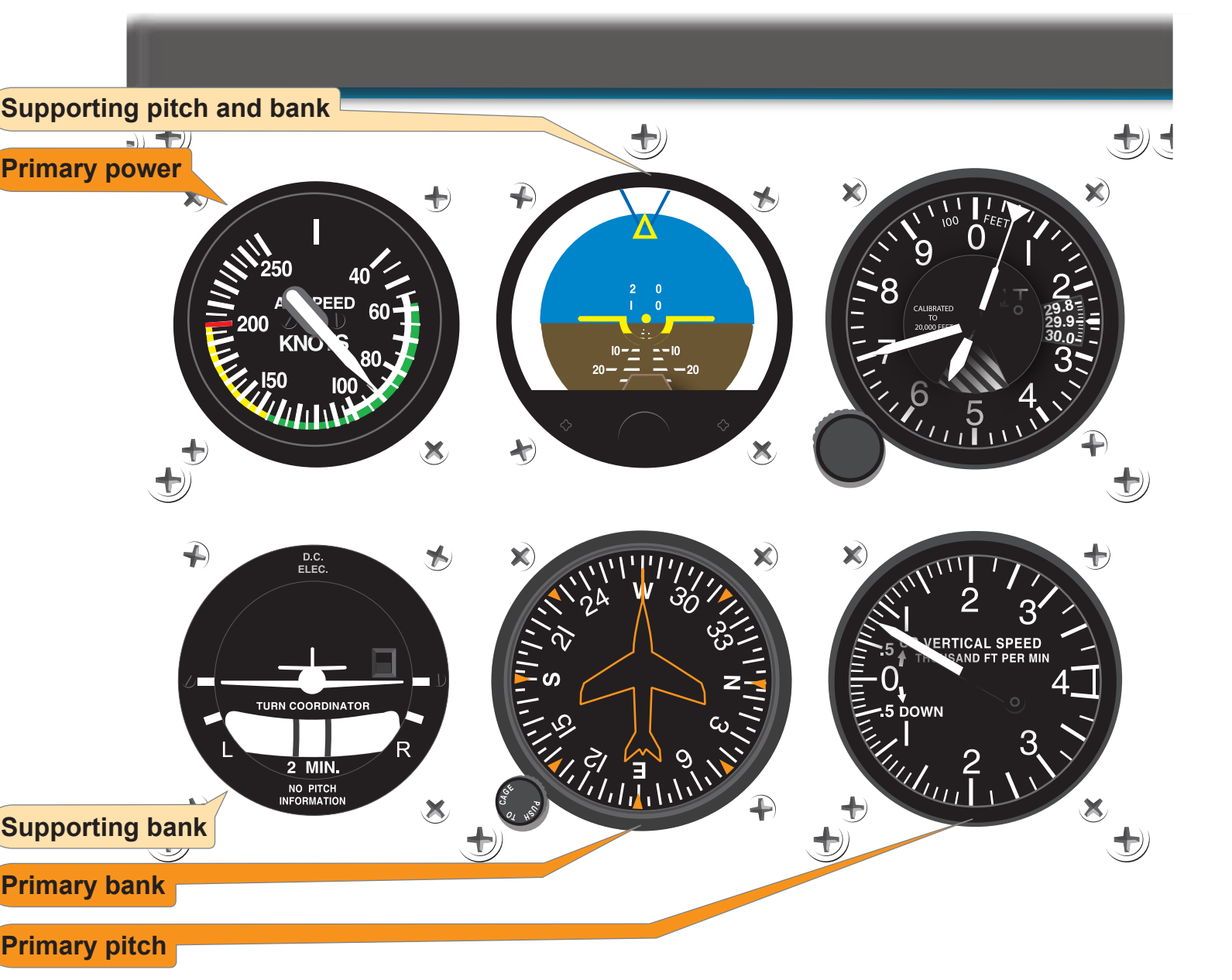
To level off from a descent at descent airspeed, lead the desired altitude by approximately 50 feet, simultaneously adjusting the pitch attitude to level flight and adding power to a setting that holds the airspeed constant. [Figure 7-32] Trim off the control pressures and continue with the normal straight-and-level flight cross-check.
Common Errors in Straight Climbs and Descents
Common errors result from the following faults: