Chapter 1
Departure Procedures
Advanced Surface Movement Guidance Control System (A-SMGCS)
With the increasing demand for airports to accommodate higher levels of aircraft movements, it is becoming more difficult for the existing infrastructure to safely handle greater capacities of traffic in all weather conditions. As a result, the FAA is implementing runway safety systems, such as Airport Surface Detection Equipment-Model X (ASDE-X) and Advanced Surface Movement Guidance and Control System (A-SMGCS) at various airports. The data that these systems use comes from surface movement radar and aircraft transponders. The combination of these data sources allows the systems to determine the position and identification of aircraft on the airport movement area and decreases the potential of collisions on airport runways and taxiways.
Additional information concerning airport lighting, markings, and signs can be found in the Aeronautical Information Manual (AIM) and the Pilot’s Handbook of Aeronautical Knowledge, appendix 1, as well as on the FAA’s website at http://www.faa.gov/airports/runway_safety/.
Airport Signs, Lighting, and Markings
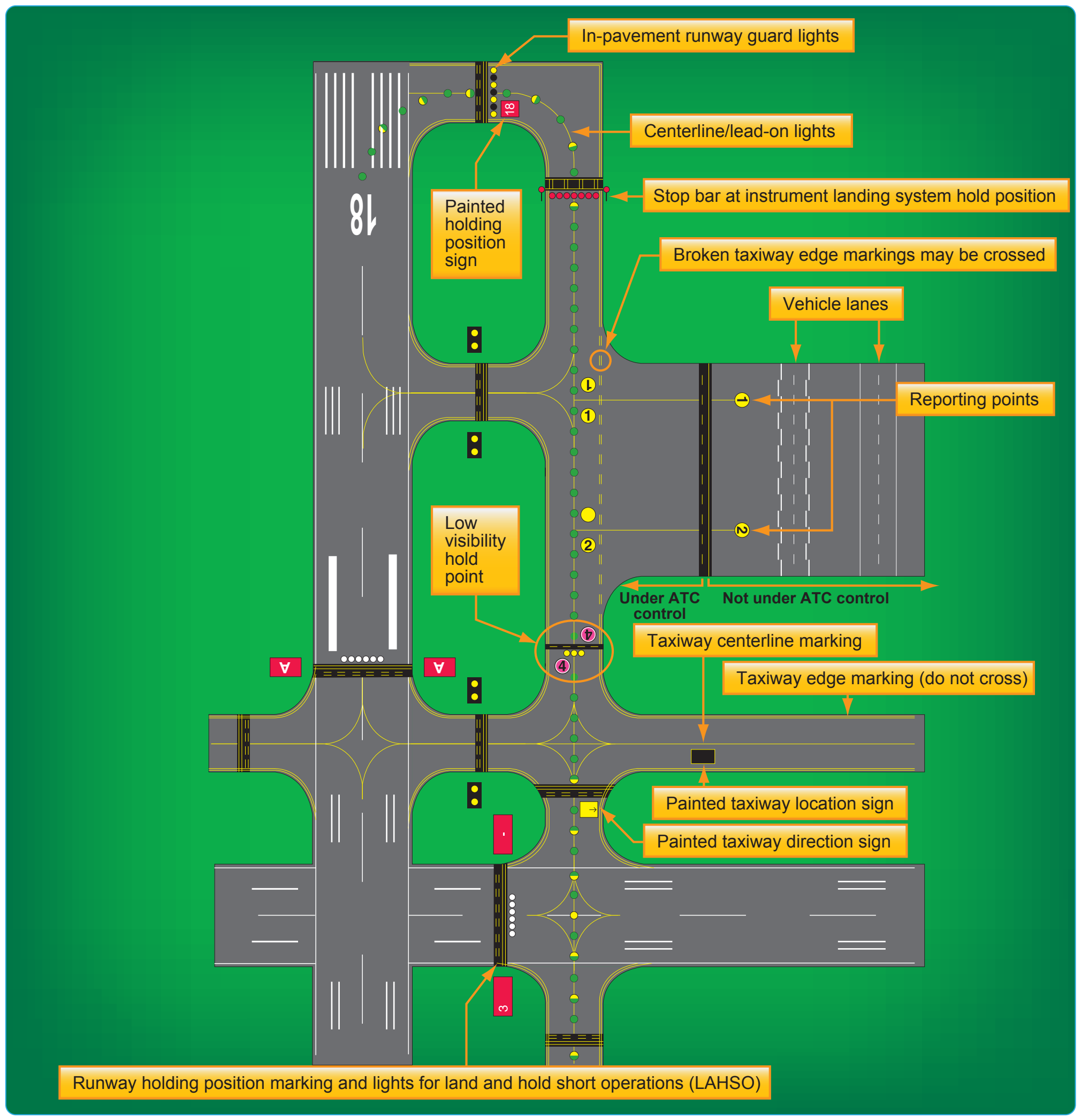
Flight crews use airport lighting, markings, and signs to help maintain situational awareness. These visual aids provide information concerning the aircraft’s location on the airport, the taxiway in use, and the runway entrance being used. Overlooking this information can lead to ground accidents that are entirely preventable. If you encounter unfamiliar markings or lighting, contact ATC for clarification and, if necessary, request progressive taxi instructions. Pilots are encouraged to notify the appropriate authorities of erroneous, misleading, or decaying signs or lighting that would contribute to the failure of safe ground operations.
Runway Incursions
On any given day, the NAS may handle almost 200,000 takeoffs and landings. Due to the complex nature of the airport environment and the intricacies of the network of people that make it operate efficiently, the FAA is constantly looking to maintain the high standard of safety that exists at airports today. Runway safety is one of its top priorities. The FAA defines a runway incursion as: “Any occurrence at an aerodrome involving the incorrect presence of an aircraft, vehicle, or person on the protected area of a surface designated for the landing and takeoff of aircraft.”
The four categories of runway incursions are listed below:
- Category A—a serious incident in which a collision was narrowly avoided.
- Category B—an incident in which separation decreases and there is a significant potential for
collision that may result in a time critical corrective/evasive response to avoid a collision.
- Category C—an incident characterized by ample time and/or distance to avoid a collision.
- Category D—an incident that meets the definition of runway incursion, such as incorrect presence of a single vehicle/person/aircraft on the protected area of a surface designated for the landing and takeoff of aircraft but with no immediate safety consequences.
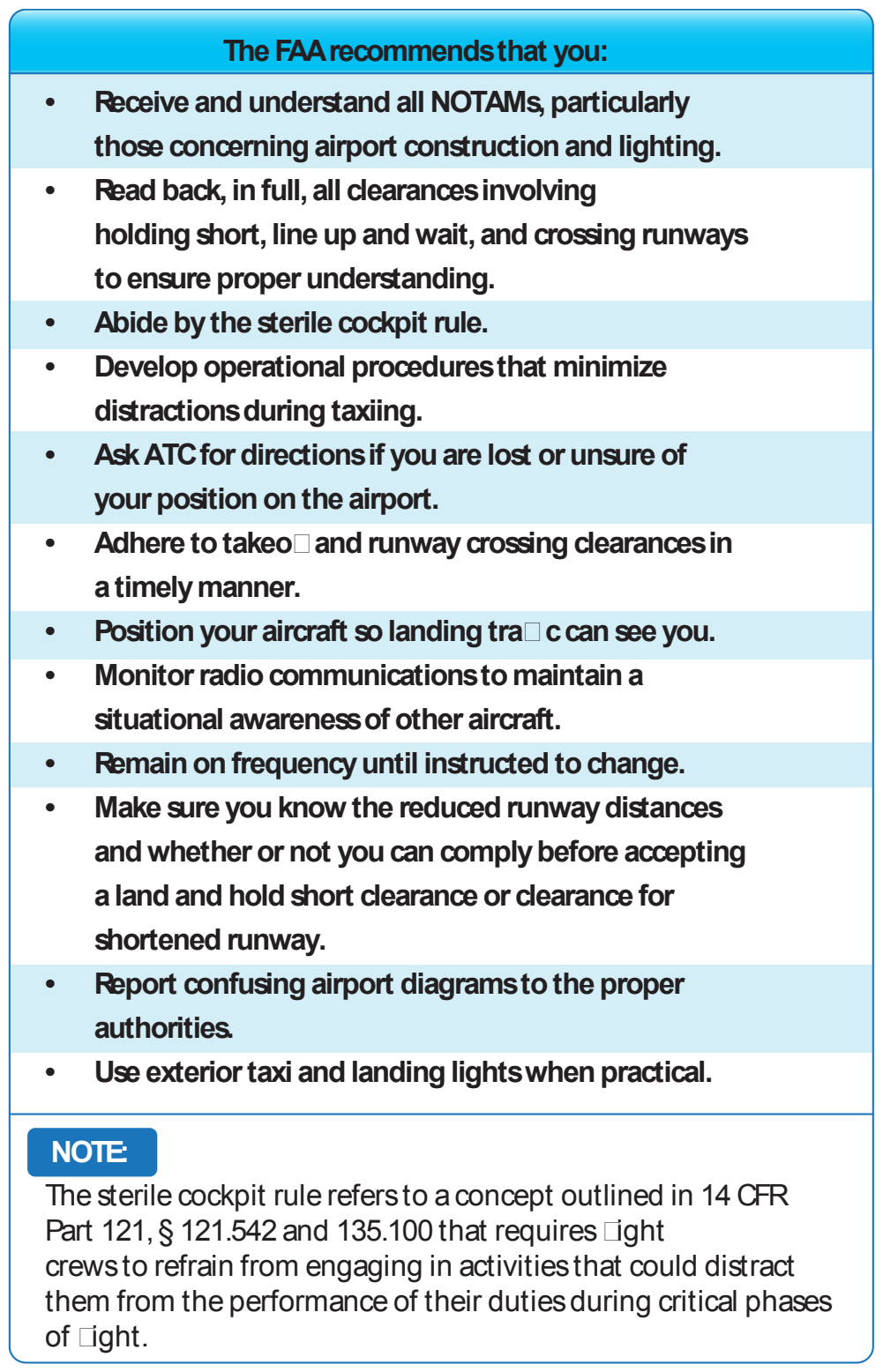
Figure 1-5 highlights several steps that reduce the chances of being involved in a runway incursion.
In addition to the SMGCS program, the FAA has implemented additional programs to reduce runway incursions and other surface movement issues. They identified runway hotspots, designed standardized taxi routes, and instituted the Runway Safety Program.
Runway Hotspots
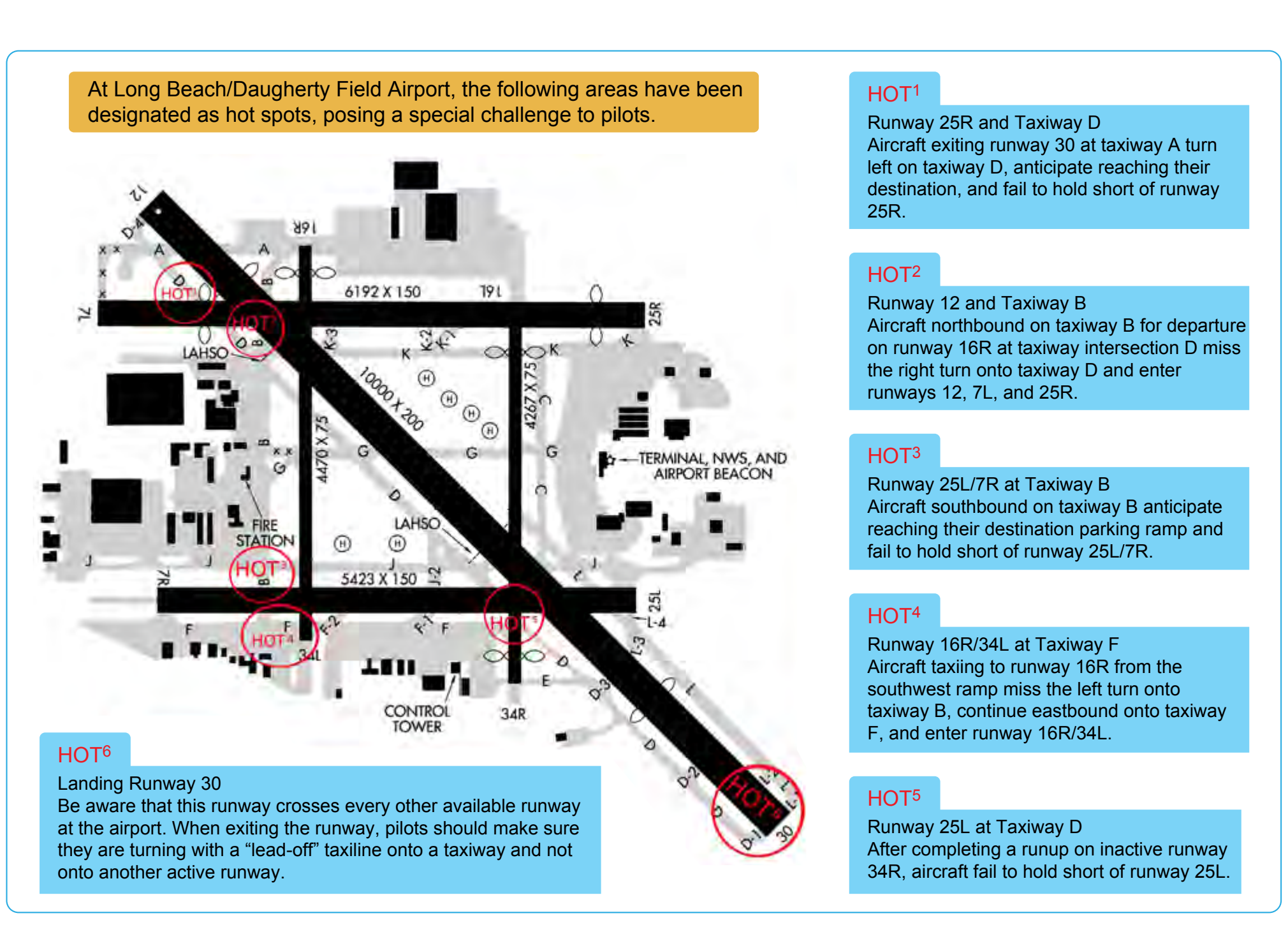
ICAO defines runway hotspots as a location on an aerodrome movement area with a history or potential risk of collision or runway incursion and where heightened attention by pilots and drivers is necessary. Hotspots alert pilots to complex or potentially confusing taxiway geometry that could make surface navigation challenging. Whatever the reason, pilots need to be aware that these hazardous intersections exist, and they should be increasingly vigilant when approaching and taxiing through these intersections. These hotspots are depicted on some airport charts as circled areas. [Figure 1-6] The FAA Office of Runway Safety has links to the FAA regions that maintain a complete list of airports with runway hotspots at [http://www.faa.gov/airports/runway_safety](http://www.faa.gov/airports/runway_safety/).
Standardized Taxi Routes
Standard taxi routes improve ground management at high-density airports, namely those that have airline service. At these airports, typical taxiway traffic patterns used to move aircraft between gate and runway are laid out and coded. The ATC specialist (ATCS) can reduce radio communication time and eliminate taxi instruction misinterpretation by simply clearing the pilot to taxi via a specific, named route. An example of this would be Los Angeles International Airport (KLAX), where North Route is used to transition to Runway 24L. [Figure 1-7] These routes are issued by ground control, and if unable to comply, pilots must advise ground control on initial contact. If for any reason the pilot becomes uncertain as to the correct taxi route, a request should be made for progressive taxi instructions. These step-by-step routing directions are also issued if the controller deems it necessary due to traffic, closed taxiways, airport construction, etc. It is the pilot’s responsibility to know if a particular airport has preplanned taxi routes, to be familiar with them, and to have the taxi descriptions in their possession. Specific information about airports that use coded taxiway routes is included in the Notices to Airmen Publication (NTAP).