Chapter 2
Design and Construction
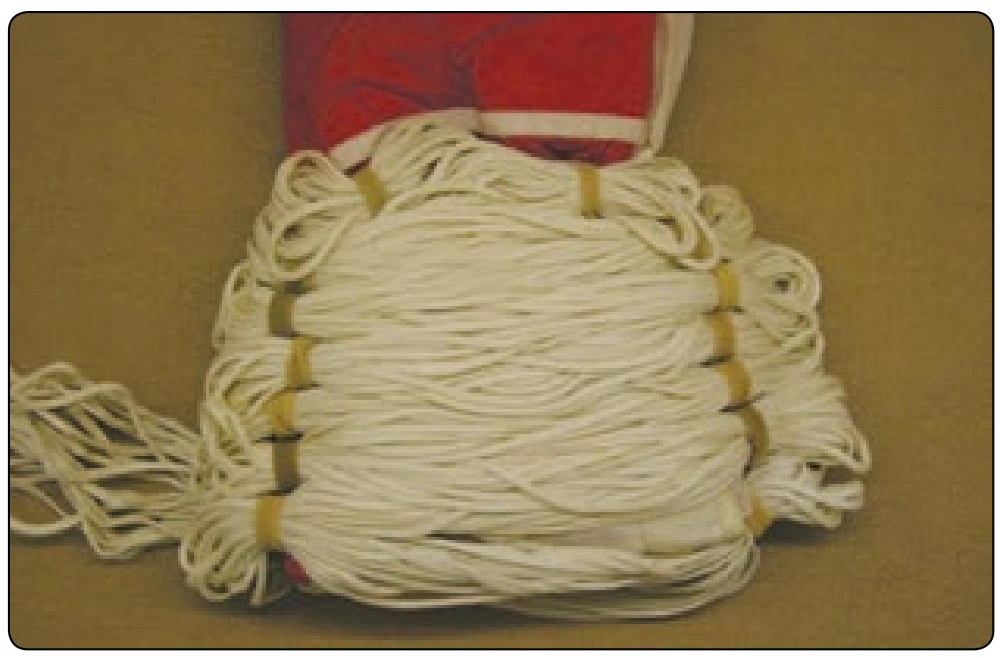
In the early days of parachutes, the lines and canopy were stowed in the container. During the deployment process, the canopy was extracted first, followed by the lines. This was known as a “canopy first” deployment. If the canopy inflated before tension was applied to the lines, a malfunction was highly likely and a hard opening shock a certainty. Over the years, it was learned that the deployment process needed to be controlled to prevent malfunctions. Hence the introduction of deployment devices that changed the deployment sequence to “lines first” by preventing canopy skirt from spreading until the lines were fully extended.
At the start of the World War II, with the advent of airborne paratroops, the main canopy was deployed from a direct bag static line system. In this system, the main canopy was packed in a bag that was permanently attached to the static line. After deployment, the bag and static line remained with the aircraft. This system is still used today with some modifications. For emergency parachutes, the military adopted the “quarter bag” in the 1950s for use with high-speed emergency systems. [Figure 2-19] This was fairly complicated to pack but effective in controlling the parachute during opening. In the early 1960s, the sleeve was developed and soon became popular for sport parachuting or skydiving.
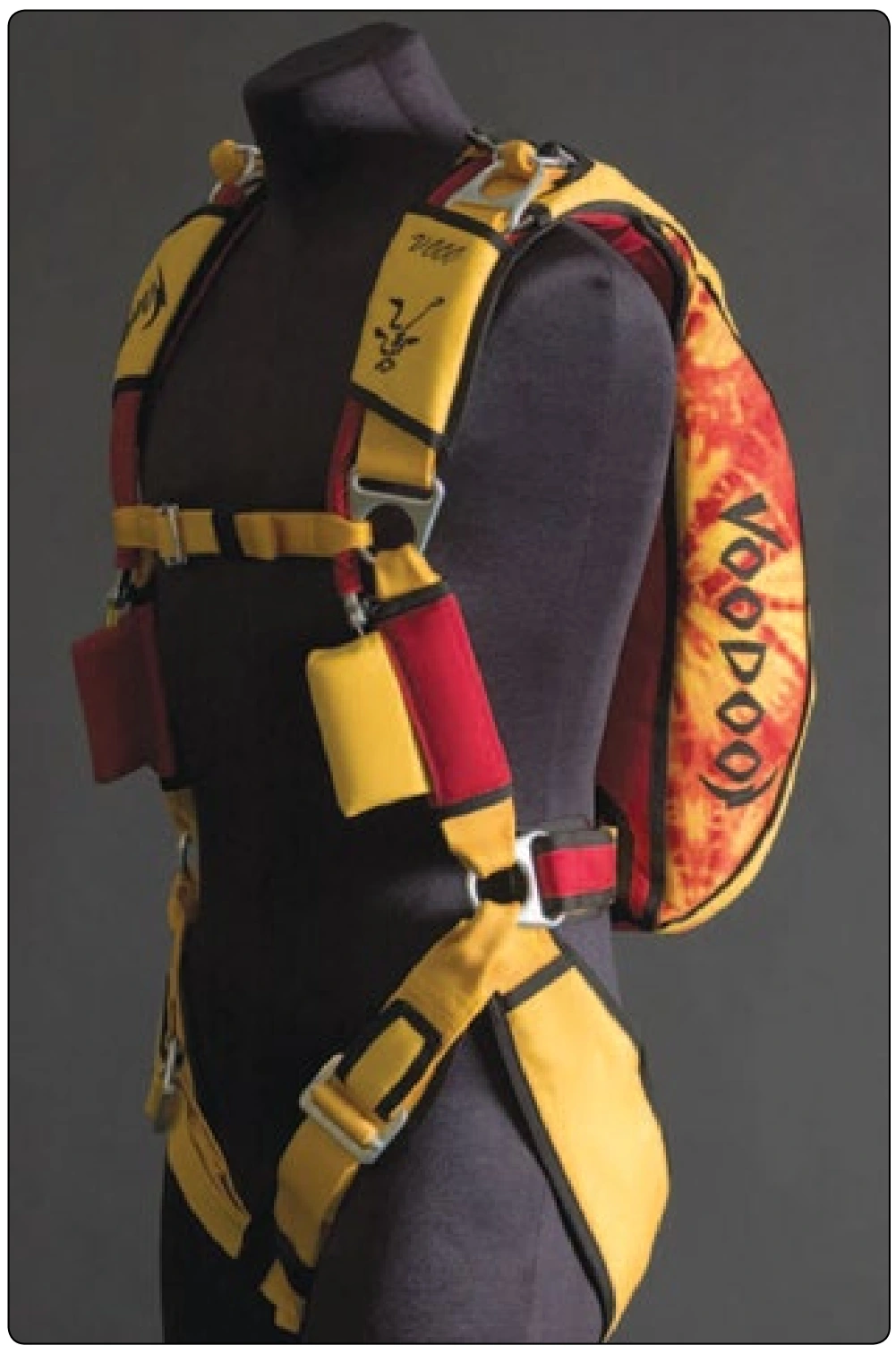
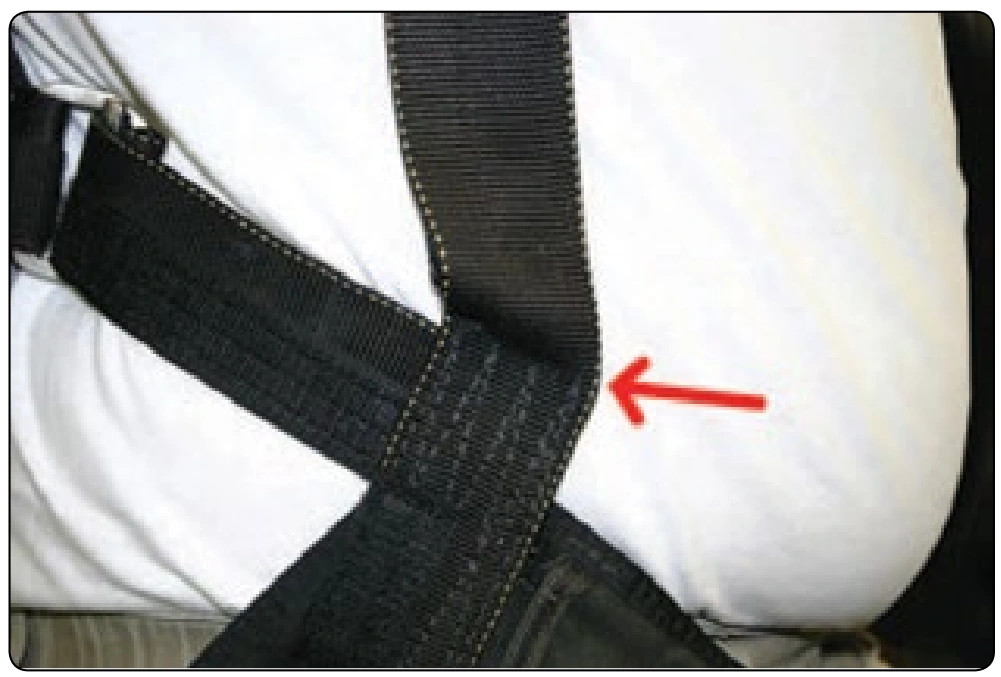
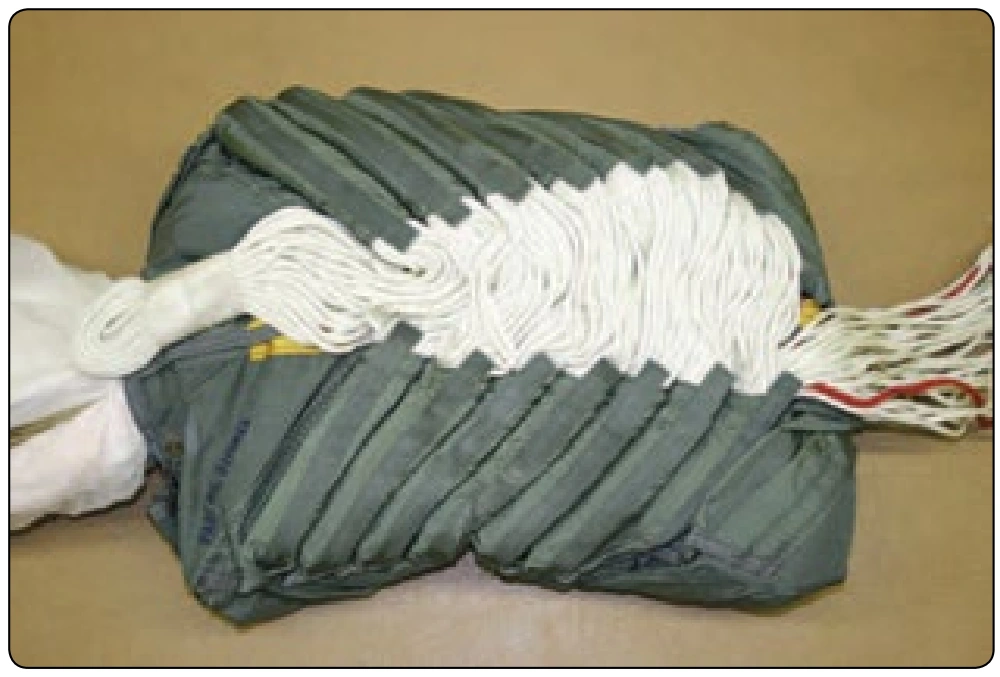
With the growth of skydiving and the increased use of the reserve parachute, it soon became obvious that the reserve parachute needed to be controlled more. In the mid 1970s, the two-stow diaper was developed for use with emergency and reserve parachutes. This design was soon followed by the three-stow diaper and the piglet-style diaper invented by Hank Ascuitto. During this time period, the deployment bag became the preferred method of deploying the increasingly popular ram-air or square canopies. In 1977, Para-Flite, Inc. introduced the first ram-air reserve canopy, which utilized the “free bag” deployment system. This design continues to this day virtually unchanged as the preferred method of deploying square reserve canopies.
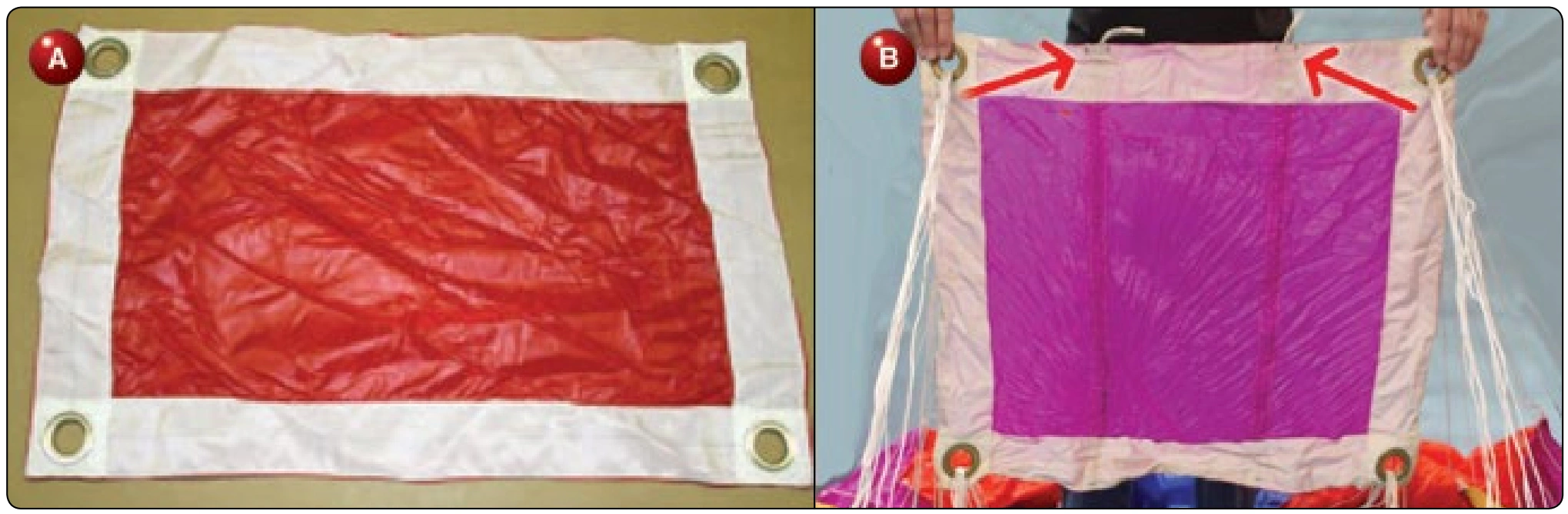
Reefing devices slow down and stage the opening sequences of canopies, resulting in lower opening forces. This is particularly critical at higher speeds where the excessive “G” forces experienced may injure or kill the user. The most common reefing device used today is the “slider.”
[Figure 2-20A and B] This device consists of a piece of fabric with grommets or rings at the corners through which the line groups pass. This restricts the inflation of the canopy and slows down the opening. While other methods have been developed for military or aerospace applications, the slider is the preferred method of reefing ram-air canopies. Without this device, skydiving would not be as developed as it is today.
Deployment Types
There are currently six different types of deployment methods, which are listed below.
Type 1: Canopy First Deployment
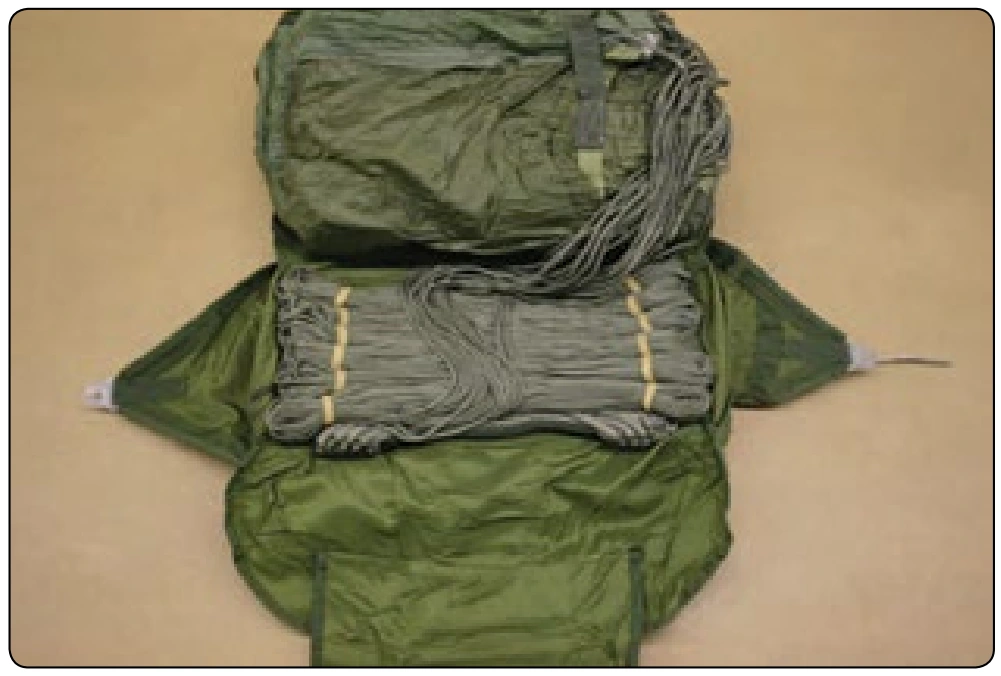
With this method, the lines are stowed vertically or horizontally in the container. Examples of this method are the T-7A chest pack or the B-12 back parachute. [Figure 2-21]
Type 2: Two-Stow Diaper or Half Diaper
This method utilizes split line groups. Two stows from one line group lock the diaper, compensated by offsetting stows of the other line group in the container with the remainder of the lines stowed in the container. Examples of this method are the early Strong 26' Lo-Po and the Pioneer “K” series reserves. [Figure 2-22]
Type 3: Ascuitto or Piglet-Style Flat Diaper
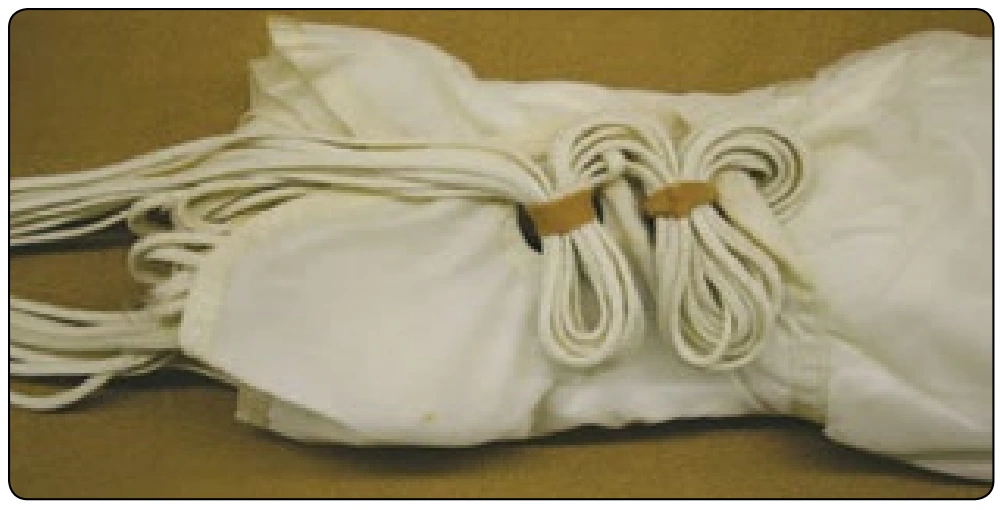
This deployment features a full diaper with all lines stowed left to right or perpendicular to the radial seam. Examples of this method are the Piglet, Phantom, and Security Aero Conical (SAC) canopies. [Figure 2-23]