
Chapter 2
Design and Construction
[Figure 2-32]
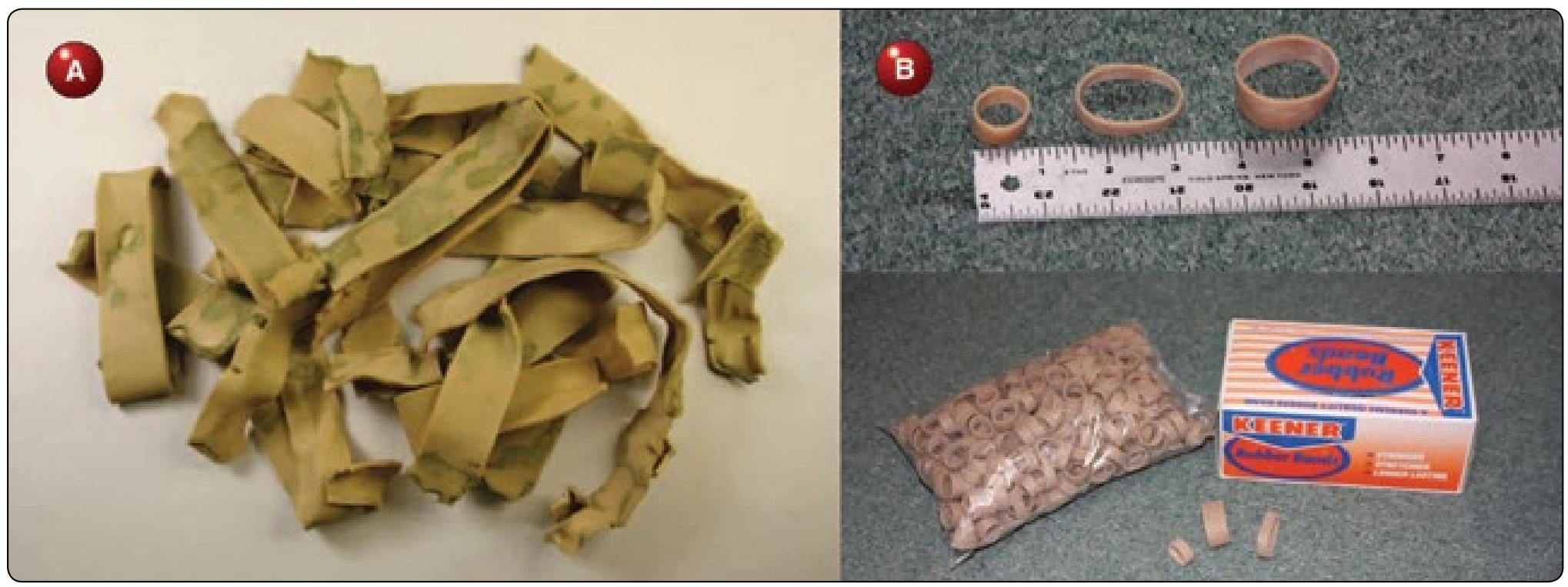
In response to occasional violent openings on ram-air canopies, Parachute Labs (Jump Shack) in 2003 introduced the “speed bag” to eliminate “line dump” (line strip). The lines are retained in rubber bands 25 percent in from the edge of the bag. This balances the mass of the stows between the bights and center span of the stow. The bag has an additional flap on the top side that has slots for the rubber bands mounted on the bottom flap. These two flaps overlap closing the bag over the canopy. The design was used on main canopies only for the first three years. Its success led to the release as a reserve bag in 2006.
Bridles
The bridle is a cord or webbing strap that is used to connect the pilot chute to the canopy or deployment device. Main and reserve bridles, while sharing the same function, operate differently.
Early bridles were simply a length of suspension line tied off to the two components. It was soon learned that the length of the bridle affected the function of the pilot chute and the opening characteristics of the canopy. On most round emergency and reserve parachute assemblies, the length and type of the bridle is fixed for optimum performance. The rigger cannot change the configuration of the bridle without approval of the manufacturer.
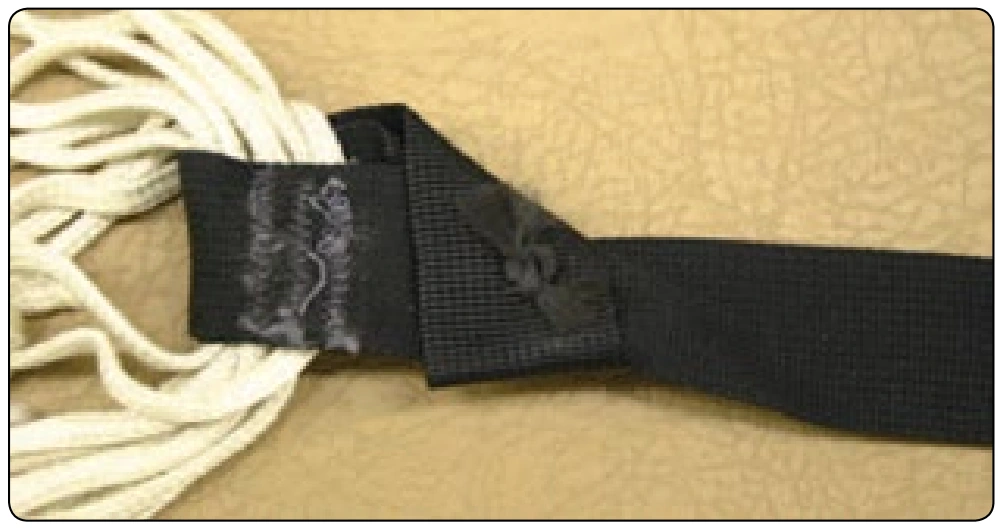
There are two basic types of round canopy bridles. The first is a tubular nylon bridle that is tied on. The second is a pre-sewn bridle with loops at each end. The loop of one end is passed through the attach point on the pilot chute and then back through itself forming a lark’s head knot. The other loop of the bridle is then similarly attached to the canopy apex. [Figure 2-33] With this type, it is essential for the loop to remain loose to ensure the bridle is free floating and self-centering around the apex lines. Hand tack the loop to ensure this. [Figure 2-34]
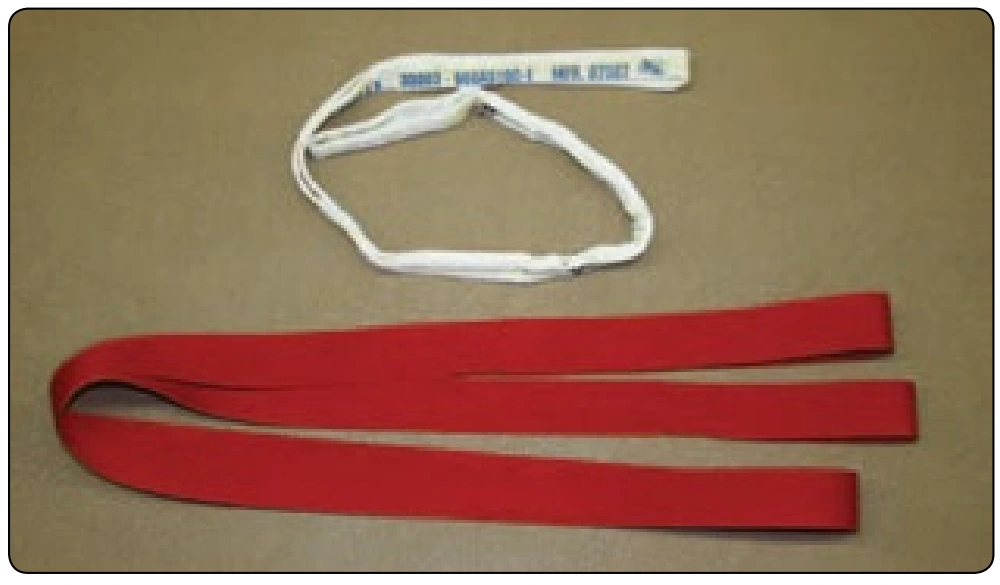
Square reserve bridles are generally built into the free bag. The bridle material is usually 2 feet wide or more for high drag. The original concept of the free bag is to allow the square reserve to deploy if the reserve pilot chute is captured resulting in a horseshoe-type malfunction. The high-drag bridle would then pull the reserve bag off the parachutist’s back and allow the canopy to deploy free from the bag. In the late 1980s, assistor pockets were added to some bridles for additional drag as square reserves became bigger and heavier. [Figure 2-35]
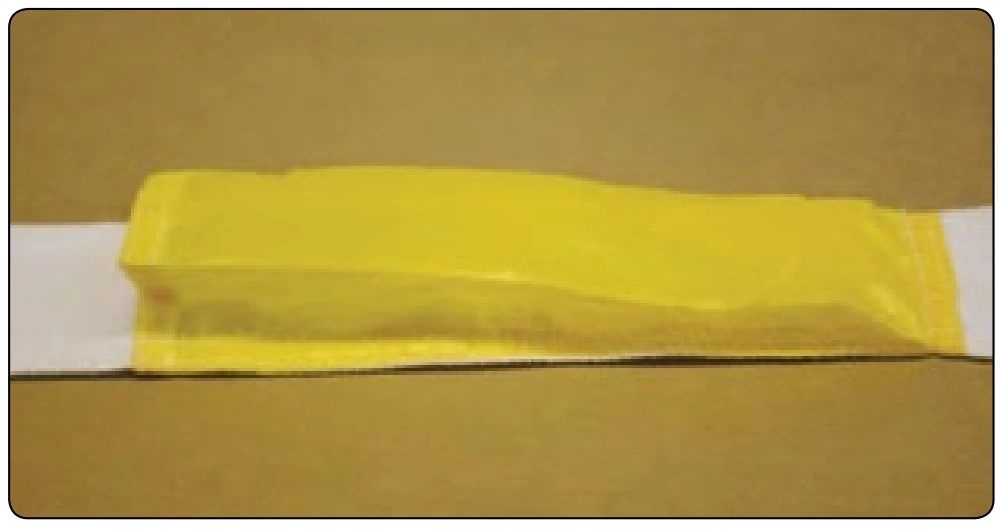
Early main bridles were simply longer versions of the reserve bridles. This was necessary to compensate for the “burble” created in free fall by the parachutist. In the mid 1970s and with the advent of the hand deploy pilot chute, the length of the bridle was critical in order to allow proper extraction of the locking pin that secured the pack closed.
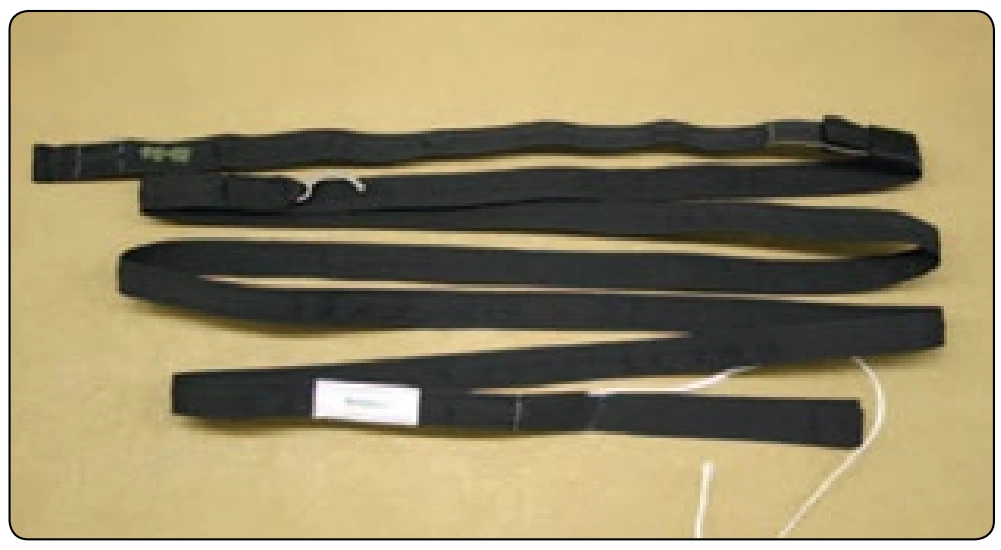
In recent years and with the almost total use of ram-air parachutes, the need for collapsible main pilot chutes has become widespread. As the main canopies have become smaller and faster, the drag of the inflated main pilot chute after opening can have an adverse effect on canopy performance. This problem has been solved through the use of a collapsible pilot chute/bridle system. There are two primary designs used to accomplish this.
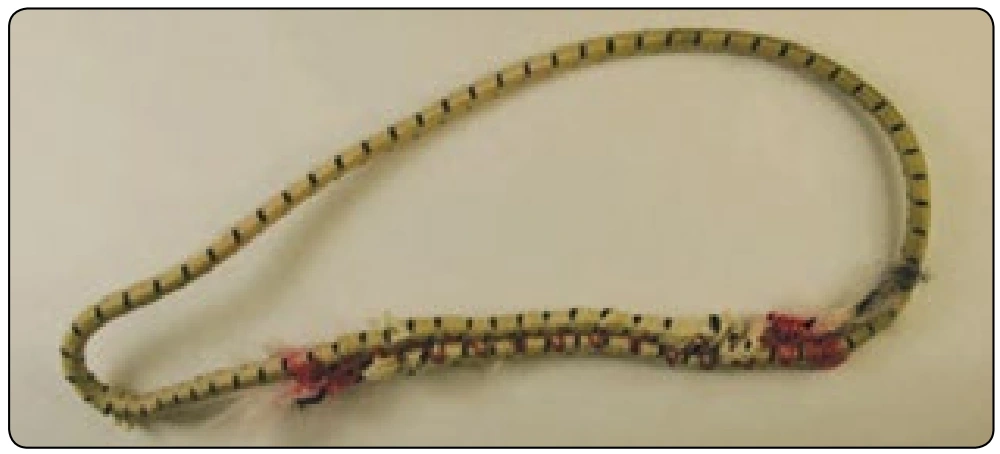
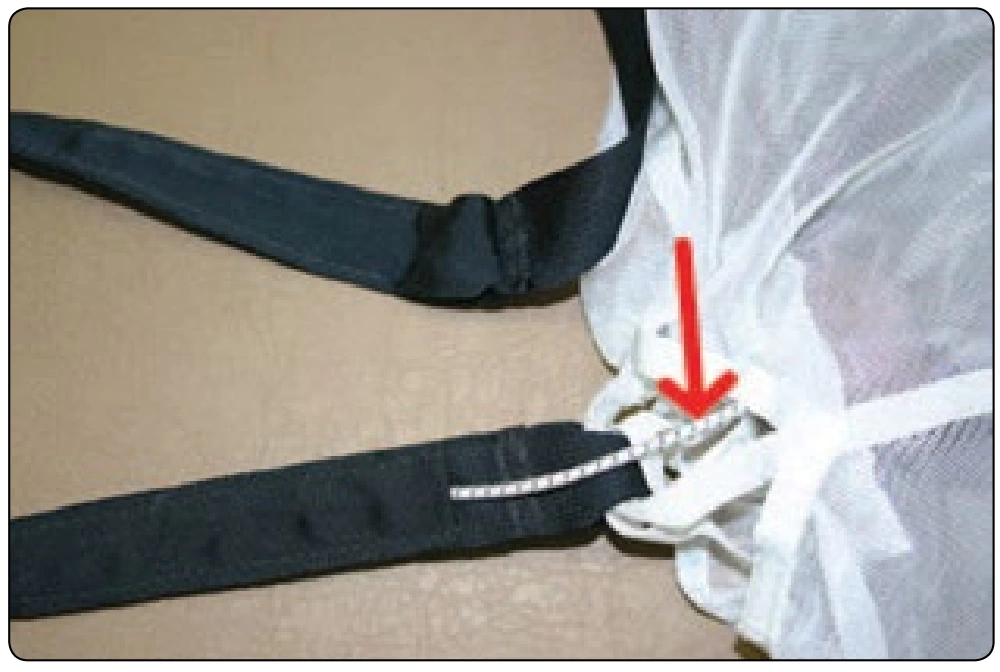
The first is the “bungee” collapsible configuration. This consists of a length of elastic shock cord inside a tape sheath on the bridle near the pilot chute end. [Figure 2-36] When relaxed, it holds the apex of the pilot chute collapsed. When the pilot chute is deployed into the airstream, the airflow inflates the pilot chute, which deploys the canopy. After opening, the elastic pulls the apex down again and collapses the pilot chute, reducing the drag. While this system works, its main drawback is that certain airspeeds are needed to inflate the pilot chute. Remember, the primary function of the pilot chute is to initiate deployment. Collapsing the pilot chute is secondary.
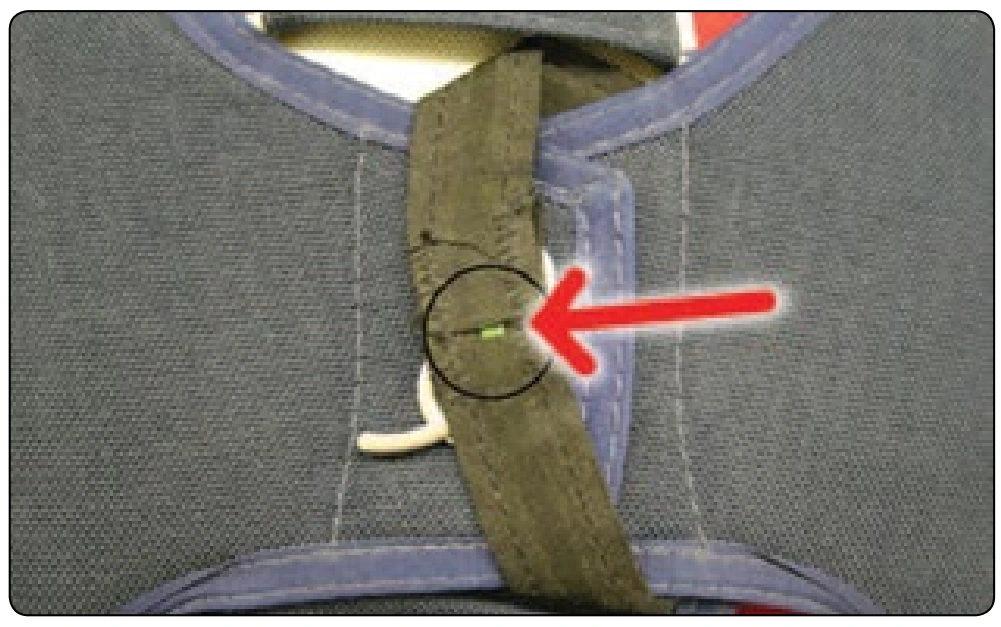
The second type is the “kill-line collapsible” configuration. This consists of a bridle with a full length channel through which passes a line of Kevlar® or Spectra®. [Figure 2-37] The bridle is “cocked” and the lower end of the bridle is collapsed during packing. This allows the pilot chute to inflate immediately. During the deployment sequence, as the canopy inflates, the lower end is stretched to length and the centerline pulls the apex of the pilot chute down and collapses it. This configuration has become almost universal in use for skydiving today. The only drawback is if the user forgets to cock the bridle during packing. This results in a collapsed pilot chute and a pilot chute in tow. In the early days of use of the kill-line bridle, this was a problem but has become less frequent today. Some bridles have a colored “eye” at the locking pin location to show if it is cocked and the centerline is set correctly. [Figure 2-38]
The kill-line configuration is used almost exclusively on tandem systems due to the high speeds involved and the size of the drogue pilot chutes. Some bridles are made from 2" Kevlar® tape and have tubular nylon centerlines. Others are made from Type 4 square weave with a Spectra centerline. The advantage of the latter is that it can be cut with a hook knife in the event of an on-person malfunction. [Figure 2-39]