Chapter 3
Materials
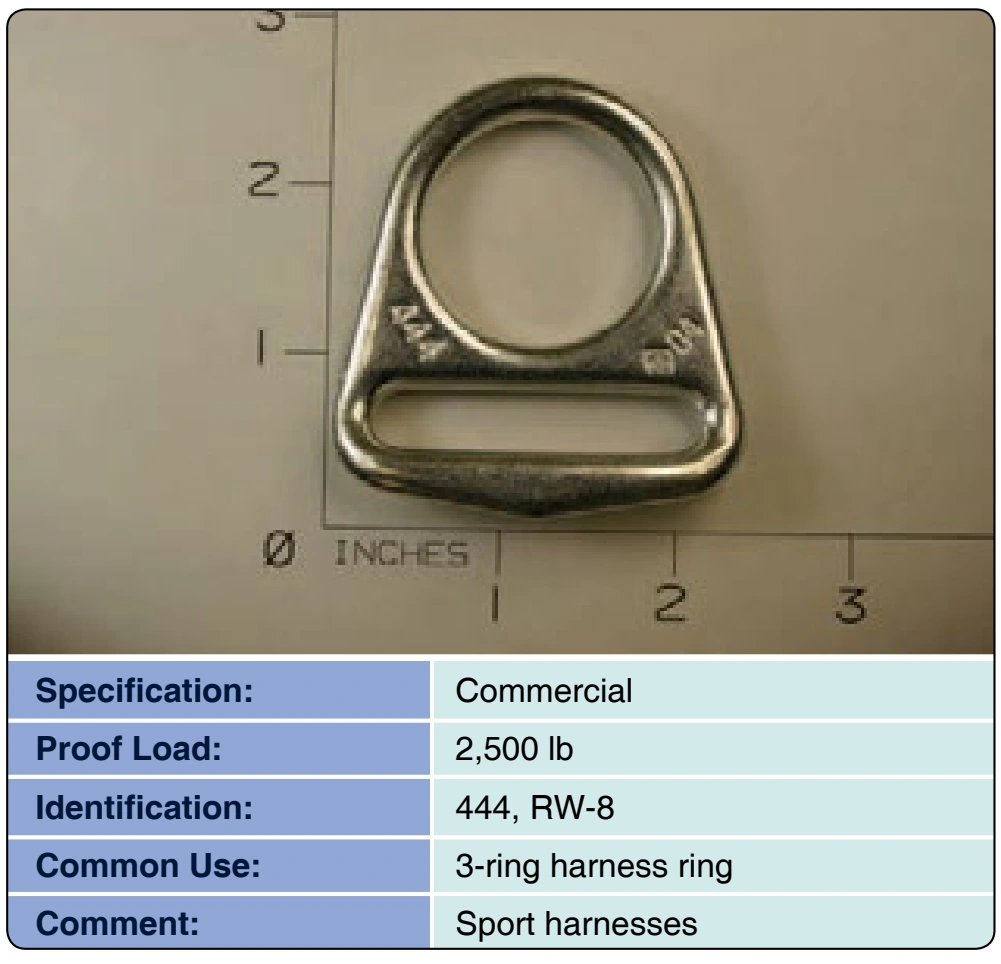
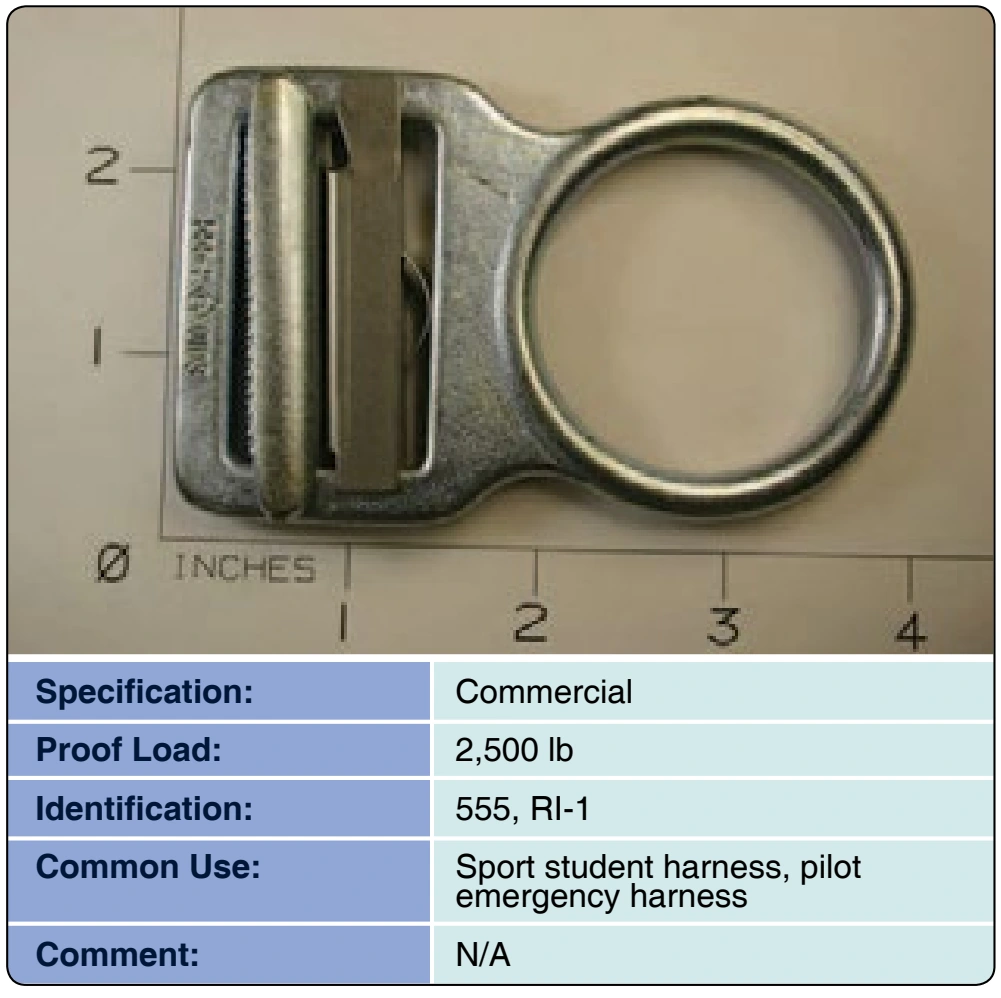
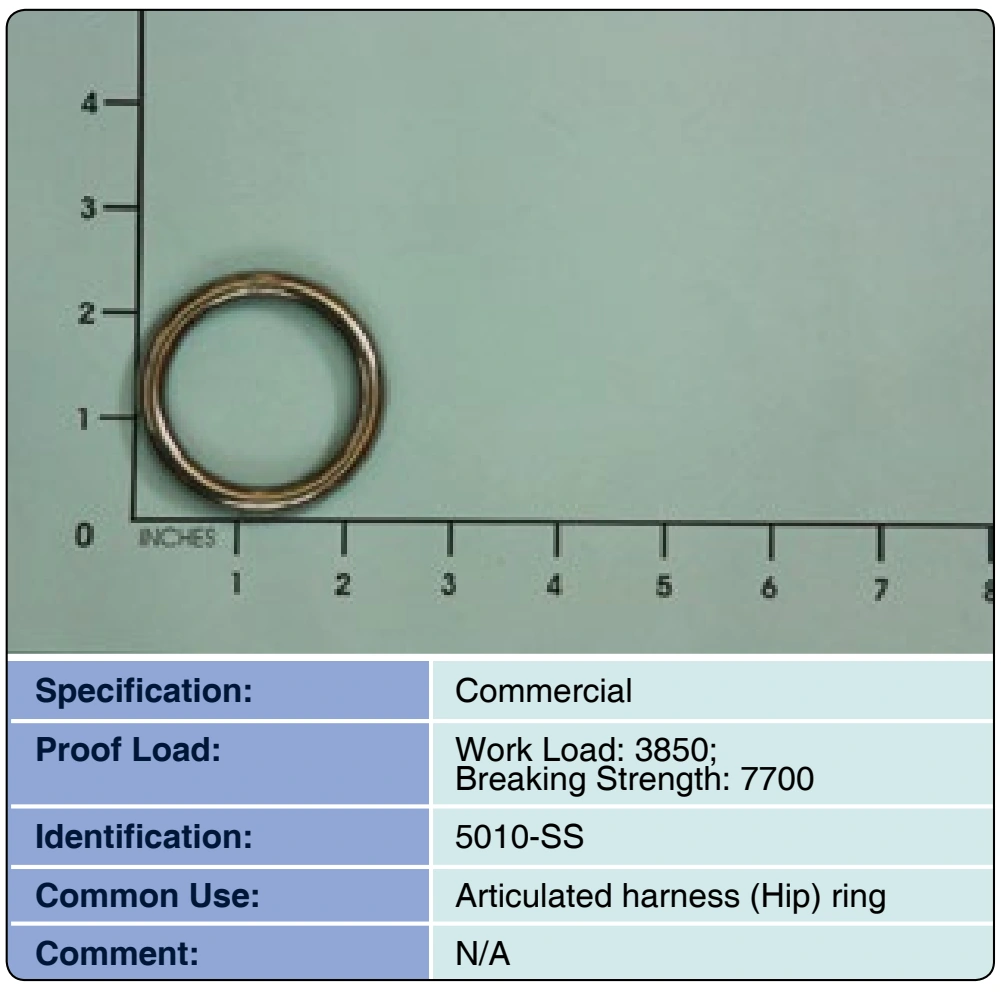
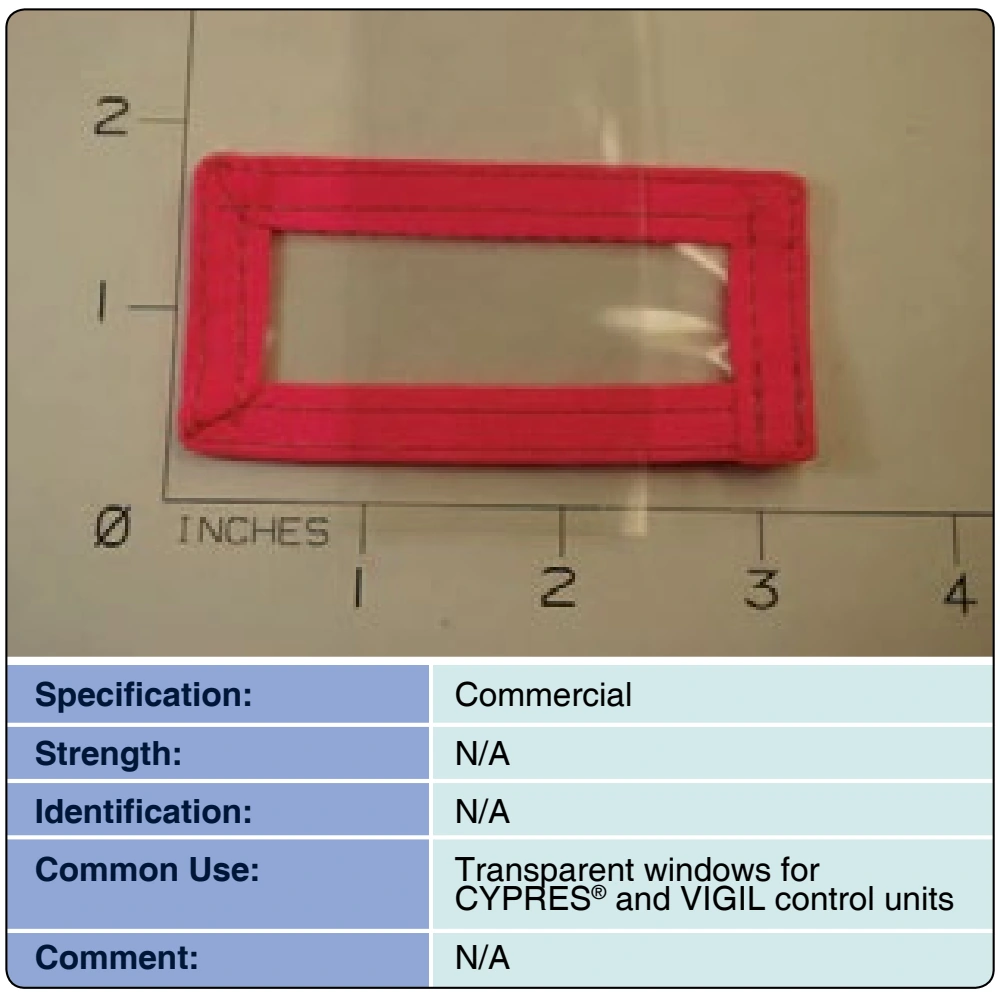
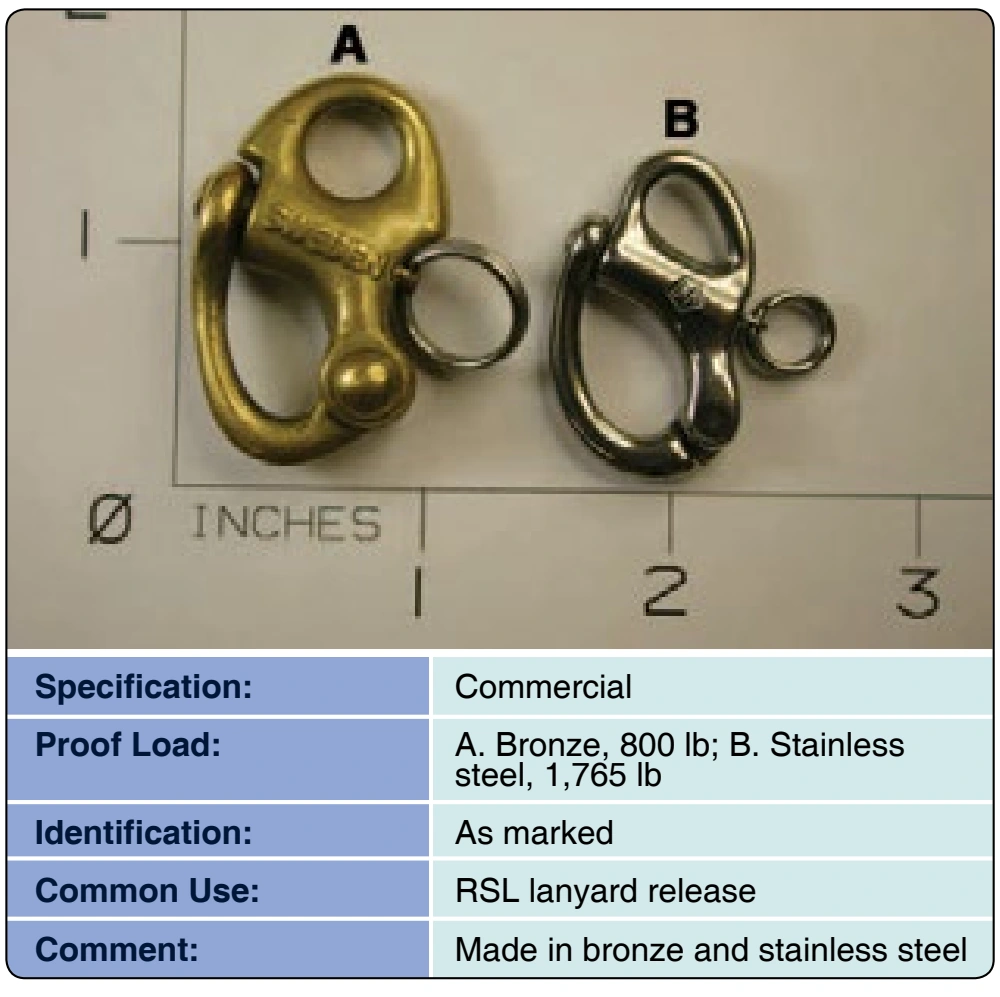
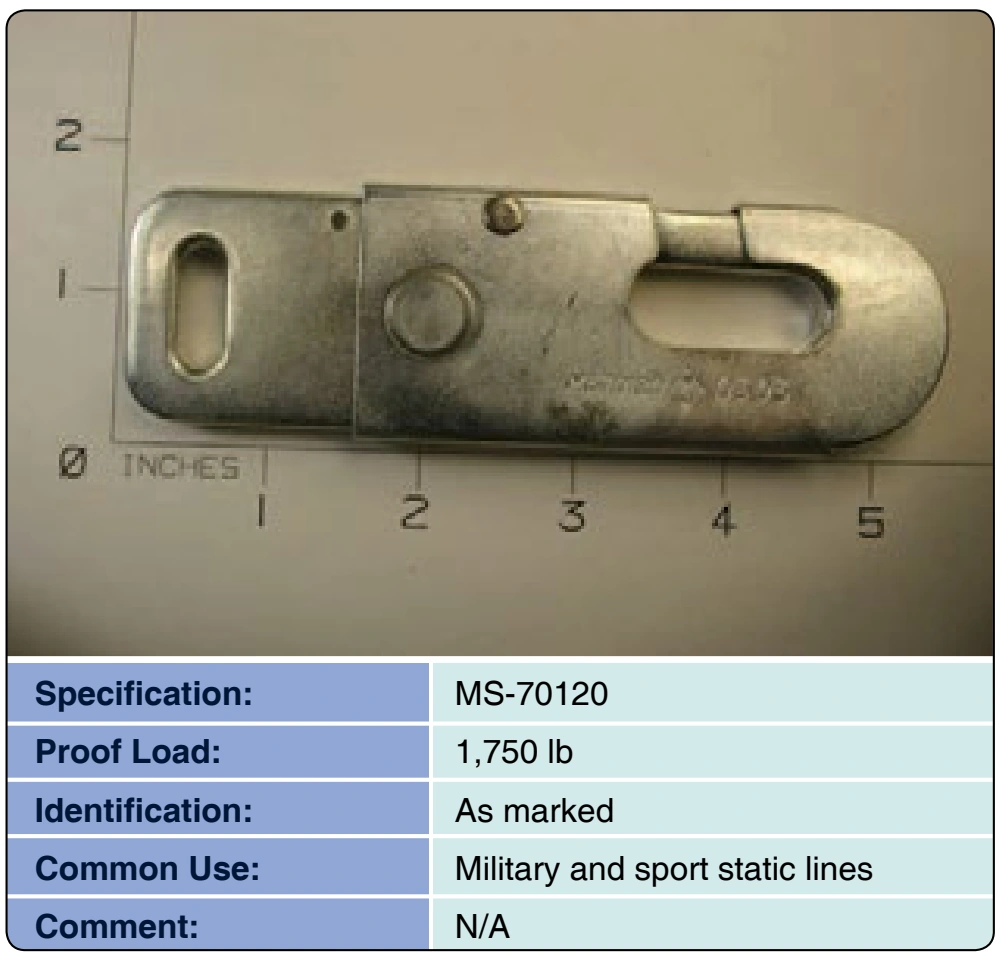
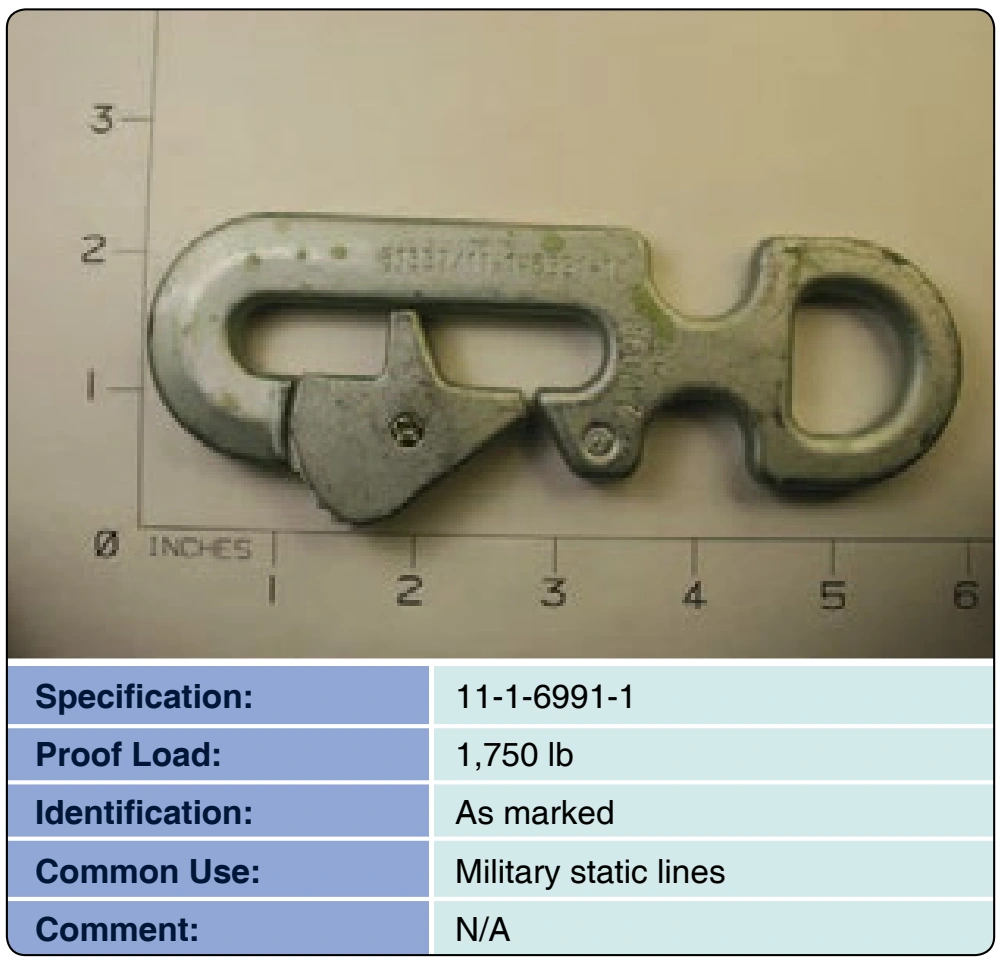
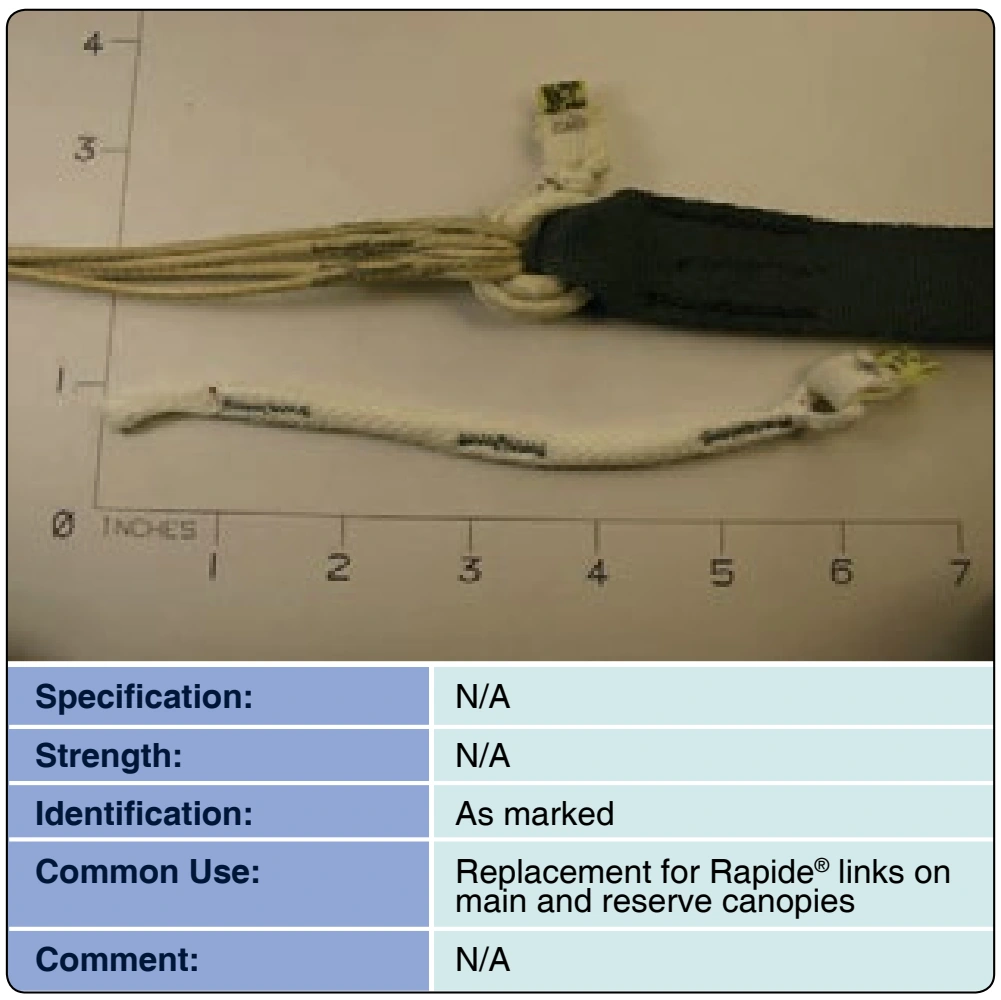
Of all these, Velcro® and grommets play a major part in parachute manufacture. The use of Velcro® is primarily for protector flap closure designs, while grommets are for use in pack closing systems. Both fasteners are subject to extreme wear and tear in their normal use. Consequently, routine maintenance involves the repair and replacement of these items. [Figures 3-85 through 3-89]
Housings
Housings are spiral-wound flexible tubing. Almost all are stainless steel. Their design is to route, house, and protect the ripcord cable. They are anchored to the container at one end and the ripcord pocket or mount at the other end. Most ripcord housings are compressible only, but some military housings used with seat parachutes are expandable as well. The reason that ripcord housings are compressible and non-expandable is to prevent premature loading of the cable and pin as the rig is donned and the user moves around. One-pin sport container systems generally use a .26" inside diameter housing. Two-pin and most military containers use a .375" inside diameter housing. Ripcord housings are measured under slight tension.
The 3-ring release system employs the smaller .20" or .18" housing for use with Lolon (yellow), or Teflon (orange or red), coated release cables. These “cutaway” housings must be expandable and non-compressible. The reason for this is, in the case where the loop load is excessive, the non-compressible housing will resist the loop or “push” against it allowing an effective “pull” of the cable from the loop.
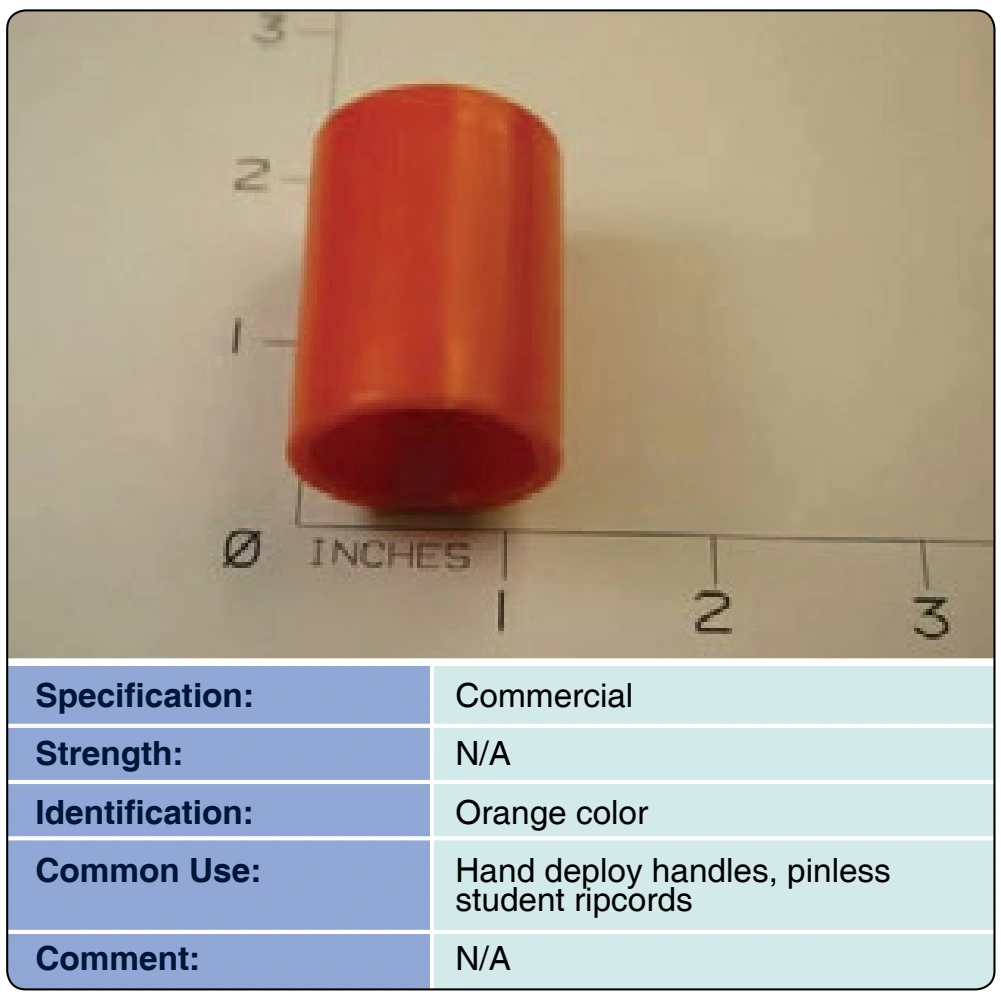
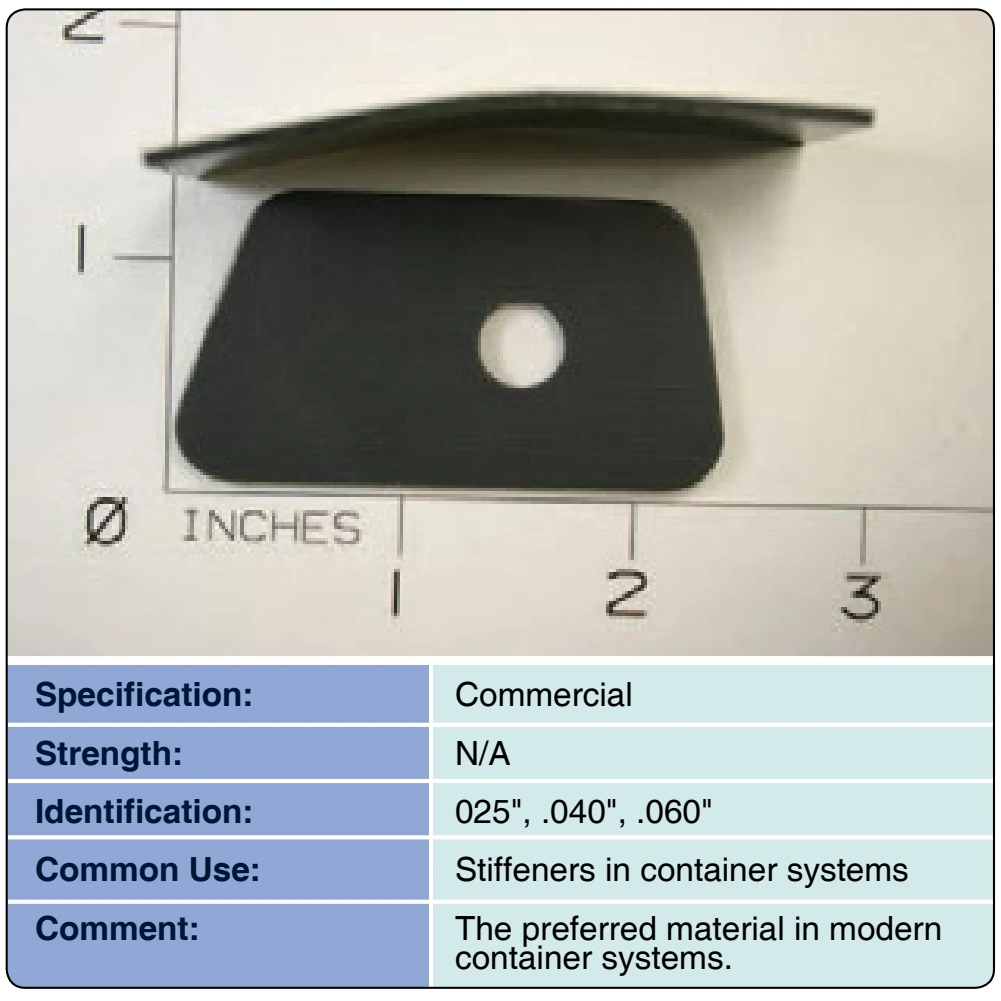
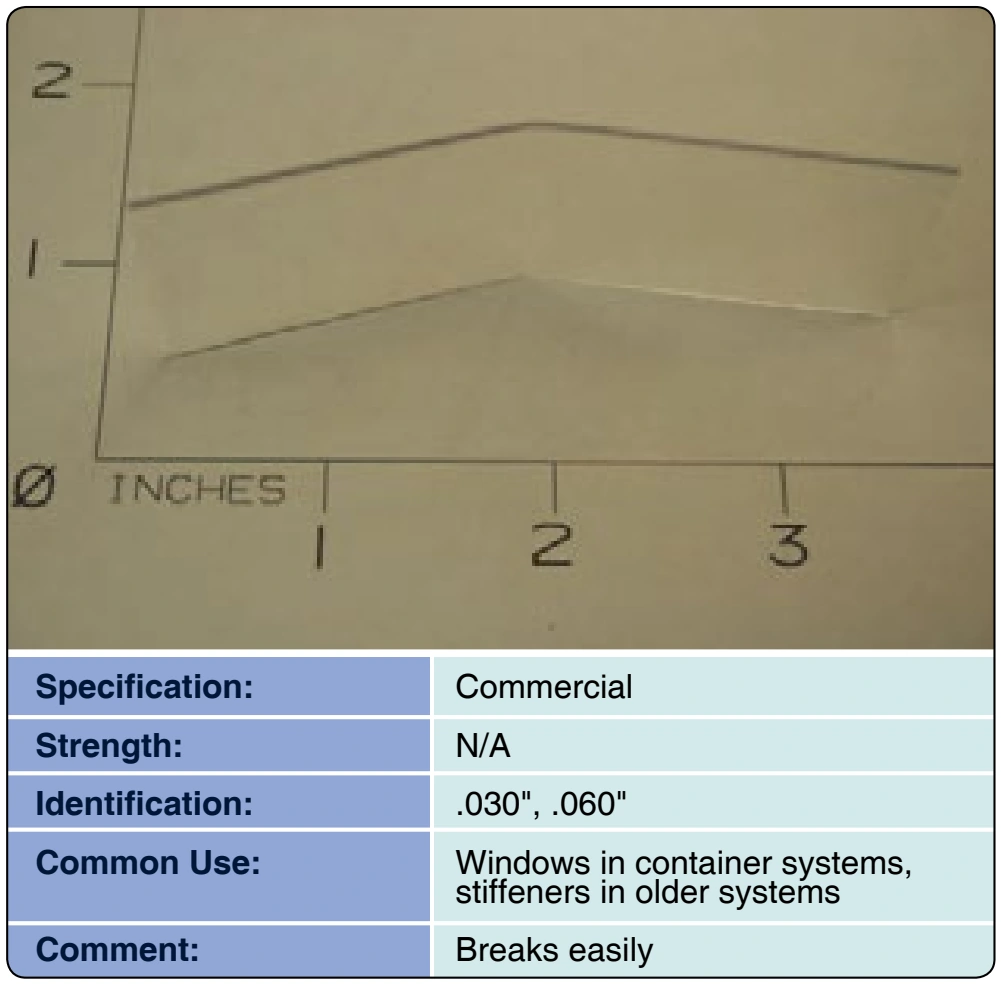
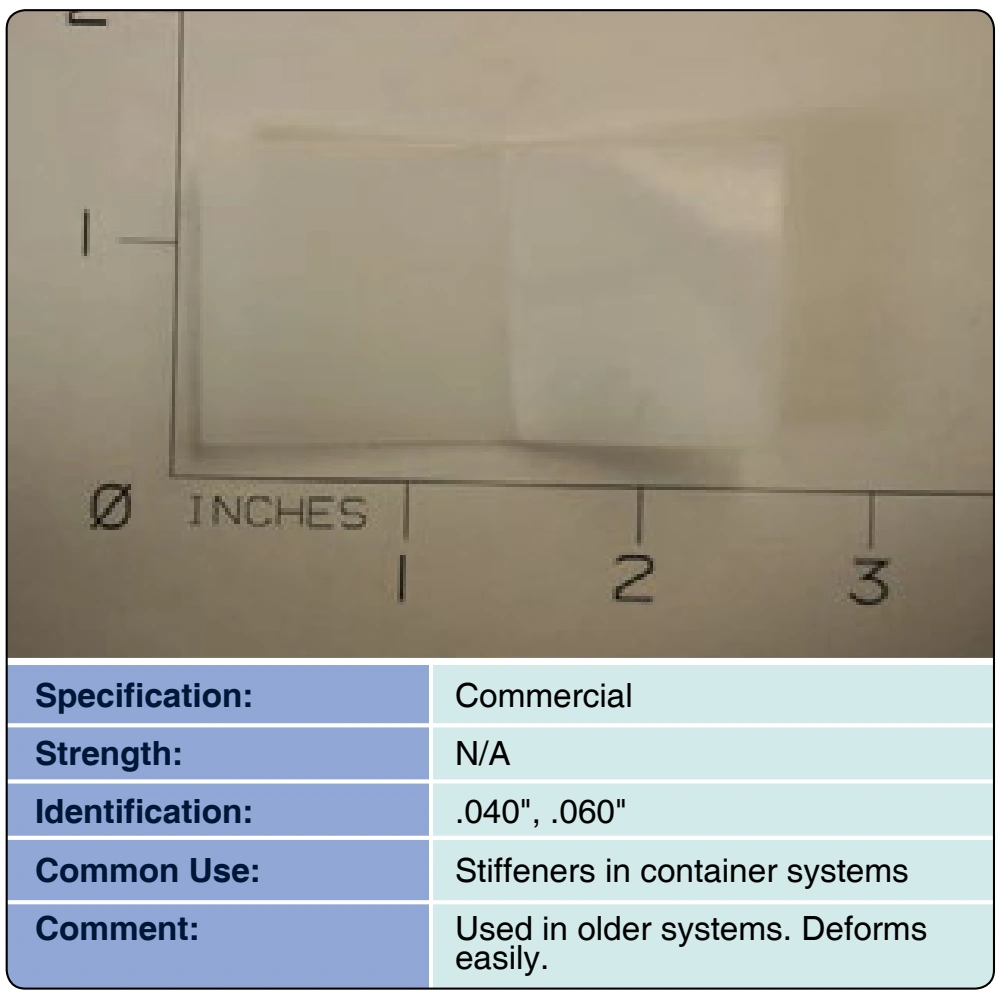
Thus the term “push-pull system.” A compressible housing compresses until it reaches its limit of compression, which could be as much as 20 percent of the total length. In a two-cable scenario, such as the 3-ring, the differential could be as much as to allow the short side to release without releasing the long side. Cutaway housings should be measured in a relaxed state and then compressed to ensure that it remains within the manufacturer’s allowable tolerance.
[Figures 3-90A through 3-92C]
Ripcords, Cables, and Swages
The standard ripcord used today on most parachute systems consists of a stainless steel handle, 3⁄32" 7 × 7 corrosion resistant steel cable, a stainless steel terminal ball, and one or more stainless steel pins swaged onto the cable. The handles come in various shapes and sizes in order to be compatible with main lift web lengths and pocket sizes and particulars, such as whether the ripcord grip is inboard or outboard. The terminal ball may be of several configurations, such as a ball and shank design. The pins usually are one of two basic designs: intermediate pin or terminal pin. The advantage of the intermediate pin is that it can be visually inspected easily by the rigger in the field. The end of the 7 × 7 cable can actually be seen where it is ground off at the bend in the shank of the pin. Metal ripcord assemblies are used on reserve and emergency parachute systems and military mains. Main ripcords may also consist of plastic handles and nylon coated cable without pins.