Chapter 6
Hand Tools, Sewing Machines, and the Parachute Loft
Introduction
Riggers are taught that there are three things necessary to do a proper job: knowledge to do the work, the correct materials, and the right tools. The job cannot be done correctly without all three of these essentials. The right tools include various types of sewing machines, as well as a wide variety of specialized hand tools.
The importance of learning the names and nomenclature of rigging tools and equipment cannot be overemphasized. Just as learning the language of a foreign country allows an individual to live and operate efficiently within a society, learning the language of the rigger allows new riggers to operate and interact within their profession. Without the necessary vocabulary, a rigger is not able to work with other riggers and, more importantly, does not present a professional image to customers. For example, when shopping for tools or sewing machines for rigging, the same tool may have a different name when used by some other trade. Knowing the language of the rigger helps avoid confusion.
Hand Tools
A new senior rigger must acquire enough tools to pack and maintain the types of parachutes for which he or she is rated.
In the course of training, the rigger candidate is exposed to various tools and individual rigging techniques. Some riggers adhere to a minimalist philosophy and use as few tools as necessary. This may initially consist of a packing paddle, a pull-up cord, and a temporary locking pin, or just a pull-up cord, when packing main parachutes at the drop zone (DZ).
With some types of parachutes, these may be all the tools needed to pack them. Other riggers develop techniques that utilize an array of tools designed to make the job easier or the end result neater. Some manufacturers have designed specialized tools to make their particular parachute easier to pack and maintain. Each rigger develops a suitable technique and then obtains the tools to support it.
In the past, the list of tools needed to pack and maintain military surplus parachutes was limited. Since most military parachutes were simply variants of the same canopy designs, common tools could be used across the board. In today’s high-tech world, some of these original tools are still used along with a number of newer designs. Many riggers and manufacturers design and build tools to fit a need, whether it is a new rig design or to make a job more productive.
All riggers need to create a tool kit tailored for their particular situation. Figure 6-1 shows a commercially-available field rigger kitbag with tools. Although commercially-made kitbags are nice, they are expensive. Many riggers are “weekend” riggers, meaning they have a regular job during the week and work as a rigger on the weekend. This is typical of many skydiving riggers. Other riggers work full time in a loft or manufacturing environment.
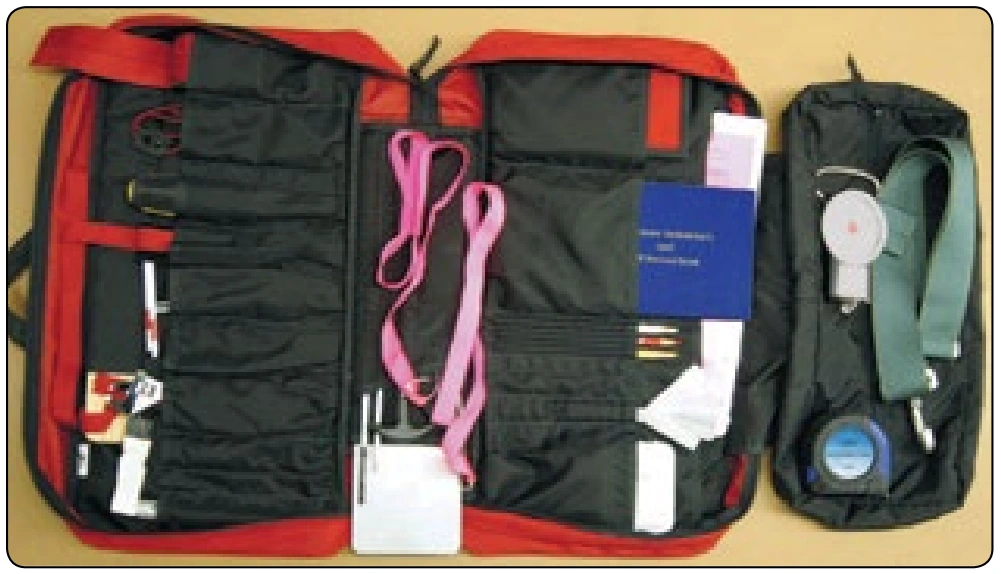
Depending on their needs, riggers have different approaches toward their tools. The weekend rigger may travel to a DZ where the primary job is packing. Therefore, the tool kit is more basic as the purpose of this kit is not to take the whole loft to the DZ. The rigger who works in a full-time loft may have a more comprehensive tool kit, since it does not have to be hauled around. For the weekend rigger, there are several field rigger kitbags available commercially that hold a full assortment of tools. Many riggers design and build custom kitbags tailored around their individual requirements. Doing this is an excellent way to show off sewing skills, while at the same time creating a needed tool kit. There are also contractor tool bags made of a strong fabric with many pockets and compartments that work well with the type of tools a rigger uses. These bags are inexpensive and are available at hardware and home improvement stores.
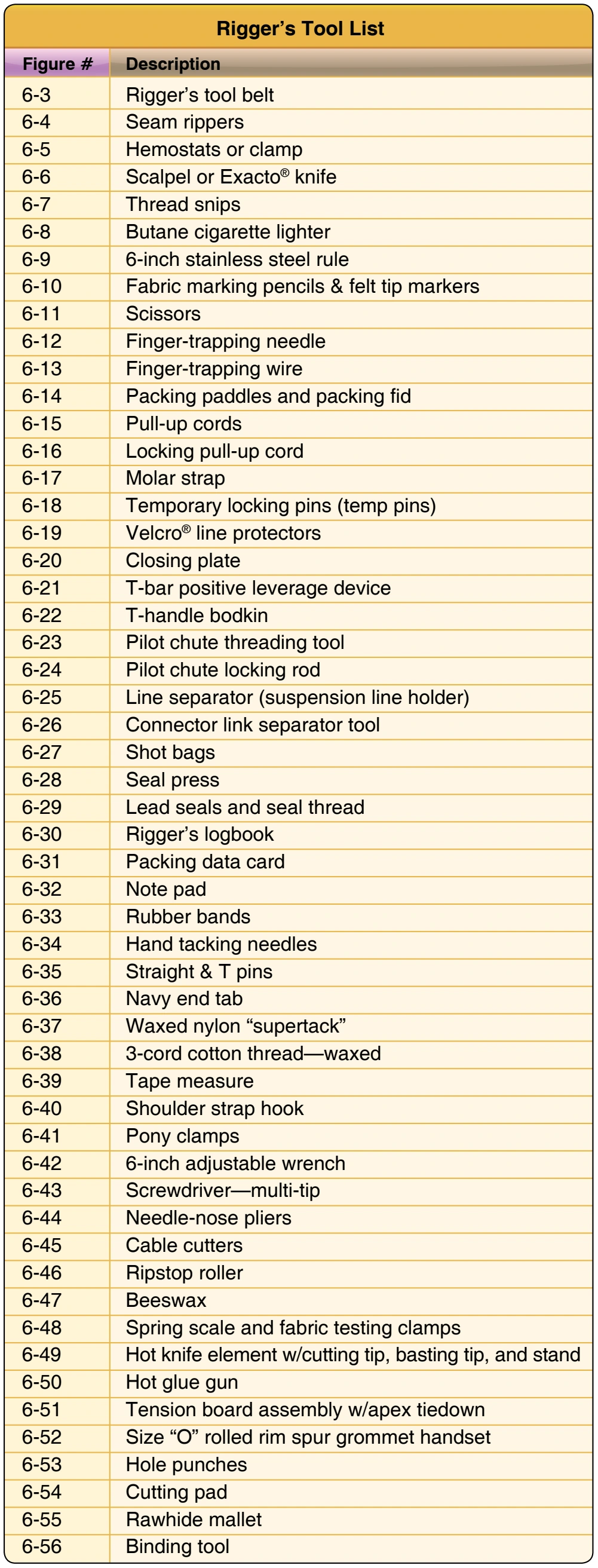
To stock the tool kit, the rigger must determine what tools he needs. This depends on where the tools are used: in the field, DZ, or in the loft. Figure 6-2 shows a list of necessary tools that have been proven useful for today’s rigger. The list of tools is broken down into two different categories: Category 1, items 6-3 through 6-49 are mandatory tools; Category 2, items 6-50 through 6-56 are optional tools as most of them are for use in the loft.
Hand Tools Description
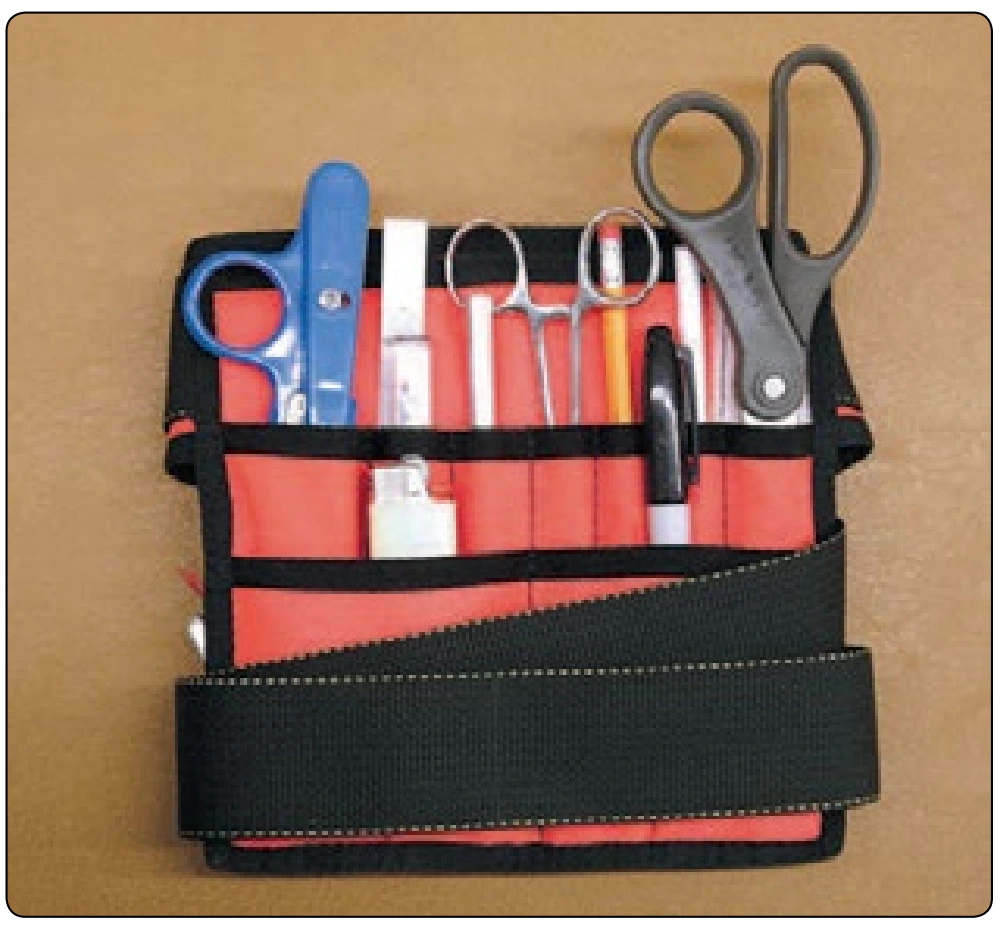
The tool belt is one of the most useful items the rigger can have. [Figure 6-3] Most tool belts are custom built by the riggers themselves and include a selection of tools that are frequently used around the loft. It always seems that the tool the rigger needs at a particular moment is at the other end of the packing table or on another sewing machine. The use of a tool belt makes riggers more efficient as they are not always looking for and having to retrieve their tools. A well-designed tool belt holds the following tools as a minimum: scissors, thread snips, 6-inch ruler, marking pencils and pens, butane cigarette lighter, seam ripper, Exacto® knife or scalpel, short packing fid, and finger-trapping needles. Other tools can be added according to the needs of the individual rigger. The following is a list of common tools and a brief description of how they are used.
Seam ripper—used in the sewing industry for “picking” stitches and ripping out seams. It has a pointed sharp end and an inside cutting edge for slicing through thread. [Figure 6-4]
Hemostats or clamp—used by riggers for many clamping or retrieving operations. Two or three sizes should be obtained, as well as both straight and curved models. These tools can be found at hardware or auto parts stores. [Figure 6-5]
Scalpel or Exacto® knife—used for delicate cutting of materials or thread. The Exacto® knife is preferred as the handles come in various sizes and with a wide selection of blades. [Figure 6-6]