Chapter 6
Hand Tools, Sewing Machines, and the Parachute Loft
Packing paddle—used for dressing the pack of the parachute when packing. This tool is made from either wood or aluminum. The MIL-SPEC paddle has rounded ends and is 1 9⁄16" × 12" long and tapers in thickness from 1⁄4" to 3⁄16". The wooden commercial paddle is 1 3⁄4" × 15" long. [Figure 6-14A]
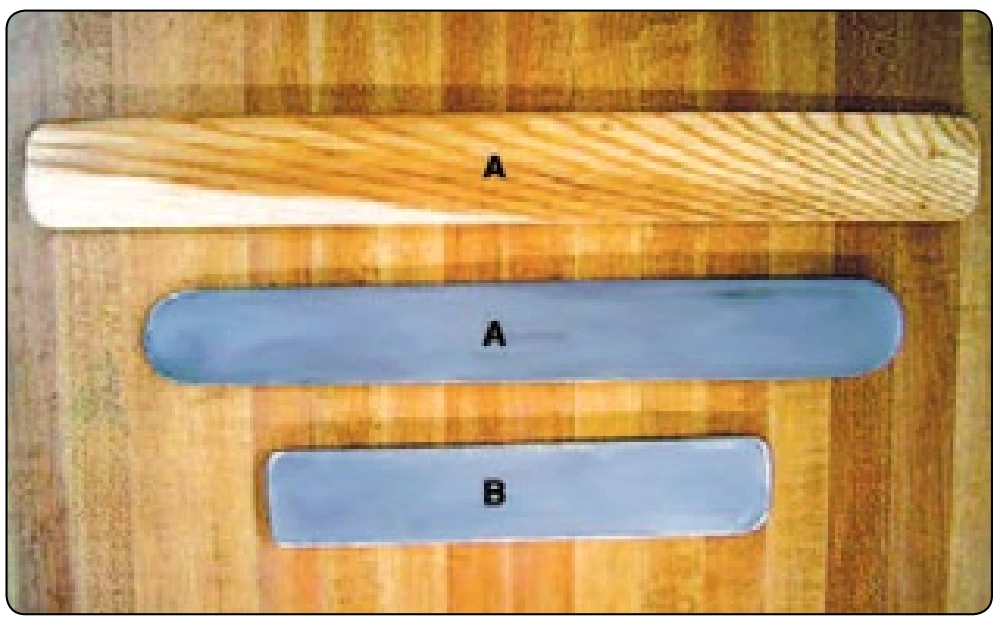
Packing fid—similar to the packing paddle, used also for dressing the parachute pack and tucking in flaps. The fid is approximately 1 9⁄16" × 8" long and tapers from 1⁄4" to 1⁄8". It is made from aluminum and was originally a United States Navy tool. Many riggers have both the fid and the paddle, but usually develop a preference for one or the other. [Figure 6-14B]
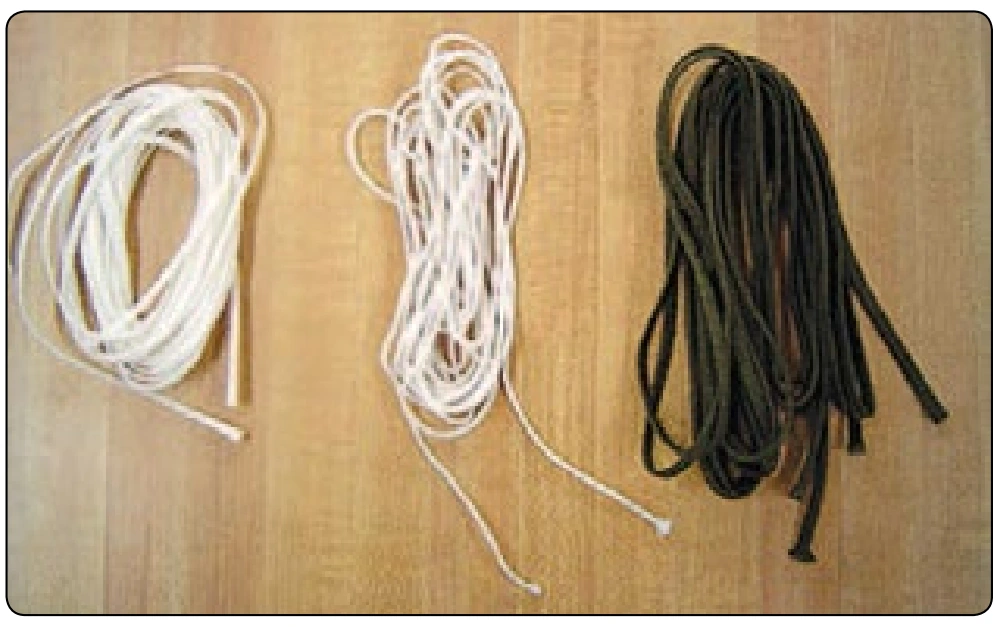
Pull-up cords—used to “pull-up” the locking loop of parachute containers when closing and pinning them. They are made from lengths of suspension line: Cypres loop cord or Type-3 tape. [Figure 6-15]
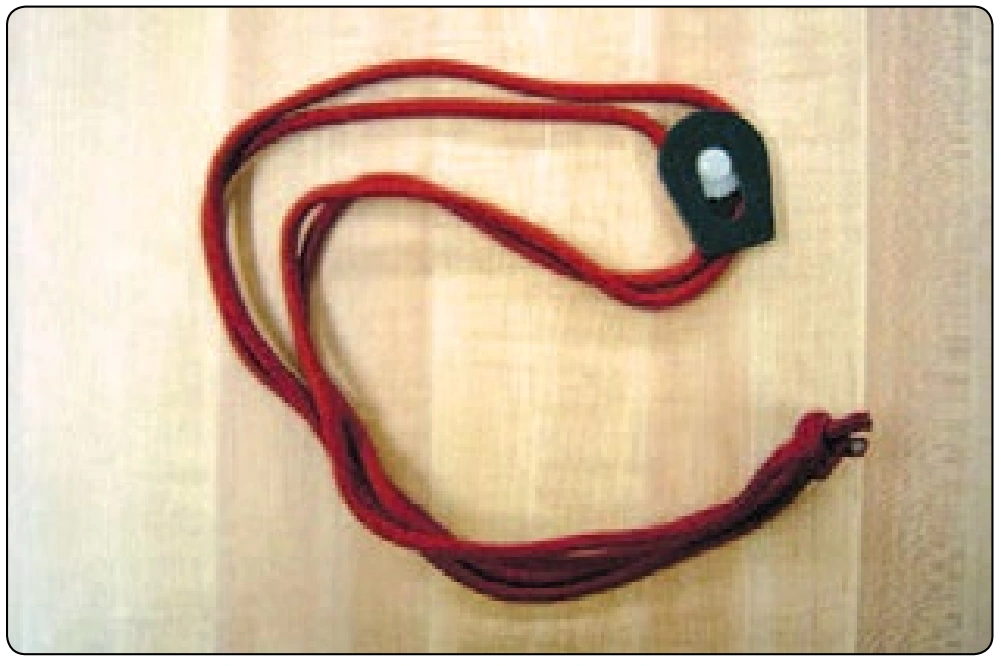
Locking pull-up cord—used to lock the thickness of a two-grommet reserve deployment bag when packing the reserve canopy. It is made from 72 inches of red Type-3 suspension line and a size 94 Cordlok nylon fastener. It may be used on one-pin or two-pin reserve bags. [Figure 6-16]
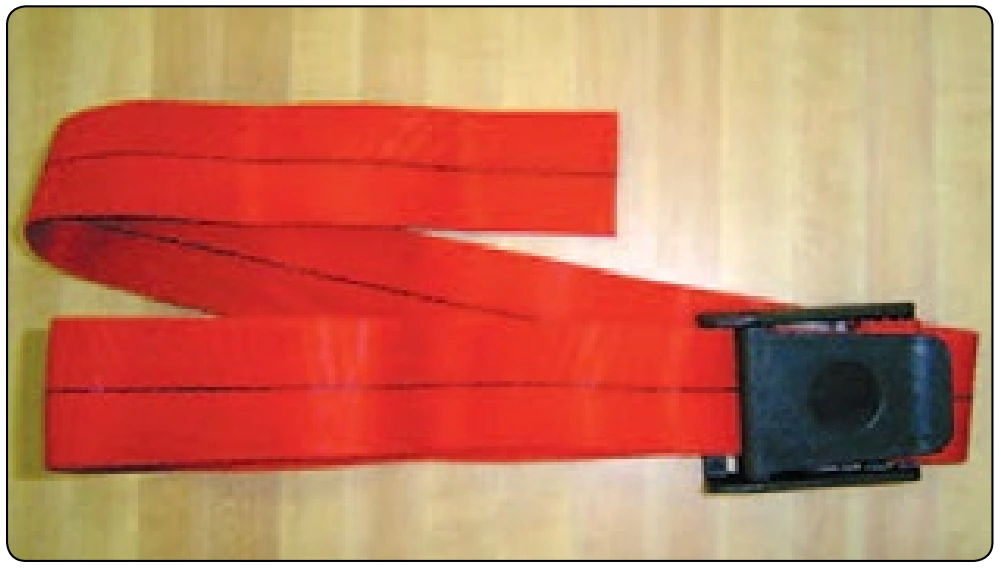
Molar strap—used to control the folded reserve canopy prior to inserting it in the reserve free bag made from Type-8 webbing and a Camlok nylon buckle. The webbing should be at least 48" long and brightly colored to serve as a flag against leaving it on the canopy. [Figure 6-17]
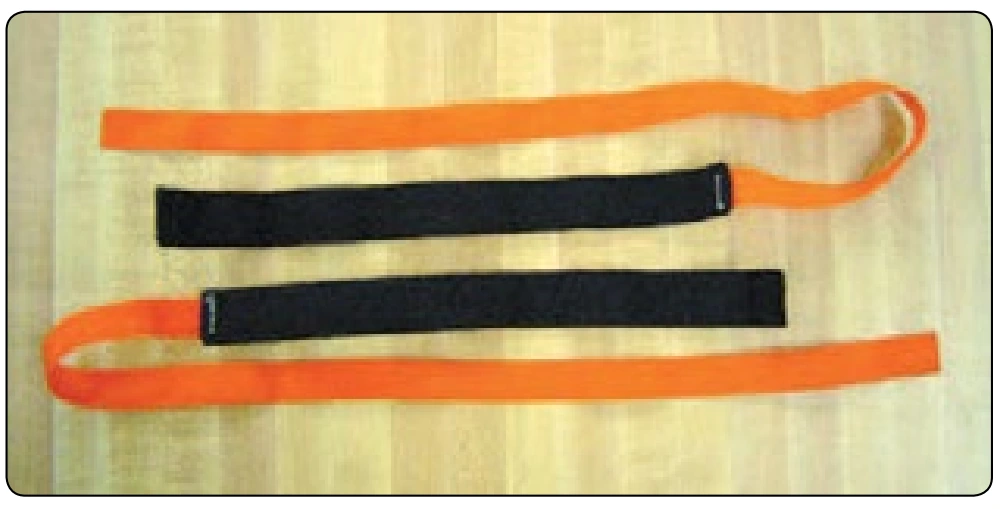
Temporary locking pins (temp pins)—used to secure the pack in the temporarily closed condition prior to inserting the ripcord pins. All pins should have long, brightly-colored flags attached for recognition. [Figure 6-18]
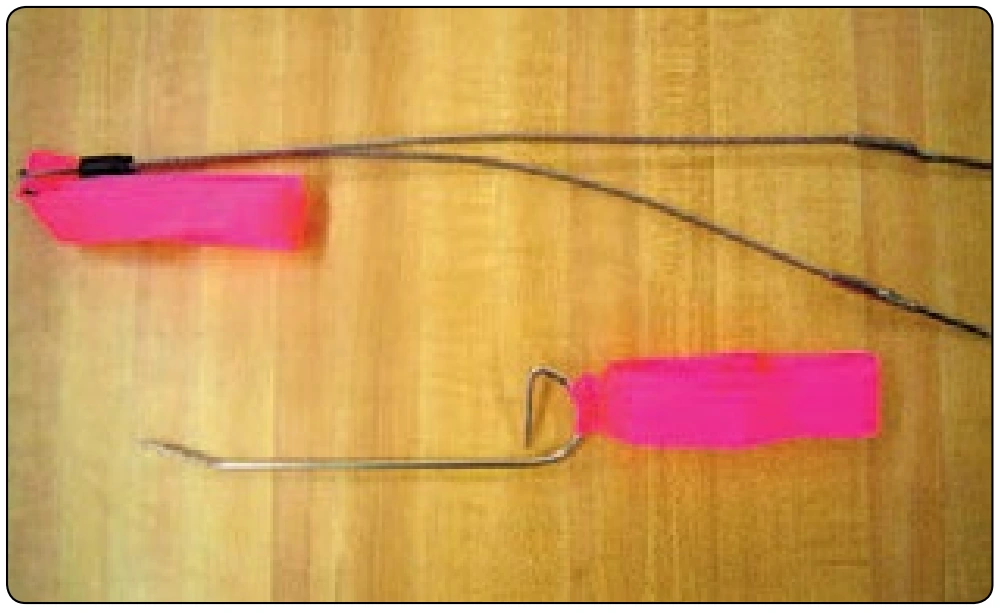
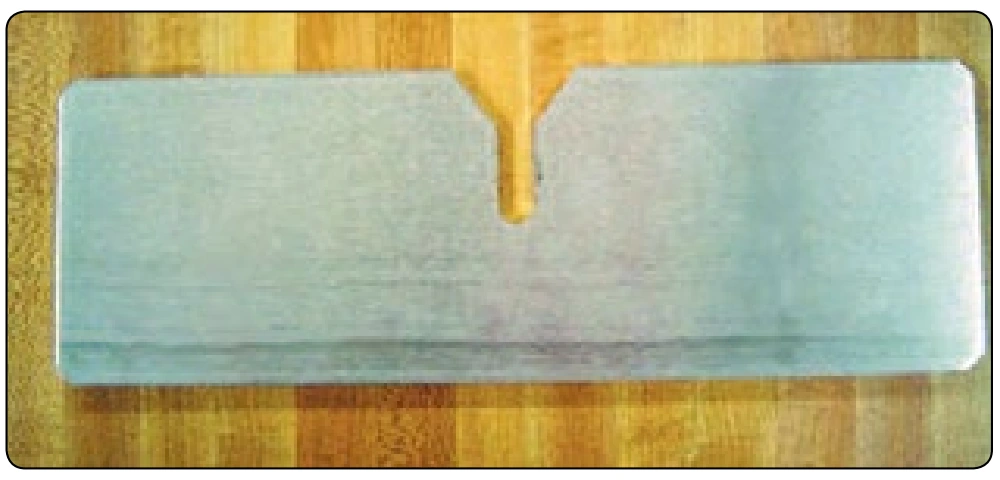
Velcro® line protectors—used to cover the hook Velcro® on the line stow pocket of reserve free bags during the line stow process. They are made from pieces of 1" loop Velcro® with Type-3 tape flags attached. [Figure 6-19] Closing plate—used for closing one-pin containers. Made from 1⁄4" aluminum with a “V” shaped notch for pulling the closing loop up through the pack flaps while compressing the container. [Figures 6-20]
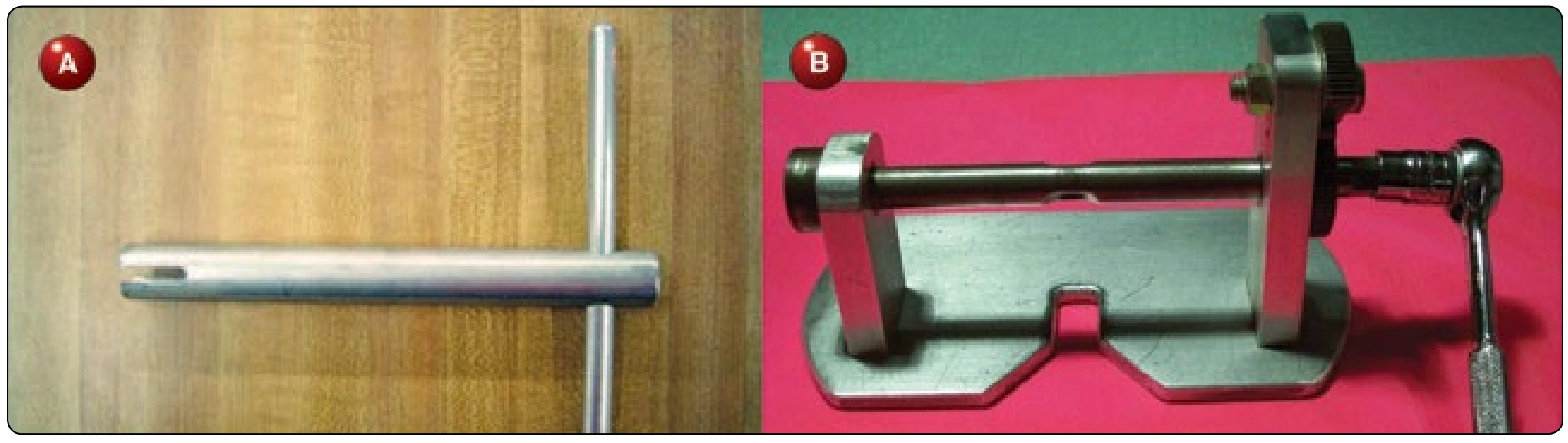
T-bar positive leverage device—used to produce a “cranking” action to wind up the pull-up cord, thereby increasing leverage when closing the container. It must be used carefully as it is possible that too much force can be applied, damaging the container or creating too much force on the pin. [Figure 6-21 A and B]
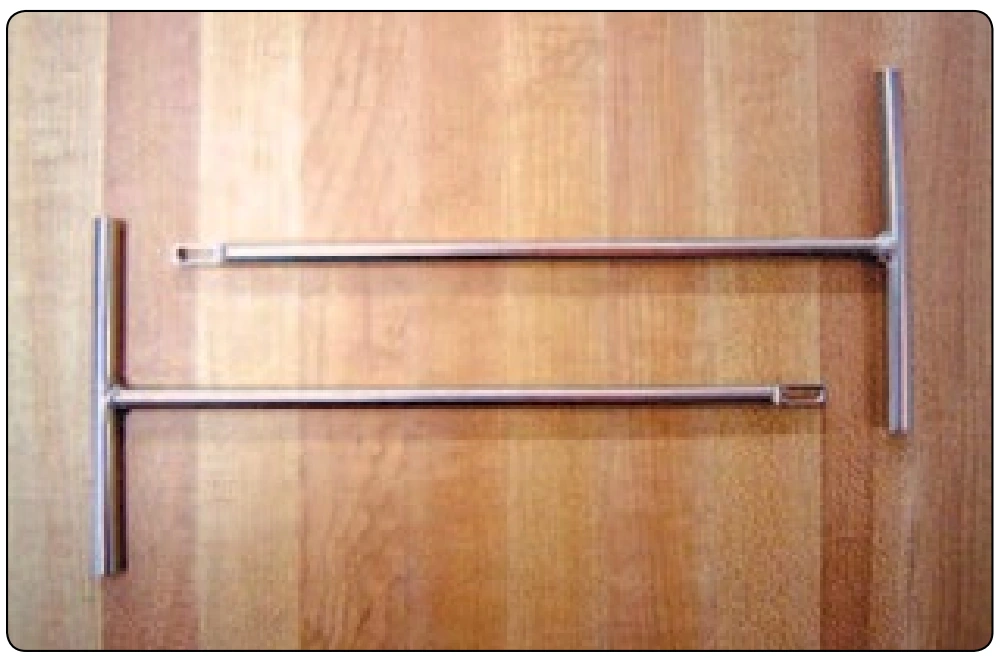
T-handle bodkin—used primarily for closing container systems that have external pilot chutes, such as the Jump Shack Racer. A minimum of two is needed for the tool kit. [Figure 6-22]
Pilot chute threading tool—used for threading the pull-up cord through a one-pin pilot chute. A .22 caliber gun-cleaning rod works well. The best is a United States military surplus M-16 cleaning rod. It is made from steel, as opposed to aluminum, and breaks down into sections and a package that is 8" long. [Figure 6-23]
Pilot chute locking rod and strap-locking rod and strap used to compress pilot chutes and used to hold the reserve pilot chute, such as an MA-1 compressed on the pilot chute launching disc. It is a tempered steel rod approximately 18" × 3⁄16". [Figure 6-24]