Chapter 6
Hand Tools, Sewing Machines, and the Parachute Loft
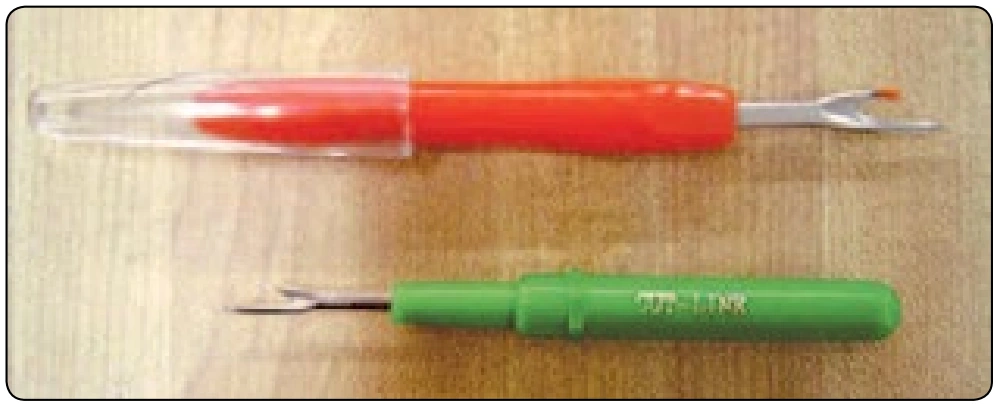
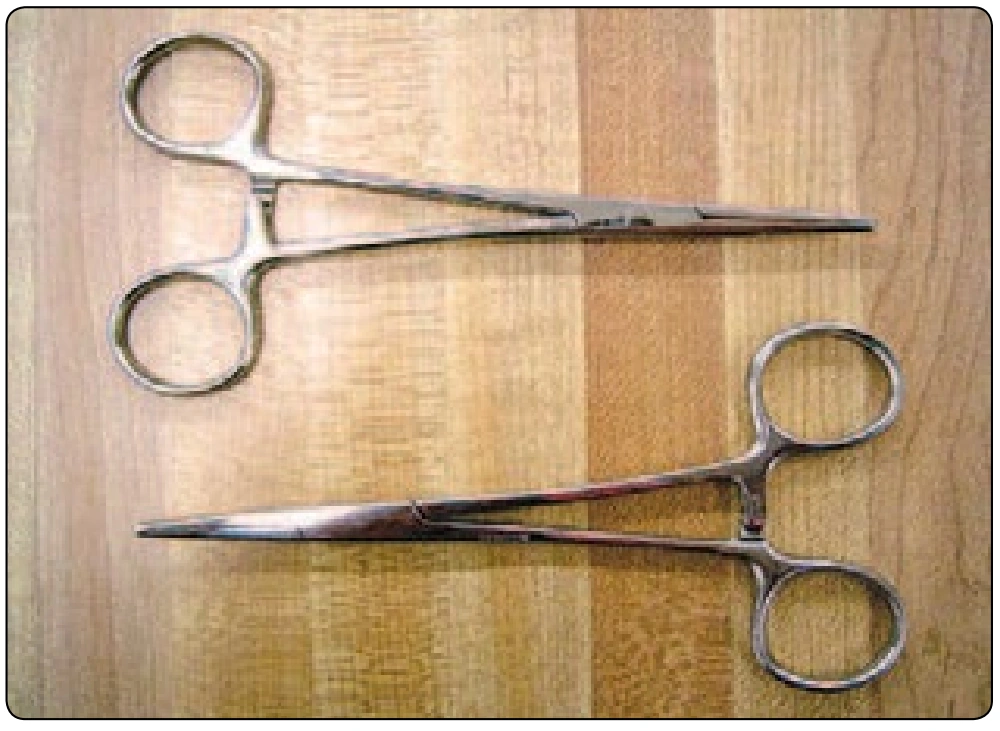
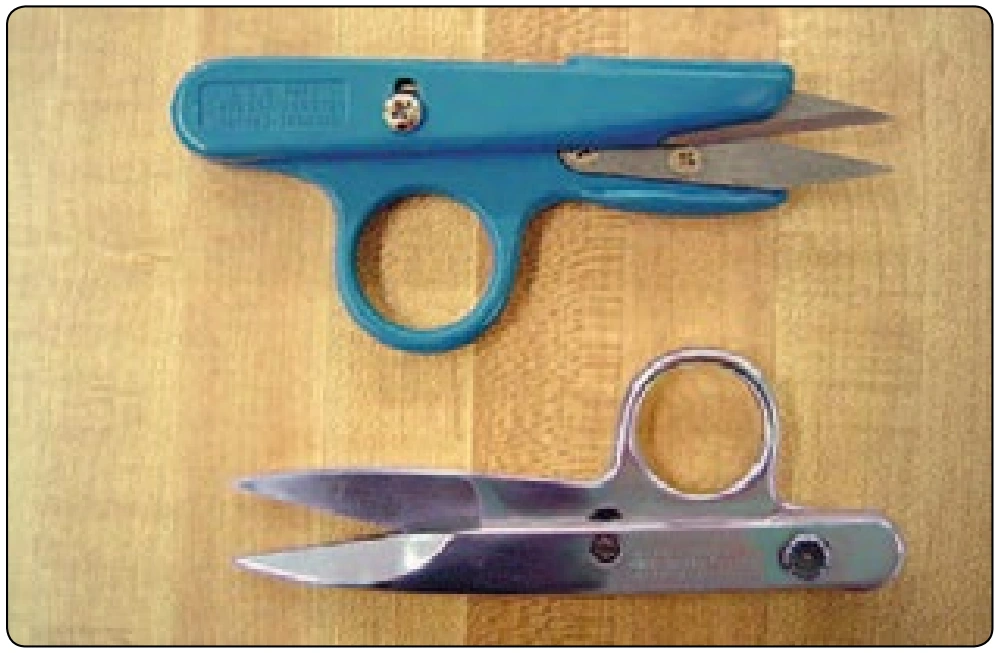
Thread snips—used in the sewing industry for trimming or “snipping” thread when sewing. Handier and easier to use than scissors as the point is finer and allows more precise cutting of the thread. The ergonomic design takes some getting used to but proves superior in the long term. The stainless steel models are best, but some riggers prefer the plastic ones that have replaceable blades. [Figure 6-7]
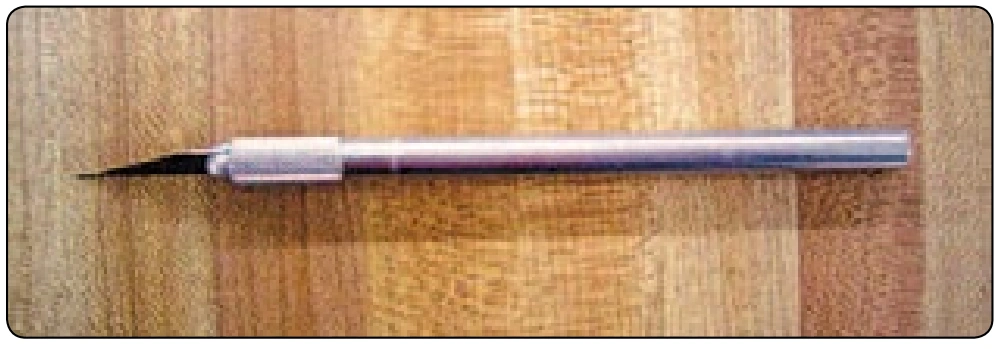
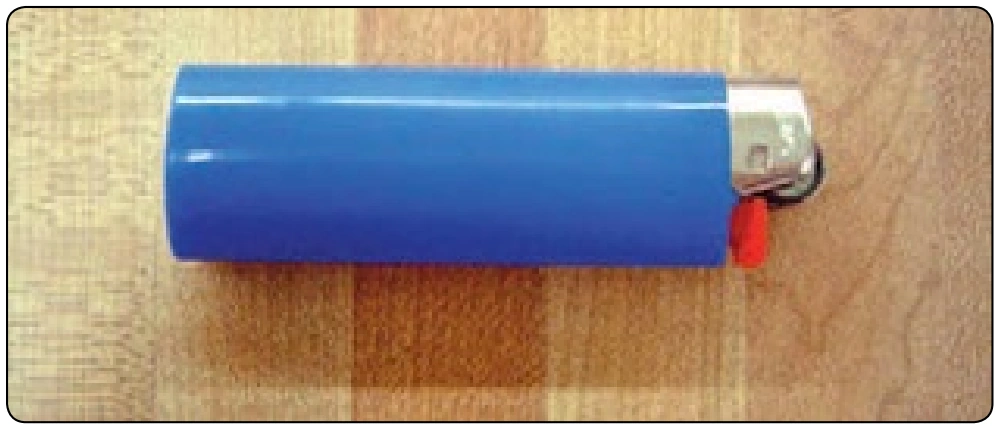
Butane cigarette lighter—used for burning thread ends to seal the thread and keep stitches from raveling. It is also used for searing tapes, lines, and light webbing. One of these should be at each sewing machine or work site so the rigger does not have to leave the work to find one. [Figure 6-8]
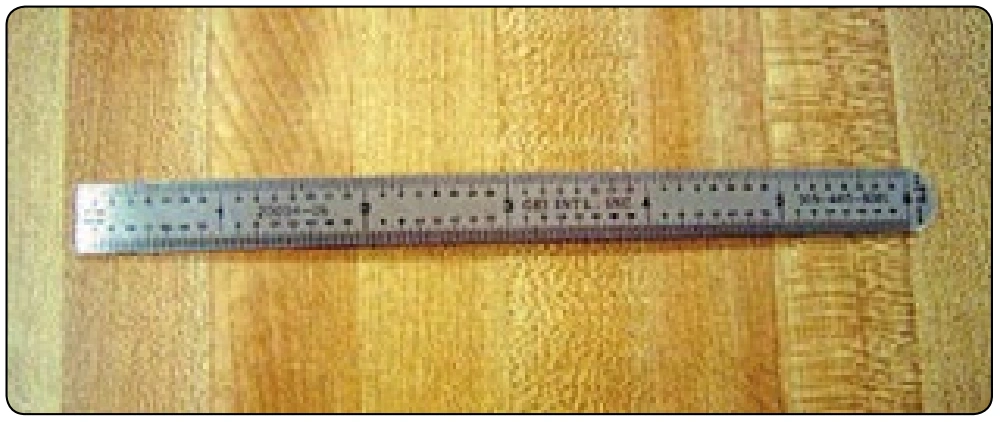
6-inch stainless steel rule—used for making fine measurements during work. At a minimum, the scale should read to 1⁄16 inch and have a dual (English/metric) readout. Certain models have one rounded end. This model can be used for removing cut stitches from work by rubbing the rounded end against the thread thereby lifting it and making it easier to remove.
[Figure 6-9]
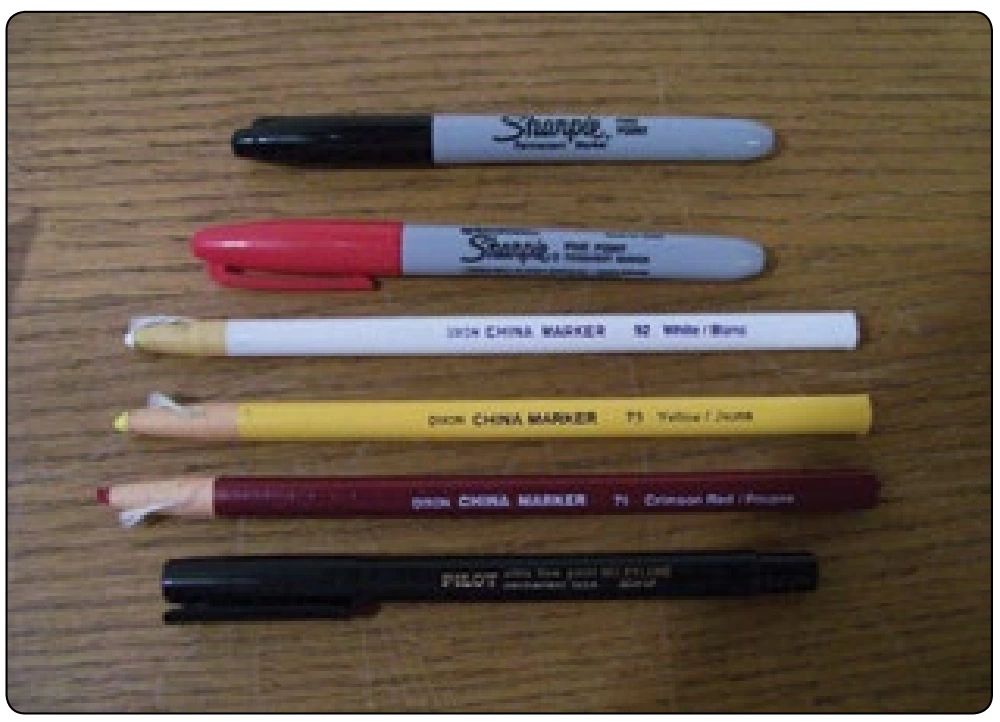
Fabric marking pencils and felt tip markers—used for marking webbing, tapes, and fabric. The Dixon #134s was used in the parachute industry for decades but is no longer available. The Dixon China Marker is now used by many riggers, as it contains no acid, and they come in 12 colors.
Other types have been found to contain abrasives and compounds that, when used on canopy fabric, weaken the material. This particular brand of pencil has been found to have minimal effect on the fabric. Various colors, such as white, yellow, and red, are useful. Fine point felt tip markers are used for marking certain materials, such as Dacron® or Spectra® line. Black, red, and blue are most common. Felt tip pens, such as Sharpie® and Pilot® ultra- fine point permanent type, are used by many riggers. [Figure 6-10]
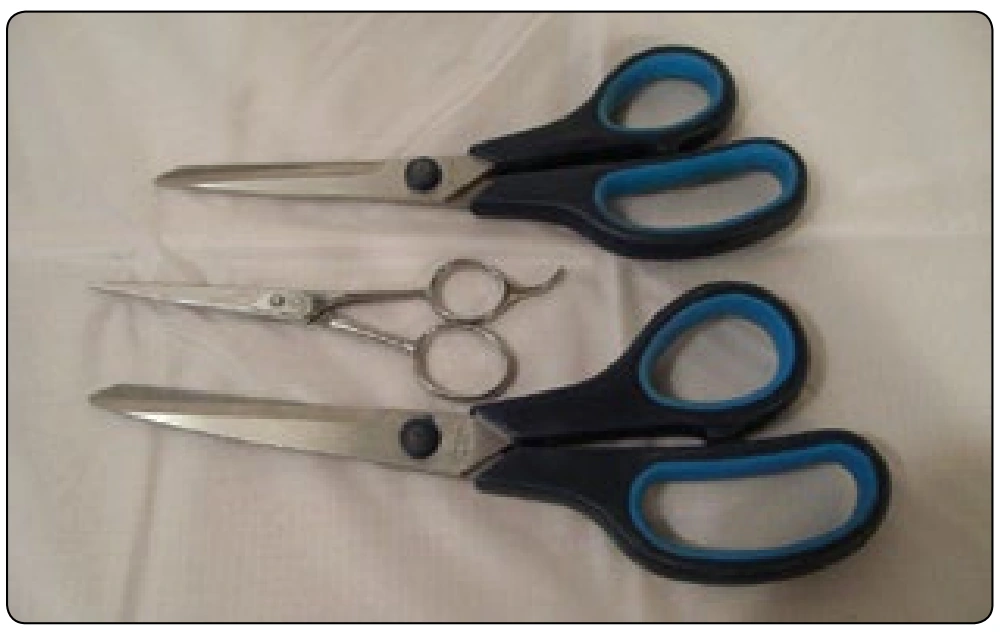
Scissors—used for cutting all types of materials used in the parachute industry. A high-quality scissor is lightweight, ergonomic, and comes in right-hand and left-hand models. Also, a short 5-inch barber shear is very sharp even when “used” and works very well in cutting Cypres loop cord and other line material commonly used in parachute rigging.
[Figure 6-11]
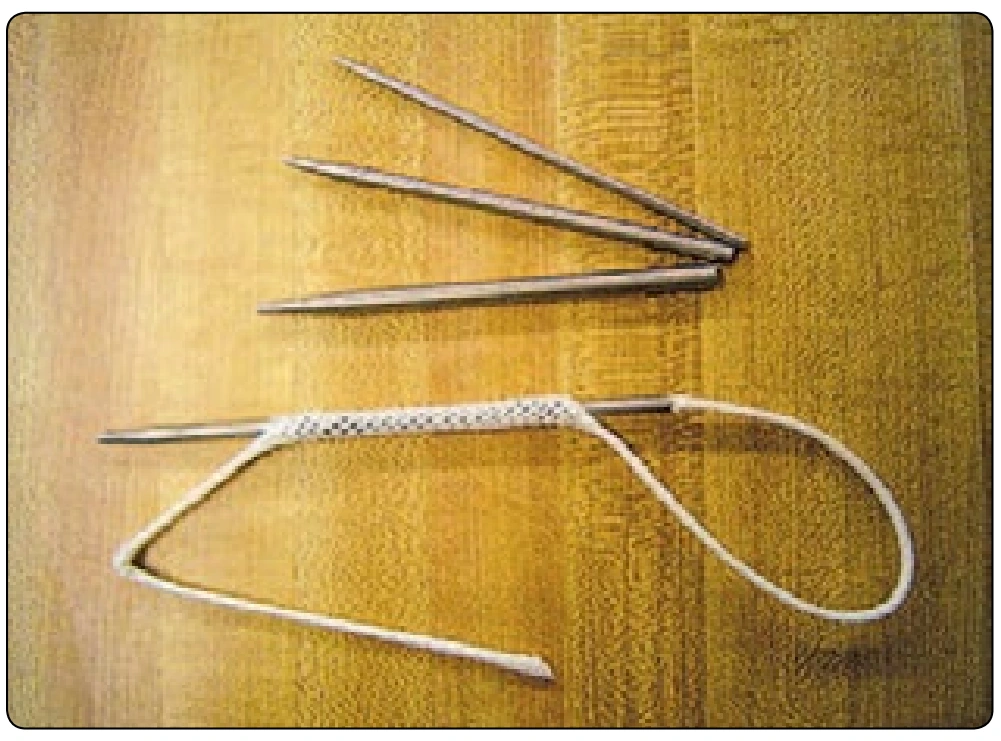
Finger-trapping needle—used for inserting suspension line into a “finger-trap” configuration. It is a heavy-duty threaded needle commonly called a “fid,” not to be confused with a “packing fid” or “paddle.” Plastic ones are available commercially, but the best ones are custom made from stainless steel or aluminum knitting needles. Cut to length, they are then drilled and tapped with screw threads in the flat end. The size 2, 6, and 8 needles are the most popular for the current line sizes. A blunt end needle is also used to finger trap Cypres loop cord. [Figure 6-12]
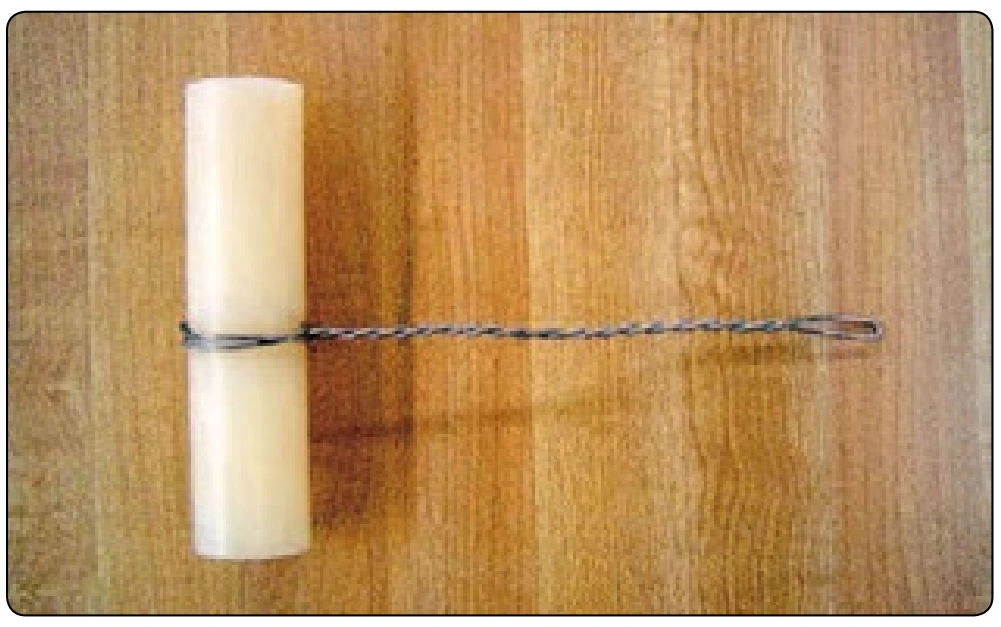
Finger-trapping wire—used to finger trap line too small to use a needle on. It is made from a wooden or plastic dowel with a wire loop made from safety wire. [Figure 6-13]