Chapter 6
Hand Tools, Sewing Machines, and the Parachute Loft
[Figure 6-82]
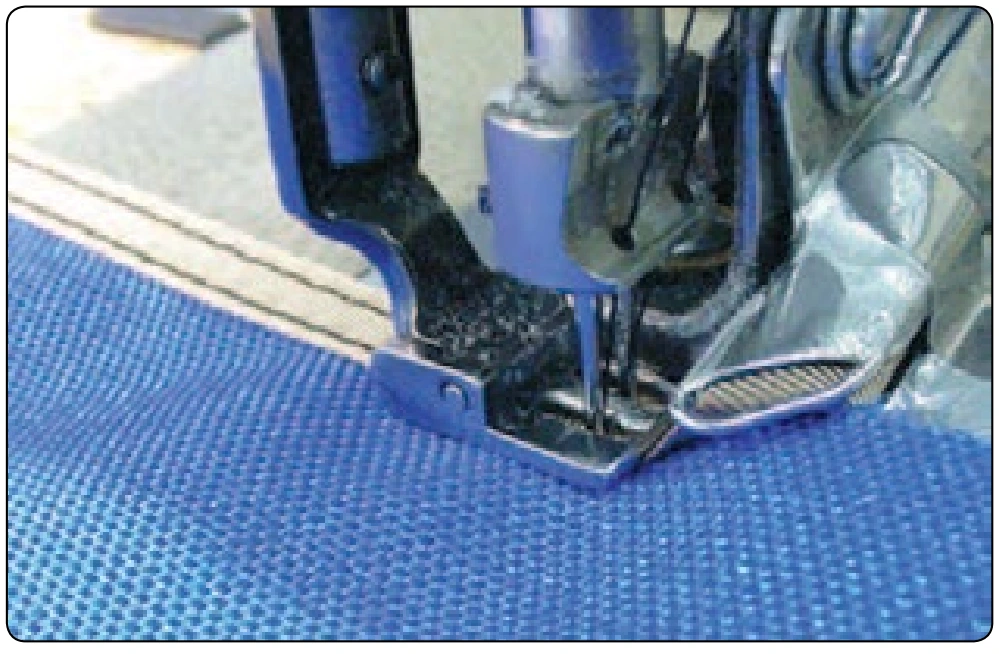
There are two types of folders. One is a straight folder where the tape is fed straight into the machine under the presser foot.
[Figure 6-83] This folder is used for most straight binding, has minimal adjustments, and is the least expensive usually costing around 35 dollars. The second type of folder is a right angle folder. [Figure 6-84] The best models of these are custom built by companies that specialize in attachments.
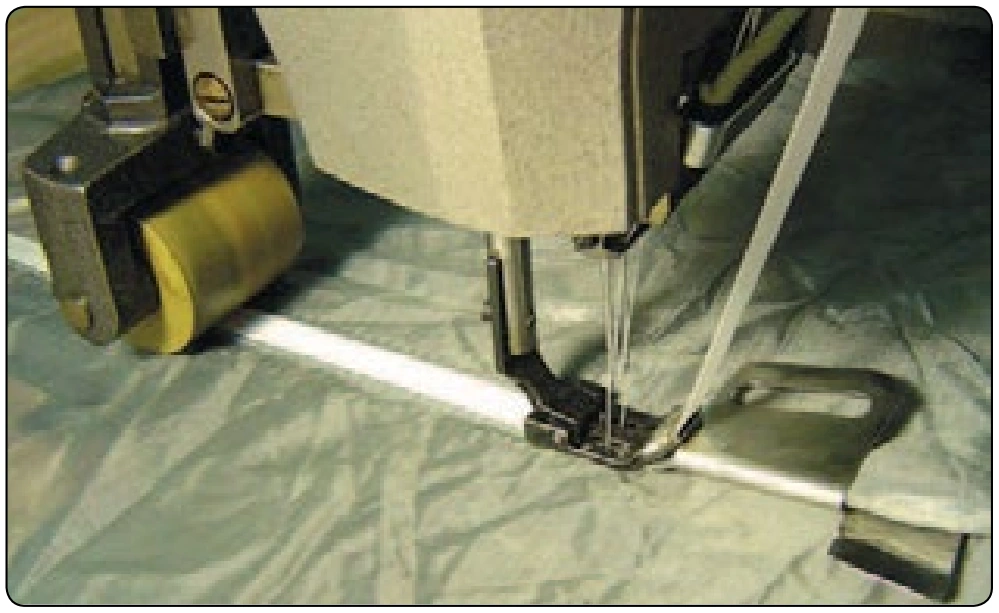
They utilize special feed dogs, throat plates, and presser feet in addition to the folder. This type of folder is hinged to swing out of the way for changing bobbins. Most machines have several adjustments that allow for fine tuning the folder for optimum performance depending on the tape used. Folders can cost several hundred dollars.
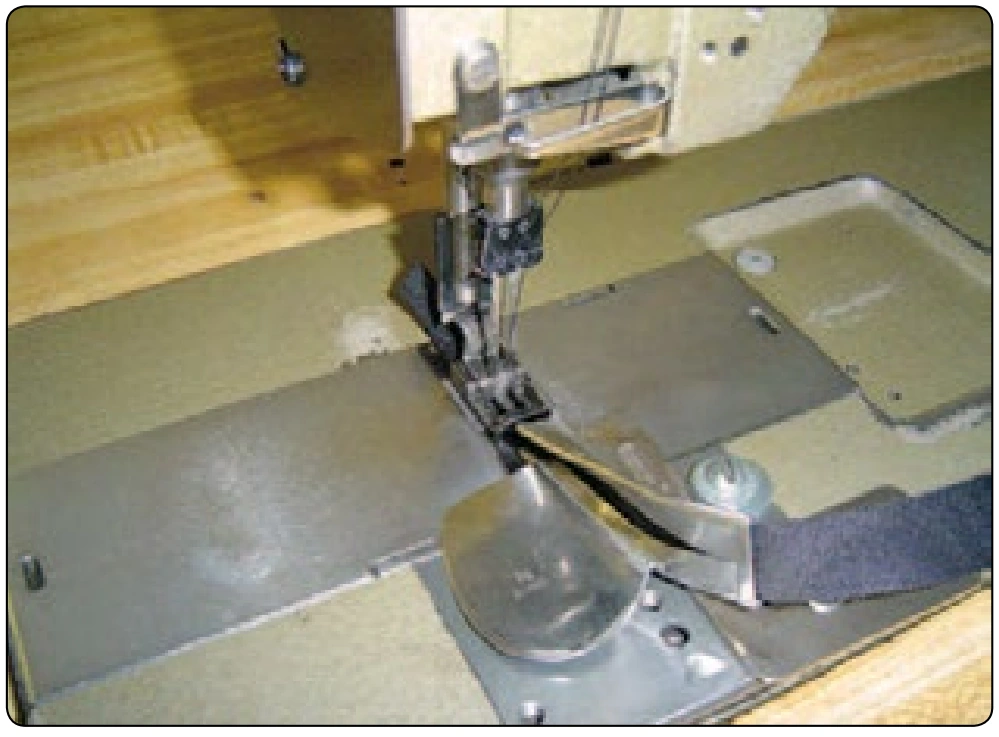
Another type of attachment is used to feed reinforcing tape such as 3⁄8-inch Type-3 onto a canopy seam. This is a simple guide that is attached to the presser foot and feeds the tape evenly to the needles. Yet another attachment is a seam folder used to make a French fell seam in canopy construction. Figure 6-85 shows both of the above attachments used in conjunction with each other. Over the years, the sewing industry has developed literally hundreds of different attachments to speed up and improve the sewing process.
The Parachute Loft
The term “loft” comes from earlier times when the area used to pack and maintain parachutes was usually situated in the aircraft hangar above the aircraft. Hence, the term“loft.” The name has continued to this day and is synonymous with the parachute workshop.
Under, 14 CFR part 65, section 65.127(b), a rigger must have: “Suitable housing that is adequately heated, lighted, and ventilated for drying and airing parachutes.” Under 14 CFR part 65, section 65.127(d), the rigger must have: “Adequate housing facilities to perform his duties and to protect his tools and equipment.” All of this only makes sense in that the properties stipulated are those that are best suited for storing and maintaining parachutes. Although these regulations have been in effect for over 40 years and were originally intended to apply to parachutes with organic fibers in them, they still apply today. From the practical side, keeping yourself and the parachute warm promotes efficient work habits. Good lighting means that you can properly inspect the parachute. Good ventilation allows the parachute to properly dry before packing.
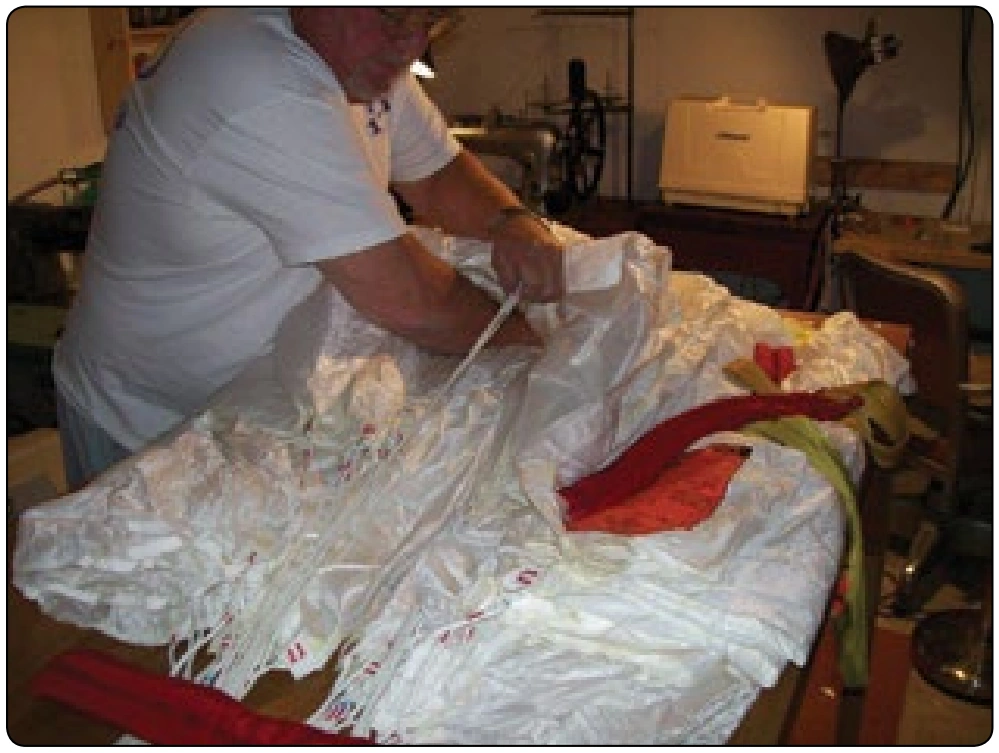
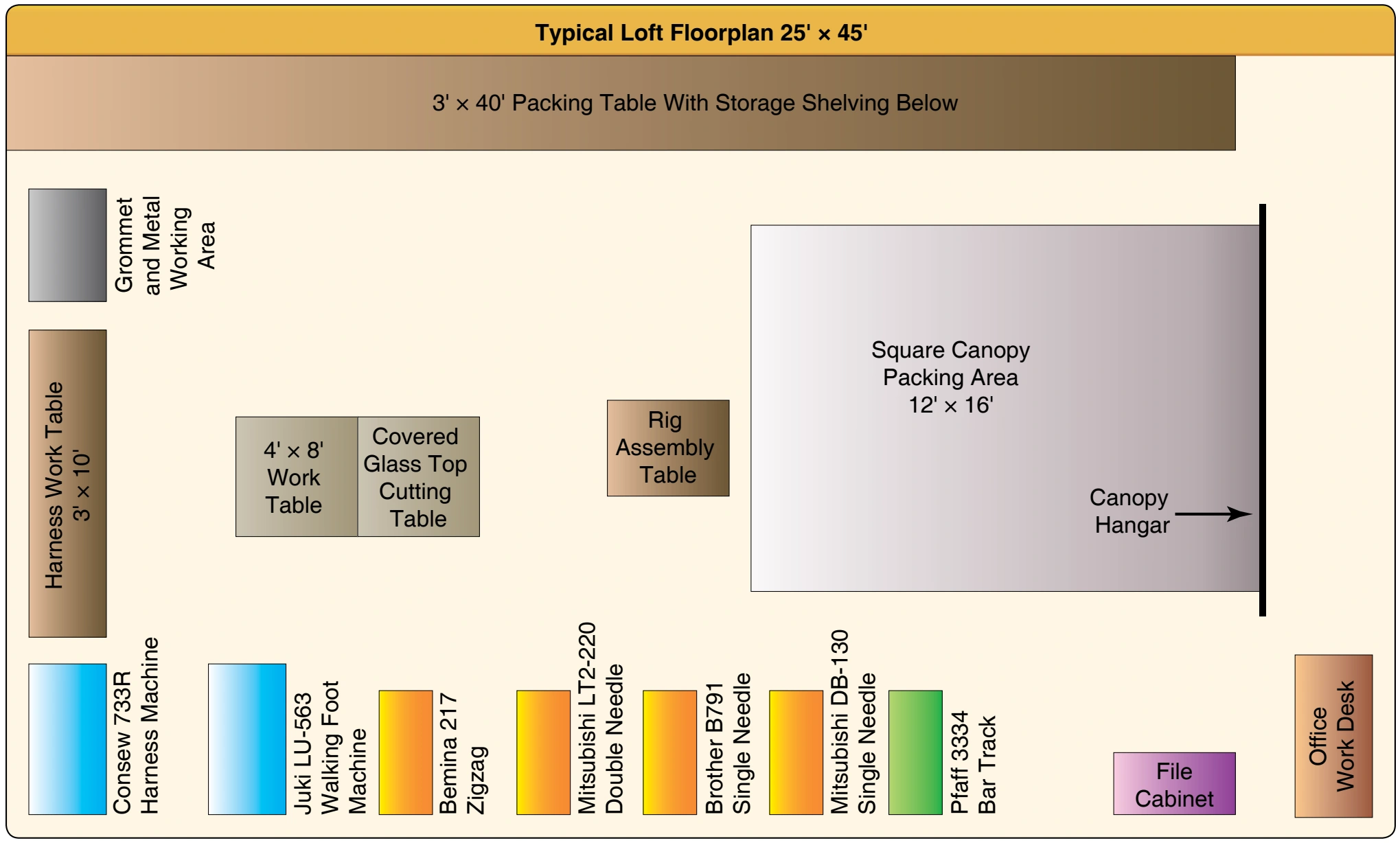
Most individuals have been to automotive garages where there was oil on the floor and parts strewn everywhere. Yet when the mechanic is finished with your car, the cost is fair and your car runs like new. In contrast, modern professional garages sometimes look like hospital facilities in their cleanliness and organization, the cost is high, and your car does not start after you pay the bill. Where would you take your car? The loft, as depicted in Figure 6-86, is a dream for most riggers who do there rigging in there basement as a hobby. For the rigger who lives in a climate that is conducive to year round work and plans to make rigging a full time job, they may invest in a full-time loft. In colder climates, it is busy in the summer, and in winter, well cold. A clean, organized, and well-designed loft can inspire customer confidence, but the rigger’s ability to work on the parachute is all that matters when you need that canopy over your head. The loft facility houses the sewing machines and other equipment over and above the hand tools that all riggers should have. A full-service loft has the following areas:
Packing and Inspection Area
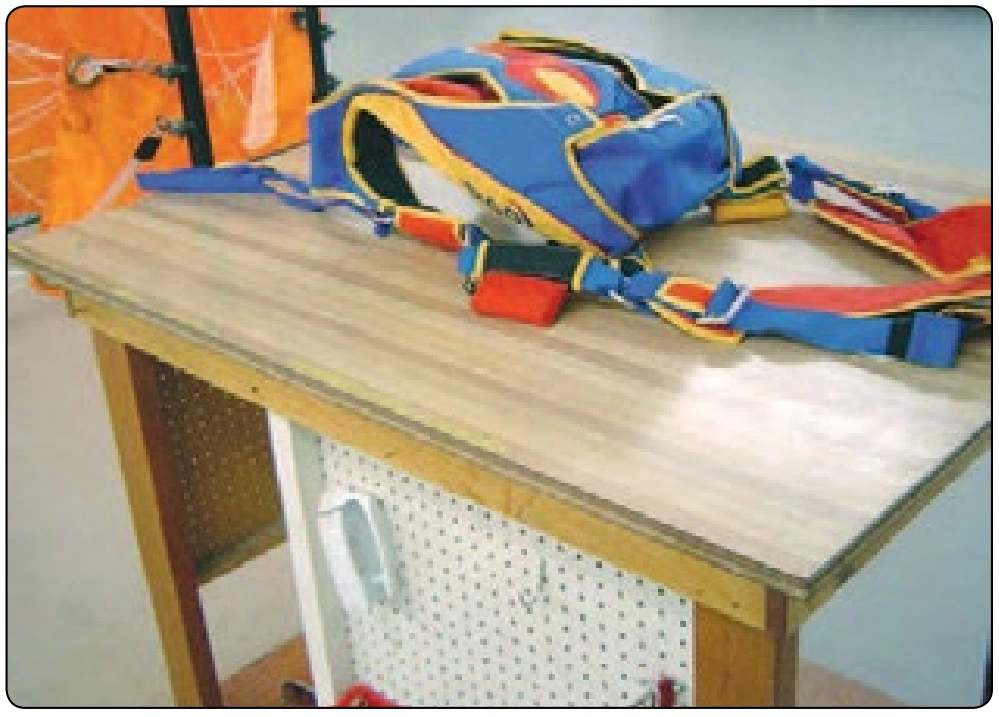
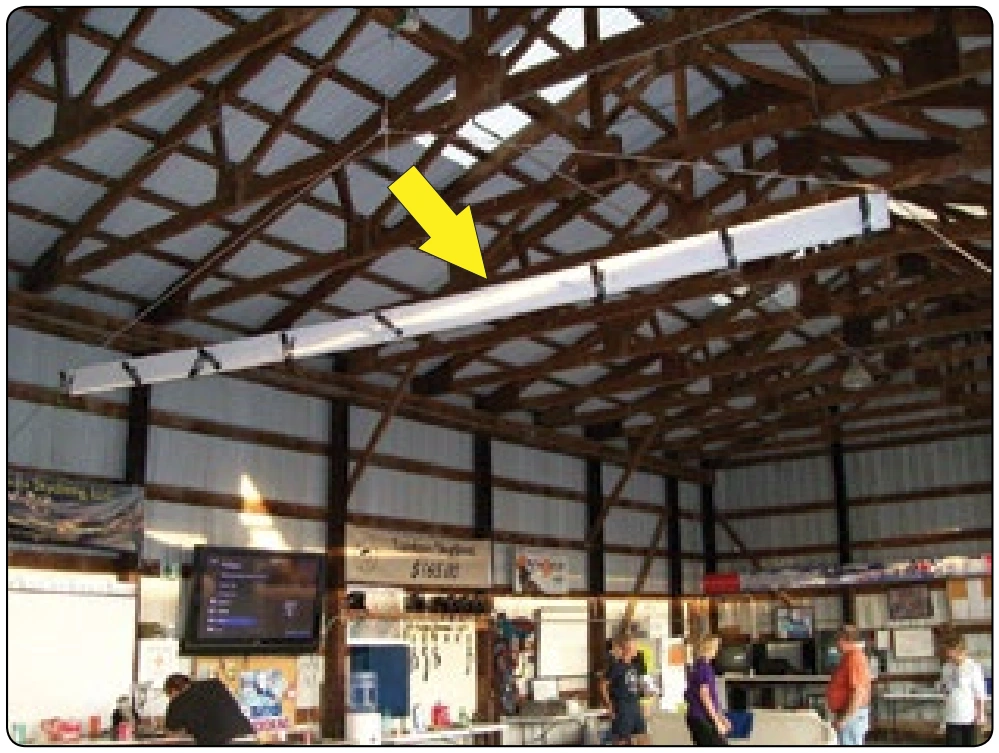
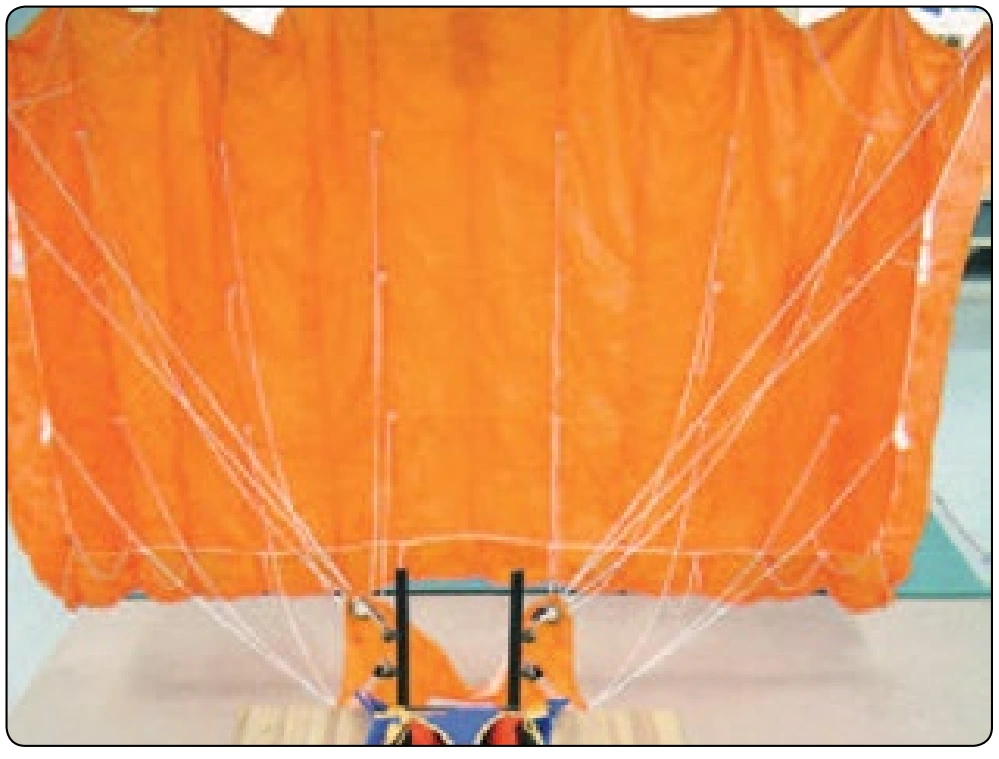
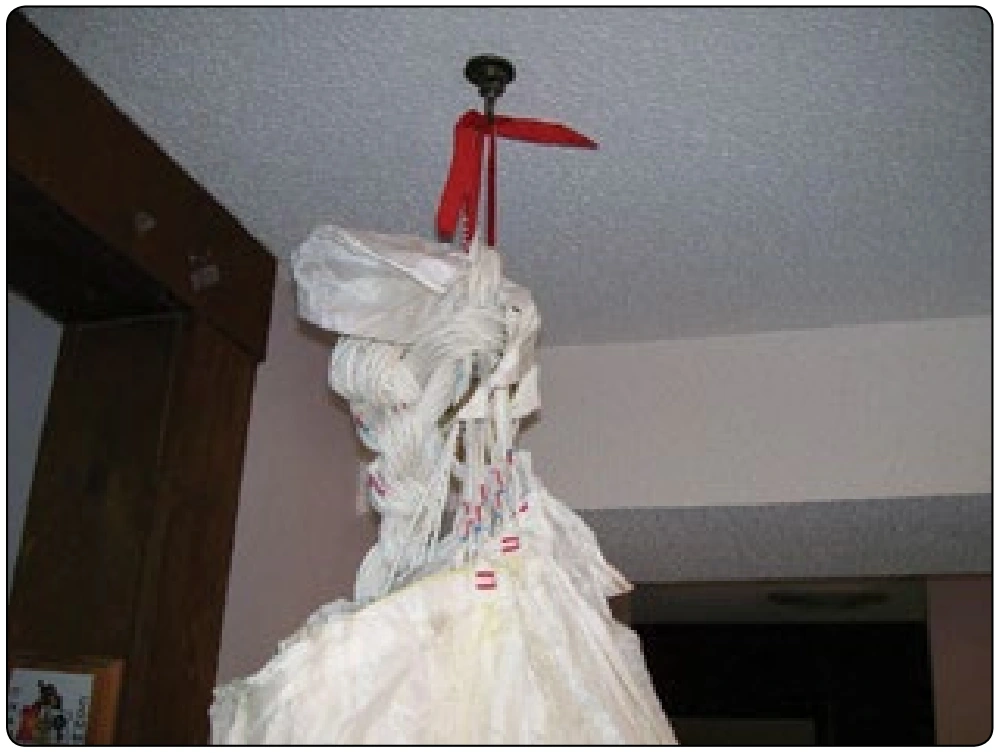
A main part of the loft layout is a suitable packing area. According to 14 CFR part 65, section 65.127(a), the rigger must have: “A smooth top table at least 3 feet wide by 40 feet long.” Technically, this is still required and is used primarily for round canopies. However, with today’s square parachutes, the accepted practice is to pack on the floor on a suitable covering, such as carpet. Squares can be packed on a table, but there must be access to the canopy from both sides of the table in order to inspect and fold it properly. [Figure 6-87] Even when packed on a table, the parachute may have to be moved to the floor to aid in closing the container. If the rigger is packing a round parachute, a packing table is preferable as it makes the rigger’s job easier and more comfortable. If there is no packing table, then there needs to be an open area big enough to lay out the round or square parachute. While not expressly required, most lofts have a canopy hanger for inspection, airing, and assembling square canopies. [Figure 6-88] Many riggers who do not have the room to hang a canopy at home take the canopy to the DZ where space is available. A square canopy can also be aired by S folding and hanging it from a simple hook. This way a square canopy can be aired in a small space, but it is important to note that this technique is to air the canopy out, not inspect it. [Figure 6-89]