
Chapter 6
Hand Tools, Sewing Machines, and the Parachute Loft
Along with the canopy hanger, an assembly and inspection table is extremely useful. [Figure 6-90] It allows the harness and container to be assembled to the canopy without laying it on the floor. The assembly table allows the correct distance from the floor to mate with the canopy and provides an ideal storage area for the packing tools, wrenches, other equipment, and materials needed for assembly. [Figure 6-91] This table can be a folding banquet table or wheeled cart if space is limited.
Work Area Including Layout Tables and Sewing Machines
The work and layout tables are ideally 4 × 8 feet for optimum space usage. Any canopy layout can be done on the packing table. The work tables should be adjacent to the sewing machines for minimum walking distance between them. Many lofts have a small table along the walls against which the sewing machines are placed. This allows storage of materials and other items needed during the sewing operation.
The right end of the sewing machine table is placed against this table so that the left, or open end, is available to lay canopies or containers on.
Harness Table and Machines
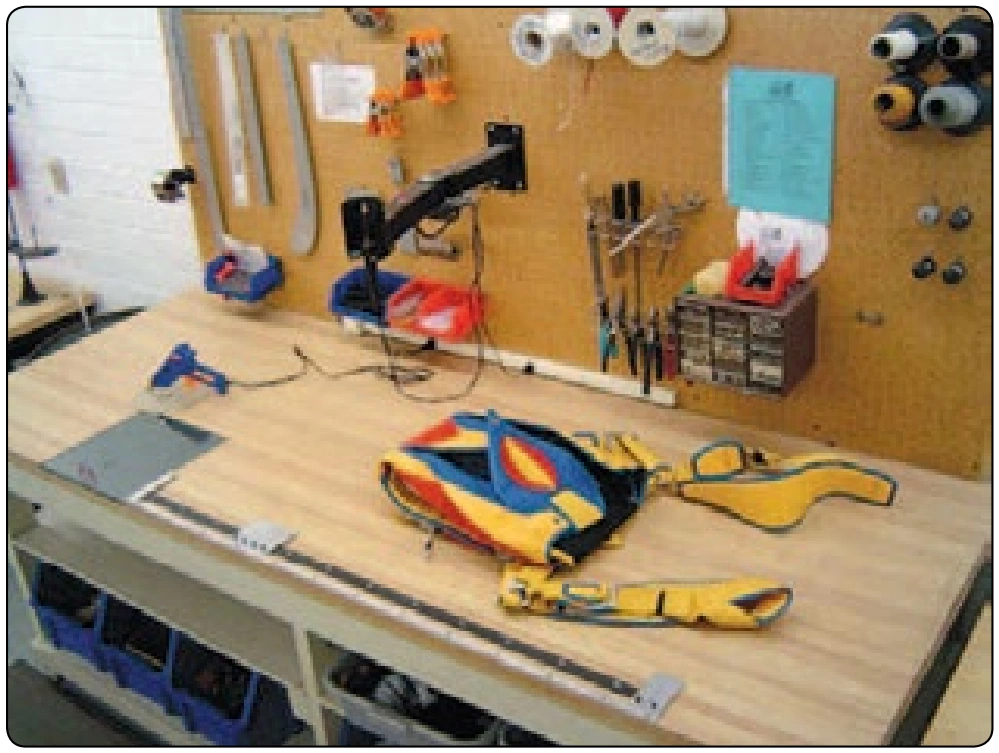
Because of the nature of harness work, there are many specialized materials and tools unique to harness work. The table houses the hot knife, hot glue gun, templates, and rulers. [Figure 6-92] The harness machine should be adjacent to the harness table for maximum efficiency.
Cutting Table
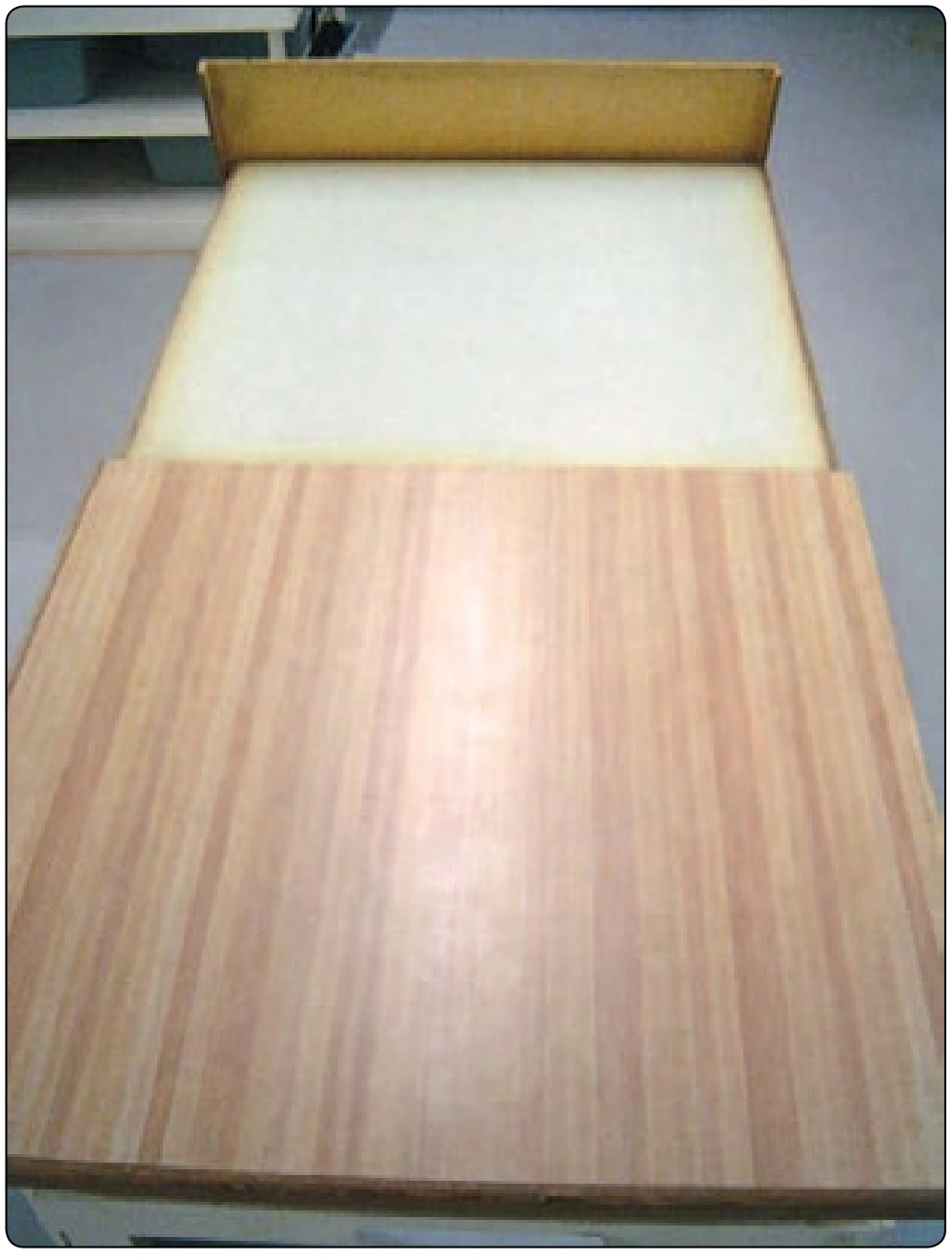
The cutting table is used for cutting canopy fabric for canopy repairs, para-pak or Cordura® for container repairs, or for cutting anything for general manufacturing. Ideally, this cutting table has a glass surface for use with a hot knife. One of the best designs utilizes a 4 × 4 feet glass surface that is hidden below a wooden cover that can be removed when needed and protects the glass when not in use. This table serves dual duty as a work table. [Figure 6-93] If space is limited, a smaller piece of glass can be used. If available, use a thick laminated piece of glass that is less prone to breaking.
Metal Working Area
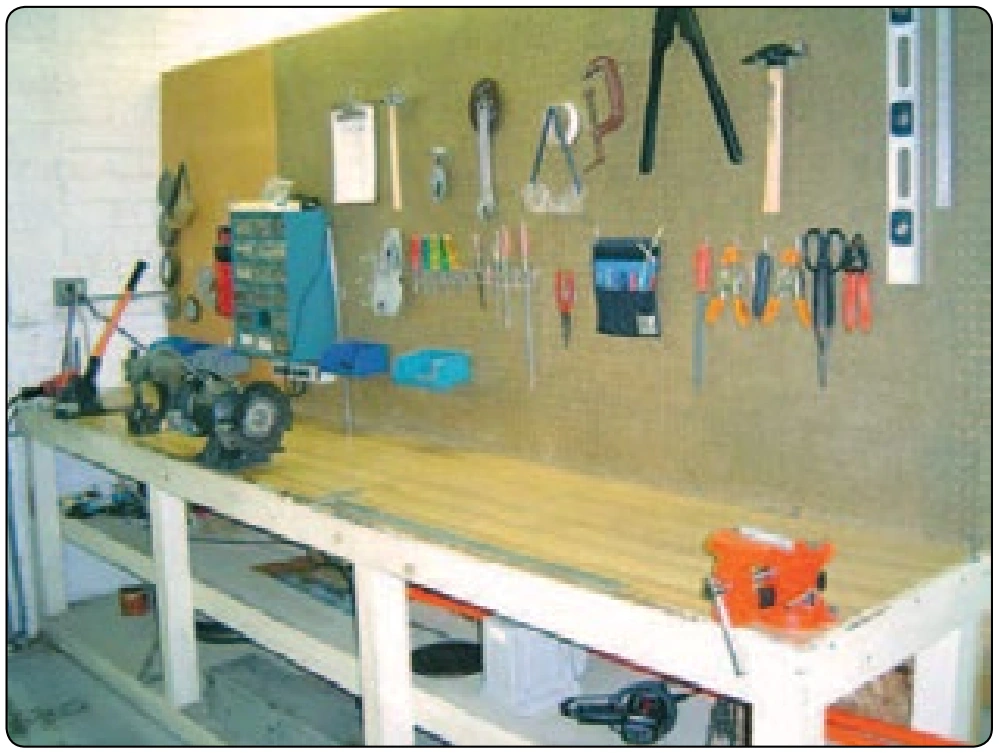
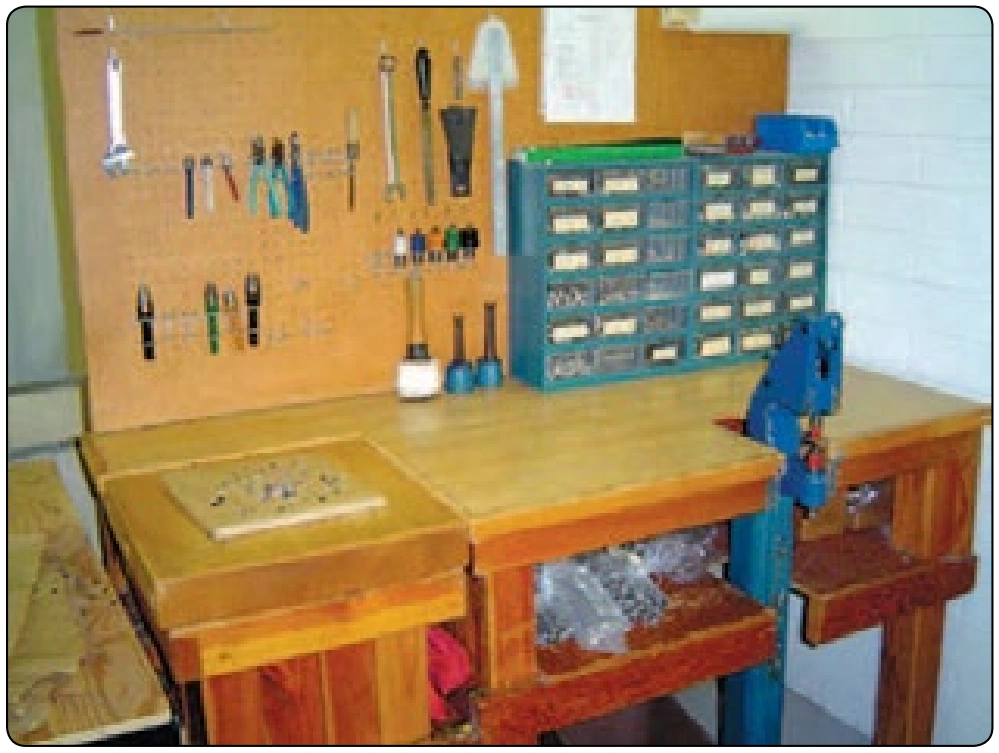
It is important to segregate the metal working area from the rest of the loft because metal working creates considerable contamination with metal shavings and other particles injurious to parachute fabrics. The metal working area has drills, grinders, swaging tools, Nicopress® tools, and other tools needed for repairing or overhauling metal components. [Figure 6-94] The grommet area should be adjacent to the metal working area, since several of the tools used to remove grommets are found there. [Figure 6-95] The grommet machine or handsets are kept in this area. Parachute containers or other parts needing grommets are brought to this area for work. A metal working cart with drawers for tools may be used, provided it is kept away from any fabric that could be damaged.
Office Area
The office area handles the administrative and record keeping functions of the loft. It should have a desk, file cabinets, library or bookshelves, telephone/fax machine, and computer. All work orders are processed through here.
Materials Storage Area
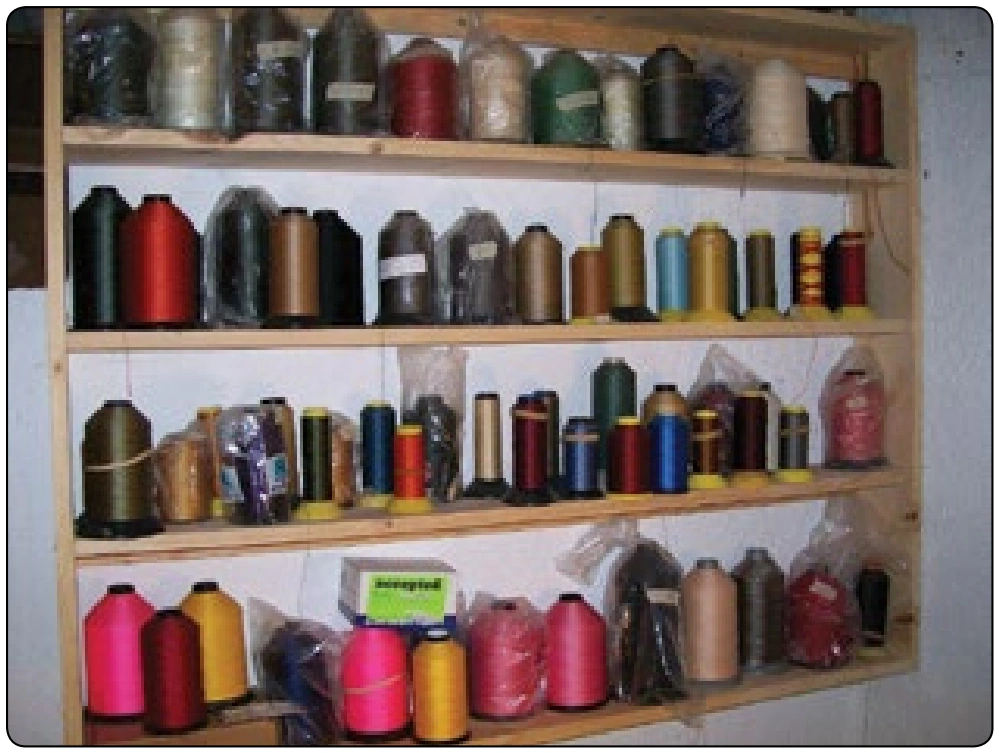
The storage area may be a separate room, a pegboard, or cabinets on the walls where thread, tapes, and webbing are stored. [Figure 6-96] Rolls of fabric may be stored under the work or packing tables or on wall racks.
All of the above may be practical for the full-time professional loft, but for the individual rigger there may be certain space constraints. Many riggers take over their garage or basement, which makes a perfectly suitable loft with some cleaning and remodeling.