
Chapter 7
Repairs, Alterations, and Manufacture
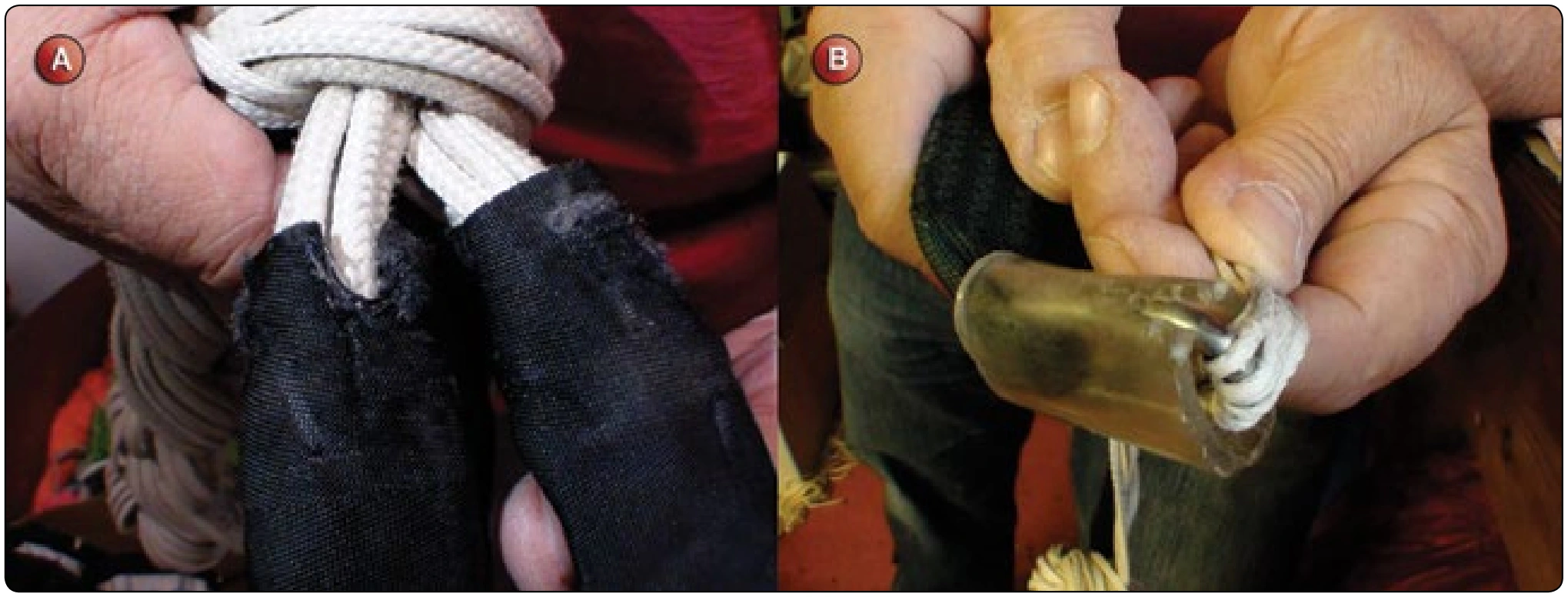
- Lines—check for burns, continuity, trim, and wear at lower section of steering lines. [Figure 7-5A and B]
- Stabilizers—check attachments, signs of excessive stress, fabric damage or stress, and line attachment stitch. [Figure 7-6A and B]
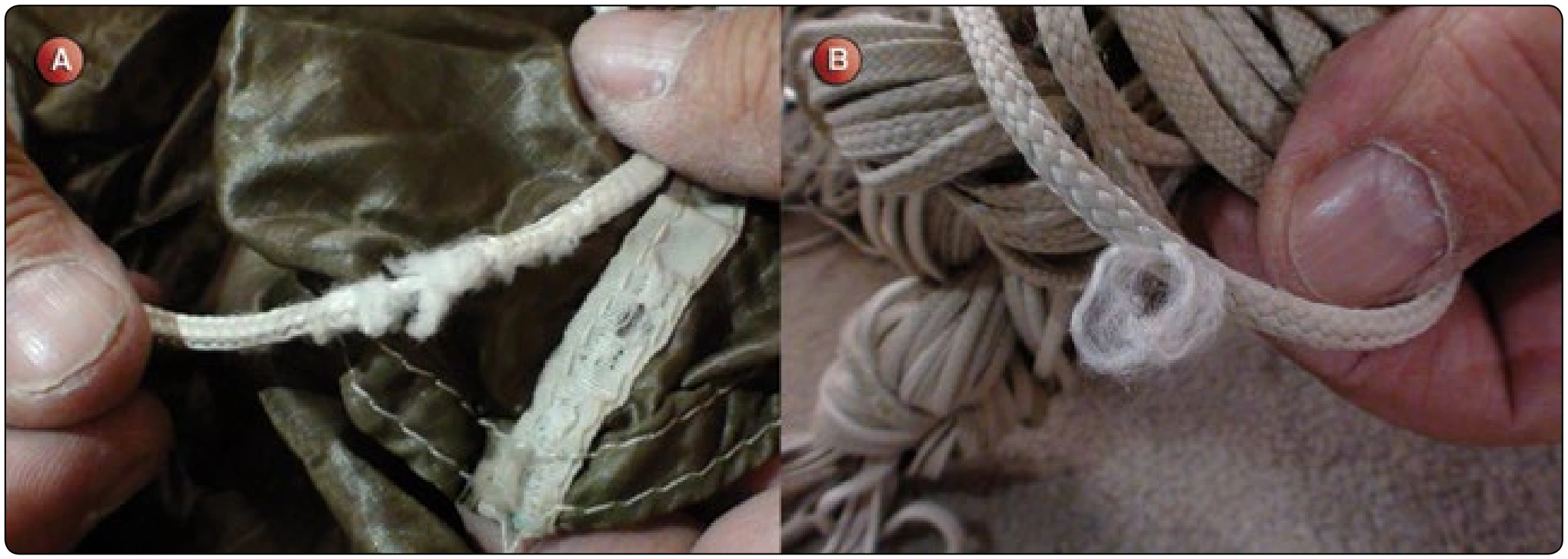
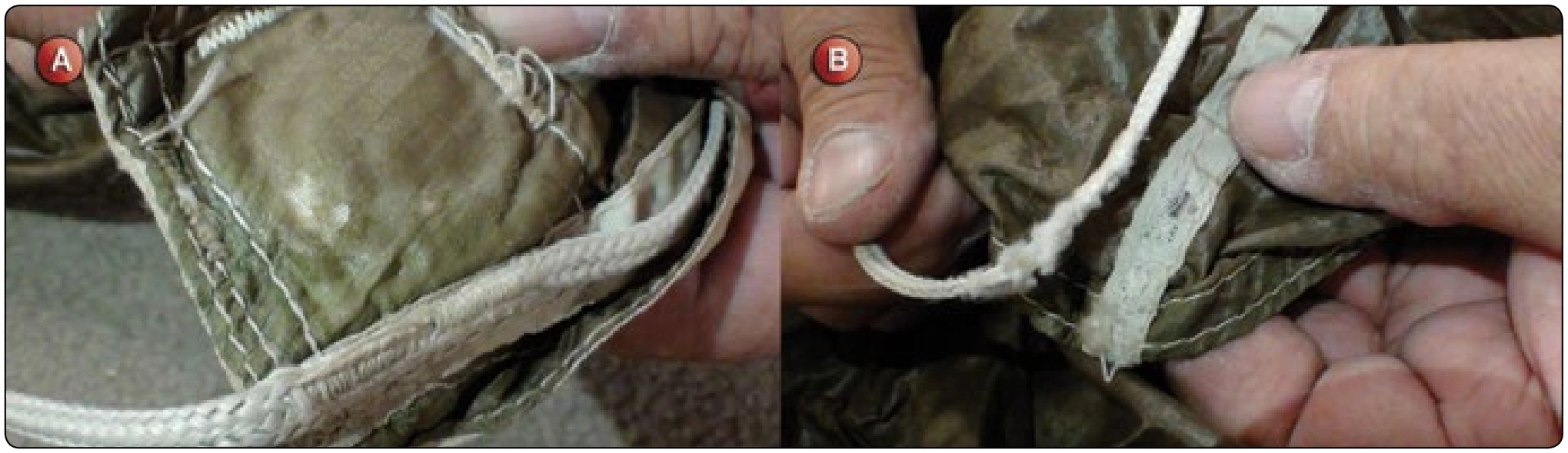
- Line attachments—check for stitch, material fatigue, paying close attention for damage behind the line tab. [Figure 7-7A and B]
- Seam starts—look for back stitching failure or fraying. [Figure 7-8]
- Seam work—check for snags, pulls, loose stitches. [Figure 7-9]
- Fabric—check entire canopy for burns, snags, rips, and tears and check inside cells, cross port condition, and rib damage. [Figure 7-10A and B]
- Pilot chute attachment—check this area excessively, inside and out, and all support tape attached to it on rib. The damage here is not always obvious. [Figure 7-11]
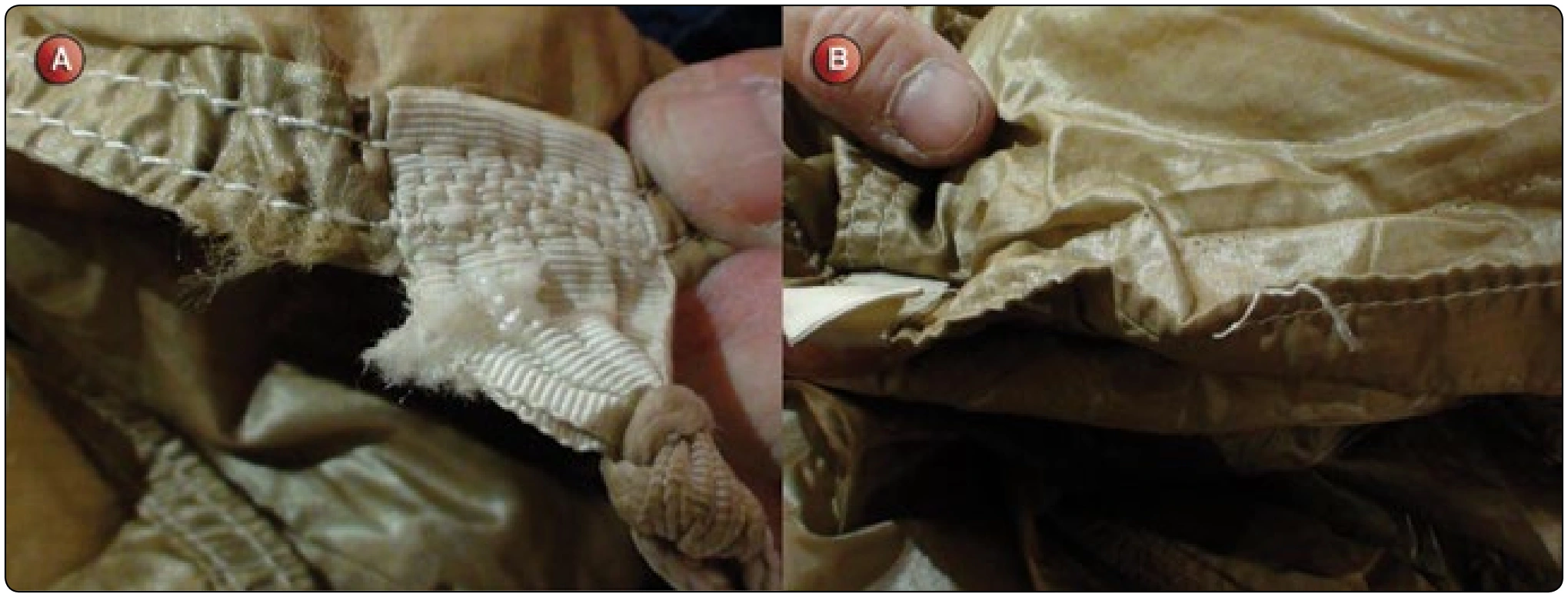
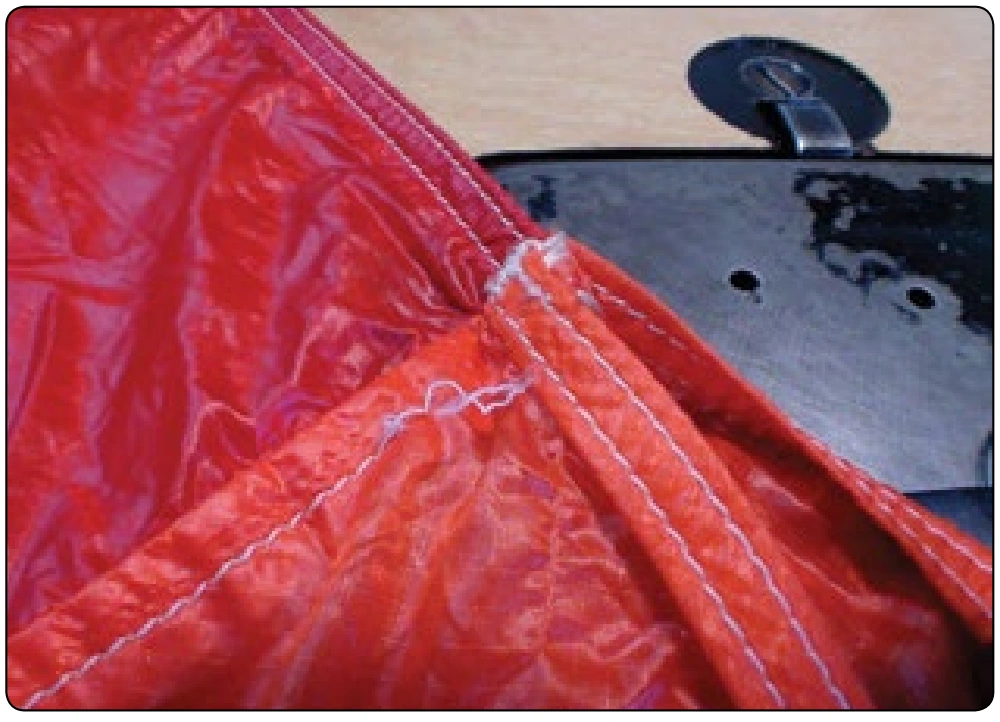
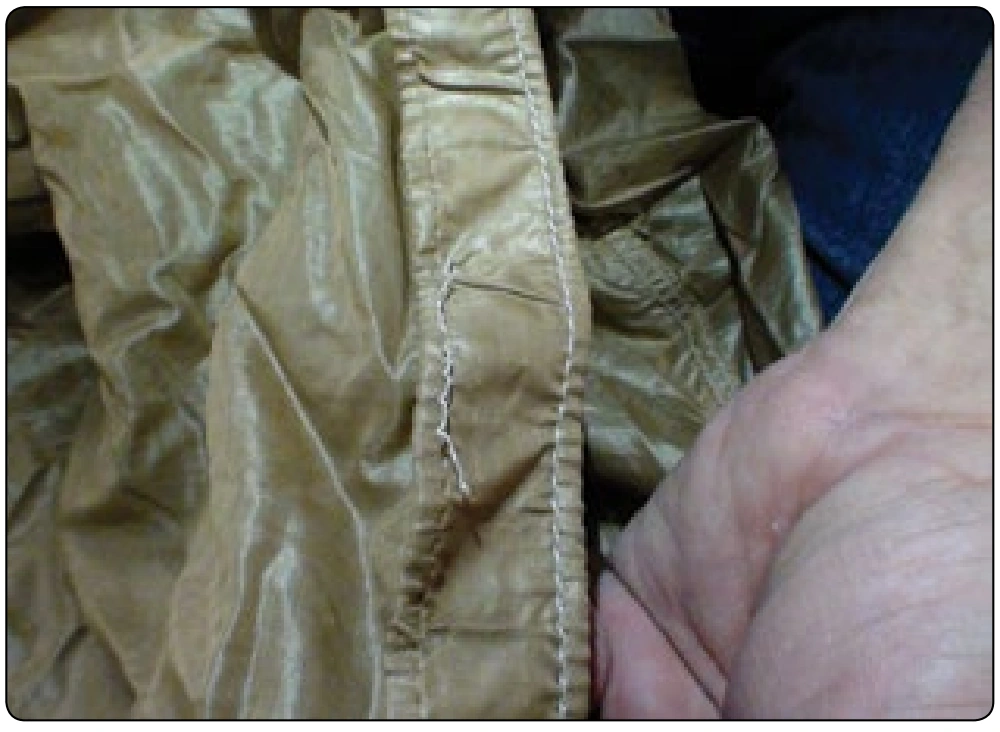
- Center cell top skin (from pilot chute attachment down to tail seam)—inspect skin for snags, dirt, discoloration, body oil/sweat transfer. Body contact is very high and sweat transfer and contact cause much faster deterioration of fabric. [Figure 7-12]
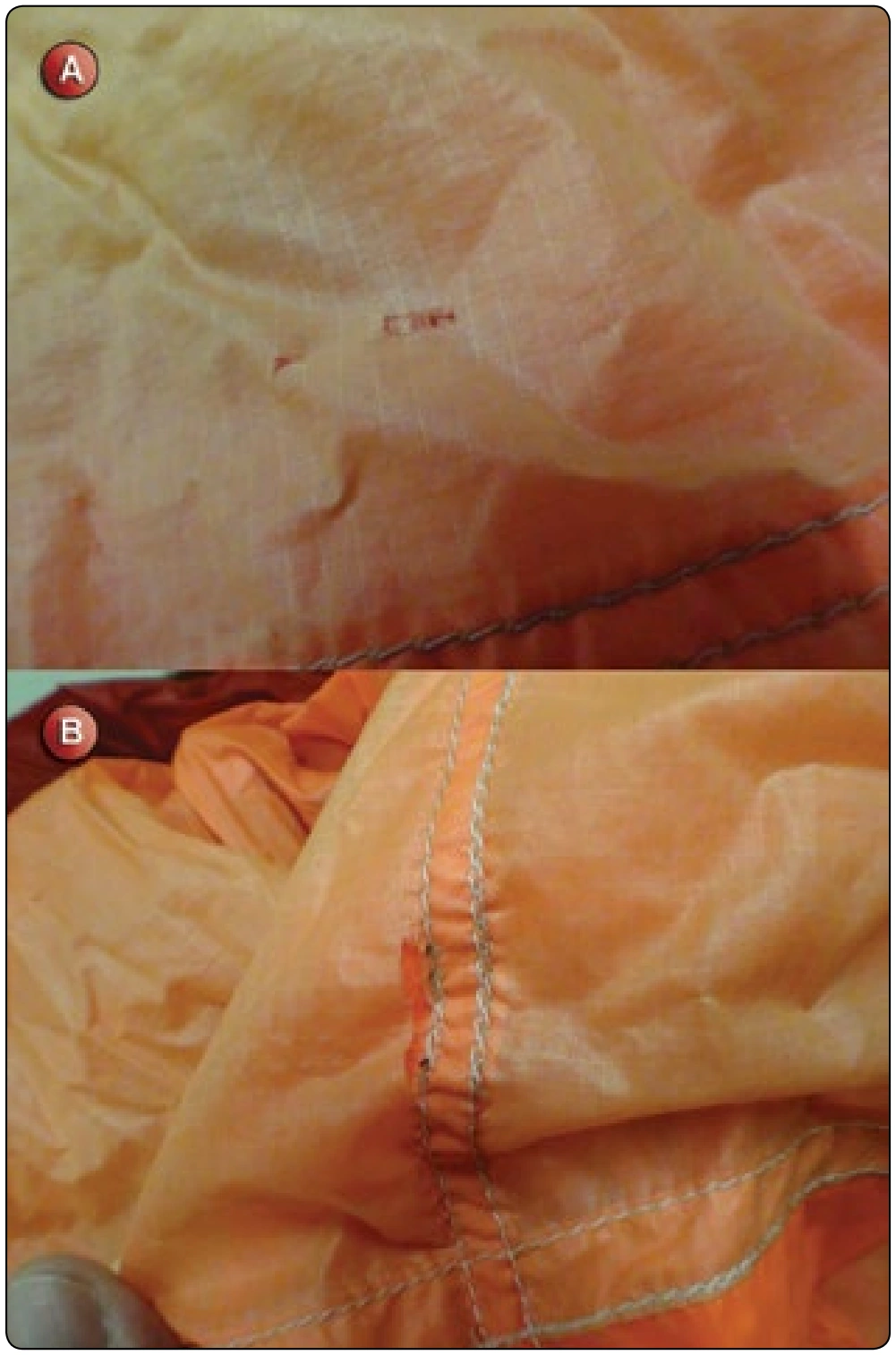
A damage chart similar to the reserve chart can be created to address main canopy inspections also.
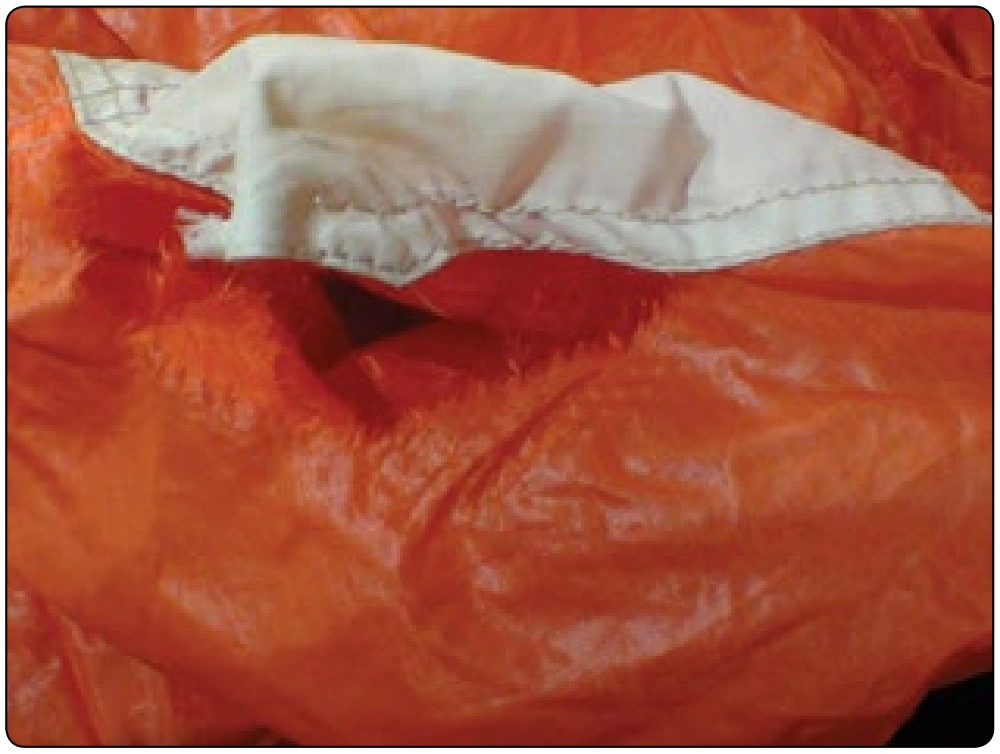
Major or Minor Repairs
It is an age-old question among rigging technicians, one that is yet to receive a clear, understandable answer. The distinction between a major repair and a minor repair is clouded by regulations and guidance material as created and applied to the repair of aircraft. The FAA classifies repairs into two categories: major and minor. Following is the FAA’s definition of both:
Major repair means a repair:
- That, if improperly done, might appreciably affect weight, balance, structural strength, performance, powerplant operation, flight characteristics, or other qualities affecting airworthiness; or
- That is not done according to accepted practices or cannot be done by elementary operations.
Minor repair means a repair other than a major repair. It is recognized and allowed by the FAA, that the weight and balance and powerplant reference as stated in paragraph (1) under major repair is not applied to parachute repairs, but all other standards are mandatory.
So, the person performing the maintenance as applies to parachutes in the view of the FAA is the one who decides if the repair or alteration is major or minor, and that person could be a rigger, a repairman (who must be employed by a manufacturer), or a person under the direct supervision of an appropriately-rated and qualified rigger (person with appropriate facilities, machines, tools, and materials).
The manufacturer can determine if a repair is major or minor and delegate authority to rated riggers or lofts in the field to perform repairs to their required standards and approved data. The FAA or their representative can also determine what category the task may be. Often, these authorizations considered by manufacturers are a one-time only allowance or limited to a specific certificated or an approved TSO piece or type of equipment.