
Chapter 2
Aerodynamics of Flight
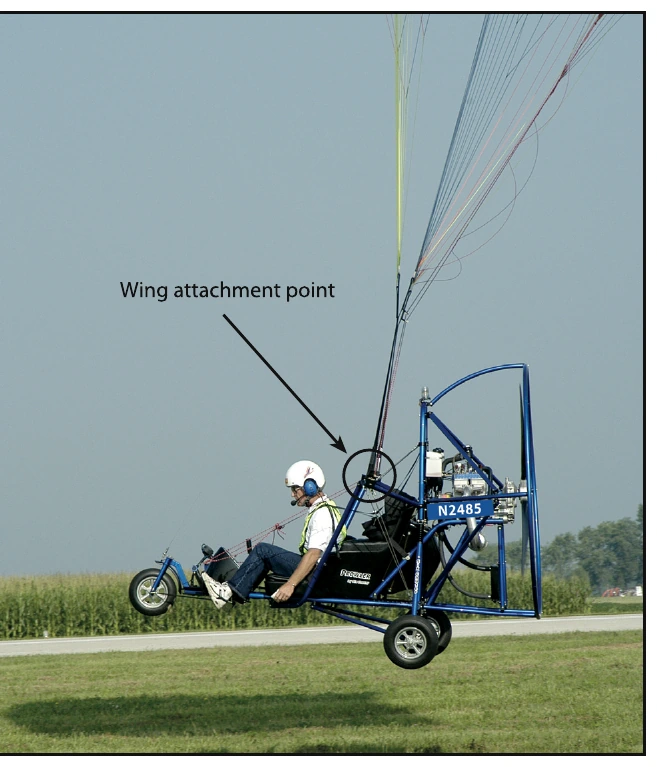
PPC Angle of Attack Characteristics
Normal Flying Conditions
For all practical purposes, the wing’s lift in a steady state normal climb is the same as it is in a steady level flight at the same airspeed. Though the flightpath has changed when the climb has been established, the angle of attack of the wing with respect to the inclined flightpath reverts to practically the same value, as does the lift. The angle of attack remains relatively constant for constant weights during stabilized flight for glide, level cruise or climb. However, wind gusts, flying in turbulence, quick uncoordinated flight (as covered later), or aerobatic maneuvers can change the PPC angle of attack. PPC limitations in the POH are specifically written to avoid any maneuver that would temporarily get the PPC into a situation of too high or too low an angle of attack. The PPC is specifically designed to fly at an angle of attack to avoid stalls (resulting from too high an angle of attack), and avoid wing collapses (resulting from too low an angle of attack). Each manufacturer specifically determines the limitations so a proper angle of attack is maintained throughout the flight operation range.
The basic design of the powered parachute is to fly at a relatively constant speed which results in a constant angle of attack. However, angle of attack can change just as with any aircraft as when a gust of wind changes the direction the air is hitting the airfoil. [Figure 2-26]
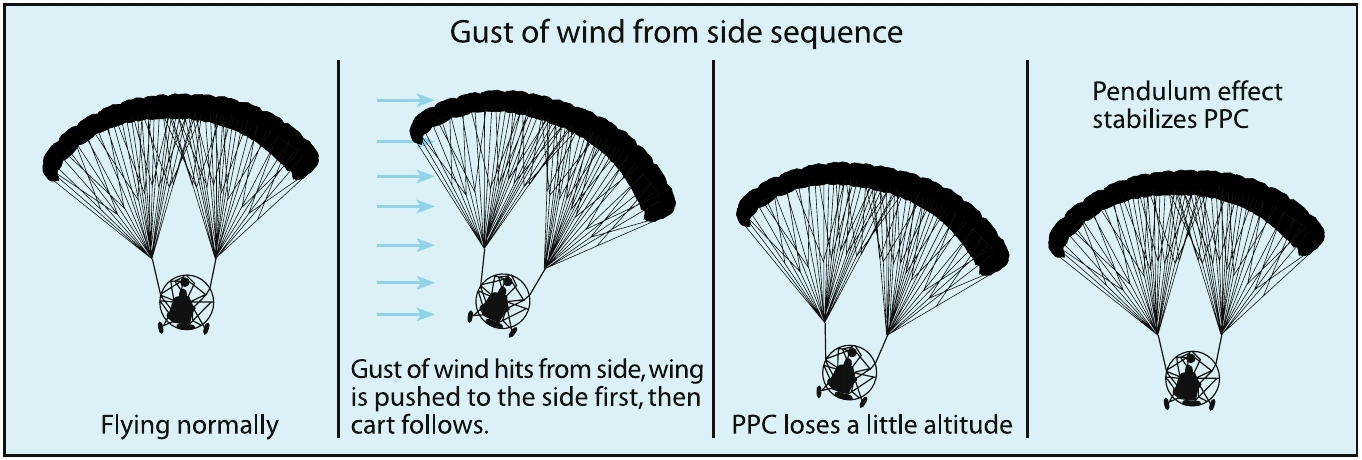
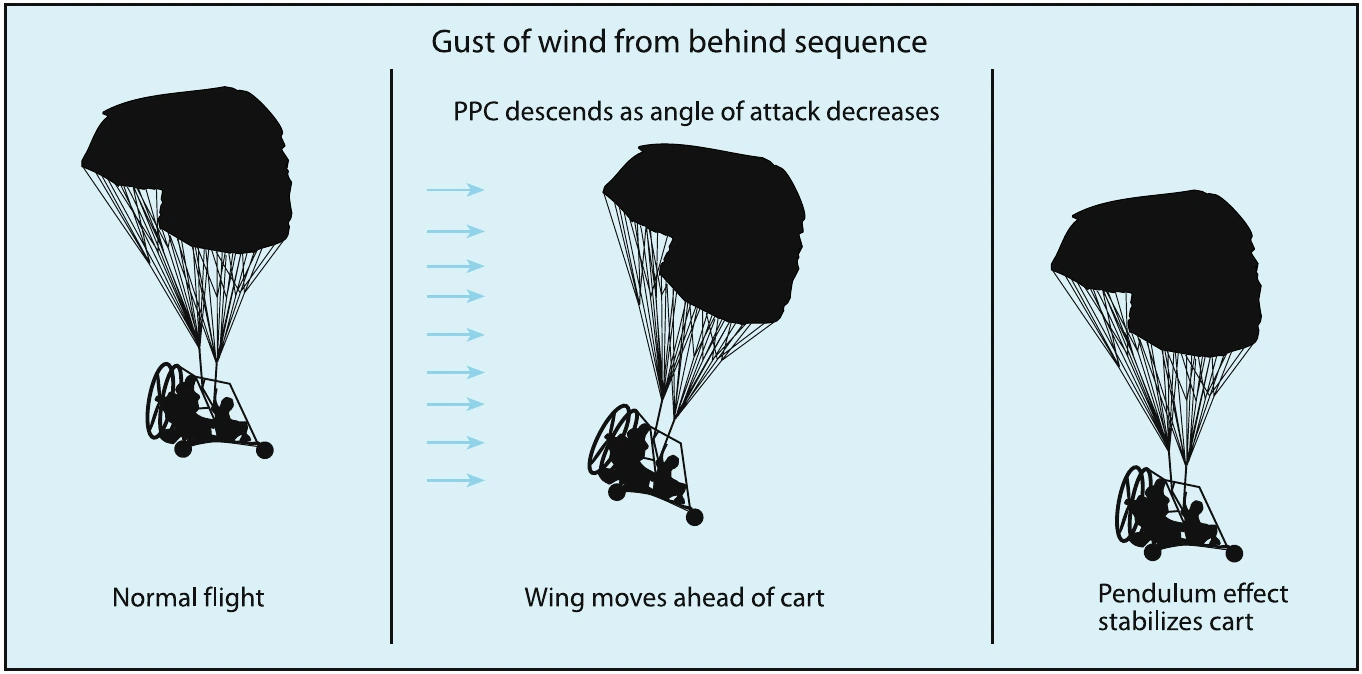
The pilot can add weight or increase loads which may also increase the angle of attack slightly.
Flaring Increases Angle of Attack
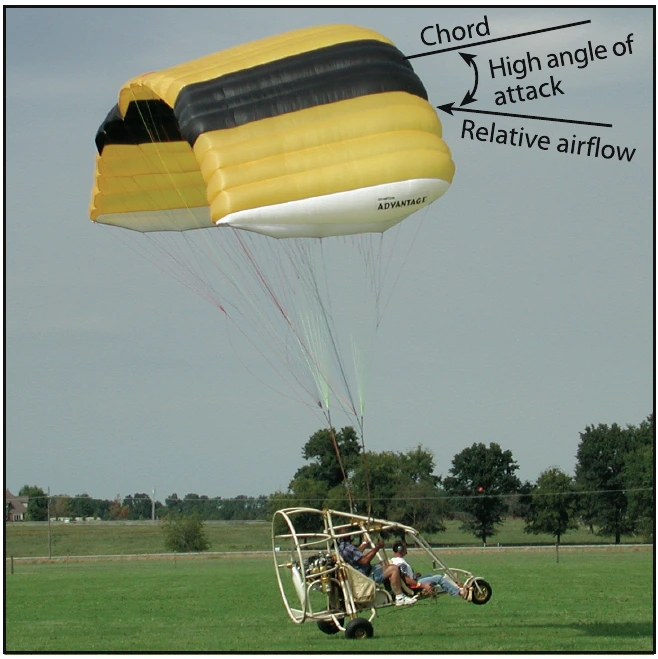
The flare (pulling down the trailing edges of the wing—and thus lowering the trailing edge) increases the angle of attack. [Figure 2-27] In a flare, the trailing edges of the wing are pulled down (usually, as both foot steering controls are pushed forward). This is similar to lowering the flaps on an airplane: lift is increased, drag is increased, and for a PPC, the angle of attack is increased. The result is that the higher drag wing slows down and thus the wing moves backward relative to the cart. So as the total weight of the pendulum (the cart and occupants) moves forward of the wing, the angle of attack increases, generating more lift and more drag. The pendulum is the weight of the CG under the wing which swings forward for this transient situation due to pendulum effect.
Porpoising Creates Variations in AOA
Another slight variation in the angle of attack is the swinging pendulum action of the PPC when high thrust engines provide strong and immediate full thrust of the propeller. This extra thrust swings the cart through the pendulum arc relative to its position under the wing. This is why many times you will see the PPC take off and porpoise until it stabilizes. This is a good example of the dynamic pendulum effect. As the propeller thrust swings the cart out front, the cart peaks then swings back to center. The cart successively swings back and forth, continuing to reduce oscillations until it stabilizes in a climb. This porpoising is most common with a high power engine. This can be eliminated by using gradual throttle increases so as not to create a dynamic pendulum effect entering a climb.
Stalls: Exceeding the Critical Angle of Attack
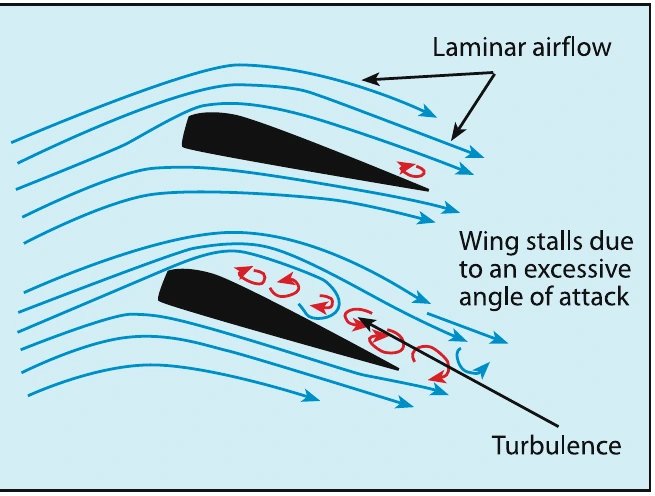
The critical angle of attack is the angle of attack at which a wing stalls regardless of airspeed, flight attitude, or weight. The drawings in Figure 2-28 show airflow over a typical rectangular PPC wing. The first shows a laminar, smooth, lift-generating airflow—one that is typical when the angle of attack is within the flight range. The second depicts an exceeded angle of attack, turbulence and loss of the lifting force. [Figure 2-28] Unlike a fixed-wing aircraft that takes constant awareness of angle of attack to prevent a stall, the powered parachute wing is designed by the manufacturers to maintain a specified range of angle of attack and airspeeds. It is resistant to stalls because for all practical purposes, it is designed to fly at a constant normal operating range. This range is maintained if the operator flies within the operating limitations specified in the POH. Flying the PPC within the limitations specified in the POH and avoiding turbulence means you will not exceed the critical angle of attack and stall the wing.
However, situations that could contribute to a stall are:
- A large increase in wing drag (full-flare)—which the PPC pilot controls by pulling the wing back, thus increasing the AOA. (Note: A full-flare is normally used and recommended only for landings.)
- A quick full RPM throttle input, creating a climbing dynamic pendulum effect loading the wing.
- A quick reduction of throttle during a high pitch angle climb. This quickly turns a high pitch climb into a high angle of attack. The wing is initially pitched high, climbing the inclined plane under full power, then quickly changes to a gliding flight path when the throttle is reduced, just like an airplane.
- A wind gust from flying in turbulent air.
To prevent a stall, do not go to full-throttle while holding a full-flare, or as specified in the POH. Note: For explanation of a stall recovery, see Chapter 12: Night, Abnormal, and Emergency Procedures.