Chapter 4
Powerplants
A two-cycle engine gearbox is kept lubricated with its own built-in reservoir of heavy gearbox oil. The reservoir is actually part of the gearbox case itself. The gearbox oil has to be changed periodically since the meshing of the gears will cause them to wear and will deposit steel filings into the oil. If the oil is not changed, the filings themselves are abrasive and will cause even more wear.
Some gearboxes have the electric starter motor built into it. When activated, the motor turns the gearing, which in turn cranks the engine itself.
Four-stroke propeller reduction gearboxes use oil from the engine oil system for lubrication.
Centrifugal Clutch
Some gearboxes come with a built-in centrifugal clutch, and others have allowances for installation. A centrifugal clutch is very useful in a two-stroke engine because it allows the engine to idle at a lower speed without the load of the propeller. Otherwise, two-strokes can generate a lot of vibration at low RPM when loaded. As the engine speeds up, the centrifugal clutch engages the rest of the gearbox and smoothly starts the propeller spinning. When the engine is brought back to idle, the clutch disengages and allows the engine to again idle smoothly; the propeller stops when on the ground and windmills when flying.
Propeller
The propeller provides the necessary thrust to push the powered parachute through the air. The engine power is used to rotate the propeller, which in turn generates thrust very similar to the manner in which a wing produces lift. The amount of thrust produced depends on the airfoil shape, the propeller blade angle of attack, and the engine RPM. [Figure 4-5] Powered parachutes are equipped with either a fixed-pitch or ground adjustable pitch propeller.
Fixed-Pitch Propeller
The pitch of this propeller is set by the manufacturer and cannot be changed. Refer to Chapter 5 of the Pilot’s Handbook of Aeronautical Knowledge for basic propeller principles.
Ground Adjustable-Pitch Propeller
Adjustable-pitch propellers for PPCs can only be adjusted on the ground with hand tools. If an engine is over-revving, more pitch can be added to the propeller. If the engine is not developing the full recommended RPM during flight, then some pitch can be taken out of the blades. This should be done per the PPC’s POH and by a qualified technician.
Induction Systems
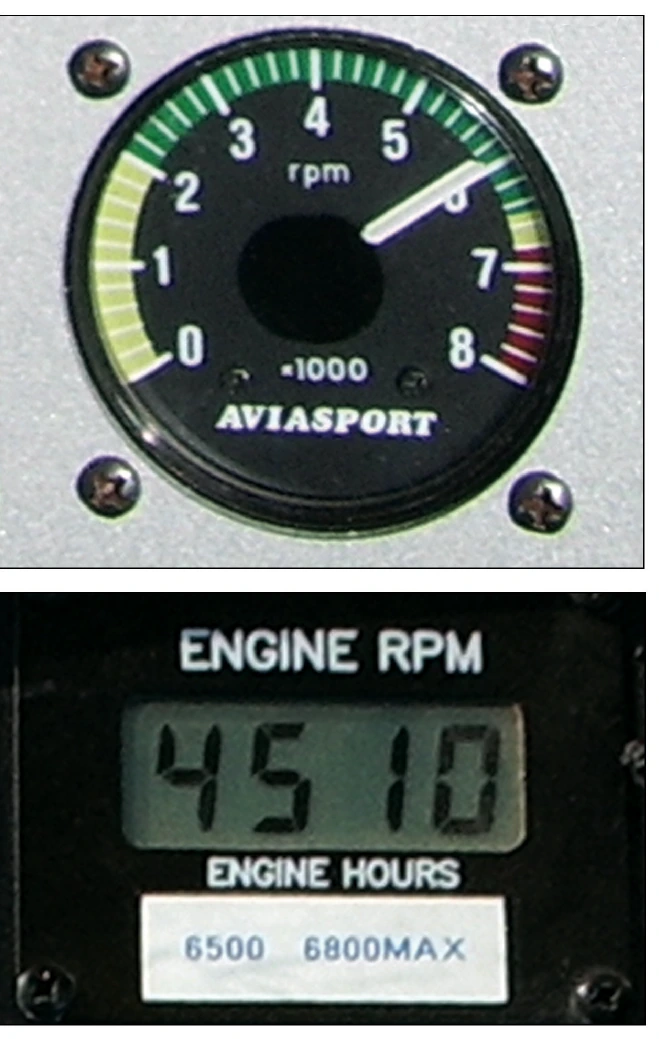
The induction system brings air in from the atmosphere, mixes it with fuel, and delivers the fuel-air mixture to the cylinder where combustion occurs. Outside air enters the induction system through an air filter on the engine. The air filter inhibits the entry of dust and other foreign objects. Two types of induction systems are used in powered parachute engines:
- The carburetor system is most common; it mixes the fuel and air in the carburetor before this mixture enters the engine intake, and
- The fuel injection system, which injects the fuel into the air just before entry into each cylinder.
Carburetor Systems
PPCs use float-type carburetors. Reference the Pilot’s Operating Handbook of Aeronautical Knowledge for basics on float carburetor operation.
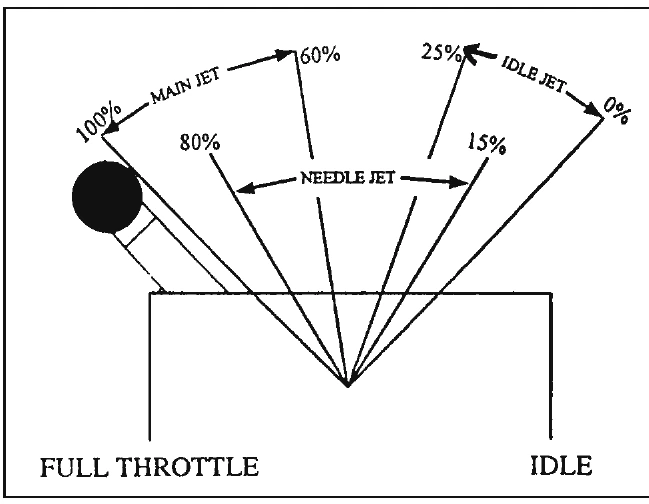
Modern two- and four-stroke carburetors operate with one of three jetting systems, depending on engine power. [Figure 4-6]
When the throttle is closed, for engine idling, the throttle valve is closed and the fuel is supplied through the idle (pilot) jet and idle (pilot) air passage. The fuel/air/oil mixture is supplied to the cylinders through the bypass hole. [Figure 4-7]