
Chapter 3
Identifying Hazards & Associated Risks
External Pressures
- The scheduled meetings back in Santa Rosa on Tuesday generate external pressures. The need to be present in Durango on Monday narrows the departure window to Tuesday morning only. If these pressures are not mitigated, a forced departure on Tuesday morning will mean dealing with the hazards and associated risks related to the pilot, the aircraft, and the environment.
As Tricia tallies up the hazards and associated risks for the planned flight to Santa Rosa, she records them on the FRAT, as shown in Figure 3-10. She needs to assess these risks in terms of their likelihood and severity. She strives to complete the risk analysis so she can return and discuss the situation with the Smiths.
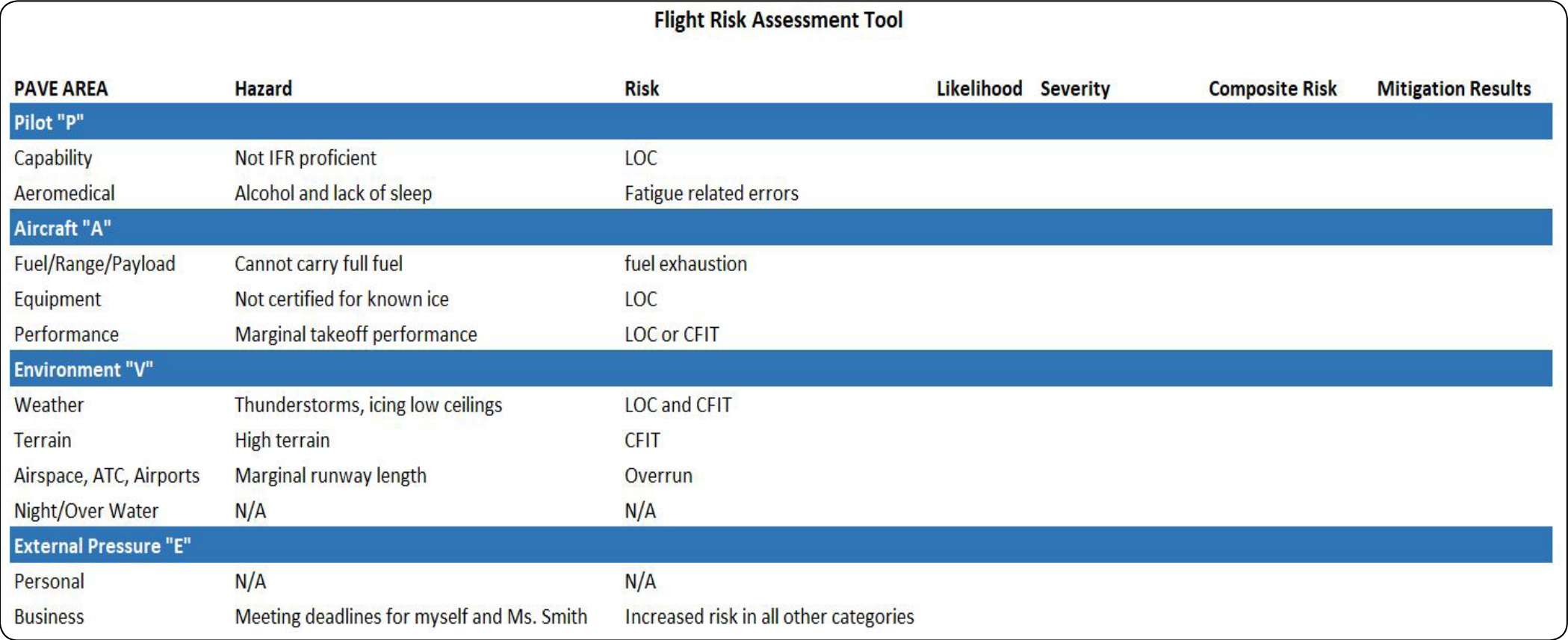
The risk assessment and mitigation for this case study will continue in Chapters 4 and 5.
Chapter Summary
Poor risk management is a common factor in many general aviation accidents. Pilots can use the PAVE checklist before flight to identify hazards. Pilots can use a FRAT to organize identified hazards and associated risks for additional analysis.