
Chapter 15
Ice & Rain Protection
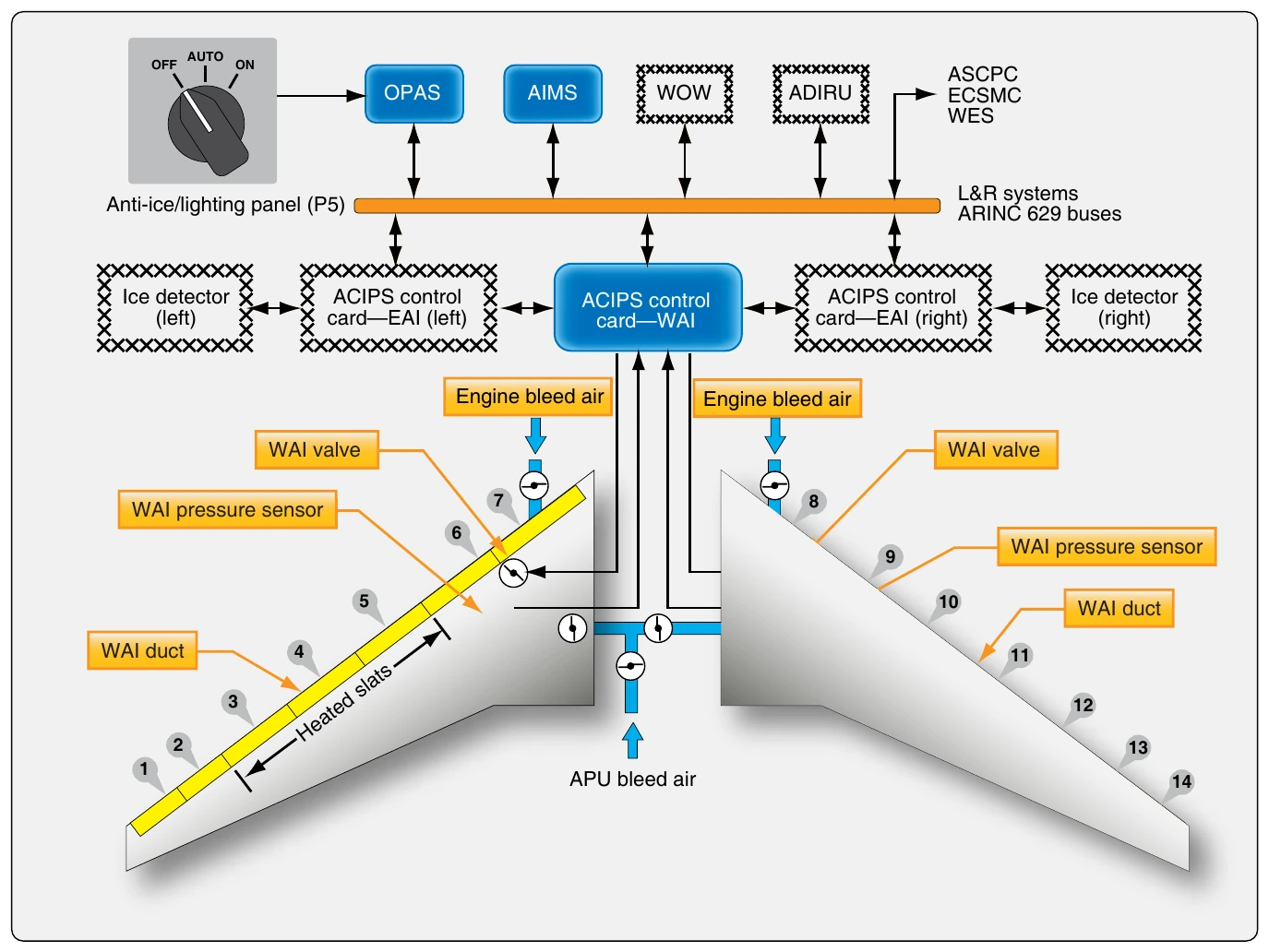
Aircraft that utilize leading edge slats often use bleed air from the engine compressor to prevent the formation of frost on these surfaces. On a modern transport category aircraft, the pneumatic system supplies bleed air for this purpose. WAI valves control the air flow from the pneumatic system to WAI ducts. The WAI ducts carry the air to the slats. Holes in the bottom of each slat let the air out.
The airfoil and cowl ice protection system (ACIPS) computer card controls the WAI valves, and pressure sensors send duct air pressure data to the computer. The aircrew can select an auto or manual mode with the WAI selector. In the auto mode, the system turns on when the ice detection system detects ice. The off and on positions are used for manual control of the WAI system. The WAI system is only used in the air, except for ground tests. The weight on wheels system and/or airspeed data disarms the system when the aircraft is on the ground. [Figure 15-9]
WAI Valve
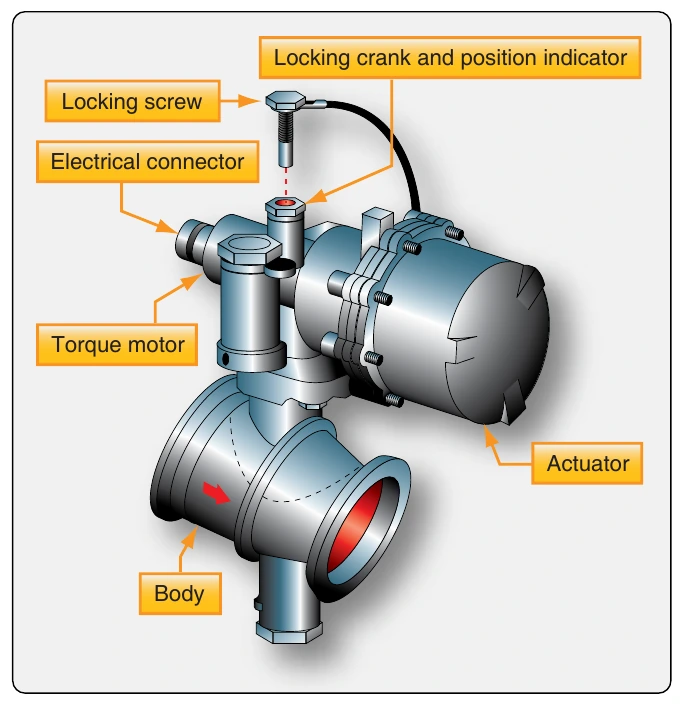
The WAI valve controls the flow of bleed air from the pneumatic system to the WAI ducts. The valve is electrically controlled and pneumatically actuated. The torque motor controls operation of the valve. With no electrical power to the torque motor, air pressure on one side of the actuator holds the valve closed. Electrical current through the torque motor allows air pressure to open the valve. As the torque motor current increases, the valve opening increases. [Figure 15-10]
WAI Pressure Sensor
The WAI pressure sensor senses the air pressure in the WAI duct after the WAI valve. The ACIPS computer card uses the pressure information to control the WAI system.
WAI Ducts
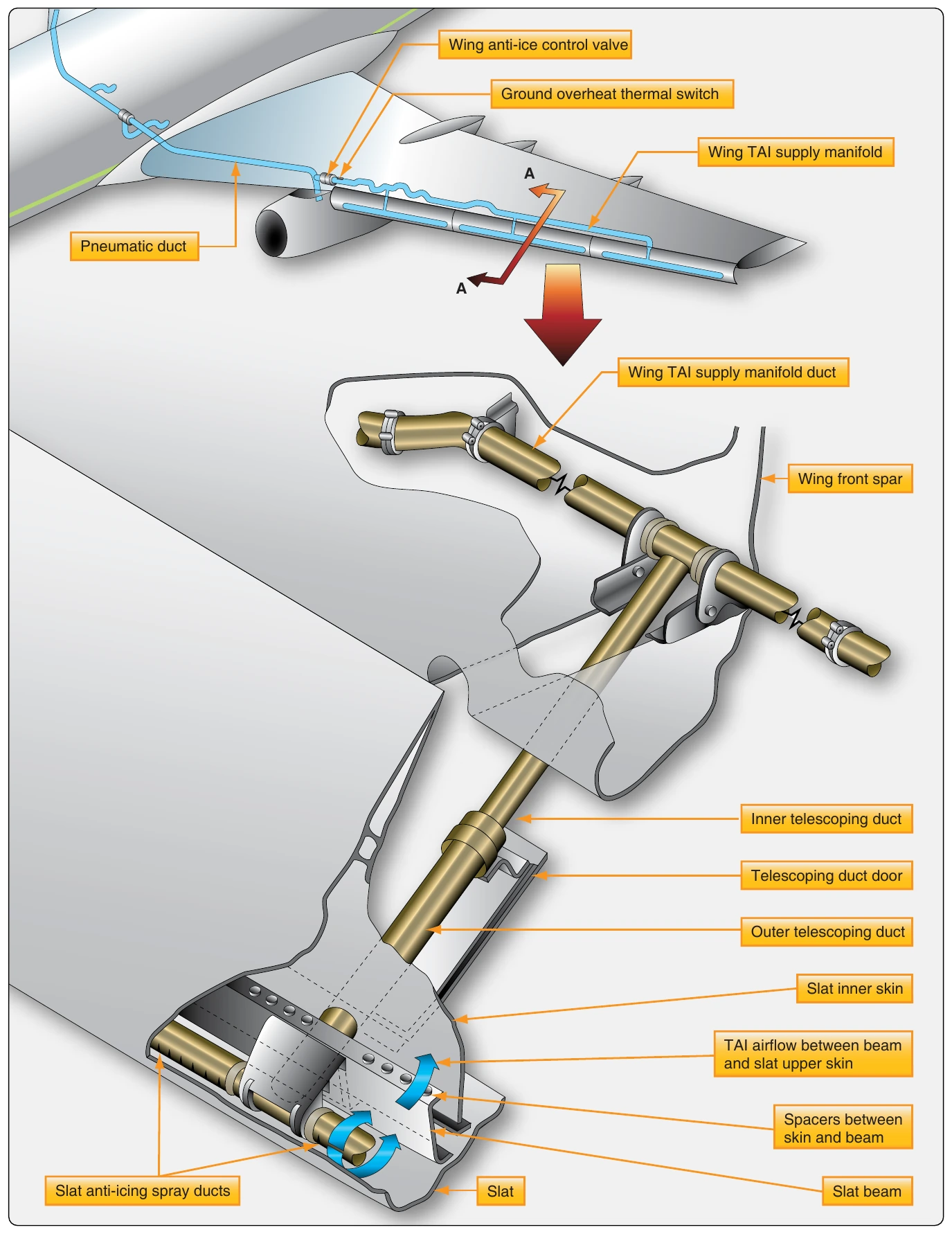
The WAI ducts move air from the pneumatic system through the wing leading edge to the leading-edge slats. Figure 15-9 shows that only leading edge slat sections 3, 4, and 5 on the left wing and 10, 11, and 12 on the right wing receive bleed air for WAI. Sections of the WAI ducting are perforated. The holes allow air to flow into the space inside the leading-edge slats. The air leaves the slats through holes in the bottom of each slat. Some WAI ducts have connecting “T” ducts that telescope to direct air into the slats while extended. The telescoping section attached to the slat on one end, slides over the narrow diameter “T” section that is connected into the WAI duct. A seal prevents any loss of air. This arrangement allows warm air delivery to the slats while retracted, in transit, and fully deployed. [Figure 15-11]
WAI Control System
Modern aircraft use several onboard computers to control aircraft systems. The WAI system is controlled by the ACIPS computer card. The ACIPS computer card controls both WAI valves. The required positions of the WAI valves change as bleed air temperature and altitude change. The left and right valves operate at the same time to heat both wings equally. This keeps the airplane aerodynamically stable in icing conditions. The WAI pressure sensors supply feedback information to the WAI ACIPS computer card for WAI valve control and position indication. If either pressure sensor fails, the WAI ACIPS computer card sets the related WAI valve to either fully open or fully closed. If either valve fails closed, the WAI computer card keeps the other valve closed.
There is one selector for the WAI system. The selector has three positions: auto, on, and off. With the selector in auto and no operational mode inhibits, the WAI ACIPS computer card sends a signal to open the WAI valves when either ice detector detects ice. The valves close after a 3-minute delay when the ice detector no longer detects ice. The time delay prevents frequent on/off cycles during intermittent icing conditions. With the selector on and no operational mode inhibits, the WAI valves open. With the selector off, the WAI valves close. The operational mode for the WAI valves can be inhibited by many different sets of conditions. [Figure 15-12]
The operational mode is inhibited if all of these conditions occur:
- Auto mode is selected.
- Takeoff mode is selected.
- Airplane has been in the air less than 10 minutes.
With auto or on selected, the operational mode is inhibited if any of these conditions occur:
- Airplane on the ground (except during an initiated or periodic built-in test equipment (BITE) test).
- Total Air Temperature (TAT) is more than 50 °F (10 °C) and the time since takeoff is less than 5 minutes.
- Auto slat operation.
- Air-driven hydraulic pump operation.
- Engine start.
- Bleed air temperature less than 200 °F (93 °C).
The WAI valves stay closed as long as the operational mode inhibit is active. If the valves are already open, the operational mode inhibit causes the valves to close.