
Chapter 16
Cabin Environmental Control Systems
Leak Detectors
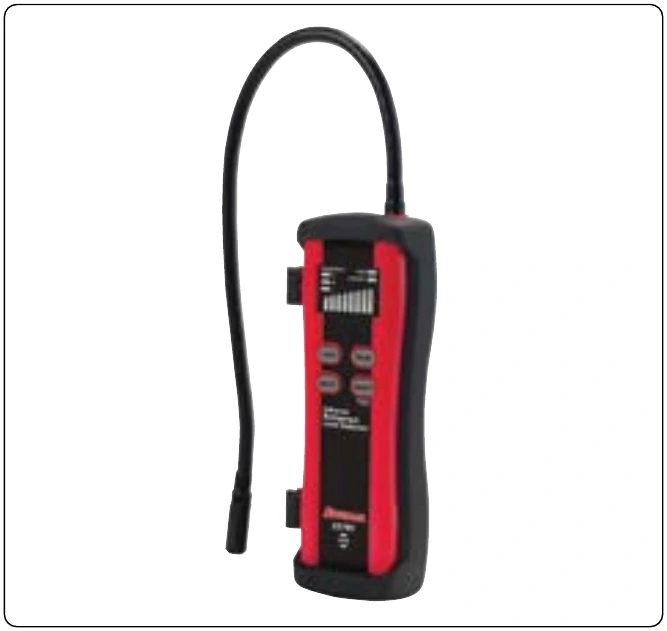
Even the smallest leak in a vapor cycle air conditioning system can cause a loss of refrigerant. When operating normally, little or no refrigerant escapes. A system that requires the addition of refrigerant should be suspected of having a leak. Electronic leak detectors are safe, effective devices used to find leaks. There are many types available that are able to detect extremely small amounts of escaped refrigerant. The detector is held close to component and hose connections where most leaks occur. Audible and visual
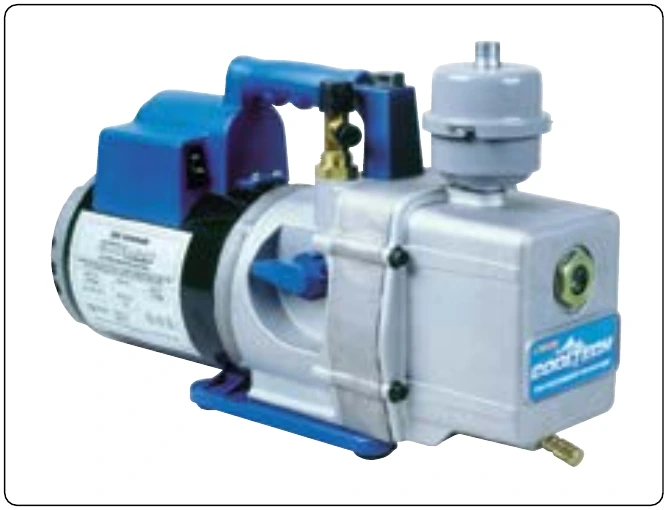
alarms signal the presence of refrigerant. A detector specified for the type of refrigerant in the system should be chosen. A good leak detector is sensitive enough to detect leaks that would result in less than 1⁄2 ounce of refrigerant to be lost per year. [Figure 16-92]
Other leak detection methods exist. A soapy solution can also be applied to fittings and inspected for the formation of bubbles indicating a leak. Special leak detection dyes compatible for use with refrigerant can be injected into the vapor cycle system and can be seen when they are forced out at a leak. Many of these are made to be visible under UV light. Occasionally, a leak can be detected upon close visual inspection. Oil in the system can be forced out of a leak, leaving a visible residue that is usually on the bottom side of a leaky fitting. Old hoses may become slightly porous and leak a significant amount of refrigerant over time. Because of the length and area through which the refrigerant is lost, this type of leak may be difficult to detect, even with leak detecting methods. Visibly deteriorated hoses should be replaced.
System Servicing
Vapor cycle air conditioning systems can give many hours of reliable, maintenance-free service. Periodic visual inspections, tests, and refrigerant level and oil level checks may be all that is required for some time. Follow the manufacturer’s instructions for inspection criteria and intervals.
Visual Inspection
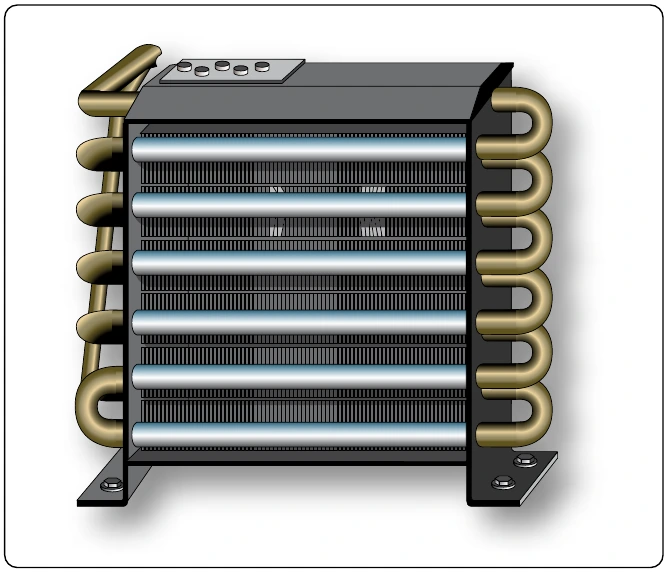
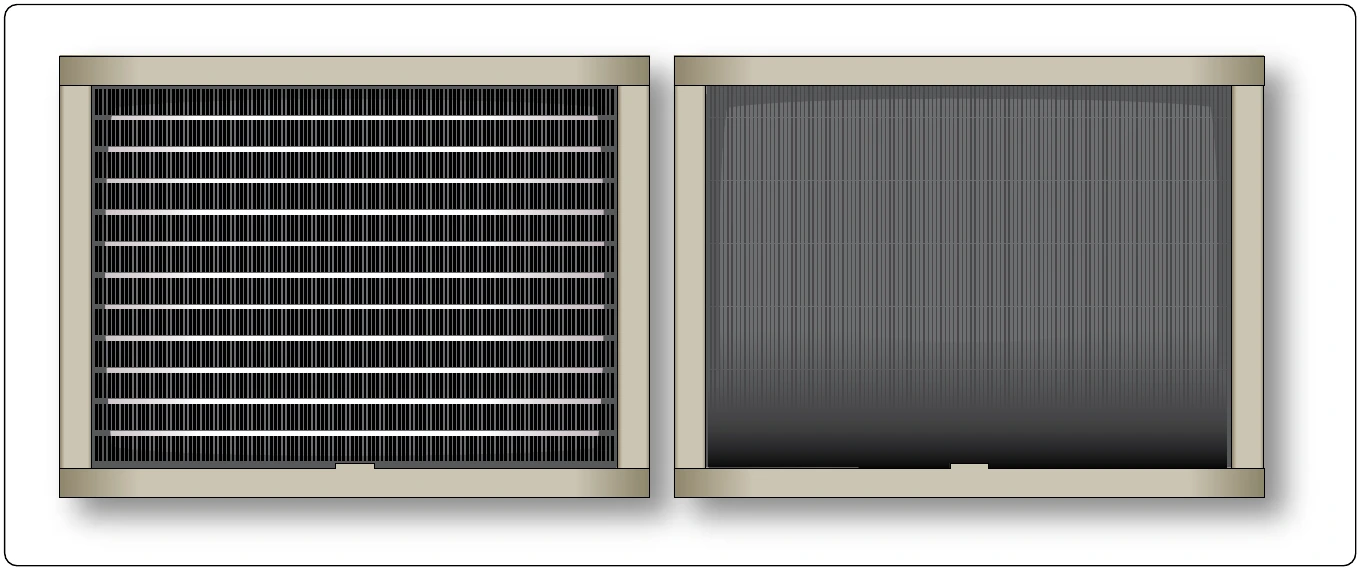
All components of any vapor cycle system should be checked to ensure they are secure. Be vigilant for any damage, misalignment, or visual signs of leakage. The evaporator and condenser fins should be checked to ensure they are clean, unobstructed, and not folded over from an impact. Dirt and inhibited airflow through the fins can prevent effective heat exchange to and from the refrigerant. Occasionally, these units can be washed. Since the condenser often has ram air ducted to it or extends into the airstream, check for the presence of debris that may restrict airflow. Hinged units should be checked for security and wear. The mechanism to extend and retract the unit should function as specified, including the throttle position switch present on many systems. It is designed to cut power to the compressor clutch and retract the condenser at full power settings. Condensers may also have a fan to pull air over them during ground operation. It should be checked to ensure it functions correctly. [Figure 16-93] Be sure the capillary temperature feedback sensor to the expansion valve is securely attached to the evaporator outlet. Also, check the security of the pressure sensor and thermostat sensor if the system has them. The evaporator should not have ice on the outside. This prevents proper heat exchange to the refrigerant from the warm cabin air blown over the unit. The fan blower should be checked to ensure it rotates freely. Depending on the system, it should run whenever the cooling switch is selected and should change speeds as the selector is rotated to more or less cooling. Sometimes systems low on refrigerant can cause ice on the evaporator, as can a faulty expansion valve or feedback control line. Ice formation anywhere on the outside of a vapor cycle air conditioning system should be investigated for cause and corrected. [Figure 16-94]
Security and alignment of the compressor is critical and should be checked during inspection. Belt-driven compressors need to have proper belt tension to function properly. Check the manufacturer’s data for information on how to determine the condition and tension of the belt, as well as how to make adjustments. Oil level should be sufficient. Typically, 1⁄4 ounce of oil is added for each pound of refrigerant added to the system. When changing a component, additional oil may need to be added to replace that which is trapped in the replaced unit. Always use the oil specified in the manufacturer’s maintenance manual.
Leak Test
As mentioned under the leak detector section above, leaks in a vapor cycle air conditioning system must be discovered and repaired. The most obvious sign of a possible leak is a low refrigerant level. Bubbles present in the sight glass of the receiver dryer while the system is operating indicate more refrigerant is needed. A system check for a leak may be in order. Vapor cycle systems normally lose a small amount of refrigerant each year. No action is needed if this amount is within limits.
Occasionally, all of the refrigerant escapes from the system. No bubbles are visible in the sight glass, but the complete lack of cooling indicates the refrigerant has leaked out. To locate the leak point, the system needs to be partially charged with refrigerant so leak detection methods can be employed. About 50 psi of refrigerant in the high and low sides should be sufficient for a leak check. By introducing the refrigerant into the high side, pressure indicated on the low side gauge verifies the orifice in the expansion valve is not clogged. When all refrigerant is lost due to a leak, the entire system should be checked. Each fitting and connection should be inspected visually and with a leak detector.
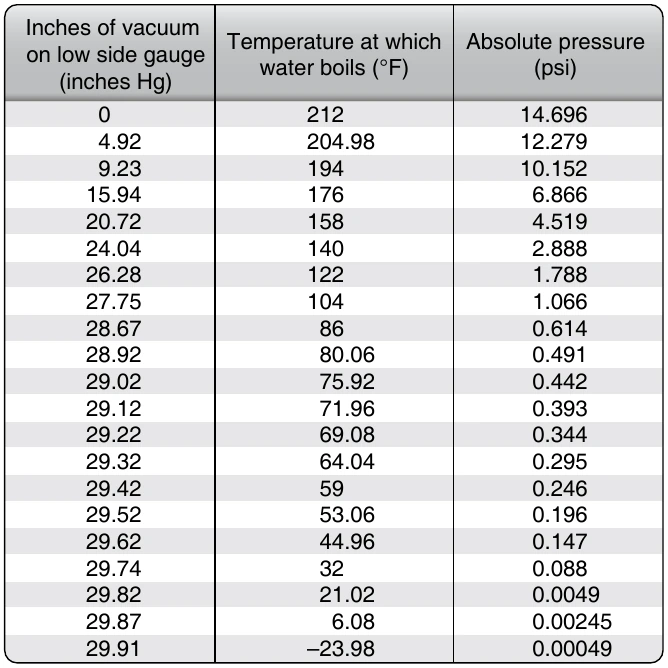
When a vapor cycle air conditioning system loses all of its refrigerant charge, air may enter the system. Water may also enter since it is in the air. This means that a full system evacuation must be performed after the leak is found and repaired. By establishing only a 50-psi charge in a depleted system, the leak(s) becomes detectable, but time and refrigerant are not wasted prior to evacuation. System evacuation is discussed below.