Chapter 17
Fire Protection Systems
- Turbine engine compartments.
- APU compartments.
- Cargo and baggage compartments.
- Lavatories.
CO2 Fire Extinguishing Systems
Older aircraft with reciprocating engines used CO2 as an extinguishing agent, but all newer aircraft designs with turbine engines use Halon or equivalent extinguishing agent, such as halocarbon clean agents.
Halogenated Hydrocarbons Fire Extinguishing Systems
The fixed fire extinguisher systems used in most engine fire and cargo compartment fire protection systems are designed to dilute the atmosphere with an inert agent that does not support combustion. Many systems use perforated tubing or discharge nozzles to distribute the extinguishing agent. High rate of discharge (HRD) systems use open-end tubes to deliver a quantity of extinguishing agent in 1 to 2 seconds. The most common extinguishing agent still used today is Halon 1301 because of its effective firefighting capability and relatively low toxicity (UL classification Group 6). Noncorrosive Halon 1301 does not affect the material it contacts and requires no cleanup when discharged. Halon 1301 is the current extinguishing agent for commercial aircraft, but a replacement is under development. Halon 1301 cannot be produced anymore because it depletes the ozone layer. Halon 1301 will be used until a suitable replacement is developed. Some military aircraft use HCL-125 and the Federal Aviation Administration (FAA) is testing HCL-125 for use in commercial aircraft.
Containers
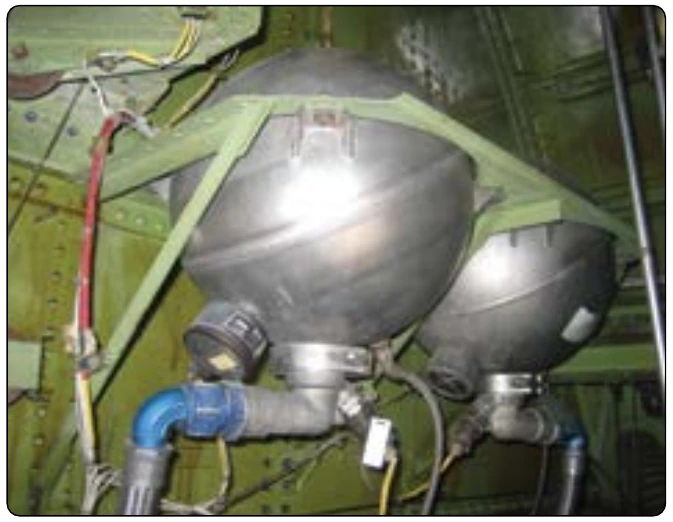
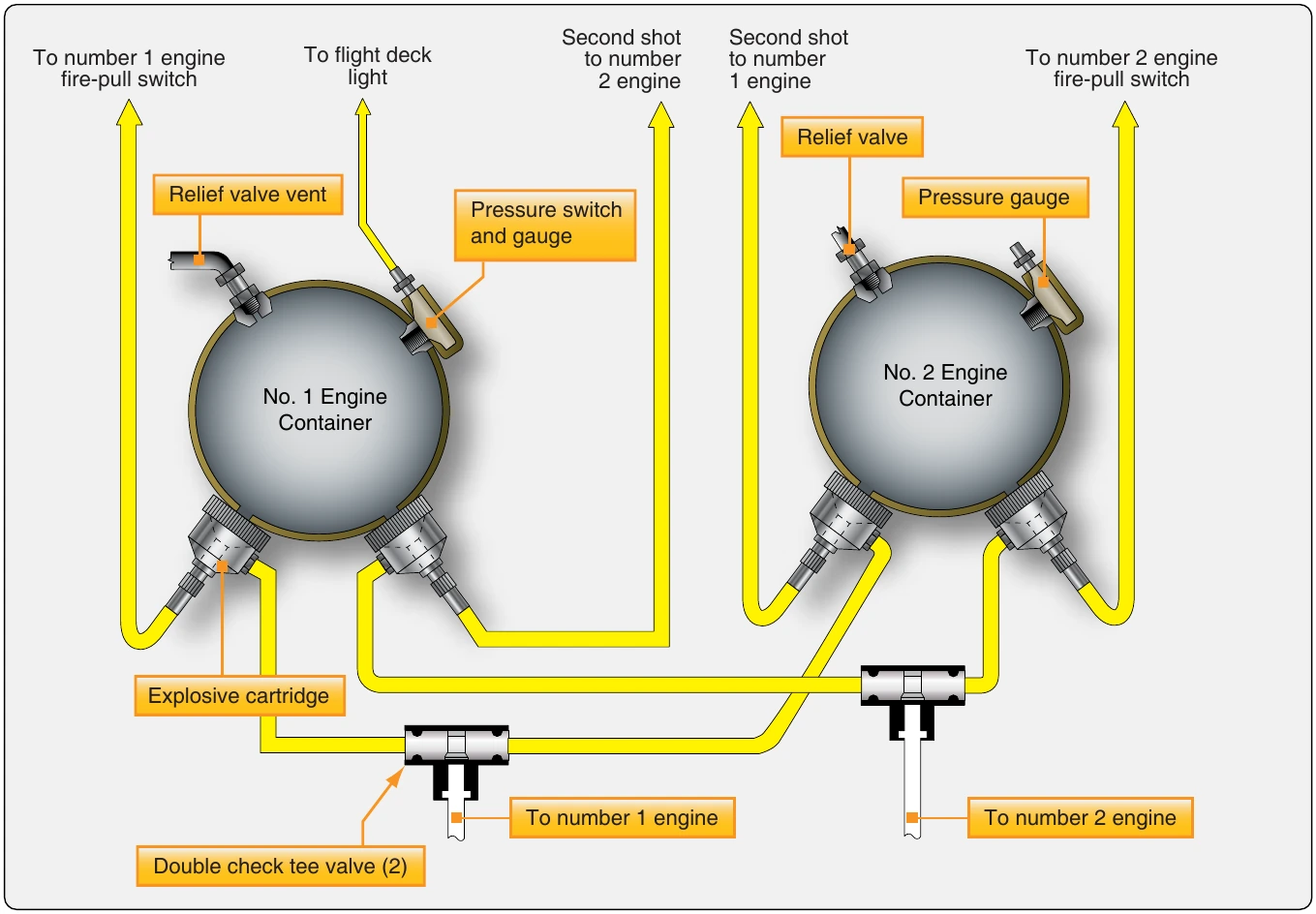
Fire extinguisher containers (HRD bottles) store a liquid halogenated extinguishing agent and pressurized gas (typically nitrogen). They are normally manufactured from stainless steel. Depending upon design considerations, alternate materials are available, including titanium. Containers are also available in a wide range of capacities. They are produced under Department of Transportation (DOT) specifications or exemptions. Most aircraft containers are spherical in design, which provides the lightest weight possible. However, cylindrical shapes are available where space limitations are a factor. Each container incorporates a temperature/pressure sensitive safety relief diaphragm that prevents container pressure from exceeding container test pressure in the event of exposure to excessive temperatures. [Figures 17-12 and 17-13]
Discharge Valves
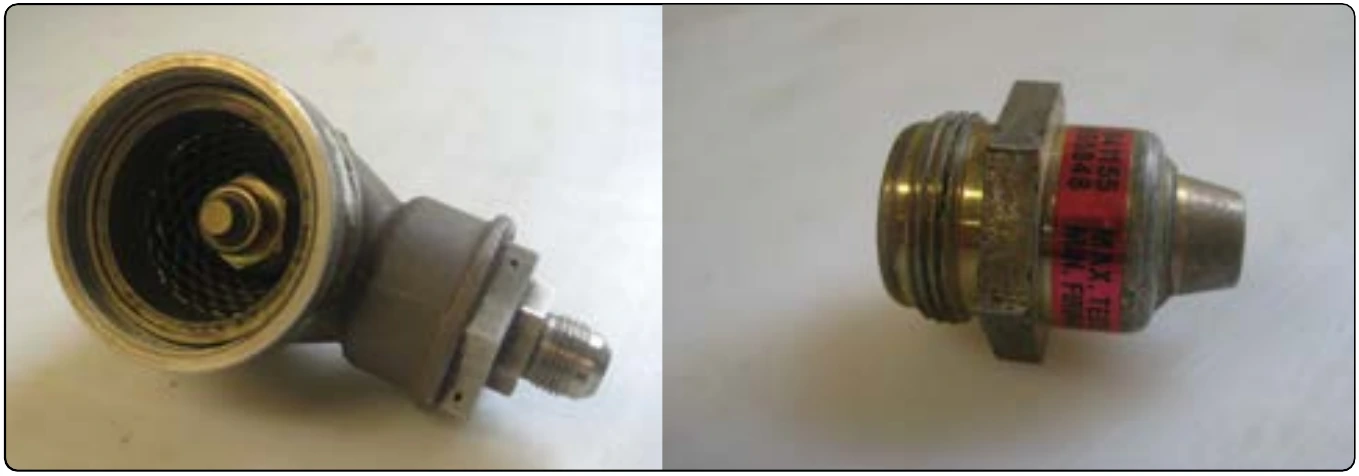
Discharge valves are installed on the containers. A cartridge (squib) and frangible disc-type valve are installed in the outlet of the discharge valve assembly. Special assemblies having solenoid-operated or manually-operated seat-type valves are also available. Two types of cartridge disc-release techniques are used. Standard release-type uses a slug driven by explosive energy to rupture a segmented closure disc. For high temperature or hermetically sealed units, a direct explosive impact-type cartridge is used that applies fragmentation impact to rupture a prestressed corrosion resistant steel diaphragm. Most containers use conventional metallic gasket seals that facilitate refurbishment following discharge. [Figure 17-14]
Pressure Indication
A wide range of diagnostics is utilized to verify the fire extinguisher agent charge status. A simple visual indication gauge is available, typically a helical bourdon-type indicator that is vibration resistant. [Figure 17-13] A combination gauge switch visually indicates actual container pressure and also provides an electrical signal if container pressure is lost, precluding the need for discharge indicators. A ground checkable diaphragm-type low-pressure switch is commonly used on hermetically sealed containers. The Kidde system has a temperature compensated pressure switch that tracks the container pressure variations with temperatures by using a hermetically sealed reference chamber.
Two-Way Check Valve
Two-way check valves are required in a two-shot system to prevent the extinguisher agent from a reserve container from backing up into the previous emptied main container. Valves are supplied with either MS-33514 or MS-33656 fitting configurations.
Discharge Indicators
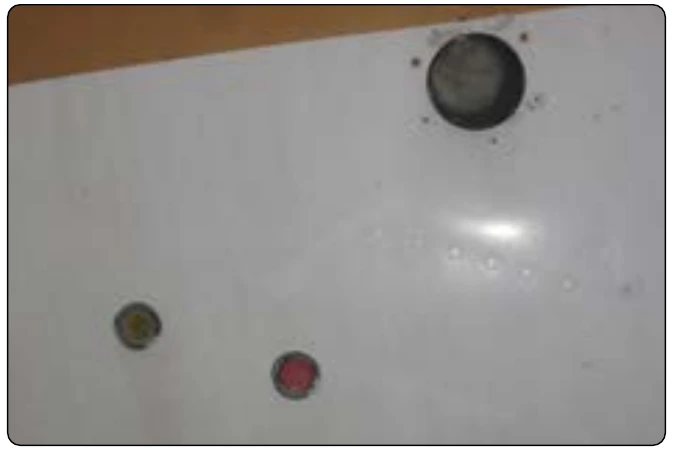
Discharge indicators provide immediate visual evidence of container discharge on fire extinguishing systems. Two kinds of indicators can be furnished: thermal and discharge. Both types are designed for aircraft and skin mounting. [Figure 17-15]