
Chapter 17
Fire Protection Systems
Class E cargo compartment is one on airplanes used only for the carriage of cargo and in which:
- There is a separate approved smoke or fire detector system to give warning at the pilot or flight engineer station.
- The controls for shutting off the ventilating airflow to, or within, the compartment are accessible to the flight crew in the crew compartment.
- There are means to exclude hazardous quantities of smoke, flames, or noxious gases from the flight crew compartment.
- The required crew emergency exits are accessible under any cargo loading condition.
Cargo & Baggage Compartment Fire Detection & Extinguisher System
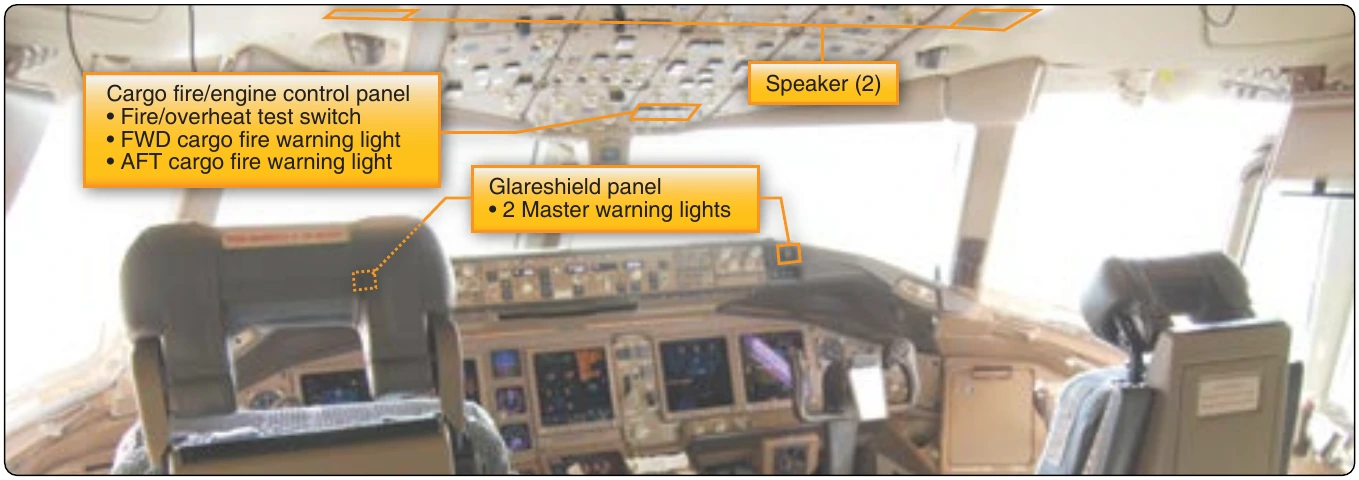
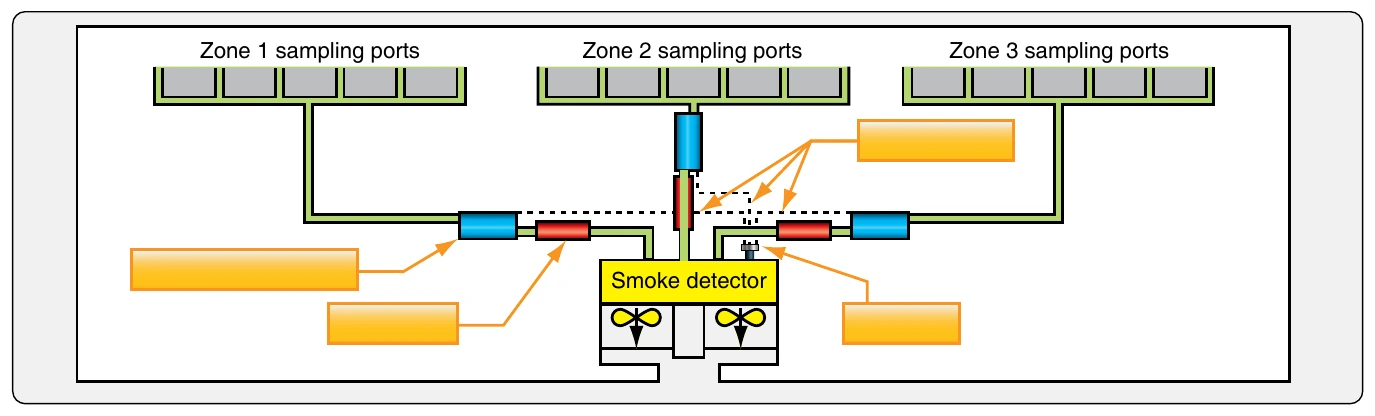
The cargo compartment smoke detection system gives warnings in the flight deck if there is smoke in a cargo compartment. [Figure 17-18] Each compartment is equipped with a smoke detector. The smoke detectors monitor air in the cargo compartments for smoke. The fans bring air from the cargo compartment into the smoke detector. Before the air goes in the smoke detector, in-line water separators remove condensation and heaters increase the air temperature. [Figure 17-19]
Smoke Detector System
The optical smoke detector consists of source light emitting diodes (LEDs), intensity monitor photodiodes, and scatter detector photodiodes. Inside the smoke detection chamber, air flows between a source LED and a scatter detector photodiode. Usually, only a small amount of light from the LED gets to the scatter detector. If the air has smoke in it, the smoke particles reflect more light on the scatter detector. This causes an alarm signal. The intensity monitor photodiode makes sure that the source LED is on and keeps the output of the source LED constant. This configuration also finds contamination of the LED and photodiodes. A defective diode, or contamination, causes the detector to change to the other set of diodes. The detector sends a fault message.
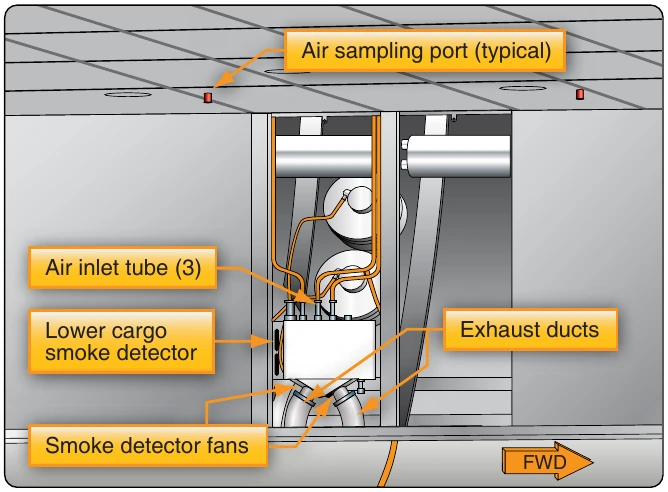
The smoke detector has multiple sampling ports. The fans draw air from the sampling ports through a water separator and a heater unit to the smoke detector. [Figure 17-20]
Cargo Compartment Extinguishing System
The cargo compartment extinguishing system is activated by the flight crew if the smoke detectors detect smoke in the cargo compartment. Some aircraft are outfitted with two types of fire extinguisher containers. The first system is the dump system that releases the extinguishing agent directly when the cargo fire discharge switch is activated. This action extinguishes the fire.
The second system is the metered system. After a time delay, the metered bottles discharge slowly and at a controlled rate through the filter regulator. Halon from the metered bottles replaces the extinguishing agent leakage. This keeps the correct concentration of extinguishing agent in the cargo compartment to keep the fire extinguished for 180 minutes.
The fire extinguishing bottles contain Halon 1301 or equivalent fire extinguishing agent pressurized with nitrogen. Tubing connects the bottles to discharge nozzles in the cargo compartment ceilings.
The extinguishing bottles are outfitted with squibs. The squib is an electrically operated explosive device. It is adjacent to a bottle diaphragm that can break. The diaphragm normally seals the pressurized bottle. When the cargo discharge switch is activated, the squib fires and the explosion breaks the diaphragm. Nitrogen pressure inside the bottle pushes the Halon through the discharge port into the cargo compartment. When the bottle discharges, a pressure switch is activated that sends an indication to the flight deck that a bottle has been discharged. Flow control valves are incorporated if the bottles can be discharged in multiple compartments. The flow control valves direct the extinguishing agent to the selected cargo compartment. [Figure 17-21]
The following indications occur in the flight deck if there is smoke in a cargo compartment:
- Master warning lights come on.
- Fire warning aural operates.
- A cargo fire warning message shows.
- Cargo fire warning light comes on.
The master warning lights and fire warning aural are prevented from operating during part of the takeoff operation.