
Chapter 3
Aircraft Fabric Covering
Once the old fabric has been removed, the exposed airframe structure must be thoroughly cleaned and inspected. The IA collaborating on the job should be involved in this step of the process. Details of the inspection should follow the manufacturer’s guidelines, the STC, or AC 43.13-1. All of the old adhesive must be completely removed from the airframe with solvent, such as MEK. A thorough inspection must be done and various components may be selected to be removed for cleaning, inspection, and testing. Any repairs that are required, including the removal and treatment of all corrosion, must be done at this time. If the airframe is steel tubing, many technicians take the opportunity to grit blast the entire airframe at this stage.
The leading edge of a wing is a critical area where airflow diverges and begins its laminar flow over the wing’s surfaces, which results in the generation of lift. It is beneficial to have a smooth, regular surface in this area. Plywood leading edges must be sanded until smooth, bare wood is exposed. If oil or grease spots exist, they must be cleaned with naphtha or other specified cleaners. If there are any chips, indentations, or irregularities, approved filler may be spread into these areas and sanded smooth. The entire leading edge should be cleaned before beginning the fabric covering process.
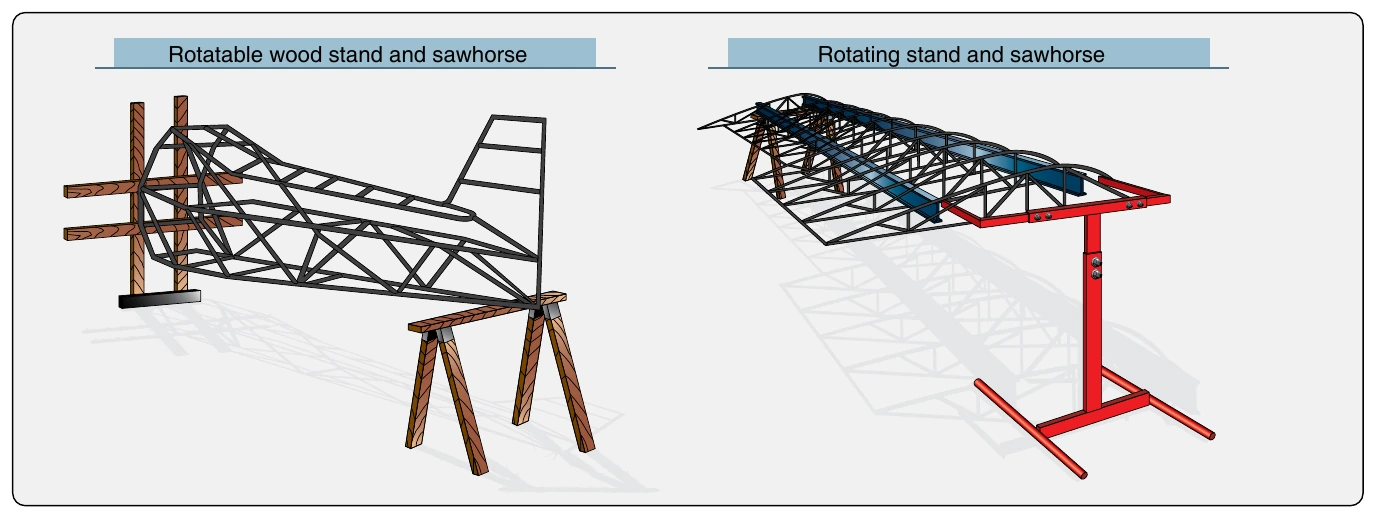
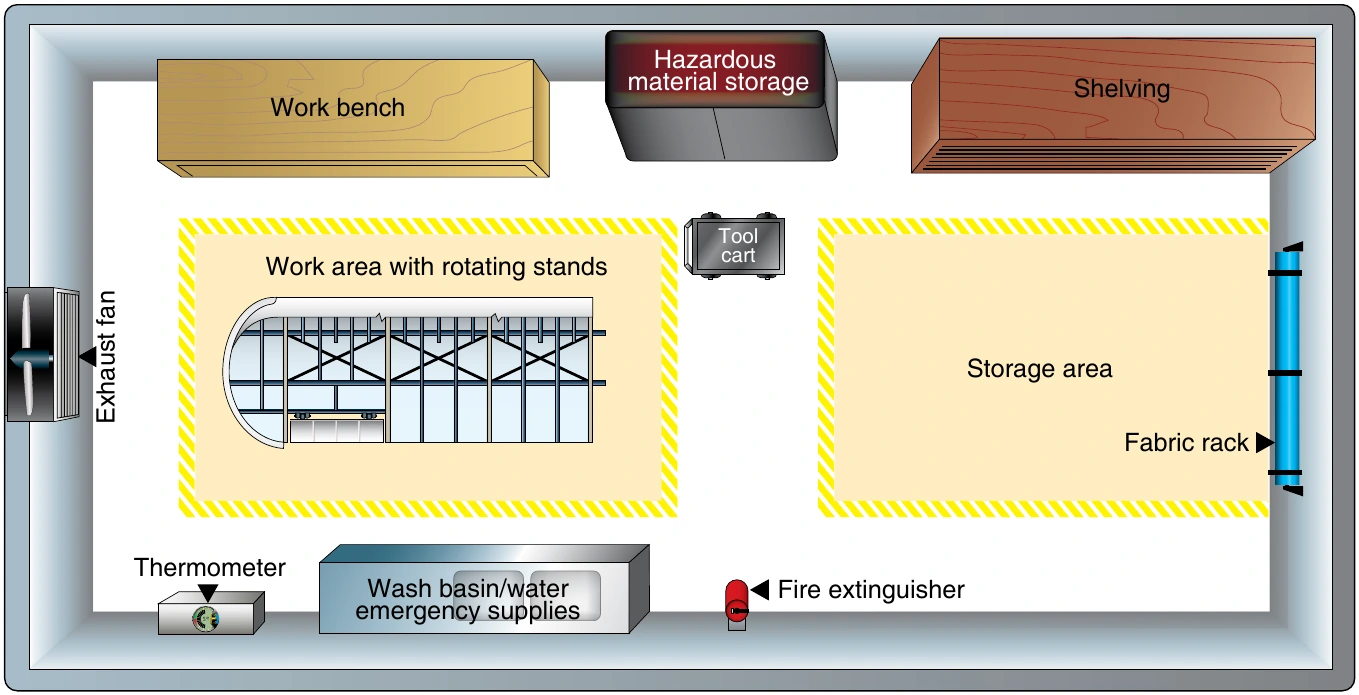
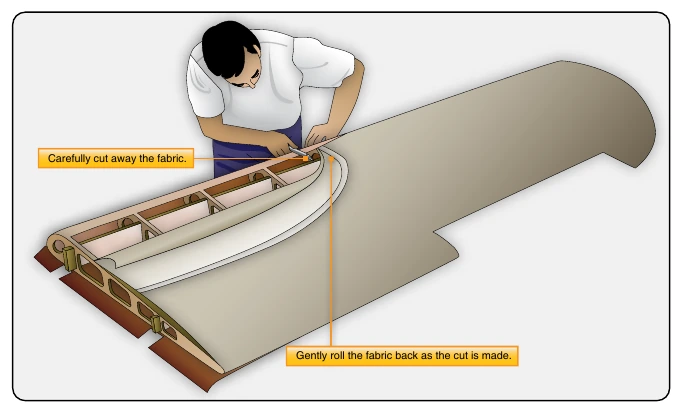
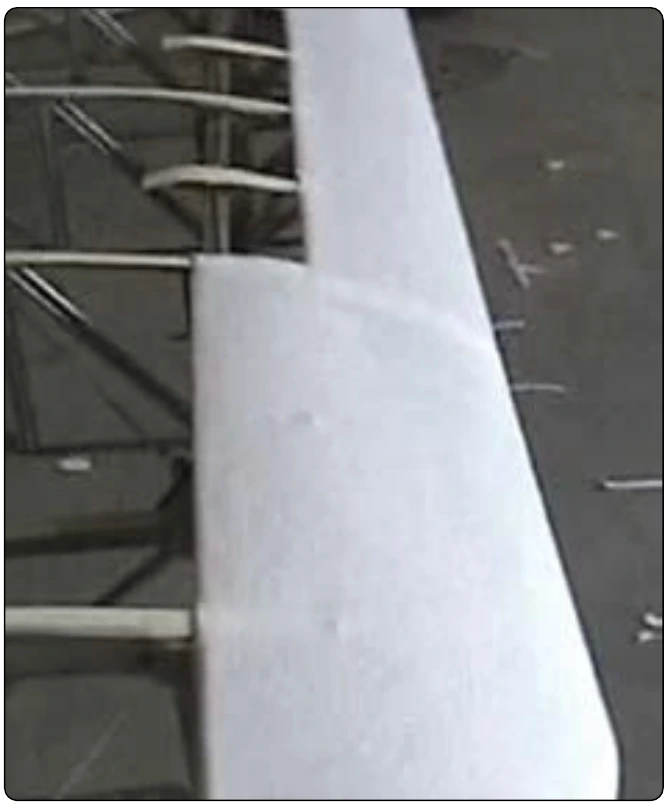
To obtain a smooth finish on fabric-covered leading edges of aluminum wings, a sheet of felt or polyester padding may be applied before the fabric is installed. This should only be done with the material specified in the STC under which the technician is working. The approved padding ensures compatibility with the adhesives and first coatings of the covering process. When a leading edge pad is used, check the STC process instructions for permission to make a cemented fabric seam over the padding. [Figure 3-17]
When completely cleaned, inspected, and repaired, an approved primer, or varnish if it is a wood structure, should be applied to the airframe. This step is sometimes referred to as dope proofing. Exposed aluminum must first be acid etched. Use the product(s) specified by the manufacturer or in the STC to prepare the metal before priming. Two part epoxy primers and varnishes, which are not affected by the fabric adhesive and subsequent coatings, are usually specified. One part primers, such as zinc chromate and spar varnish, are typically not acceptable. The chemicals in the adhesives dissolve the primers, and adhesion of the fabric to the airframe is lost.
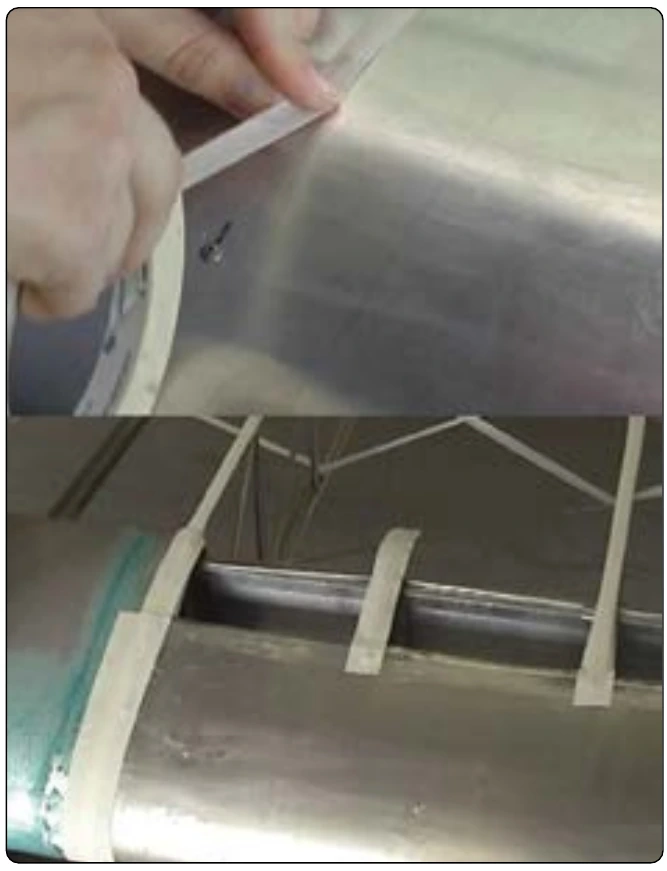
Sharp edges, metal seams, the heads of rivets, and any other feature on the aircraft structure that might cut or wear through the fabric should be covered with anti-chafe tape. As described above, this cloth sticky-back tape is approved and should not be substituted with masking or any other kind of tape. Sometimes, rib cap strips need to have anti-chafe tape applied when the edges are not rounded over. [Figure 3-18]
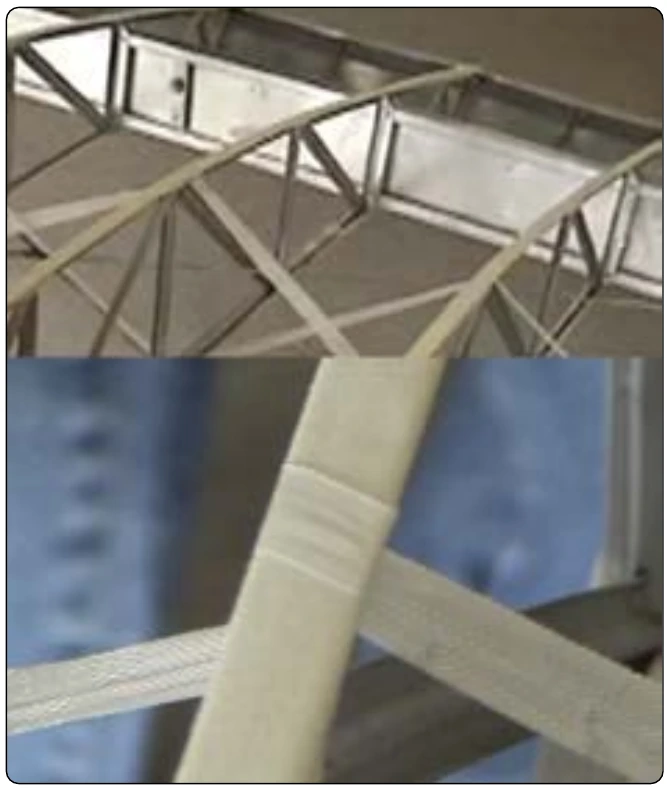
Inter-rib bracing must also be accomplished before the fabric is installed. It normally does not have an adhesive attached to it and is wrapped only once around each rib. The single wrap around each rib is enough to hold the ribs in place during the covering process but allows small movements during the fabric shrinking process. [Figure 3-19]
Attaching Polyester Fabric to the Airframe
Inexperienced technicians are encouraged to construct a test panel upon which they can practice with the fabric and various substances and techniques to be used on the aircraft. It is often suggested to cover smaller surfaces first, such as the empennage and control surfaces. Mistakes on these can be corrected and are less costly if they occur. The techniques employed for all surfaces, including the wings and fuselage, are basically the same. Once dexterity has been established, the order in which one proceeds is often a personal choice.
When the airframe is primed and ready for fabric installation, it must receive a final inspection by an A&P with IA. When approved, attachment of the fabric may begin. The manufacturer’s or STC’s instructions must be followed without deviation for the job to be airworthy. The following are the general steps taken. Each approved process has its own nuances.
Seams
During installation, the fabric is overlapped and seamed together. Primary concerns for fabric seams are strength, elasticity, durability, and good appearance. Whether using the blanket method or envelope method, position all fabric seams over airframe structure to which the fabric is to be adhered during the covering process, whenever possible. Unlike the blanket method, fabric seam overlap is predetermined in the envelope method. Seams sewn to the specifications in AC 43.13-1, the STC under which the work is being performed, or the manufacturer’s instructions should perform adequately.
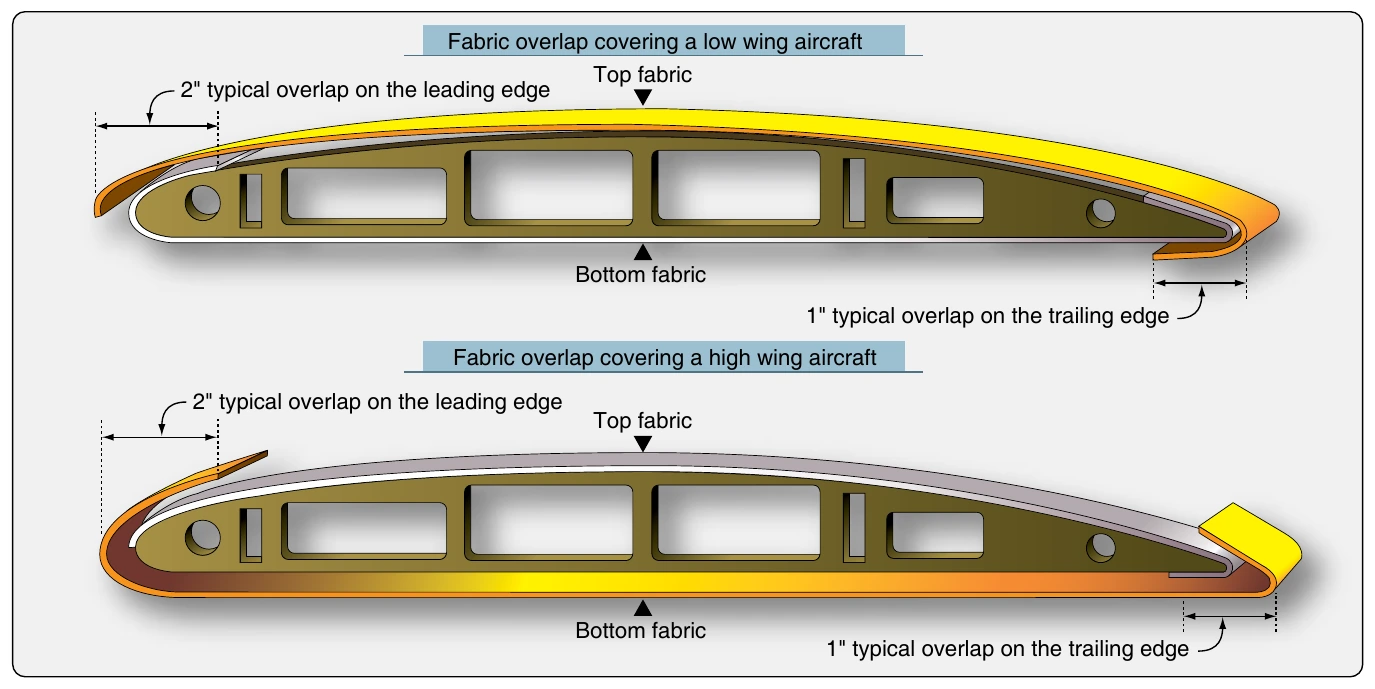
Most covering procedures for polyester fabric rely on doped or glued seams as opposed to sewn seams. They are simple and easy to make and provide excellent strength, elasticity, durability, and appearance. When using the blanket method, seam overlap is specified in the covering instructions and the FAA-certificated A&P mechanic must adhere to these specifications. Typically, a minimum of two to four inches of fabric overlap seam is required where ends of fabric are joined in areas of critical airflow, such as the leading edge of a wing. One to two inches of overlap is often the minimum in other areas.
When using the blanket method, options exist for deciding where to overlap the fabric for coverage. Function and the final appearance of the covering job should be considered. For example, fabric seams made on the wing’s top surface of a high wing aircraft are not visible when approaching the aircraft. Seams on low wing aircraft and many horizontal stabilizers are usually made on the bottom of the wing for the same reason. [Figure 3-20]