Chapter 4
Aircraft Metal Structural Repair
Transfer Punch
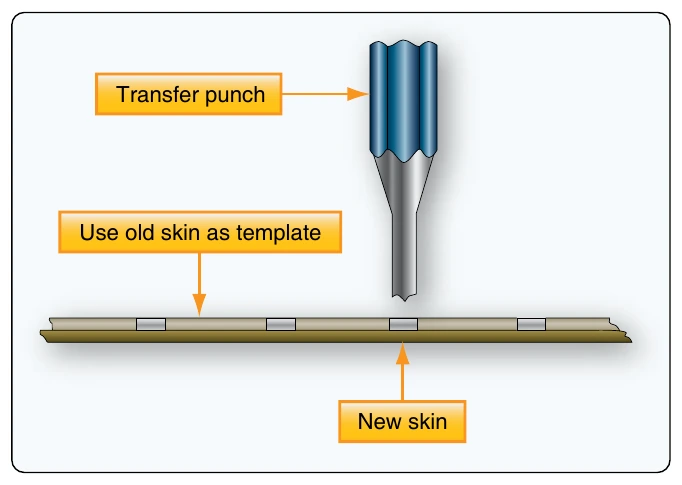
A transfer punch uses a template or existing holes in the structure to mark the locations of new holes. The punch is centered in the old hole over the new sheet and lightly tapped with a mallet. The result should be a mark that serves to locate the hole in the new sheet. [Figure 4-11]
Drive Punch
The drive punch is made with a flat face instead of a point because it is used to drive out damaged rivets, pins, and bolts that sometimes bind in holes. The size of the punch is determined by the width of the face, usually 1⁄8-inch to 1⁄4-inch. [Figure 4-12]
Pin Punch
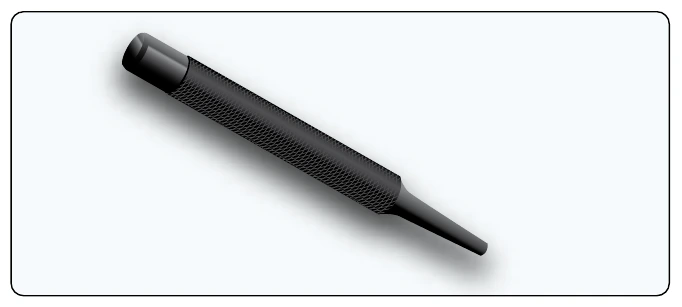
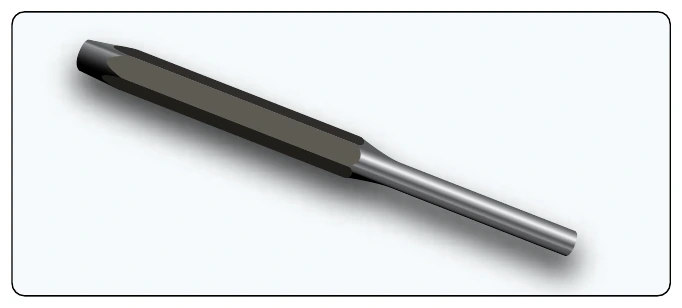
The pin punch typically has a straight shank characterized by a hexagonal body. Pin punch points are sized in 1⁄32-inch increments of an inch and range from 1⁄16-inch to 3⁄8-inch in diameter. The usual method for driving out a pin or bolt is to start working it out with a drive punch until the shank of the punch is touching the sides of the hole. Then use a pin punch to drive the pin or bolt the rest of the way out of the hole. [Figure 4-13]
Chassis Punch
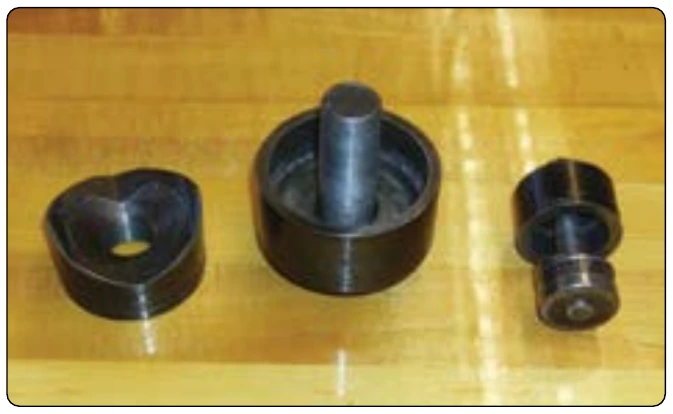
A chassis punch is used to make holes in sheet metal parts for the installation of instruments and other avionics appliance, as well as lightening holes in ribs and spars. Sized in 1⁄16 of an inch, they are available in sizes from 1⁄2 inch to 3 inches. [Figure 4-14]
Awl
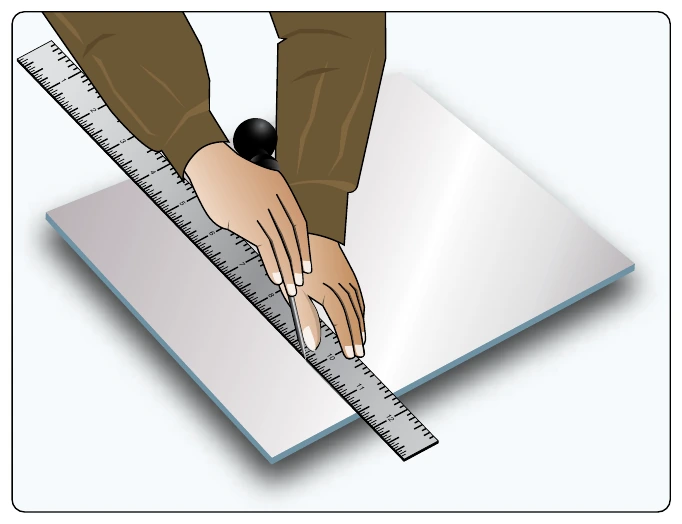
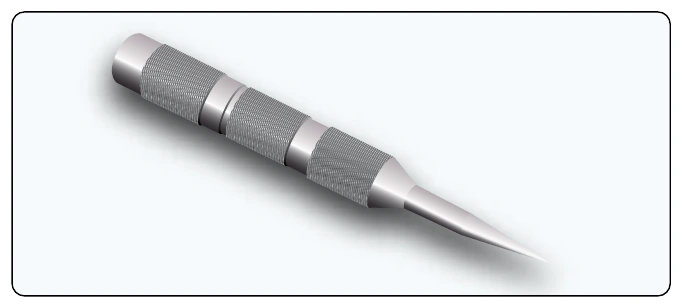
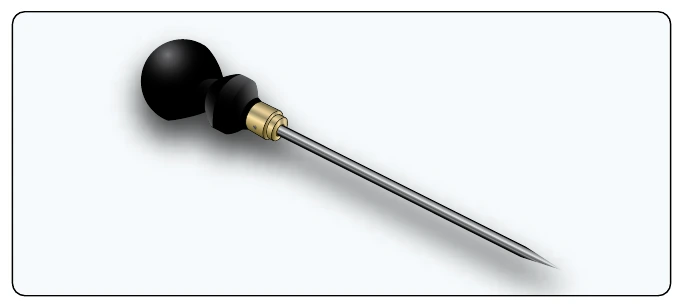
A pointed tool for marking surfaces or for punching small holes, an awl is used in aircraft maintenance to place scribe marks on metal and plastic surfaces and to align holes, such as in the installation of a deicer boot. [Figure 4-15] Procedures for one use of an awl:
- Place the metal to be scribed on a flat surface. Place a ruler or straightedge on the guide marks already measured and placed on the metal.
- Remove the protective cover from the awl.
- Hold the straightedge firmly. Hold the awl, as shown in Figure 4-16, and scribe a line along the straightedge.
- Replace the protective cover on the awl.
Hole Duplicator
Available in a variety of sizes and styles, hole duplicators, or hole finders, utilize the old covering as a template to locate and match existing holes in the structure. Holes in a replacement sheet or in a patch must be drilled to match existing holes in the structure and the hole duplicator simplifies this process. Figure 4-17 illustrates one type of hole duplicator. The peg on the bottom leg of the duplicator fits into the existing rivet hole. To make the hole in the replacement sheet or patch, drill through the bushing on the top leg. If the duplicator is properly made, holes drilled in this manner are in perfect alignment. A separate duplicator must be used for each diameter of rivet.