
Chapter 4
Aircraft Metal Structural Repair
Joggles in removed rivet shanks indicate partial shear failure. Replace these rivets with the next larger size. Also, if the rivet holes show elongation, replace the rivets with the next larger size. Sheet failures, such as tearouts, cracks between rivets, and the like, usually indicate damaged rivets, and the complete repair of the joint may require replacement of the rivets with the next larger size.
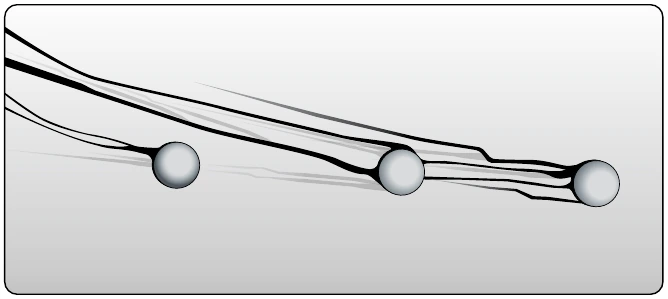
The presence of a black residue around the rivets is not an indication of looseness, but it is an indication of movement (fretting). The residue, which is aluminum oxide, is formed by a small amount of relative motion between the rivet and the adjacent surface. This is called fretting corrosion, or smoking, because the aluminum dust quickly forms a dark, dirty looking trail, like a smoke trail. Sometimes, the thinning of the moving pieces can propagate a crack. If a rivet is suspected of being defective, this residue may be removed with a general purpose abrasive hand pad, such as those manufactured by Scotch Brite™, and the surface inspected for signs of pitting or cracking. Although the condition indicates the component is under significant stress, it does not necessarily precipitate cracking. [Figure 4-172]
Airframe cracking is not necessarily caused by defective rivets. It is common practice in the industry to size rivet patterns assuming one or more of the rivets is not effective. This means that a loose rivet would not necessarily overload adjacent rivets to the point of cracking.
Rivet head cracking is acceptable under the following conditions:
- The depth of the crack is less than 1⁄8 of the shank diameter.
- The width of the crack is less than 1⁄16 of the shank diameter.
- The length of the crack is confined to an area on the head within a circle having a maximum diameter of 11⁄4 times the shank diameter.
- Cracks should not intersect, which creates the potential for the loss of a portion of a head.
Inspection for Corrosion
Corrosion is the gradual deterioration of metal due to a chemical or electrochemical reaction with its environment. The reaction can be triggered by the atmosphere, moisture, or other agents. When inspecting the structure of an aircraft, it is important to watch for evidence of corrosion on both the outside and inside. Corrosion on the inside is most likely to occur in pockets and corners where moisture and salt spray may accumulate; therefore, drain holes must always be kept clean. Also inspect the surrounding members for evidence of corrosion.
Damage Removal
To prepare a damaged area for repair:
- Remove all distorted skin and structure in damaged area.
- Remove damaged material so that the edges of the completed repair match existing structure and aircraft lines.
- Round all square corners.
- Smooth out any abrasions and/or dents.
- Remove and incorporate into the new repair any previous repairs joining the area of the new repair.
Repair Material Selection
The repair material must duplicate the strength of the original structure. If an alloy weaker than the original material has to be used, a heavier gauge must be used to give equivalent cross-sectional strength. A lighter gauge material should not be used even when using a stronger alloy.
Repair Parts Layout
All new sections fabricated for repairing or replacing damaged parts in a given aircraft should be carefully laid out to the dimensions listed in the applicable aircraft manual before fitting the parts into the structure.
Rivet Selection
Normally, the rivet size and material should be the same as the original rivets in the part being repaired. If a rivet hole has been enlarged or deformed, the next larger size rivet must be used after reworking the hole. When this is done, the proper edge distance for the larger rivet must be maintained. Where access to the inside of the structure is impossible and blind rivets must be used in making the repair, always consult the applicable aircraft maintenance manual for the recommended type, size, spacing, and number of rivets needed to replace either the original installed rivets or those that are required for the type of repair being performed.