
Chapter 4
Aircraft Metal Structural Repair
Flush Patch
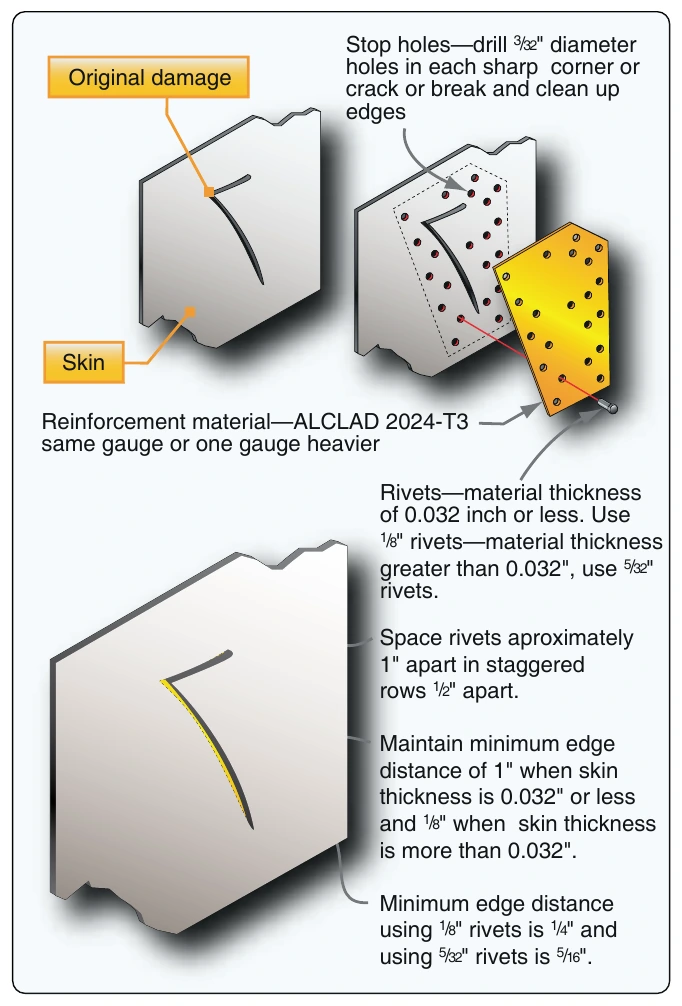
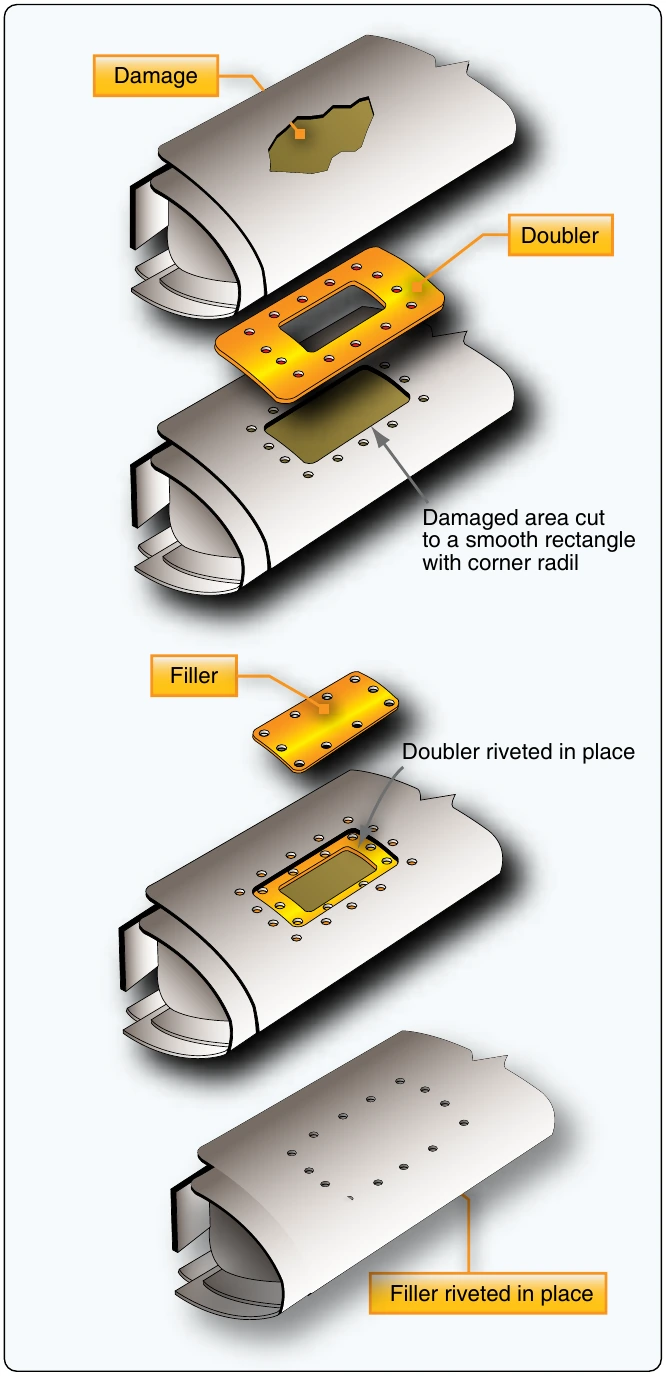
A flush patch is a filler patch that is flush to the skin when applied it is supported by and riveted to a reinforcement plate which is, in turn, riveted to the inside of the skin. Figure 4-176 shows a typical flush patch repair. The doubler is inserted through the opening and rotated until it slides in place under the skin. The filler must be of the same gauge and material as the original skin. The doubler should be of material one gauge heavier than the skin.
Open & Closed Skin Area Repair
The factors that determine the methods to be used in skin repair are accessibility to the damaged area and the instructions found in the aircraft maintenance manual. The skin on most areas of an aircraft is inaccessible for making the repair from the inside and is known as closed skin. Skin that is accessible from both sides is called open skin.
Usually, repairs to open skin can be made in the conventional manner using standard rivets, but in repairing closed skin, some type of special fastener must be used. The exact type to be used depends on the type of repair being made and the recommendations of the aircraft manufacturer.
Design of a Patch for a Non-pressurized Area
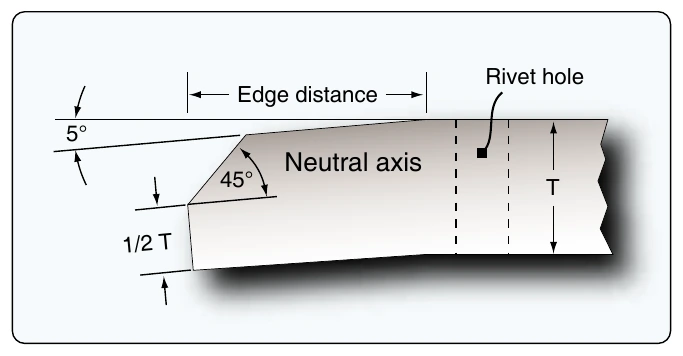
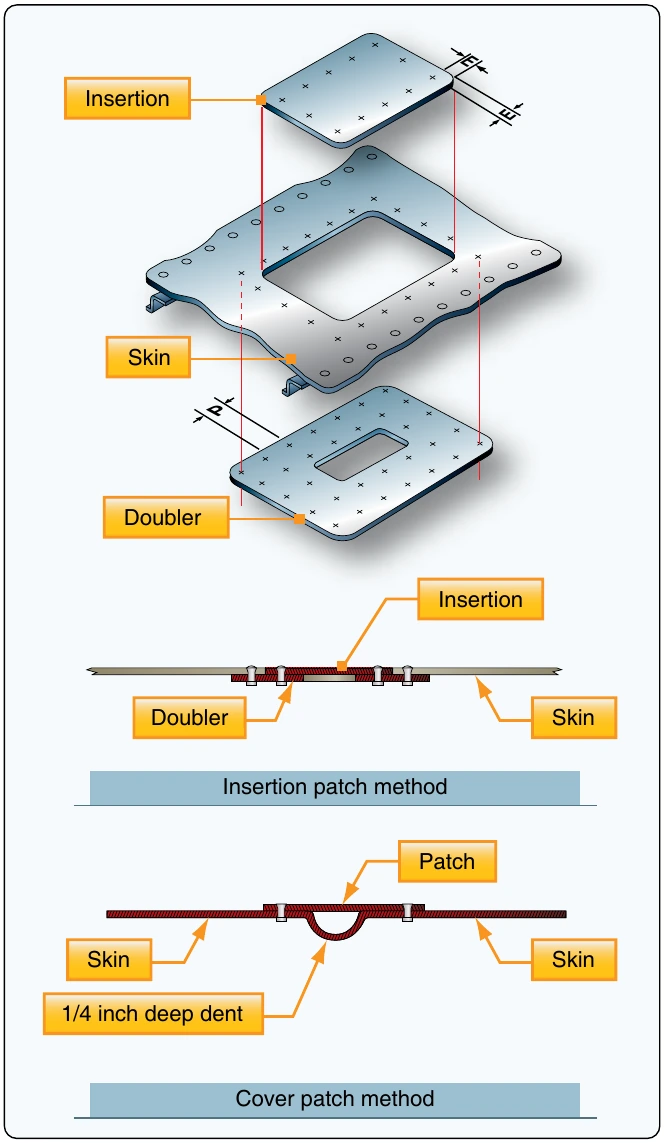
Damage to the aircraft skin in a non-pressurized area can be repaired by a flush patch if a smooth skin surface is required or by an external patch in noncritical areas. [Figure 4-177] The first step is to remove the damage. Cut the damage to a round, oval, or rectangular shape. Round all corners of a rectangular patch to a minimum radius of 0.5-inch. The minimum edge distance used is 2 times the diameter and the rivet spacing is typically between 4-6 times the diameter. The size of the doubler depends on the edge distance and rivet spacing. The doubler material is of the same material as the damaged skin, but of one thickness greater than the damaged skin. The size of the doubler depends on the edge distance and rivet spacing. The insert is made of the same material and thickness as the damaged skin. The size and type of rivets should be the same as rivets used for similar joints on the aircraft. The SRM indicates what size and type of rivets to use.
Typical Repairs for Aircraft Structures
This section describes typical repairs of the major structural parts of an airplane. When repairing a damaged component or part, consult the applicable section of the manufacturer’s SRM for the aircraft. Normally, a similar repair is illustrated, and the types of material, rivets, and rivet spacing and the methods and procedures to be used are listed. Any additional knowledge needed to make a repair is also detailed. If the necessary information is not found in the SRM, attempt to find a similar repair or assembly installed by the manufacturer of the aircraft.
Floats
To maintain the float in an airworthy condition, periodic and frequent inspections should be made because of the rapidity of corrosion on metal parts, particularly when the aircraft is operated in salt water. Inspection of floats and hulls involves examination for damage due to corrosion, collision with other objects, hard landings, and other conditions that may lead to failure.
Sheet-metal floats should be repaired using approved practices; however, the seams between sections of sheet metal should be waterproofed with suitable fabric and sealing compound. A float that has undergone hull repairs should be tested by filling it with water and allowing it to stand for at least 24 hours to see if any leaks develop. [Figure 4-178]
Corrugated Skin Repair
Some of the flight controls of smaller general aviation aircraft have beads in their skin panels. The beads give some stiffness to the thin skin panels. The beads for the repair patch can be formed with a rotary former or press brake. [Figure 4-179]