Chapter 6
Aircraft Wood & Structural Repair
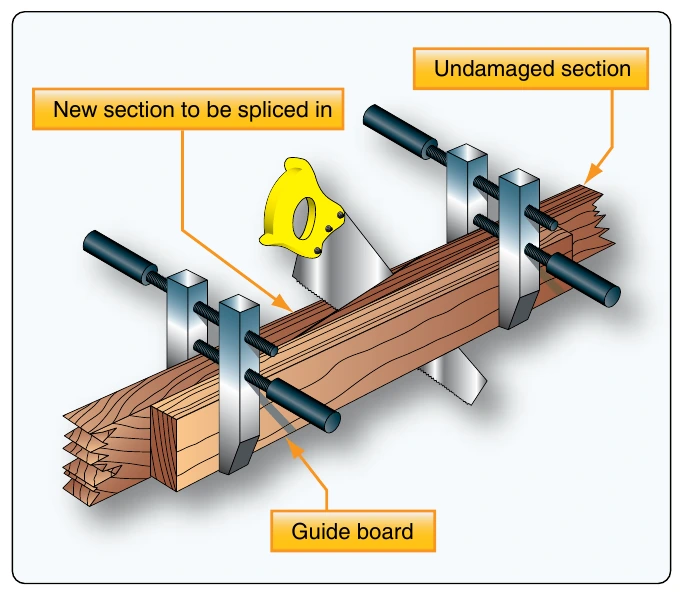
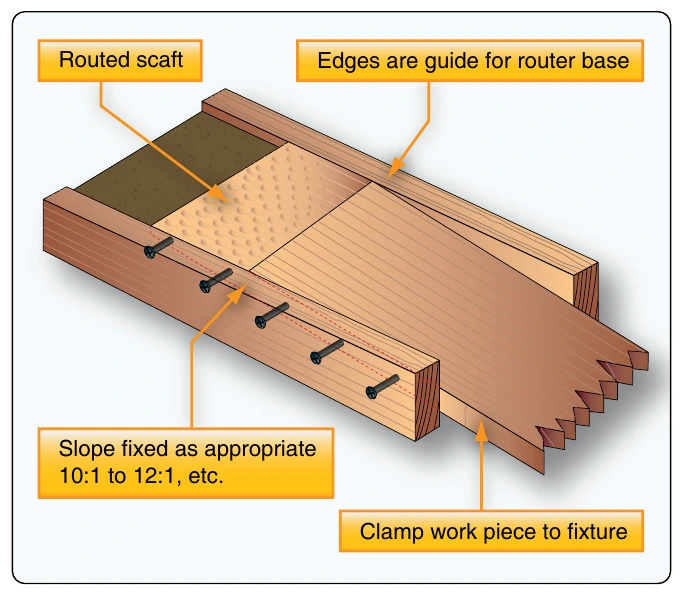
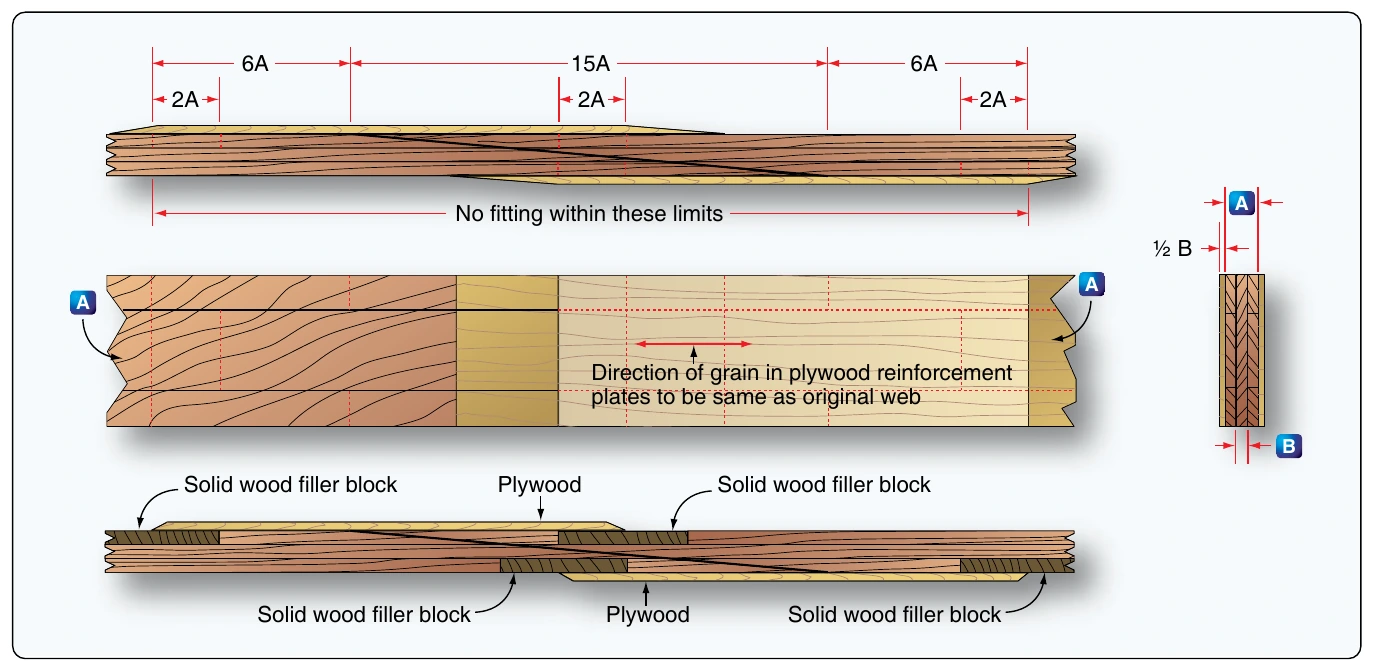
[Figure 6-27]
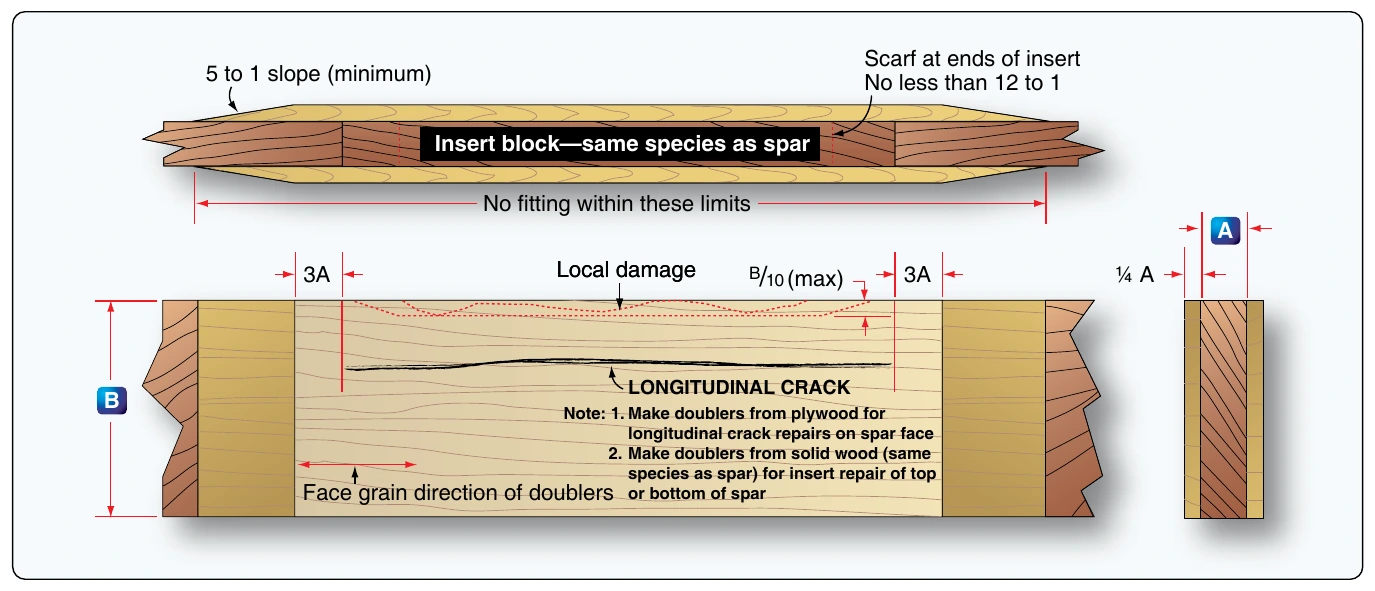
A typical repair to a built-up I spar is illustrated using plywood reinforcement plates with solid wood filler blocks. As with all repairs, the reinforcement plate ends should be feathered out to a 5:1 slope. [Figure 6-28]
Repair methods for the other types of spar illustrated at the start of this section all follow the basic steps of repair. The wood used should be of the same type and size as the original spar. Always splice and reinforce plywood webs with the same type of plywood as the original. Do not use solid wood to replace plywood webs because plywood is stronger in shear than solid wood of the same thickness. The splices and scarf cuts must be of the correct slope for the repair with the face grain running in the same direction as the original member. Not more than two splices should be made in any one spar.
When a satisfactory repair to a spar cannot be accomplished, the spar should be replaced. New spars may be obtained from the manufacturer or the holder of a PMA for that part. An owner-produced spar may be installed provided it is made from a manufacturer-approved drawing. Care should be taken to ensure that any replacement spars accurately match the manufacturer’s original design.
Bolt & Bushing Holes
All bolts and bushings used in aircraft structures must fit snugly into the holes. If the bolt or bushing is loose, movement of the structure allows it to enlarge the hole. In the case of elongated bolt holes in a spar or cracks in close proximity to the bolt holes, the repair may require a new section to be spliced in the spar, or replacement of the entire spar.
All holes drilled in a wood structure to receive bolts or bushings should be of such size that inserting the bolt or bushing requires a light tapping with a wood or rawhide mallet. If the hole is so tight that heavy blows are necessary, deformation of the wood may cause splitting or unequal load distribution.
For boring accurate smooth holes, it is recommended that a drill press be utilized where possible. Holes should be drilled with sharp bits using slow steady pressure. Standard twist drills can be used in wood when sharpened to a 60° angle. However, a better designed drill was developed for wood boring called a lip and spur or brad point. The center of the drill has a spur with a sharp point and four sharp corners to center and cut rather than walk as a conventional drill sometimes does. It has the outside corner of the cutting edges leading, so that it cuts the periphery of the hole first and maximizes the chance that the wood fibers cut cleanly, leaving a smooth bore.
Forstner bits bore precise, flat bottomed holes in wood, in any orientation with respect to the wood grain. They must be used in a drill press because more force is needed for their cutting action. Also, they are not designed to clear chips from the hole and must be pulled out periodically to do this. A straight, accurate bore-through hole can be completed by drilling through the work piece and into a piece of wood backing the work piece.
All holes bored for bolts that are to hold fittings in place should match the hole diameter in the fitting. Bushings made of steel, aluminum, or plastic are sometimes used to prevent crushing the wood when bolts are tightened. Holes drilled in the wood structure should be sealed after being drilled. This can be accomplished by application of varnish or other acceptable sealer into the open hole. The sealer must be allowed to dry or cure thoroughly prior to the bolts or bushings being installed.
Plywood Skin Repairs
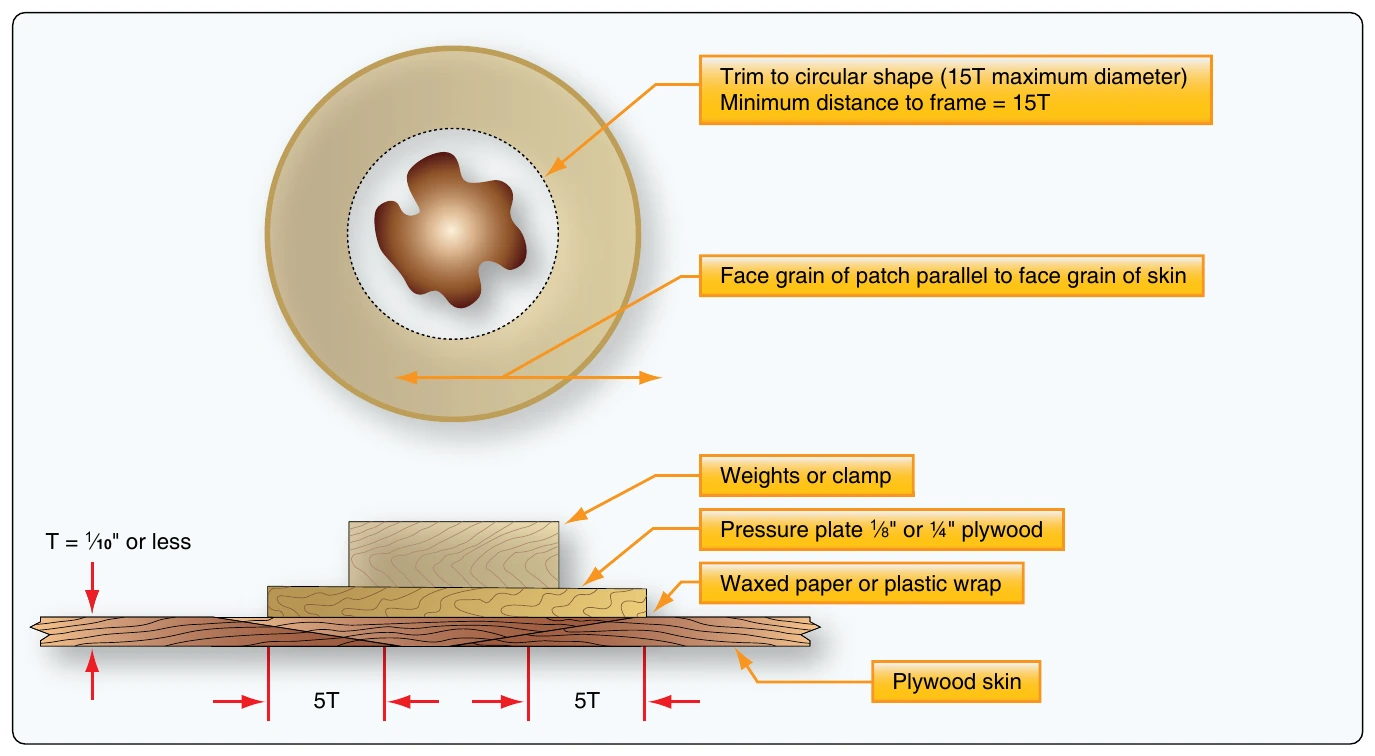
Plywood skin can be repaired using a number of different methods depending on the size of the hole and its location on the aircraft. Manufacturer’s instructions, when available, should be the first source of a repair scheme. AC 43.13-1 provides other acceptable methods of repair. Some of those are featured in the following section.
Fabric Patch
A fabric patch is the simplest method to repair a small hole in plywood. This repair is used on holes not exceeding 1-inch in diameter after being trimmed to a smooth outline. The edges of the trimmed hole should first be sealed, preferably with a two-part epoxy varnish. This varnish requires a long cure time, but it provides the best seal on bare wood.
The fabric used for the patch should be of an approved material using the cement recommended by the manufacturer of the fabric system. The fabric patch should be cut with pinking shears and overlap the plywood skin by at least 1-inch. A fabric patch should not be used to repair holes in the leading edge of a wing, in the frontal area of the fuselage, or nearer than 1-inch to any frame member.