
Chapter 9
Aircraft Electrical System
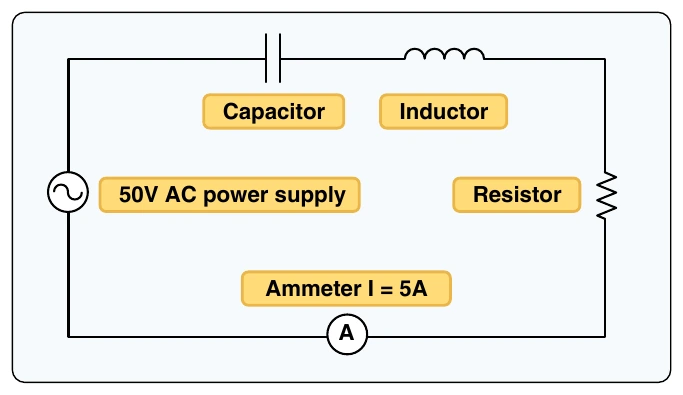
Example of calculating PF: Figure 9-31 shows an AC load connected to a 50 volt power supply. The current draw of the circuit is 5 amps and the total resistance of the circuit is 8 ohms. Determine the true power, the apparent power, and the power factor for this circuit.
Solution:
Power factor can also be represented as a percentage. Using a percentage to show power factor, the circuit in the previous example would have a power factor of 80 percent.
It should be noted that a low power factor is undesirable. Circuits with a lower power factor create excess load on the power supply and produce inefficiency in the system. Aircraft AC alternators must typically operate with a power factor between 90 percent and 100 percent. It is therefore very important to carefully consider power factor when designing the aircraft electrical system.
Aircraft Batteries
Aircraft batteries are used for many functions (e.g., ground power, emergency power, improving DC bus stability, and fault clearing). Most small private aircraft use lead-acid batteries. Most commercial and corporate aircraft use nickel-cadmium (NiCd) batteries. However, other lead acid types of batteries are becoming available, such as the valve-regulated lead-acid (VRLA) batteries. The battery best suited for a particular application depends on the relative importance of several characteristics, such as weight, cost, volume, service or shelf life, discharge rate, maintenance, and charging rate. Any change of battery type may be considered a major alteration.
Types of Batteries
Aircraft batteries are usually identified by the material used for the plates. The two most common types of battery used are lead-acid and NiCd batteries.
Lead-Acid Batteries
Dry Charged Cell Lead-Acid Batteries
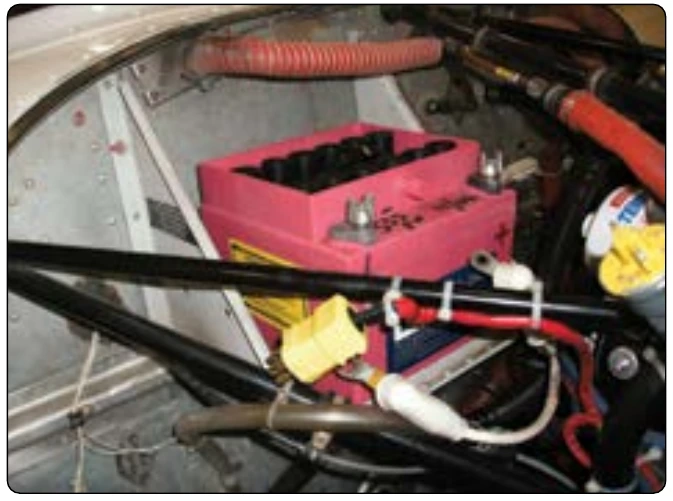
Dry charged cell lead-acid batteries, also known as flooded or wet batteries, are assembled with electrodes (plates) that have been fully charged and dried. The electrolyte is added to the battery when it is placed in service, and battery life begins when the electrolyte is added. An aircraft storage battery consists of 6 or 12 lead-acid cells connected in series. The open circuit voltage of the 6 cell battery is approximately 12 volts, and the open circuit voltage of the 12-cell battery is approximately 24 volts. Open circuit voltage is the voltage of the battery when it is not connected to a load. When flooded (vented) batteries are on charge, the oxygen generated at the positive plates escapes from the cell. Concurrently, at the negative plates, hydrogen is generated from water and escapes from the cell. The overall result is the gassing of the cells and water loss. Therefore, flooded cells require periodic water replenishment. [Figure 9-32]
Valve-Regulated Lead-Acid (VRLA) Batteries
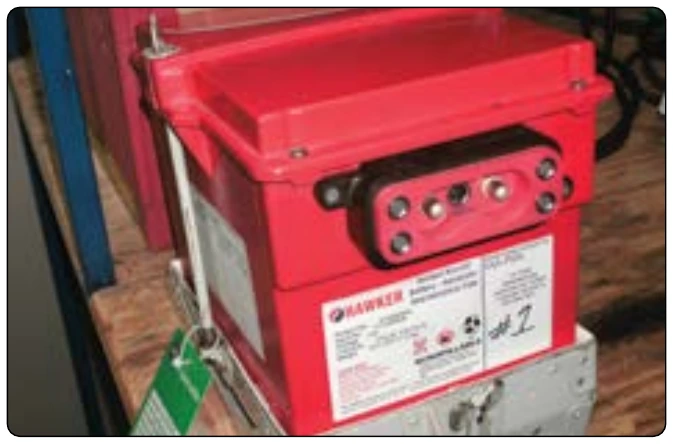
VRLA batteries contain all electrolyte absorbed in glass-mat separators with no free electrolyte and are sometimes referred to as sealed batteries. [Figure 9-33] The electrochemical reactions for VRLA batteries are the same as flooded batteries, except for the gas recombination mechanism that is predominant in VRLA batteries. These types of battery are used in general aviation and turbine powered aircraft and are sometimes authorized replacements for NiCd batteries.
When VRLA batteries are on charge, oxygen combines chemically with the lead at the negative plates in the presence of H2SO4 to form lead sulfate and water. This oxygen recombination suppresses the generation of hydrogen at the negative plates. Overall, there is no water loss during charging. A very small quantity of water may be lost as a result of self-discharge reactions; however, such loss is so small that no provisions are made for water replenishment. The battery cells have a pressure relief safety valve that may vent if the battery is overcharged.
NiCd Batteries
A NiCd battery consists of a metallic box, usually stainless steel, plastic-coated steel, painted steel, or titanium containing a number of individual cells. [Figure 9-34] These cells are connected in series to obtain 12 volts or 24 volts. The cells are connected by highly conductive nickel copper links. Inside the battery box, the cells are held in place by partitions, liners, spacers, and a cover assembly. The battery has a ventilation system to allow the escape of the gases produced during an overcharge condition and provide cooling during normal operation.