
Chapter 1
Safety, Ground Operations, & Servicing
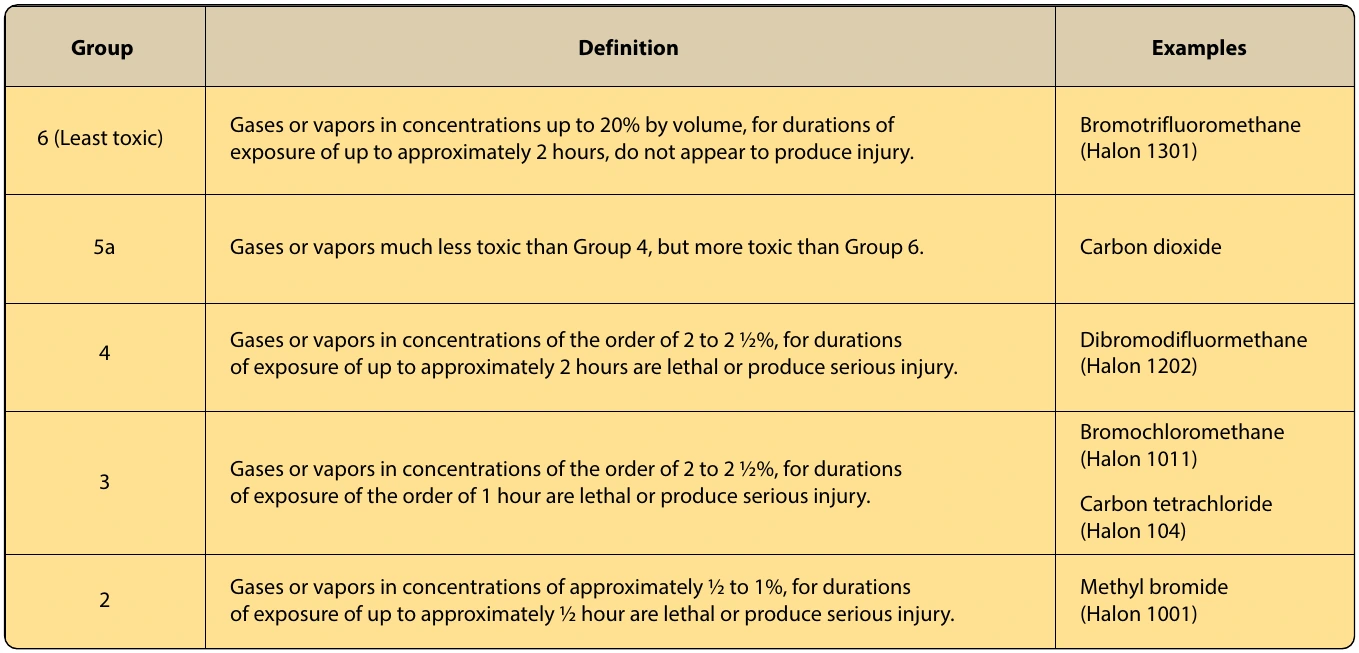
- It has all the characteristics of Halon
- The significant difference between the two is Halon 1211 forms a spray similar to CO2, while Halon 1301 has a vapor spray that is more difficult to direct.
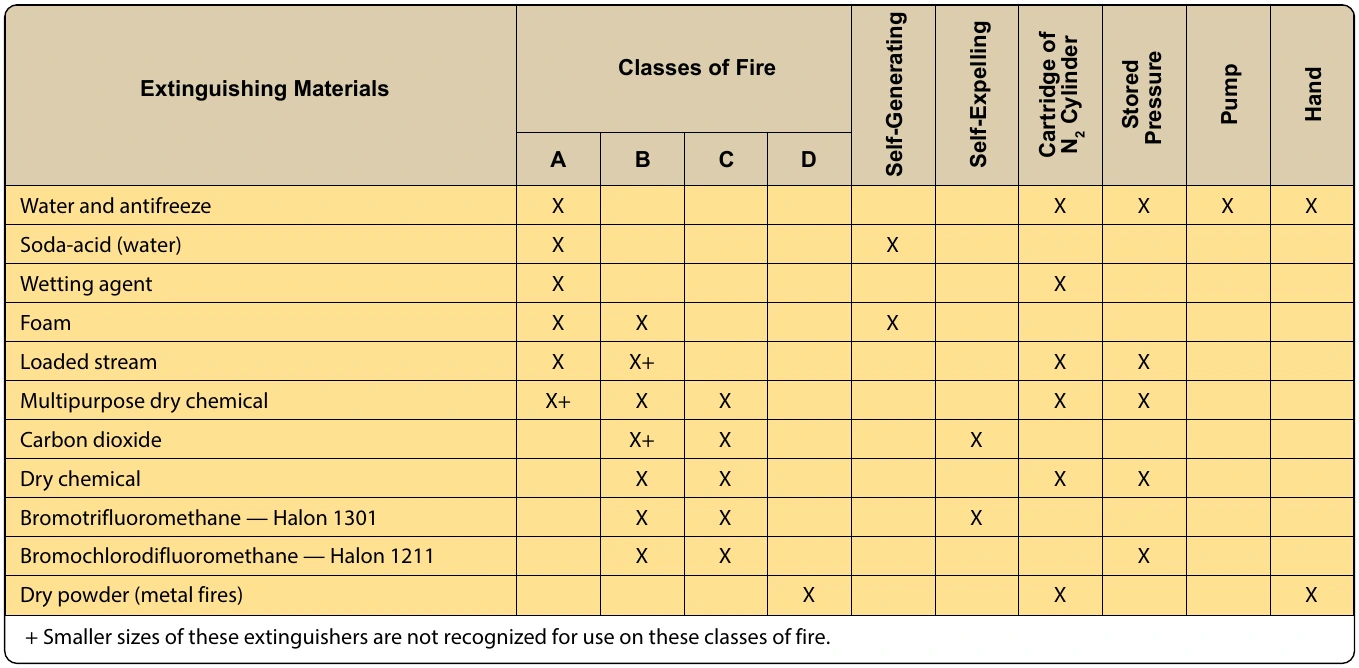
Dry powder extinguishers, while effective on Class B and C fires, are best for use on Class D fires. The method of operation of dry powder fire extinguishers varies from gas cartridge charges, stored pressure within the container that forces the powder charge out of the container, to scooping pails or buckets of the powder from large containers or barrels to toss on the fire.
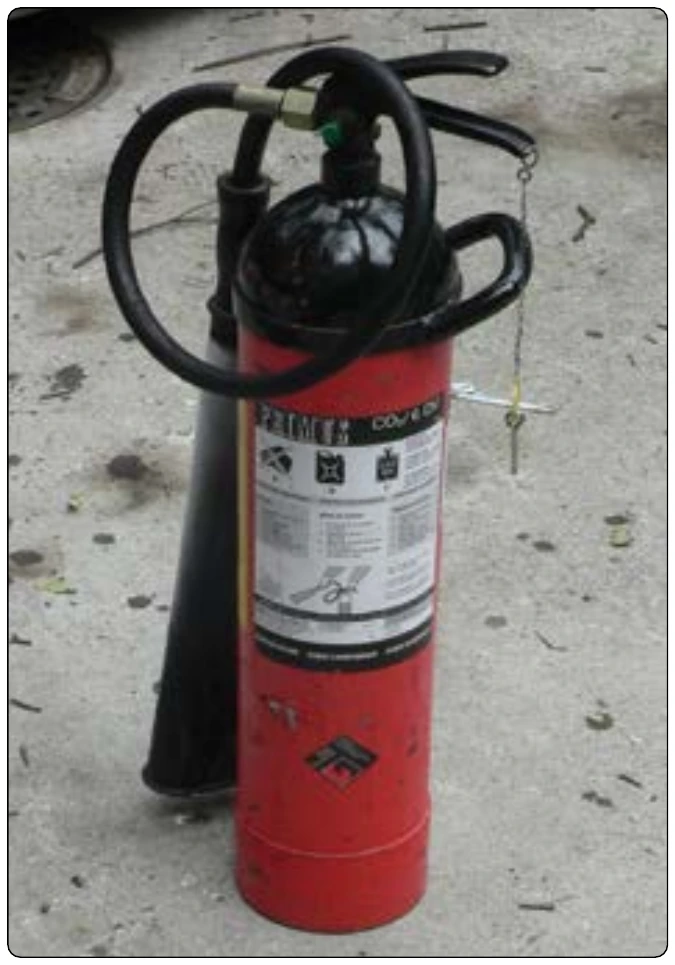
Dry powder is not recommended for aircraft use, except on metal fires, as a fire extinguisher. The leftover chemical residues and dust often make cleanup difficult and can damage electronic or other delicate equipment.
Inspection of Fire Extinguishers
Fire extinguishers need to be checked periodically utilizing a checklist. If a checklist is unavailable, check the following as a minimum:
- Proper location of appropriate extinguisher
- Safety seals unbroken
- All external dirt and rust removed
- Gauge or indicator in operable range
- Proper weight
- No nozzle obstruction
- No obvious damage
Airport or other local fire departments can usually help in preparing or providing extinguisher checklists. In addition, these fire departments can be helpful in answering questions and assisting in obtaining repairs to or replacement of fire extinguishers.
Identifying Fire Extinguishers
Fire extinguishers are marked to indicate suitability for a particular class of fire. The markings on Figure 1-7 must be placed on the fire extinguisher and in a conspicuous place in the vicinity of the fire extinguisher. When the location is marked, however, take extreme care to ensure that the fire extinguisher kept at that location is in fact the type depicted by the marking. In other words, if a location is marked for a Class B fire extinguisher, ensure that the fire extinguisher in that location is in fact suitable for Class B fires.
Markings must be applied by decalcomanias (decals), painting, or similar methods. They are to be legible and as durable as necessary for the location. For example, markings used outside need to be more durable than those in the hangar or office spaces.
When markings are applied to the extinguisher, they are placed on the front of the shell, if one is installed, above or below the extinguisher nameplate. Markings must be large enough and in a form that is easily seen and identifiable by the average person with average eyesight at a distance of at least 3 feet.
When markings are applied to wall panels, and so forth, in the vicinity of extinguishers, they must be large enough and in a form that is easily seen and identifiable by the average person with average eyesight at a distance of at least 25 feet. [Figure 1-8]
Using Fire Extinguishers
When using a fire extinguisher, ensure the correct type is used for the fire. Most extinguishers have a pin to pull that allows the handle to activate the agent. Stand back 8 feet and aim at the base of the fire or flames. Squeeze the lever and sweep side to side until the fire is extinguished.