
Chapter 1
Safety, Ground Operations, & Servicing
Preparation of Aircraft
Aircraft are to be tied down after each flight to prevent damage from sudden storms. The direction that aircraft are to be parked and tied down is determined by prevailing or forecast wind direction.
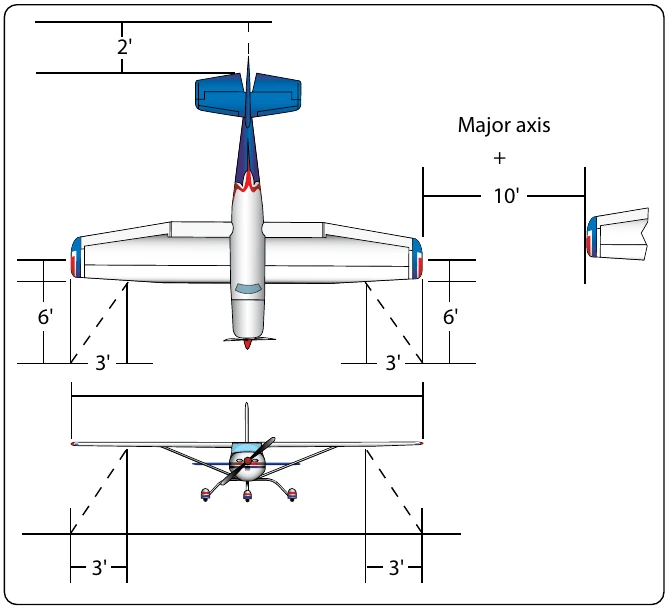
Aircraft are to be headed into the wind, depending on the locations of the parking area’s fixed tie-down points. Spacing of tie-downs need to allow for ample wingtip clearance. [Figure 1-9] After the aircraft is properly located, lock the nosewheel or the tail wheel in the fore-and-aft position.
Tie-Down Procedures for Land Planes
Securing Light Aircraft
Light aircraft are most often secured with ropes tied only at the aircraft tie-down rings provided for securing purposes. Rope is never to be tied to a lift strut, since this practice can bend a strut if the rope slips to a point where there is no slack. Since manila rope shrinks when wet, about 1 inch (1") of slack needs to be provided for movement. Too much slack, however, allows the aircraft to jerk against the ropes. Tight tie-down ropes put inverted flight stresses on the aircraft and many are not designed to take such loads.
A tie-down rope holds no better than the knot. Anti-slip knots, such as the bowline, are quickly tied and are easy to untie. [Figure 1-10] Aircraft not equipped with tie-down fittings must be secured in accordance with the manufacturer’s instructions. Ropes are to be tied to outer ends of struts on high-wing monoplanes and suitable rings provided where structural conditions permit, if the manufacturer has not already provided them.
Securing Heavy Aircraft
The normal tie-down procedure for heavy aircraft can be accomplished with rope or cable tie-down. The number of tie-downs are governed by anticipated weather conditions.
Most heavy aircraft are equipped with surface control locks that are engaged or installed when the aircraft is secured. Since the method of locking controls vary on different types of aircraft, check the manufacturer’s instructions for proper installation or engaging procedures. If high winds are anticipated, control surface battens can also be installed to prevent damage. Figure 1-11 illustrates four common tie-down points on heavy aircraft.
The normal tie-down procedure for heavy aircraft includes the following:
- Head aircraft into prevailing wind whenever possible.
- Install control locks, all covers, and guards.
- Chock all wheels fore and aft. [Figure 1-12]
- Attach tie-down reels to aircraft tie-down loops, tie-down anchors, or tie-down stakes. Use tie-down stakes for temporary tie-down only. If tie-down reels are not available, 1⁄4" wire cable or 11⁄2" manila line may be used.
Tie-Down Procedures for Seaplanes
Seaplanes can be moored to a buoy, weather permitting, or tied to a dock. Weather causes wave action, and waves cause the seaplane to bob and roll. This bobbing and rolling while When warning of an impending storm is received and it is not possible to fly the aircraft out of the storm area, some compartments of the seaplane can be flooded, partially sinking the aircraft. Tie down the aircraft securely to anchors. Seaplanes tied down on land have been saved from high-wind damage by filling the floats with water in addition to tying the aircraft down in the usual manner. During heavy weather, if possible, remove the seaplane from the water and tie down in the same manner as a land plane. If this is not possible, the seaplane could be anchored in a sheltered area away from the wind and waves.


in the same manner as land planes. Ski-equipped airplanes can be secured on ice or in snow by using a device called a dead-man. A dead-man is any item at hand, such as a piece of pipe, log, and so forth, that a rope is attached to and buried in a snow or ice trench. Using caution to keep the free end of the rope dry and unfrozen, snow is packed in the trench. If available, pour water into the trench; when it is frozen, tie down the aircraft with the free end of the rope.
Operators of ski-equipped aircraft sometimes pack soft snow around the skis, pour water on the snow, and permit the skis to freeze to the ice. This, in addition to the usual tie-down procedures, aids in preventing damage from windstorms. Caution must be used when moving an aircraft that has been secured in this manner to ensure that a ski is not still frozen to the ground. Otherwise, damage to the aircraft or skis can occur.