
Chapter 1
Safety, Ground Operations, & Servicing
Helicopters, like other aircraft are secured to prevent structural damage that can occur from high-velocity surface winds. Helicopters are to be secured in hangars, when possible. If not, they must be tied down securely. Helicopters that are tied down can usually sustain winds up to approximately 65 mph. If at all possible, helicopters are evacuated to a safe area if tornadoes or hurricanes are anticipated. For added protection, helicopters can be moved to a clear area so that they are not damaged by flying objects or falling limbs from surrounding trees.
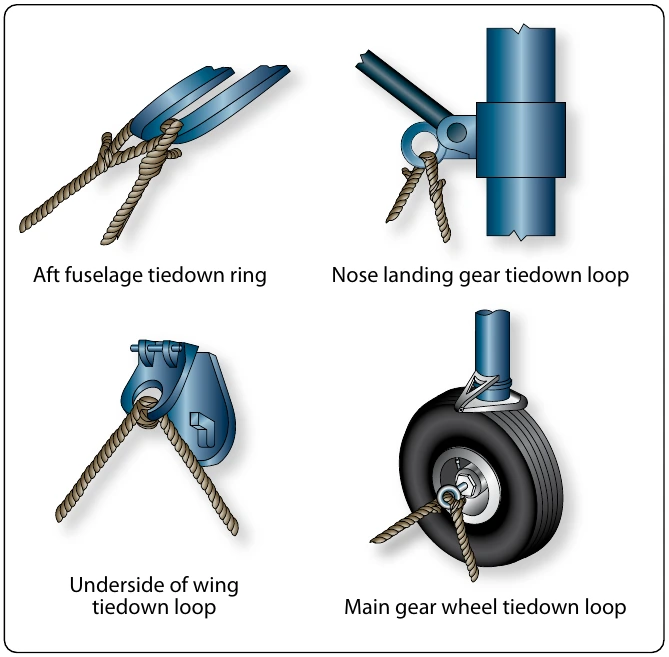
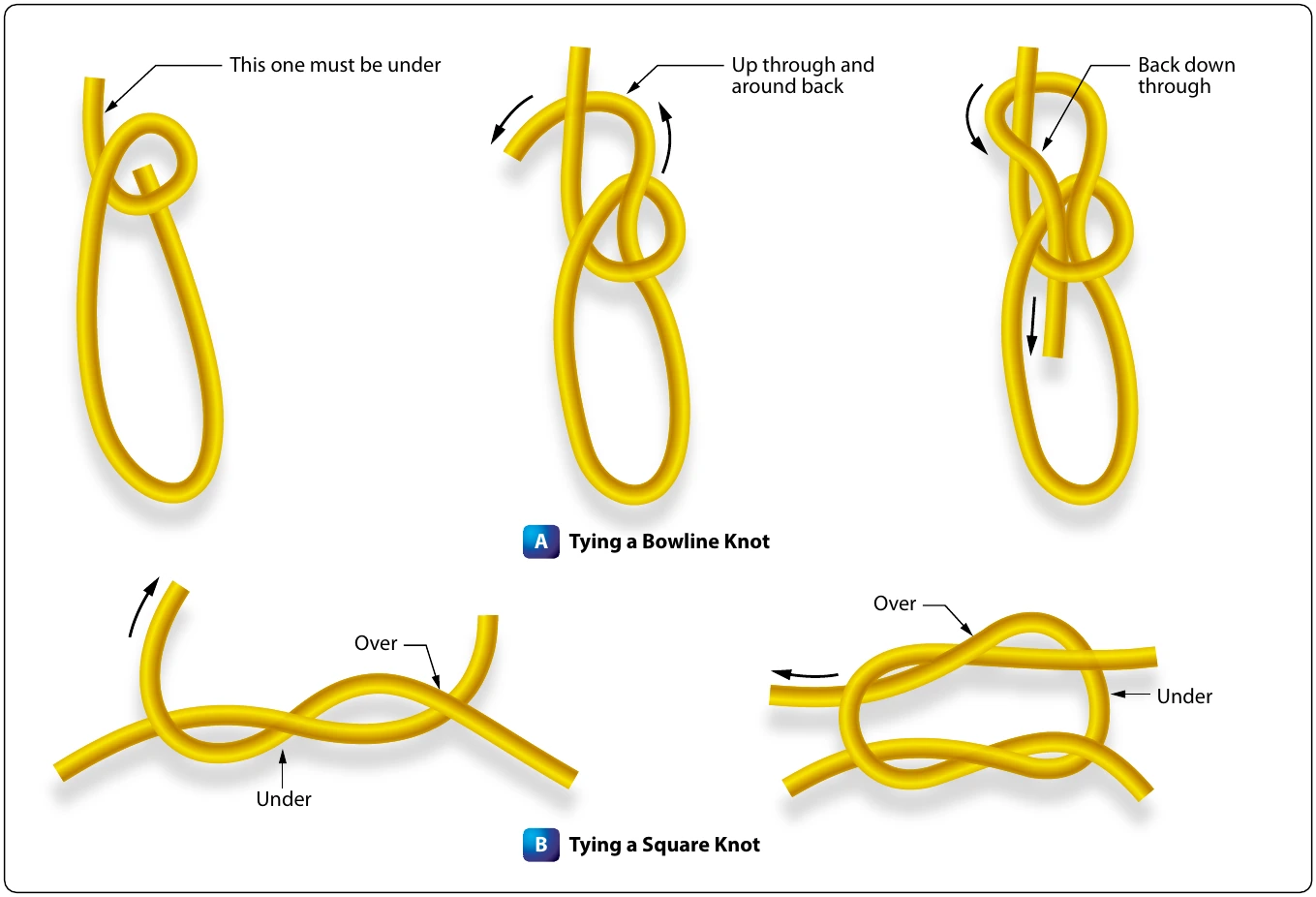
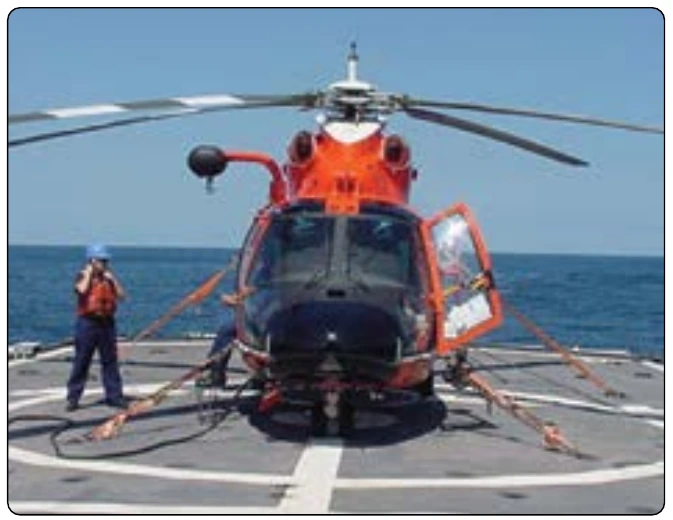
If high winds are anticipated with the helicopter parked in the open, tie down the main rotor blades. Detailed instructions for securing and mooring each type of helicopter can be found in the applicable maintenance manual. [Figure 1-13] Methods of securing helicopters vary with weather conditions, the control locks, rope tie-downs, mooring covers, tip socks, tie-
- Face the helicopter in the direction that the highest forecast wind or gusts are anticipated.
- Spot the helicopter slightly more than one rotor span distance from other aircraft.
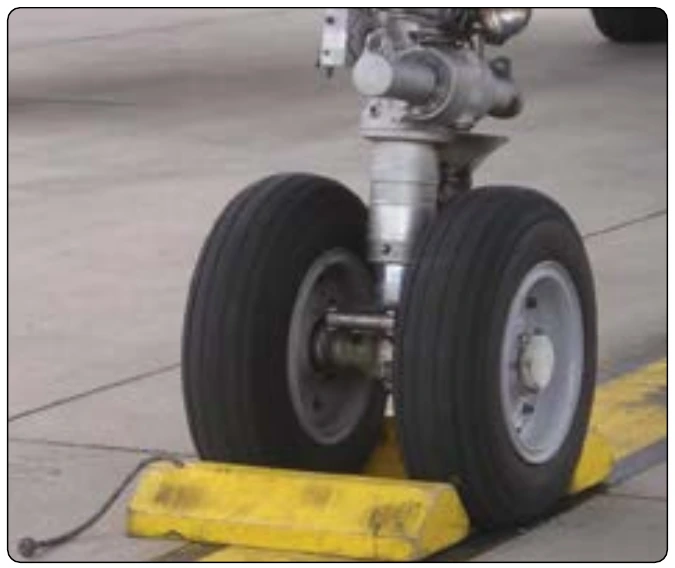
- Place wheel chocks ahead of and behind all wheels (where applicable). On helicopters equipped with skids, retract the ground handling wheels, lower the helicopter to rest on the skids, and install wheel position lock pins or remove the ground-handling wheels. Secure ground-handling wheels inside the aircraft or inside the hangar or storage buildings. Do not leave them unsecured on the flight line.
- Align the blades and install tie-down assemblies as prescribed by the helicopter manufacturer. [Figure 1-14] Tie straps snugly without strain, and during wet weather, provide some slack to avoid the possibility of the straps shrinking, causing undue stress on the aircraft and/or its rotor system(s).
- Fasten the tie-down ropes or cables to the forward and aft landing gear cross tubes and secure to ground stakes or tie-down rings.
Procedures for Securing Weight-Shift-Control
There are many types of weight-shift-controlled aircraft— engine powered and non-powered. These types of aircraft are very susceptible to wind damage. The wings can be secured in a similar manner as a conventional aircraft in light winds. In high winds, the mast can be disconnected from the wing and the wing placed close to the ground and secured. This type of aircraft can also be partially disassembled or moved into a hangar for protection.
Procedures for Securing Powered Parachutes
When securing powered parachutes, pack the parachute in a bag to prevent the chute from filling with air from the wind and dragging the seat and engine. The engine and seat can also be secured if needed.
Ground Movement of Aircraft
Engine Starting and Operation
The following instructions cover the starting procedures for reciprocating, turboprop, turbofan, and APU. These procedures are presented only as a general guide for familiarization with typical procedures and methods. Detailed instructions for starting a specific type of engine can be found in the manufacturer’s instruction book.
Before starting an aircraft engine:
- Position the aircraft to head into the prevailing wind to ensure adequate airflow over the engine for cooling purposes.
- Make sure that no property damage or personal injury occurs from the propeller blast or jet exhaust.
- If external electrical power is used for starting, ensure that it can be removed safely, and it is sufficient for the total starting sequence.
- During any and all starting procedures, a “fireguard” equipped with a suitable fire extinguisher shall be stationed in an appropriate place. A fireguard is someone familiar with aircraft starting procedures. The fire extinguisher should be a CO2 extinguisher of at least 5-pound capacity. The appropriate place is adjacent to the outboard side of the engine, in view of the pilot, and also where they can observe the engine/aircraft for indication of starting problems.
- If the aircraft is turbine-engine powered, the area in front of the jet inlet must be kept clear of personnel, property, and/or debris (FOD).
- These “before starting” procedures apply to all aircraft powerplants.
- Follow manufacturer’s checklists for start procedures and shutdown procedures.
Reciprocating Engines
The following procedures are typical of those used to start reciprocating engines. There are, however, wide variations in the procedures for the many reciprocating engines. Do not attempt to use the methods presented here for actually starting an engine. Instead, always refer to the procedures contained in the applicable manufacturer’s instructions. Reciprocating engines are capable of starting in fairly low temperatures The various covers (wing, tail, flight deck, wheel, and so forth) protecting the aircraft must be removed before attempting to turn the engine. Use external sources of electrical power when starting engines equipped with electric starters, if possible or needed. This eliminates an excessive burden on the aircraft battery. Leave all unnecessary electrical equipment off until the generators are furnishing electrical power to the aircraft power bus.
Before starting a radial engine that has been shut down for more than 30 minutes, check the ignition switch for off. Turn the propeller three or four complete revolutions by hand to detect a hydraulic lock, if one is present. Any liquid present in a cylinder is indicated by the abnormal effort required to rotate the propeller or by the propeller stopping abruptly during rotation. Never use force to turn the propeller when a hydraulic lock is detected. Sufficient force can be exerted on the crankshaft to bend or break a connecting rod if a lock is present.
To eliminate a lock, remove either the front or rear spark plug from the lower cylinders and pull the propeller through. Never attempt to clear the hydraulic lock by pulling the propeller through in the direction opposite to normal rotation. This tends to inject the liquid from the cylinder into the intake pipe. The liquid is drawn back into the cylinder with the possibility of complete or partial lock occurring on the subsequent start.