
Chapter 14
Human Factors
In aviation maintenance, an intentional error should really be considered a violation. If someone knowingly or intentionally chooses to do something wrong, it is a violation, which means that one has purposely deviated from safe practices, procedures, standards, or regulations.
Active & Latent
An active error is the specific individual activity that is an obvious event. A latent error is the company issues that lead up to the event. For example, an AMT climbs up a ladder to do a repair knowing that the ladder is broken. In this example, the active error was falling from the ladder. The latent error was the broken ladder that someone should have replaced.
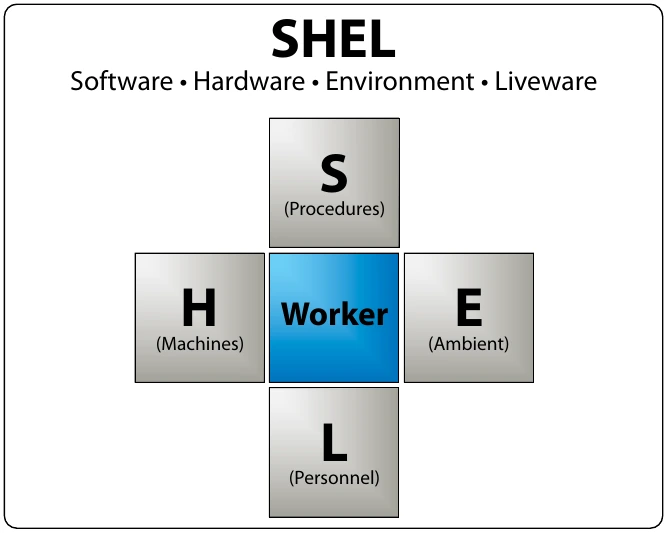
accidents and incidents that occurred in the late 1980s and early 1990s, Transport Canada identified twelve human factors that degrade people’s ability to perform effectively and safely, which could lead to maintenance errors. These twelve factors, known as the “dirty dozen,” were eventually adopted by the aviation industry as a straightforward means to discuss human error in maintenance. It is important to know the dirty dozen, how to recognize their symptoms, and most importantly, know how to avoid or contain errors produced by the dirty dozen. Understanding the interaction between organizational, work group, and individual factors that may lead to errors and accidents, AMTs can learn to prevent or manage them proactively in the future.
Lack of Communication
Lack of communication is a key human factor that can result in suboptimal, incorrect, or faulty maintenance. [Figure 14-18] Communication occurs between the AMT and many people (i.e., management, pilots, parts suppliers, aircraft servicers). Each exchange holds the potential for misunderstanding or omission. But communication between AMTs may be the most important of all. Lack of communication between technicians could lead to a maintenance error and result in an aircraft accident. This is especially true during procedures where more than one technician performs the work on the aircraft. It is critical that accurate, complete information be exchanged to ensure that all work is completed without any step being omitted. Knowledge and speculation about a task must be clarified and not confused. Each step of the maintenance procedure must be performed according to approved instructions as though only a single technician did the work.
A common scenario where communication is critical and a lack thereof can cause problems, is during shift change in an airline or fixed base operator (FBO) operation. A partially completed job is transferred from the technician finishing their workday to the technician coming on duty. Many steps in a maintenance procedure are not able to be seen or verified once completed due to the installation of components hiding the work. No steps in the procedure can be omitted and some steps still to be performed may be contingent on the work already completed. The departing technician must thoroughly explain what has occurred so that the arriving technician can correctly complete the job. A recounting of critical steps and any difficulties encountered gives insight. A lack of communication at this juncture could result in the work being continued without certain required operations having been performed.
The approved steps of a maintenance procedure must be signed off by the technician doing the work as it is performed. Continuing a job that has been started by someone else should only occur after a face-to-face meeting of technicians. The applicable paperwork should be reviewed, the completed work discussed, and attention drawing to the next step. Absence of either a written or oral turnover serves as warning that an error could occur.
It is vital that work not be continued on a project without both oral and written communication between the technician who started the job and the technician continuing it. Work should always be done in accordance with the approved written procedure and all of the performed steps should bear the signature of the technician who accomplishes the work. If necessary, a phone call can be made to obtain an oral turnover when technicians cannot meet face-to-face at the work area. In general, the technician must see their role as part of a greater system focused on safe aircraft operation and must communicate well with all those in that system to be effective.
Complacency
Complacency is a human factor in aviation maintenance that typically develops over time. [Figure 14-18] As a technician gains knowledge and experience, a sense of self satisfaction and false confidence may occur. A repetitive task, especially an inspection item, may be overlooked or skipped because the technician has performed the task a number of times without ever finding a fault. The false assumption might be made that inspection of the item is not important. However, even if rare, a fault may exist. The consequences of the fault not being detected and corrected could cause an incident or accident. Routine tasks performed over and over allow time for the technician’s mind to wander, which may also result in a required task not being performed.
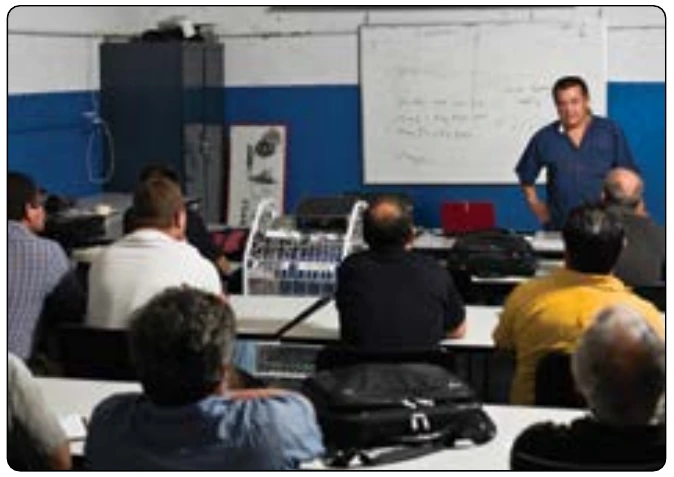
or documents work that was not performed, it is a sign that complacency may exist. Approved, written maintenance procedures should be followed during all maintenance inspections and repairs. Executing the proper paperwork draws attention to a work item and reinforces its significance.
To combat complacency, a technician must be trained to expect to find the fault that created the inspection item in the first place. The technician must stay mentally engaged in the task being performed. All inspection items must be treated with equal importance, and it must never be assumed that an item is acceptable when it has not been inspected. A technician should never sign for any work that has not been performed. Prior to the pen touching the paper for a signature, the technician should read the item before signing and confirm it has been performed.
Lack of Knowledge
A lack of knowledge when performing aircraft maintenance can result in a faulty repair that can have catastrophic results. [Figure 14-20] Differences in technology from aircraft to aircraft and updates to technology and procedures on a single aircraft also make it challenging to obtain the knowledge required to perform airworthy maintenance.
All maintenance must be performed to standards specified in approved instructions. These instructions are based on knowledge gained from the engineering and operation of the aircraft equipment. Technicians must be sure to use the latest applicable data and follow each step of the procedure as outlined. They must also be aware that differences exist in the design and maintenance procedures on different aircraft. It is important for technicians to obtain training on different types of aircraft. When in doubt, a technician with experience on the aircraft should be consulted. If one is not available, or the consulted technician is not familiar with the procedure, a manufacturer’s technical representative should be contacted. It is better to delay a maintenance procedure than to do it incorrectly and cause an accident.
Distraction
A distraction while performing maintenance on an aircraft may disrupt the procedure. [Figure 14-21] When work resumes, it is possible that the technician skips over a detail that needs attention. It is estimated that 15 percent of maintenance related errors are caused by distractions.