
Chapter 14
Human Factors
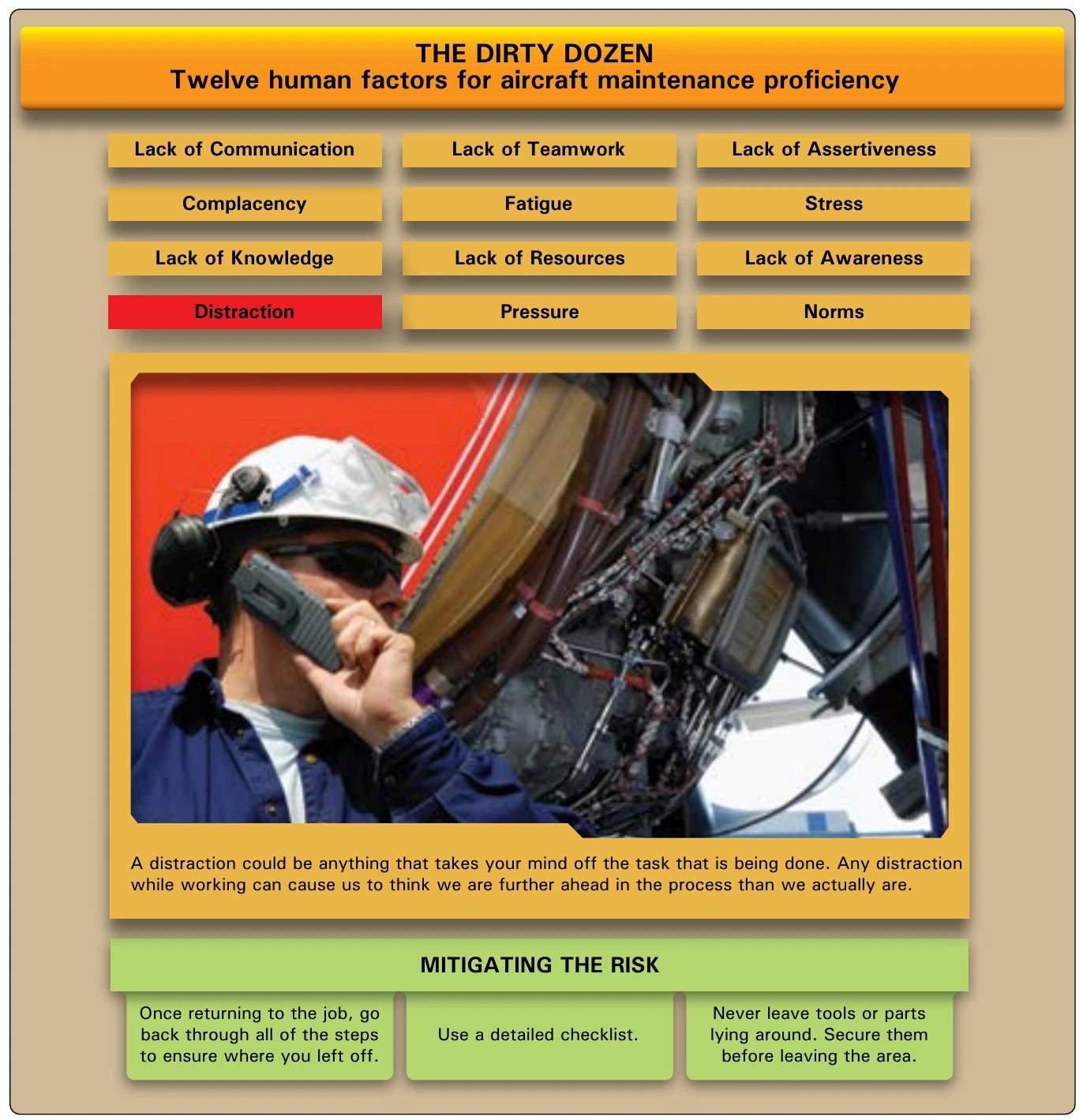
Distractions can be mental or physical in nature. They can occur when the work is located on the aircraft or in the hangar. They can also occur in the psyche of the technician independent of the work environment. Something as simple as a cell phone call or a new aircraft being pushed into the hangar can disrupt the technician’s concentration on a job. Less visible is a difficult family or financial matter or other personal issues that may occupy the technician’s thought process as work is performed. This can make performance of the required maintenance less effective.
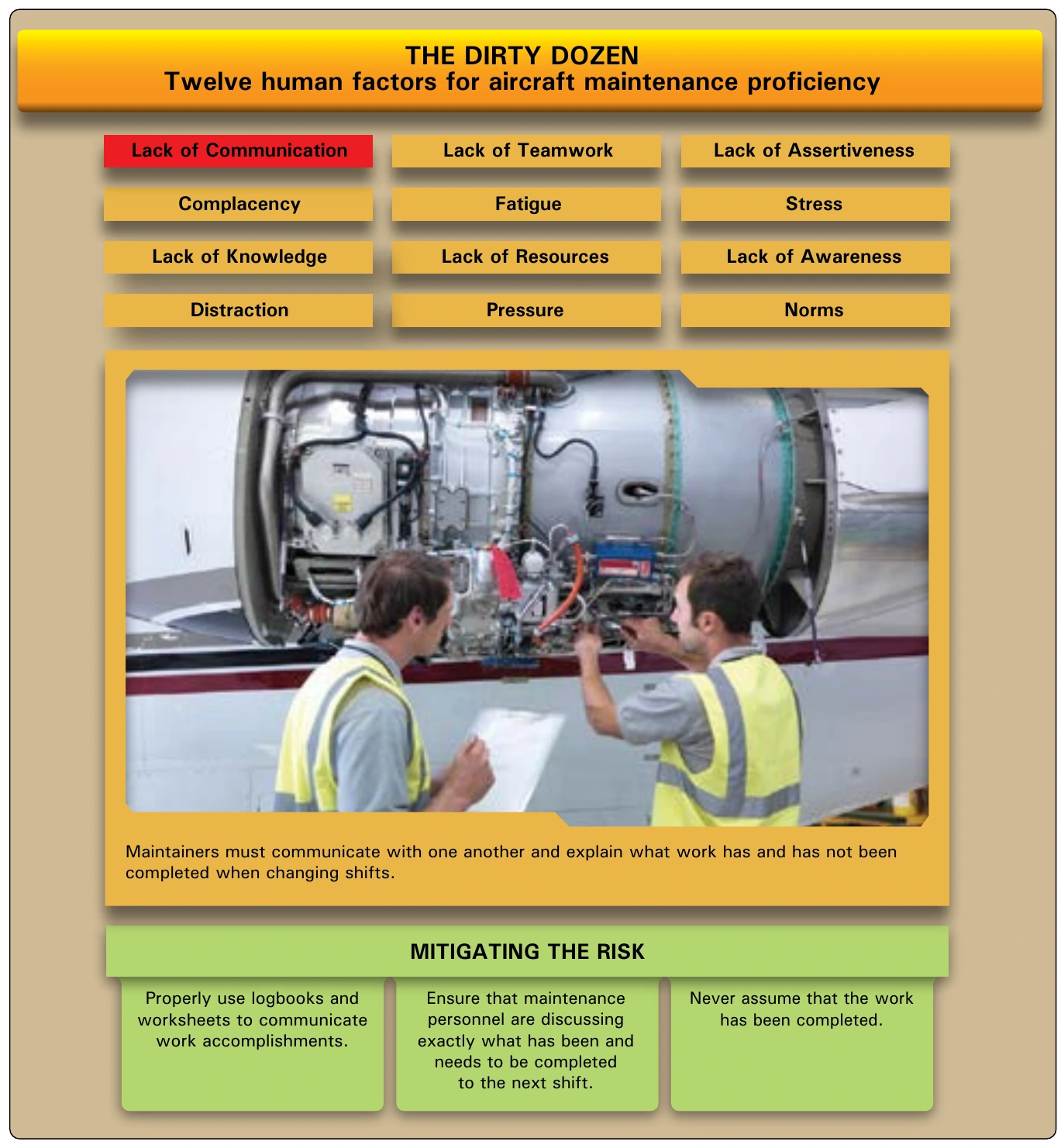
Whatever their nature, numerous distractions can occur during the course of maintaining an aircraft. The technician must recognize when attention to the job at hand is being diverted and assure that work continues correctly. A good practice is to go back three steps in the work procedure from when distraction occurred and resume the job from that point. Using of a detailed step-by-step written procedure and signing off each step only after it is completed also helps. Incomplete work can be marked or tagged, especially when the technician is pulled from the work by a distraction, and it is unknown when work will be resumed and by whom. Disconnect any connector and leave it plainly visible if an installation is not complete. There is a tendency to think a job is finished when a component is “hooked up.” Similarly, when a step in the maintenance procedure is complete, be sure to immediately lock wire or torque the fasteners if required. This can be used as an indication that all is well up to that point in the procedure.
Lack of Teamwork
A lack of teamwork may also contribute to errors in aircraft maintenance. [Figure 14-22] Closely related to the need for communication, teamwork is required in aviation maintenance in many instances. Sharing of knowledge between technicians, coordinating maintenance functions, turning work over from shift to shift, and working with flight personnel to troubleshoot and test aircraft are all are executed better in an atmosphere of teamwork. Often associated with improved safety in the workplace, teamwork involves everyone understanding and agreeing on actions to be taken. A gear swing or other operational check involves all the members of a team working together. Multiple technicians contribute to the effort to ensure a single outcome. They communicate and look out for one another as they do the job. A consensus is formed that the item is airworthy or not airworthy.
The technician primarily deals with the physical aspect of the aircraft and its airworthiness. Others in the organization perform their roles and the entire company functions as a team. Teams can win or lose depending on how well everyone in the organization works together toward a common objective. A lack of teamwork makes all jobs more difficult and, in maintenance, could result in a miscommunication that affects the airworthiness of the aircraft.
Fatigue
Fatigue is a major human factor that has contributed to many maintenance errors resulting in accidents.
[Figure 14-23] Fatigue can be mental or physical in nature. Emotional fatigue also exists and affects mental and physical performance. A person is said to be fatigued when a reduction or impairment in any of the following occurs: cognitive ability, decision-making, reaction time, coordination, speed, strength, or balance. Fatigue reduces alertness and often reduces a person’s ability to focus on the task being performed.
Symptoms of fatigue can also include short-term memory problems, channeled concentration on unimportant issues while neglecting more important ones, and failure to maintain a situational overview. A fatigued person may be easily distracted or may be nearly impossible to distract. They may experience abnormal mood swings. Fatigue results in an increase in mistakes, poor judgment, and poor decisions or perhaps no decisions at all. A fatigued person may also lower their standards.
Tiredness is a symptom of fatigue. However, sometimes a fatigued person may feel wide awake and engaged in a task. The primary cause of fatigue is a lack of sleep. Good restful sleep, free from drugs or alcohol is a human necessity to prevent fatigue. Fatigue can also be caused by stress and overworking. A person’s mental and physical state also naturally cycles through various levels of performance each day. Variables such as body temperature, blood pressure, heart rate, blood chemistry, alertness, and attention rise and fall in a pattern daily. This is known as circadian rhythm. [Figure 14-24] A person’s ability to work (and rest) rises and falls during this cycle, and performance counter to circadian rhythm can be difficult. Until it becomes extreme, a person may be unaware that they are fatigued. It is easier recognized by another person or in the results of tasks being performed. This is particularly dangerous in aviation maintenance since the lives of people depend on maintenance procedures performed at a high level of proficiency. Working alone when fatigued is particularly dangerous.
The best remedy for fatigue is to get enough sleep on a regular basis. The technician must be aware of the amount and quality of sleep obtained. Time off is justified when too little sleep has occurred and errors are probable during maintenance. Countermeasures to fatigue are often used, but their effectiveness can be short lived and many can make fatigue worse. Caffeine is a common fatigue countermeasure. Pseudoephedrine found in sinus medicine and amphetamines are also used. While they can be effective for short periods, the underlying fatigue remains and due to this drug use, the person may have trouble getting the rest needed once off the job.
Suggestions to help mitigate the problems caused by fatigue include looking for symptoms of fatigue in oneself and in nine hours of daily sleep are recommended to avoid fatigue. AMTs in airline operations are part of a system in which most maintenance is performed at night. Fleet aircraft are operated primarily during daytime hours to generate company revenue. Therefore, shift work is required to maintain the fleet. It is already known that turning work over to other technicians during shift changes can lead to errors due to lack of communication. But shift work alone is a cause of fatigue that can degrade performance and also lead to errors. Shift work requires technicians to work during low cycles of their natural circadian rhythm. It also makes sleep more difficult when not on the job. Furthermore, regular night shift work makes a person’s body more sensitive to environmental disturbances. It can degrade performance, morale, and safety. It can also affect one’s physical health. All of these can be reflected in degraded maintenance performance—a dangerous situation.
The technician must be aware that shift work is the norm in Since this is obviously not enough, it is up to companies and technicians to regulate shift work and time off to reduce the potential for errors. Most importantly, each technician must monitor and control their sleep habits to avoid fatigue.
Lack of Resources
A lack of resources can interfere with a person’s ability to complete a task because of a lack of supplies and support. [Figure 14-25] Low quality products also affect one’s ability to complete a task. Aviation maintenance demands proper tools and parts to maintain a fleet of aircraft. Any lack of resources to safely carry out a maintenance task can cause both non-fatal and fatal accidents. For example, if an aircraft is dispatched without a functioning system that is typically nonessential for flight but suddenly becomes needed, this but all too frequently parts become a critical issue. AMTs can try to be proactive by checking suspected areas or tasks that may require parts at the beginning of the inspection. Aircraft on ground (AOG) is a term in aviation maintenance indicating that a problem is serious enough to prevent an aircraft from flying. In these cases, there is a rush to acquire the parts to put the aircraft back into service and prevent further delays or cancellations of the planned itinerary. AOG applies to any aviation materials or spare parts that are needed immediately for an aircraft to return to service. AOG suppliers refer qualified personnel and dispatch the parts required to repair the aircraft for an immediate return to service. AOG also is used to describe critical shipments for parts or materials for aircraft “out of service” (OTS) at a location.
If the status of an aircraft is AOG and materials required are not on hand, parts and personnel must be driven, flown, or AOG desks. All major air carriers have an AOG desk that is manned 24 hours a day, 7 days a week by personnel trained in purchasing, hazardous materials shipping, and parts manufacturing and acquisition processes.